






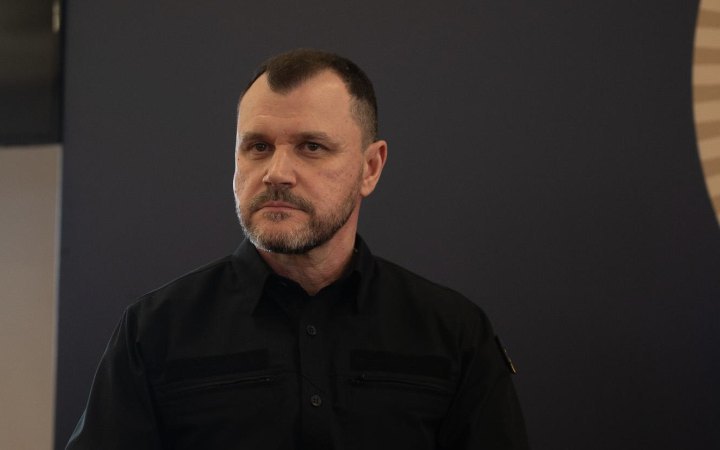
At the meeting of the “LB Club” on 28 May, the guest speaker was Ihor Klymenko, Ukraine’s Minister of the Interior.
“Club LB” is a closed-door event governed by the Chatham House Rules; however, given its public significance, we are now publishing selected points from the discussion.
Mobilisation measures and the role of the National Police
According to the Minister of Internal Affairs, the number of incidents involving abuse during the transport of people to temporary reception centres has decreased in recent months; however, because Ukraine has partly lost the corresponding information campaign to Russia, such negative incidents are quickly amplified on social media. The key source of mobilisation difficulties remains the general fear among citizens, exacerbated by the Russian information war.
Ihor Klymenko therefore insists on equal conditions for all and a structured approach to service terms.
At the same time, the minister notes that there are regional differences in mobilisation due to demographics or the capacity of local military registration and enlistment offices to perform their functions. These offices operate within the law, but to reduce social tension, better communication and accurate data on those subject to mobilisation are required.
Ihor Klymenko emphasises that the police and the Territorial Center of Recruitments are working together to identify ‘draft dodgers’; intelligence services are carrying out extensive work to verify and update lists containing millions of names. However, the prolonged state of martial law is fuelling heightened aggression, which sometimes results in dangerous incidents against the Territorial Center of Recruitments and police officers (such as, for example, the shooting of three patrol officers in Odesa).
Strategy for Maintaining Law and Order: Current Challenges and Post-War Prospects
The strategic goal of the Ministry of Internal Affairs, notes Minister Ihor Klymenko, is to maintain and strengthen law enforcement capacity for the post-war period, when a large number of people (military personnel and those who have been abroad) are expected to return, as well as significant circulation of weapons among the population and the psychological consequences of the war.
According to him, the National Police is currently understaffed by 20–25,000 officers. Women make up 25% of the police force; 13% are under 25 years of age. 9,000 police officers are serving in the military, whilst 25,000 are on duty in areas close to the front lines
The Minister admits that, under current conditions and with the existing pay, there are few willing to join the police. In the absence of adequate financial, moral and public support, police officers may leave the service.
“The police are a ‘mirror of society’ with all its traumas and shortcomings, particularly among young people,” noted the head of the Ministry of Internal Affairs.
Due to demographic problems in the regions and the issue of an ageing workforce in the civil service, recruiting police officers, rescue workers and border guards may become more difficult in 10 years’ time, Ihor Klymenko added.
Legalisation of civilian firearms: procedures and risks
The Minister of Internal Affairs advocates for a law on civilian firearms to replace the current practice of regulation by Ministry of Internal Affairs orders. Priorities: a clear procedure for obtaining a licence; establishing principles of safety, practical application and the responsibilities of citizens and law enforcement officers; ensuring legal protection for those acting in self-defence.
Ihor Klymenko also supports the authorisation of short-barrelled firearms. According to recent estimates, approximately 50% of MPs support concealed carry, and 50% support open carry. Work on the draft law is expected to be completed in the coming months; the next step will be a parliamentary decision.
This requires standardised procedures, a sufficient number of certified specialists, and a register of individuals who have consulted a psychiatrist or who have had, or are at risk of developing, PTSD. There is also a need for police officers to be psychologically prepared for the open carrying of potential short-barrelled firearms by civilians, as well as for psychiatrists and clinical psychologists to assess civilians’ suitability to possess firearms.
Furthermore, inter-ministerial coordination is required between the Ministry of the Interior and the Ministry of Health regarding psychodiagnostics, risk groups and suicide risk assessments, as well as attention to the circulation of combat collectible (antique) weapons.
It is also necessary to determine how information will be processed through electronic systems, who will issue medical certificates on a collegial basis, and to establish clear restrictions under which permission will not be granted.