




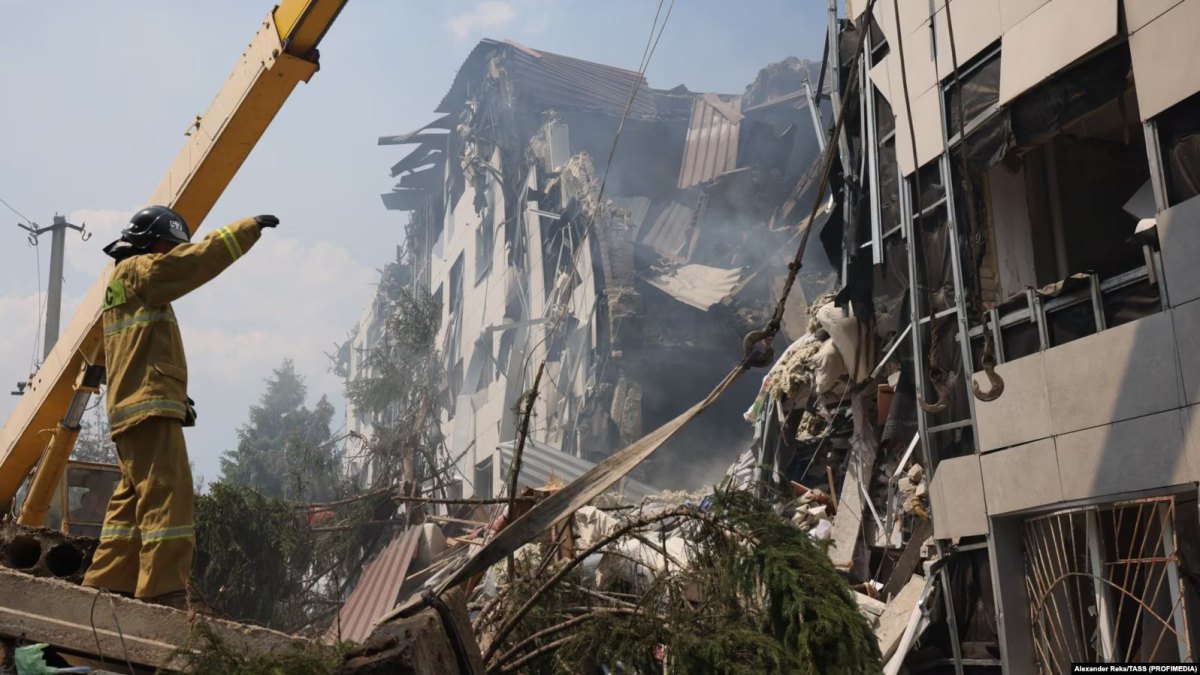
Starobilsk is a Ukrainian city currently under occupation. Russia bears full responsibility for locating the ‘Rubicon’ centre within the technical college and for the presence of civilians there, as well as for evacuating civilians from such facilities.
All this rhetoric about the beaches of Zugres and the ‘Alley of Angels’ should be directed at the Kremlin regime, which unleashed an aggressive war against a sovereign country. Or did those same Girkins with their Kamaz trucks full of weapons from the Russian Federation — where it is forbidden even to stand in a square with a blank placard — arrive here of their own accord?
Once again, for those who may still not understand: Moscow has no means of threatening us beyond what it is already doing now. There can be no question of making Kyiv ‘unfit for life’.
Since the invasion began, the Russians have used the full spectrum of weaponry against Ukraine: Kinzhals, Iskanders, modified anti-ship missiles with an accuracy measured in city blocks, KABs, concrete-piercing warheads, thermobaric bombs, and even BRSDs.
They have reached the limit of their capabilities — firing Iskanders and X-101s manufactured only last month. At present, the Russian military-industrial complex is capable of producing around 40–50 ballistic missiles and a similar number of cruise missiles per month. They have depleted their stockpiles of missiles for the S-300 system to the point of shortage.
Russia does not even have enough air-to-air missiles for its aircraft. It has come to the point of purchasing shells and gunpowder from North Korea.
That is the reality: they have exhausted Soviet stockpiles, and the situation has turned out worse than Afghanistan. The Russians did not retaliate by bombing the airfields in Akhtubinsk (600 km from Ukraine) and Orsk (1,800 km away), nor did they shut down all the oil refineries in the European part of the Russian Federation.
Not a single campaign of strategic bombing carried out by the Russian Federation against Ukraine — targeting bridges, railways, the military-industrial complex, mobilisation efforts, or attempts to freeze cities into submission — has achieved its objective. Why should this one succeed?
How many missiles and naval drones did the Russians launch at the bridge in Zatoka? I lost count after more than 20 waves of attacks. So, did the bridge collapse? Was Bessarabia cut off? They damaged it, halted traffic, and caused considerable difficulties for our repair crews. But the bridge is still standing, and the Russians’ strategic objective remains unfulfilled.
Nuclear weapons are not being used not because Russia is afraid — after all, Ukraine has no nuclear deterrent. Rather, it is because of the same dilemma the Americans faced when preparing for a landing on the Japanese islands during the Second World War.
If special combat units were deployed to support such an operation, they would have to be used on a massive scale. Even then, an entire battalion could be rendered ineffective under ideal conditions. As a result, alongside the ruins of Popasna — which no one plans to rebuild — there could be, for example, the radioactive ruins of Kostyantynivka. And what would that change? Would the EU stop supplying millions of shells? Would the drone coalition stop producing millions of drones? Would France and the United States halt deliveries of guided bombs? Of course not.
Nor would strikes on cities where drone production is dispersed across numerous facilities cripple the military-industrial complex. On the contrary, it could result in hundreds of drones being directed at our own nuclear power plants and chemical facilities. After that, no one would feel sympathy for us.
It is also clear that it would be impossible to wipe out all cities with populations of over one million using strategic nuclear forces. Radioactive contamination would inevitably spread to the Black Sea, Crimea, and Tuapse. It was, after all, reindeer herders in Scandinavia who were the first to report elevated radiation levels after the Chornobyl disaster, lest anyone forget. Poisoning Russia’s own border regions simply to ‘punish the Ukrainians’ would be a step too far even for people accustomed to smearing Novichok on their political opponents’ underwear.
And naturally, an extremely sharp reaction from the other members of the nuclear club would be inevitable. During virtually all Cold War-era military exercises, an exchange of tactical nuclear strikes ultimately escalated into the deployment of strategic nuclear forces. In such a scenario, the survivors — Hungarians, for example — might have had to be resettled to the remaining 20 per cent of uncontaminated territory in Soviet Ukraine.
A nuclear winter, fires lasting for months, famine, and mass deaths from radiation sickness — there is an abundance of material documenting such scenarios. To risk an outcome like that merely to force Ukraine into neutrality and occupy the ruins of the Donbas would be sheer madness.
In short, a few dozen ballistic missiles per month — roughly 50 at most — is the limit of Russia’s current capabilities. Rapidly expanding chemical warfare capacity, electronics manufacturing, and engine production is far more difficult than promising on television to ‘render the enemy’s capital uninhabitable’.
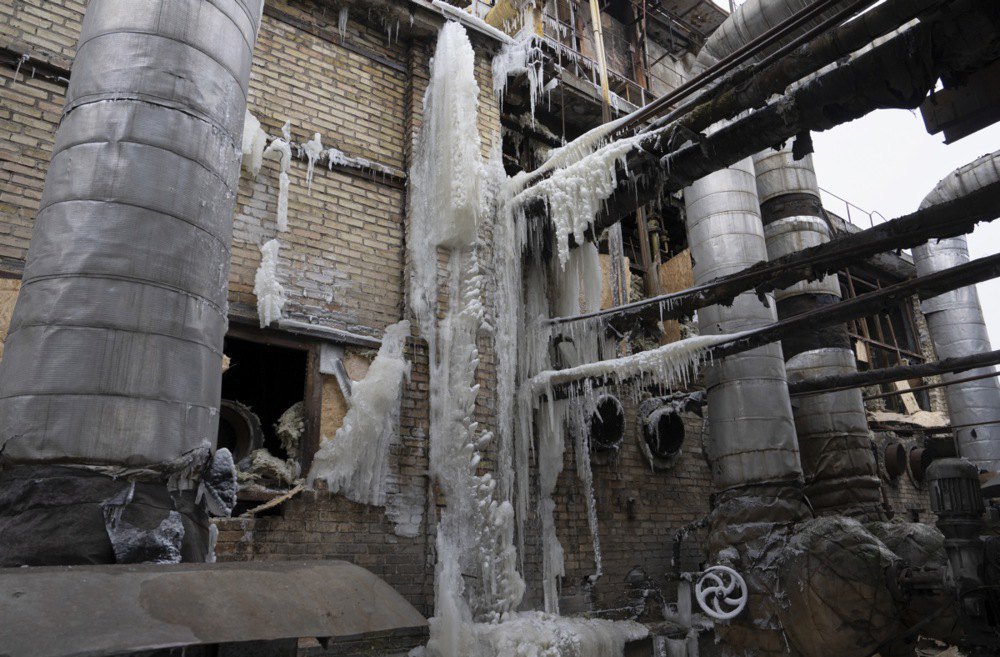
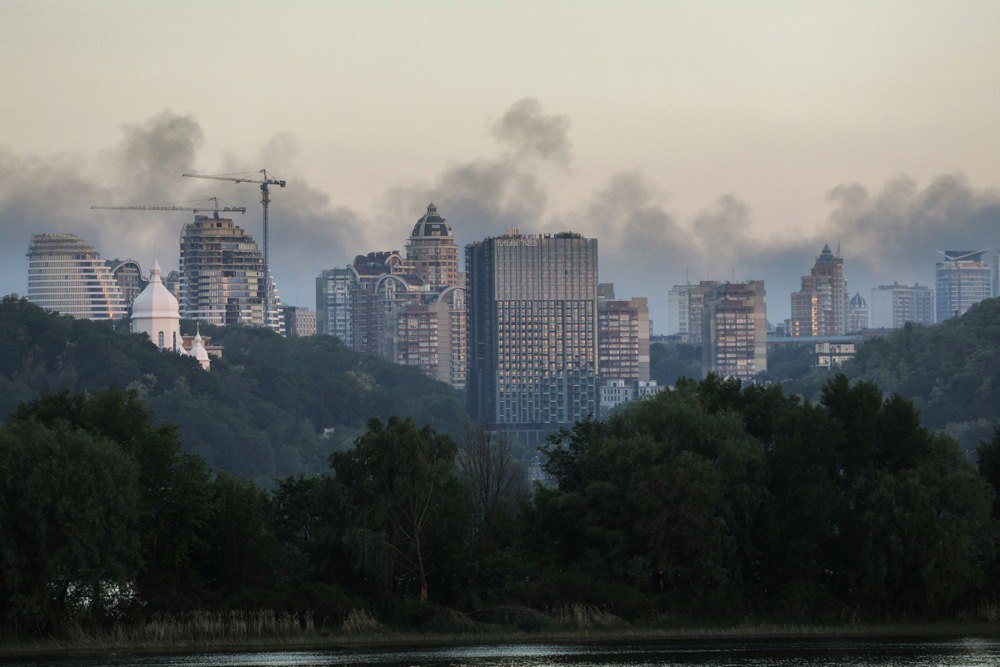
Russia attempted to plunge Kyiv into blackout and bring the city to a standstill. It failed. The cost-benefit ratio of these air strikes on the capital simply does not justify the expenditure incurred by the Russian Federation. Most ‘suicide drones’ — launched in their hundreds — and missiles are intercepted through a complex, decentralised defence system comprising mobile fire groups, interceptor pilots (including those flying sports aircraft), small-calibre anti-aircraft artillery, air defence systems, the Air Force, and army aviation.
Despite the constant shortage of interceptors, the EU has already begun producing missiles for the Patriot system and is increasing output for the SAMP/T. Not everything will get through, and dispersal tactics will prevent the Russians from exploiting any potential weak points. As a last resort, the EU may expand its assistance further: the Czech initiative may not remain limited to artillery shells alone.
It is unclear which ‘decision-making centres’ the Russians imagine they can destroy. The historic buildings on Bankova Street? Operational command is unlikely to be conducted from there, but rather from underground facilities and bunkers built by the USSR at depths of up to 80 metres in preparation for a large-scale nuclear war.
Quite simply, they have no means of exerting greater pressure on us than they already are.
But we do. Ukraine is developing its own ballistic capabilities, scaling up production of Flamingo, Neptune, and Ruta missiles to dozens of units per day, while also modernising medium-range UAVs. Warheads weighing 200 kg with a range exceeding 300 km are sufficient to destroy entire buildings. For now, strikes are focused on FSB bases and pilot training schools, but attention will eventually shift towards railways, chemical plants, and dual-use industrial facilities.
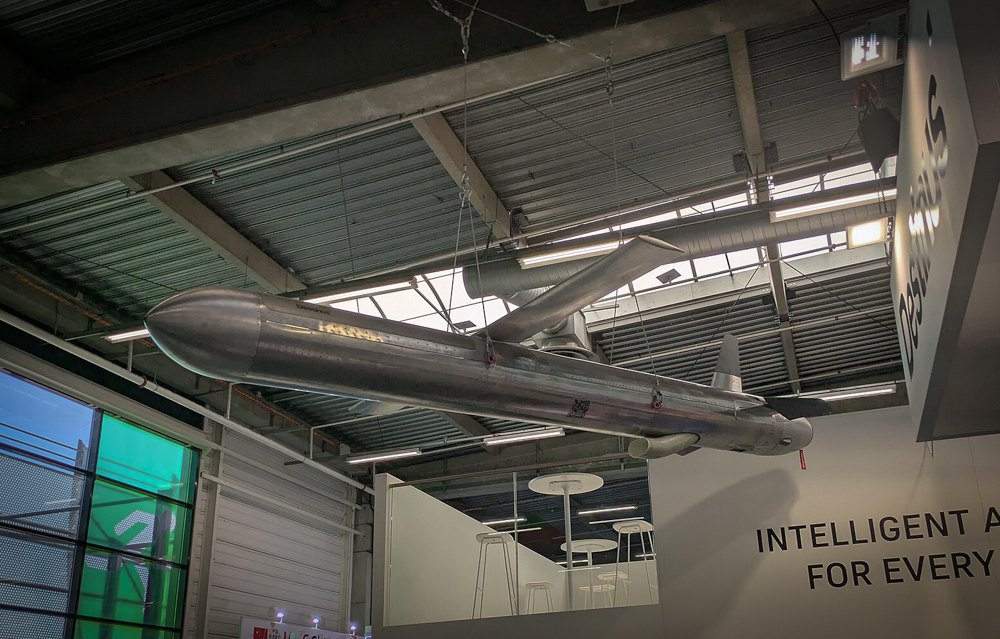
Strikes on electronics factories in Bryansk and electroplating workshops in Votkinsk will only intensify. Temporary restrictions on ammonium nitrate exports this spring, strict six-month quotas on fertiliser exports amounting to more than 20 million tonnes, and a complete ban on fuel exports from the Russian Federation are merely the first signs of how the war is beginning to affect the Russian economy.
Within a year, Ukraine is expected to possess aircraft capable of reaching cruise missile carriers, as well as its own ballistic missiles and an even larger arsenal of cruise missiles. Western intelligence functions with remarkable efficiency — preparations for launches of systems such as the Oreshnik become known within 48 hours.
Until then, our task is to treat these threats seriously: maintain bomb shelters, maximise dispersal, move production underground, and duplicate adjacent production lines wherever possible.
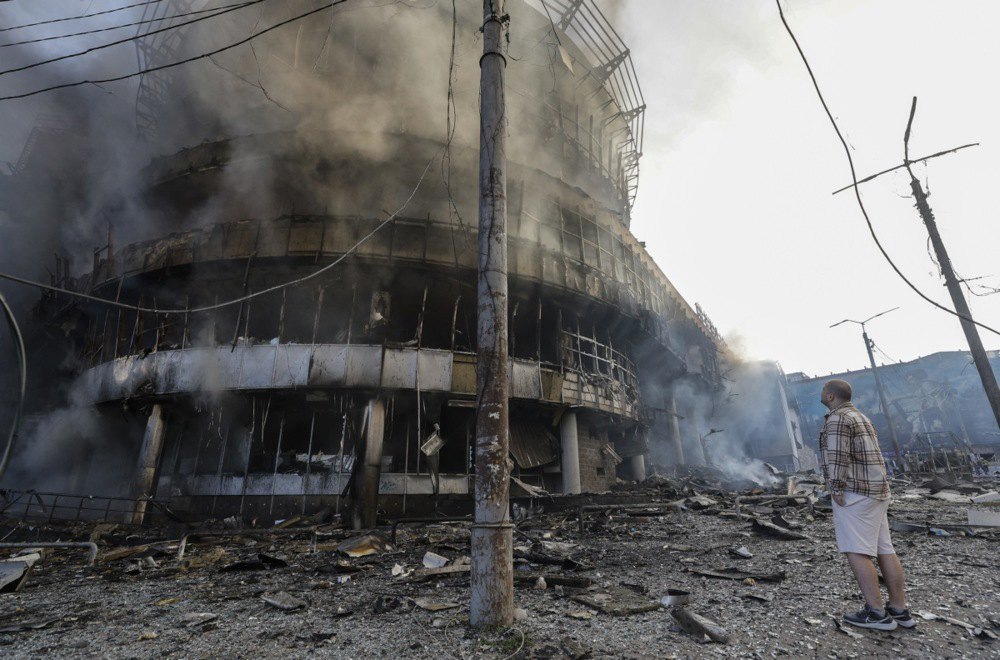
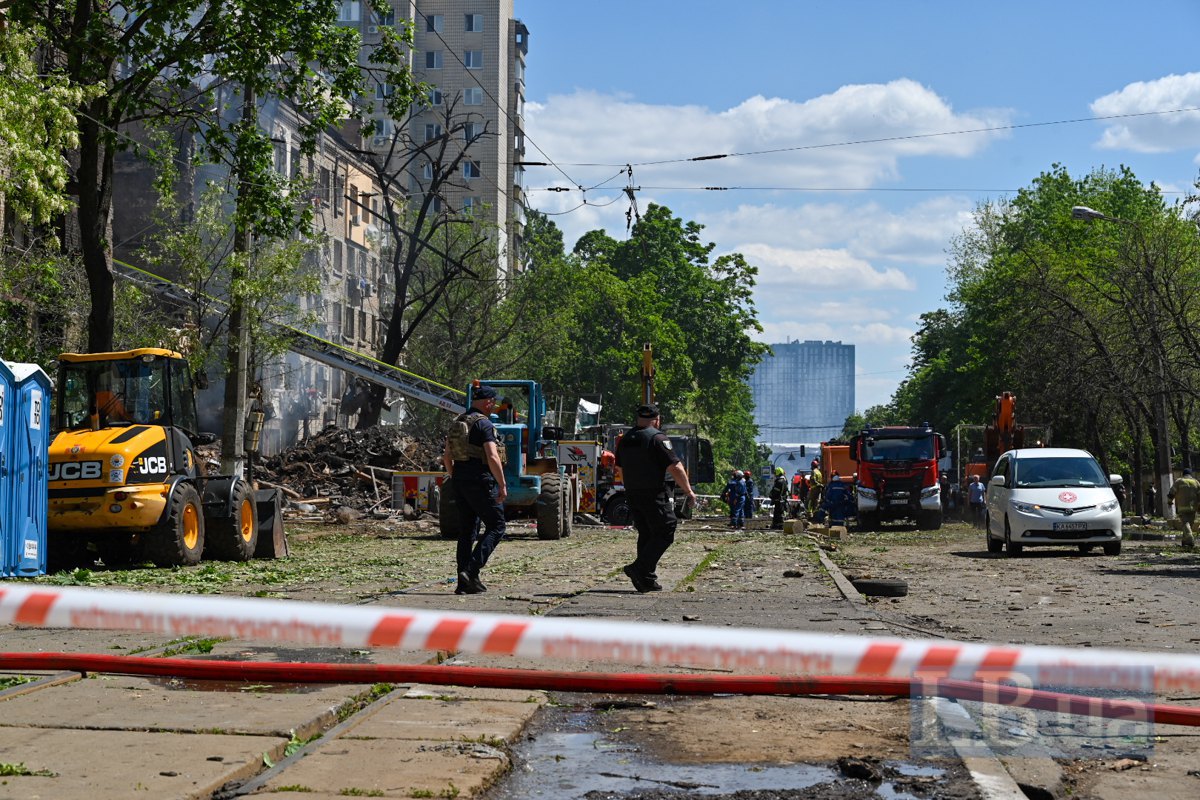
The fact that only three people were killed in the latest raid on Kyiv was partly a matter of luck, although the high interception rate and comparatively low casualty figures also demonstrate the effectiveness of Ukrainian air defence. At the same time, everyone must understand a simple reality: casualties are far lower when people are sheltering in basements rather than remaining in entrances or flats. Even if a building partially collapses, people can survive and dig themselves out — provided there is water available and at least two exits.
Will the Russians continue launching strikes? Yes. Will they succeed in carrying out their threats to destroy Kyiv? No.