





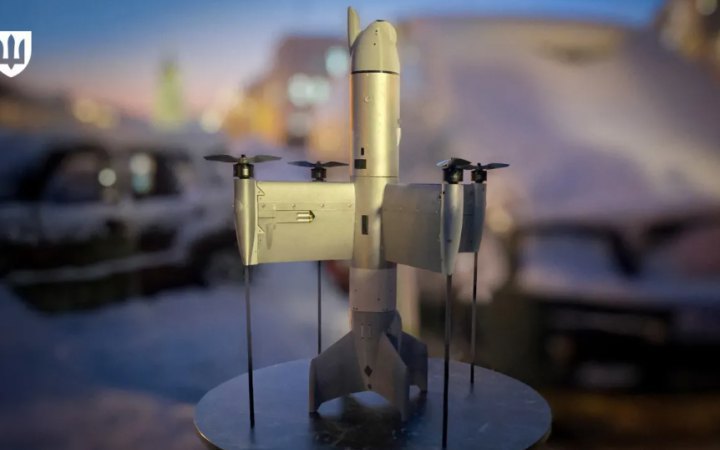
Thanks to the expansion of ‘light air defence’, the interception rate for Shahed drones has doubled over the past four months, despite the number of Russian strikes using such drones increasing by 35% every month.
Over the same period, the supply of interceptor drones increased 2.6-fold. This was announced by Defence Minister Mykhaylo Fedorov during a meeting with journalists dedicated to reviewing the ministry’s results.
“This is a cheaper, faster and scalable response to Russia’s mass attacks,” he said.
Fedorov noted that improving air defence is a systematic process. The strategic goal is to achieve a stable interception rate of 95% for aerial targets. The introduction of after-action reviews has played a key role in this process. This is a standard NATO procedure involving a detailed analysis of combat operations after their completion. For Ukraine, it has become one of the key elements in building a modern air defence system.
“Together with the Air Force and the military, we conduct a detailed debriefing after every large-scale attack. We examine the route of every missile and drone, flight paths, interception points, technical details, the reasons why certain targets were not shot down, and what needs to be changed in the operations of mobile groups, electronic warfare units or interceptor drones,” the minister explained.
He added that the Ministry of Defence continues to pursue the Air-Land-Economy strategy: protecting the skies, stopping the Russian army on the ground and exhausting the Russia’s economy as much as possible.
Light air defence
To provide more effective protection against Russian attacks, the Armed Forces are continuing to transform their air defence system. Defence Minister Mykhaylo Fedorov announced that, on the President’s instructions, a new system for analysing, countering and forecasting threats is being established, with “light air defence” and interceptor drones forming its key elements. Colonel Yevhen Khlibnikov has been appointed to lead the initiative.
He served in the Air Defence Missile Forces of the Air Force and worked at the General Staff on air defence development. From the first days of the full-scale invasion, he oversaw the deployment of Bayraktar UAVs during the defence of Kyiv and the Chernihiv Region, and took part in planning the operation to liberate Zmiyinyy Island. In 2014–2015, he fought in the battles for Donetsk Airport.
The President stated that he had identified three priorities for light air defence: strengthening defences in frontline towns such as Nikopol, Kherson and other cities where the Russians are “hunting” civilians; scaling up countermeasures against Shahed drones; and sharing the experience of successful units.