





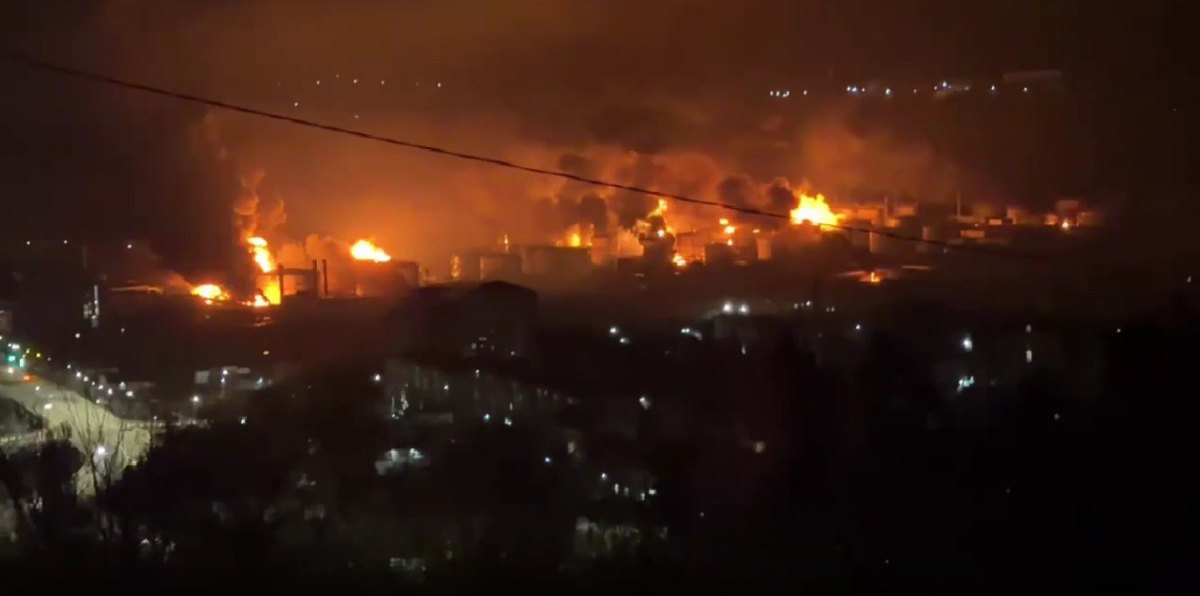
So far, the shock wave has only begun to spread inward, much like a tsunami. It first affected the occupied territories of Ukraine and neighbouring Russian regions such as Kuban, where attacks on facilities in Tuapse coincided with a surge in fuel demand from hundreds of thousands of Crimean motorists. The effects then spread further into Russia, reaching cities such as Ufa and Yekaterinburg.
At present, fuel rationing and restrictions of one form or another — primarily affecting the military and agricultural sectors — have been introduced in 25 Russian regions, including Moscow and St Petersburg, not counting the occupied territories.
Storage shortages and pipeline paralysis
The crisis is likely to deepen further. Around 35% of Russia’s refining capacity has reportedly been knocked out, including eight of the country’s ten largest refineries, along with a substantial portion of its fuel storage infrastructure. More than 70 large storage tanks have been damaged or destroyed.
Rebuilding this destroyed infrastructure would require enormous financial resources, as well as tens of thousands of tonnes of corrosion-resistant steel, specialised valves and metering equipment, and high-pressure welding teams — resources that have never been abundant.
More importantly, the shortage of storage capacity limits the ability of refineries that remain operational in Siberia to adjust production and take full advantage of export restrictions by stockpiling fuel.
In addition, pipeline infrastructure and pumping stations have become increasingly frequent targets. Damage to automation systems at pumping stations acts like a tourniquet applied to Russia’s own economic arteries. Without adequate pressure, pipelines cease to function effectively, preventing crude oil from reaching both operational refineries and export terminals.
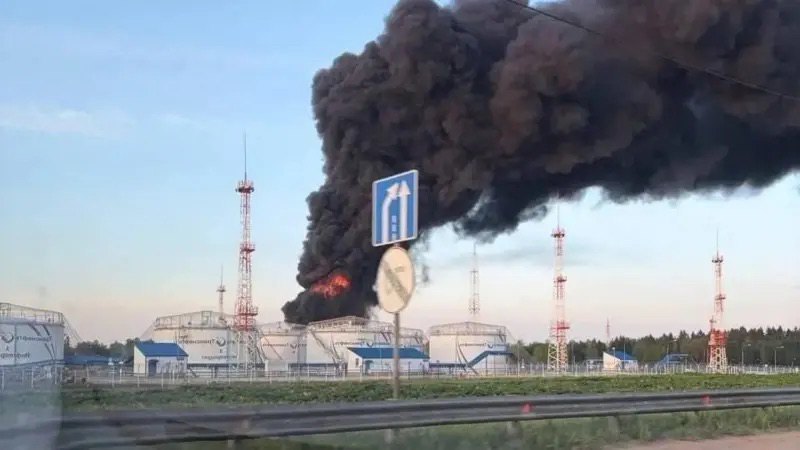
Since May, a systematic campaign has been underway to sever these transportation arteries. In recent weeks alone, six strategic pumping stations have been hit: Solnechnogorsk near Moscow, Yaroslavl-3 and Palkino — a key hub for moving Siberian oil to export markets — as well as stations in Vtorovo and Lobkovo in Vladimir Region, and Yefimovka near Volgograd.
Direct damage from strikes on refineries alone is estimated to have cost the Russian budget $7–8 billion. The increasing use of fuel additives such as ethanol and monomethylaniline, along with relaxed sulphur-content standards, effectively amounts to a temporary rollback to Euro 3 fuel specifications, allowing refineries to operate without fully modernised purification units. This is likely to shorten engine lifespans, creating additional losses worth billions of dollars over time, borne by both the state and private consumers.
Logistics under strain
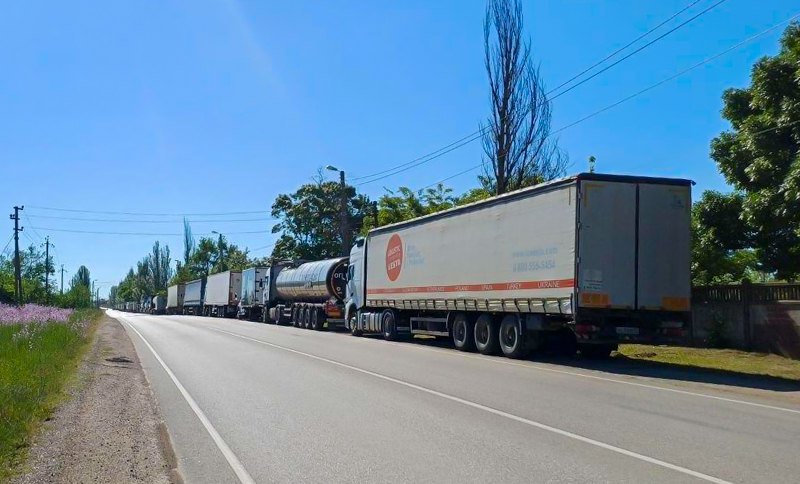
Russia’s fuel logistics network is also coming under growing pressure. Hundreds of fuel tankers have reportedly been damaged on transport routes, while many more remain out of service due to overuse and repair needs.
Authorities are attempting to supply military operations directly from mobile fuel stocks, but another challenge is emerging: drivers are increasingly reluctant to take such assignments. The prospect of transporting highly flammable cargo through areas at risk of attack is making recruitment more difficult.
Beyond the direct damage, the broader economic consequences are harder to quantify: disrupted contracts, supply delays, companies excluded from lists of critical enterprises, spoilage during hot weather, logistical bottlenecks, penalty payments, restrictions on aircraft refuelling in some regions, and losses to the tourism sector. Collectively, these secondary effects may prove just as costly as the physical damage itself.
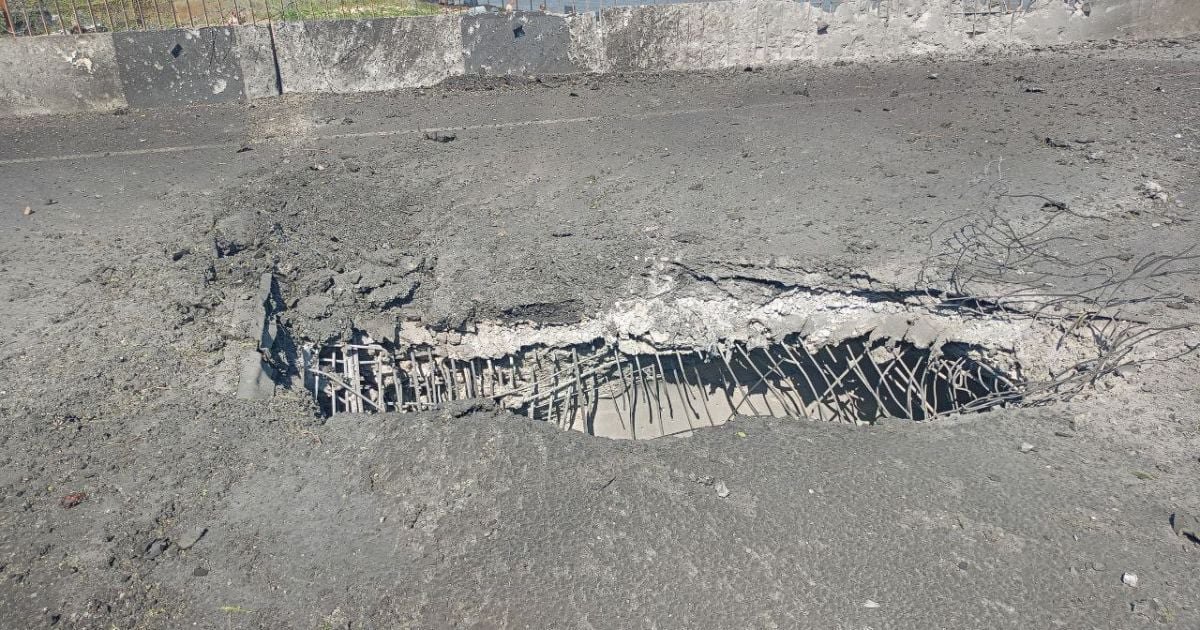
Damage to all bridges in Crimea, suspension of civilian truck transshipment along the “Novorossiya” highway, and the use of pontoons to supply positions near Stepnohirske and Mala Tokmachka from Crimea — these are characteristic indicators that the main logistics flow has shifted through the Crimean Bridge. The fact that units of “Rubicon”, equipped with drone interceptors, are being redeployed to the region suggests that the adversary is under severe pressure after the destruction of railway ferries, bridges, and the increased vulnerability of fuel tanker routes.
The main message intended for Moscow is that the previous situation — where operations could be conducted unchallenged — is over. There are no longer any safe areas in the European part of Russia. Neither attempts to encircle Kostiantynivka nor strikes on film studios in Kyiv will change this reality.
The mathematics of losses
Each destroyed refinery represents a double blow to the state budget. First, it means billions in lost foreign currency revenue from exports. Second, it forces the state to pay billions of rubles in subsidies to the oil sector (the so-called damping mechanism) to prevent fuel prices from skyrocketing, to enable refinery repairs, and to secure infrastructure. These funds are diverted away from purchasing ammunition or paying new contract soldiers. Meanwhile, protective measures such as nets installed in areas like Kapotnya have proven ineffective — money was spent, but results were not achieved.
By disabling pumping stations and refineries, the logistical distance increases. Fuel trucks must take much longer routes, trains are rerouted, and the railway network becomes overloaded. All of this results in delays. Even a few days of fuel convoy downtime can mean a failed assault, idle equipment at the front line, lack of irrigation or harvesting capacity during critical agricultural periods, and an inability for heavy machinery and combines to refuel at standard stations, while wholesale supplies are redirected primarily to security forces.
All of this creates a ripple effect that disrupts supply schedules, strains the flow of raw materials and equipment, and weakens both the economy and horizontal logistics networks.
Air defence overstretch
They cannot defend a territory the size of a continent. Each strike forces them to make painful choices: withdraw air defence systems and electronic warfare assets from the front line to protect a chemical plant deep in the rear, or leave a state reserve fuel depot burning for weeks, or watch as fuel tanks in Tuapse or Rybinsk are repeatedly hit again and again. Billions of dollars are being poured into drone interceptors and scaling up air defence delivery systems? That suits us — air defence systems do not assault Kostiantynivka, and that requires many months of preparation.
Read alsoA patched-up quilt of Russia’s air defence: why the country’s skies have turned into a sieve
Industrial cannibalisation
Due to sanctions, they cannot quickly purchase Western primary and secondary oil refining units (atmospheric and vacuum distillation units) or high-quality pump automation systems. Repairs take months, require dismantling other facilities for spare parts, and worsen scheduled maintenance cycles — pressure on the remaining supply chain continues to grow.
Fuel production is at its lowest point in 21 years, with diesel prices up 36% and aviation fuel up 40%, alongside bans on aircraft refuelling in six regions. Tatarstan — the empire’s oil hub — has introduced a 20-litre per-person fuel limit. It is as if sand had run out in the United Arab Emirates.
Ahead lies seasonal demand growth, the holiday period, and an escalation of systematic medium-range strikes on rail tankers, locomotives, and fuel trucks — potentially 500–700 per month. Only then, they argue, will the worst fuel crisis in Russia’s history materialise — but there is no need to rush conclusions yet.