






On 16 June at the international defence exhibition Eurosatory 2026 in Paris, Fire Point signed a Memorandum of Understanding with German high-tech radar manufacturer Hensoldt. The cooperation concerns the pan-European Freya air defence system project, according to Oboronka.
According to Fire Point CEO and CTO Iryna Terekh, the main missing component for the project had been radar systems.
“Now we have them, and we can move from concept to practical implementation of a pan-European anti-ballistic shield,” she said.
Under the agreement, Hensoldt will be responsible for the production, testing, and supply of radar systems for the ground-based air defence complex.

It concerns the highly mobile TRML-4D radar, which is capable of simultaneously detecting and tracking over 1,500 targets at distances of up to 250 km. It is based on the latest AESA (Active Electronically Scanned Array) technology. The radar has proven its effectiveness in combat conditions over recent years and, thanks to its software adaptability, is also well suited for GBAD (Ground-Based Air Defence) systems.
The Ukrainian company Fire Point will, in turn, be responsible for the overall system architecture. This includes the development, production, and integration of FP-7.x interceptor missiles, command-and-control systems, launchers, and the integration of all components into a unified system.
Read alsoHow Russia is modernising the weapons used in attacks on civilians: analysis by a defence research institute
What is known about the Freya project
The goal of the Freya project, according to Fire Point, is to create a unified, protected air and missile defence system with a focus on intercepting ballistic missiles.
Freya has already been described as a low-cost alternative to the American Patriot surface-to-air missile system.
The concept of the new project was first publicly presented by Fire Point co-owner and chief designer Denys Stilerman on 14 May on the social network X.
According to him, Germany, France, and Norway are involved in the project, as well as another Ukrainian company whose name has not been disclosed.
He also stated that development is being financed by the companies participating in the programme.
At present, Stilerman says the project is at the stage of testing prototype systems. If everything goes well, the first intercepts could take place by the end of 2026. In an interview with the Financial Times on 10 June, Stilerman also said that operational missiles could become available in 2027.

Mass production of the missile could begin in August. This depends on the supply of an infrared homing seeker, which Fire Point expects to receive from the German company Diehl Defence (IRIS).
It is known that in April, Fire Point and German missile and air defence manufacturer Diehl Defence signed a technological cooperation agreement.
What is known about the FP-7.X missile
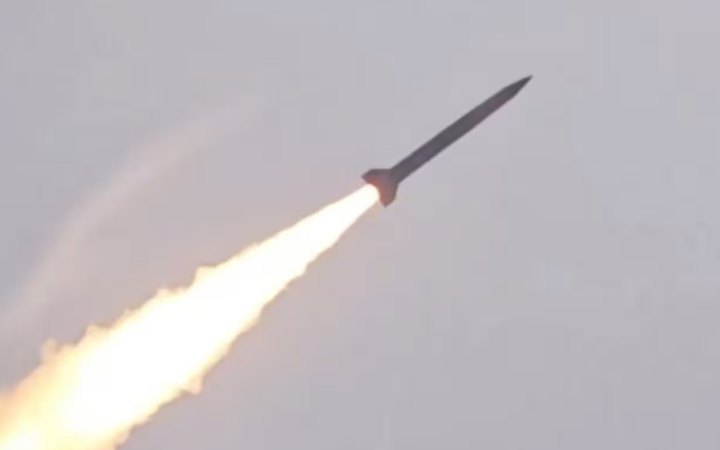
On 3 June, Fire Point conducted a test of a guided manoeuvring flight of the FP-7.X ground-to-air anti-ballistic missile. According to company representatives, the test was successful, and the missile reached the interception point defined by a ground-based radar.
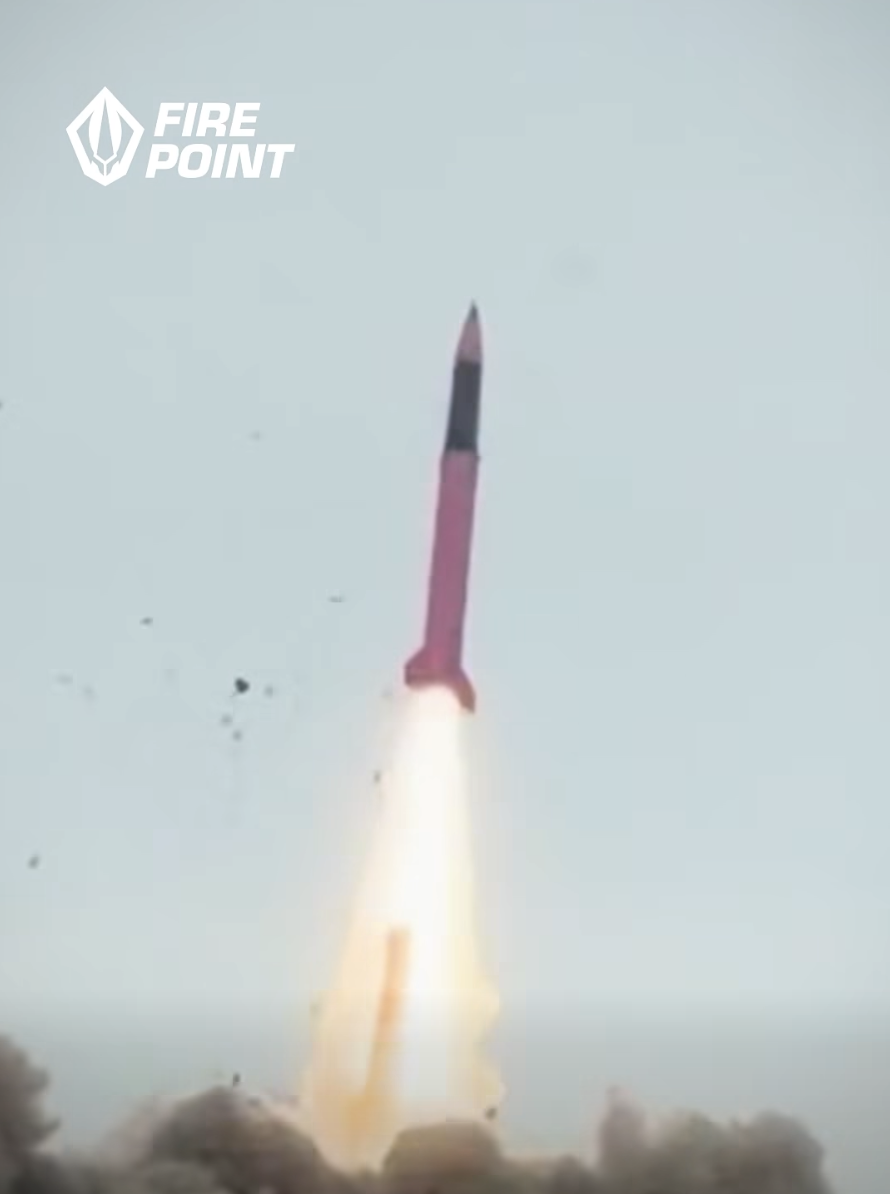
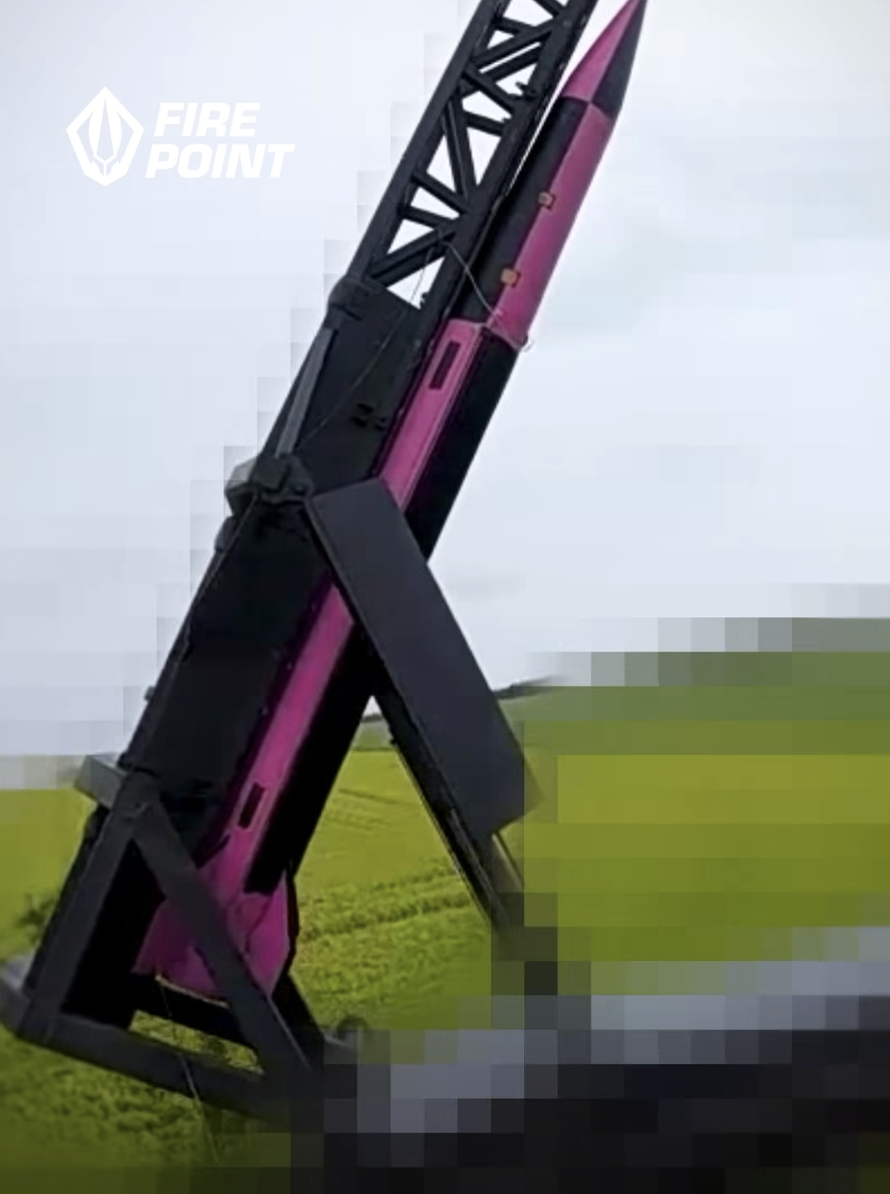
The FP-7.X is expected to become the core interceptor for the Freya missile defence system’s anti-ballistic capability.
The missile is reportedly based on a modernised Soviet-era 48N6 surface-to-air missile, used in the S-300 and S-400 air defence systems. It is designed to operate on a proximity detonation principle — exploding near the target missile to neutralise it.
Its declared performance characteristics include a speed of 1,500–2,000 m/s, a length of 7.25 metres, and a diameter of 1.15 metres. The stated engagement altitude is up to 25 km.
The missile’s launch system is being developed by Fire Point. The command centre is planned to be based on the Kongsberg FDC system.
Freya is expected to be integrated into Ukraine’s air and missile defence network via the Link-16 protocol, using ASTERIX for radar connectivity and a full-duplex channel for missile flight correction.
Why the system is described as a cheaper alternative to Patriot
Military analyst Denys Popovych, writing for Slovo i Dilo, notes that the most effective interceptors against ballistic missiles are the PAC-3 and PAC-3 MSE missiles.
“These use a Hit-to-Kill technology, meaning direct impact on the target. Thanks to extremely high speed (up to 6,170 km/h), the interceptor can destroy a ballistic missile in mid-air, leaving only debris to fall to the ground. However, guidance requires extremely precise targeting and instantaneous data processing, as ballistic missiles can travel at very high speeds, leaving very little reaction time,” he explains.
According to Popovych, this is what makes the Patriot system highly effective and globally in demand despite its high cost, creating a backlog of buyers.
Fire Point states that its interceptor costs around $700,000, compared to $3.8 million for a Patriot PAC-3 missile, according to US Army budget estimates for 2026.
Stilerman claims the company will be able to produce three missiles per day starting in August and store them until the seeker head is installed, which Fire Point plans to develop in cooperation with Diehl Defence.
Popovych adds that although Hit-to-Kill technology used by Patriot is more accurate, cost efficiency and mass production may compensate for lower precision.
“This approach is cheaper and does not require sniper-level accuracy, so lower effectiveness can be offset by a larger number of missiles launched. In other words, a salvo of 4–5 FP-7.X missiles could potentially cost less than a single PAC-3 missile launch,” he concluded.