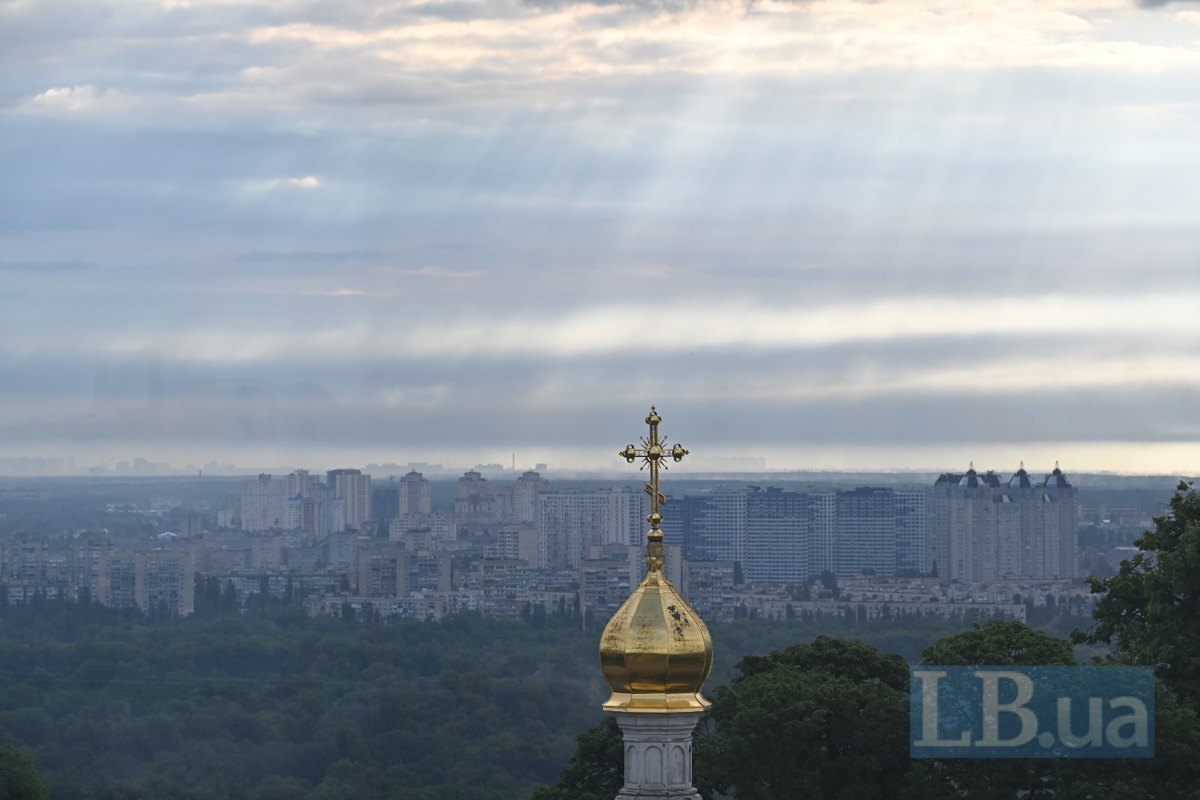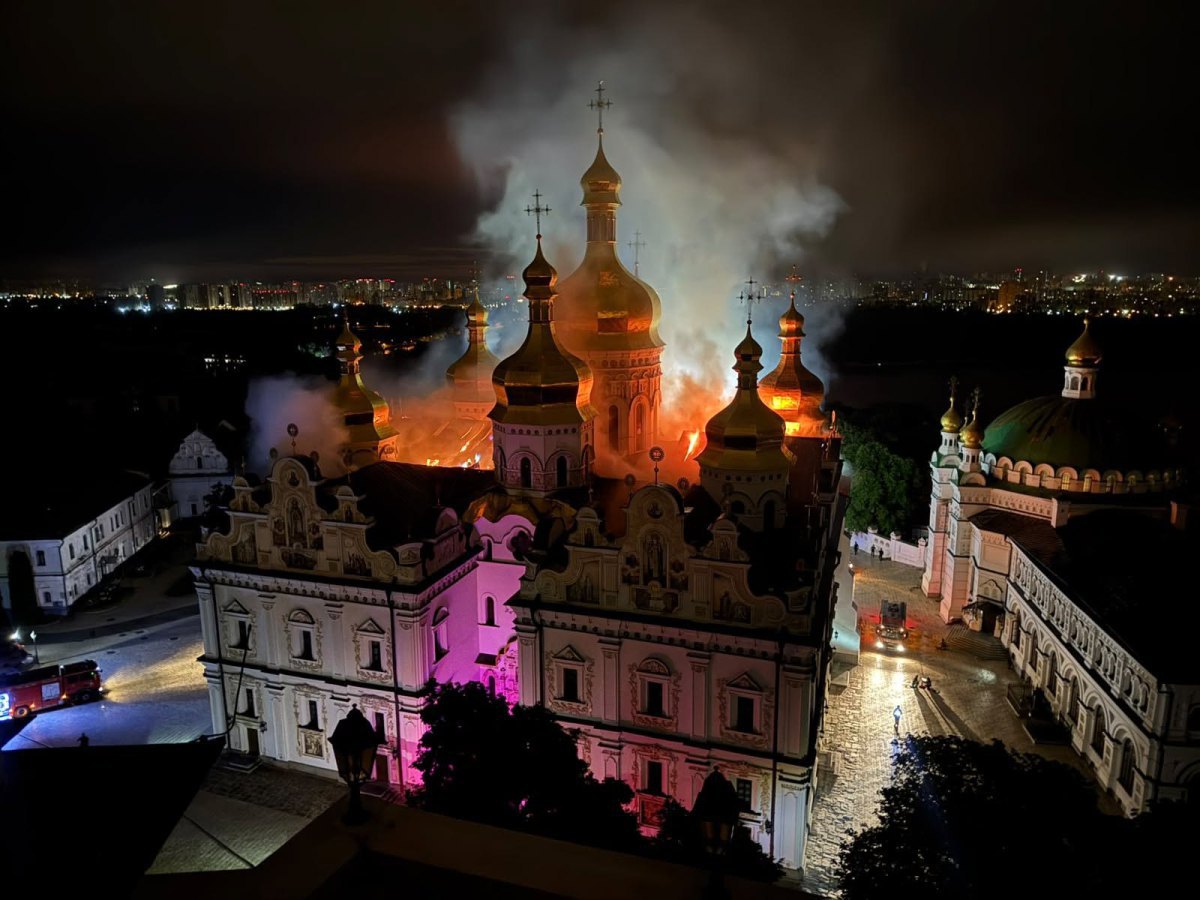






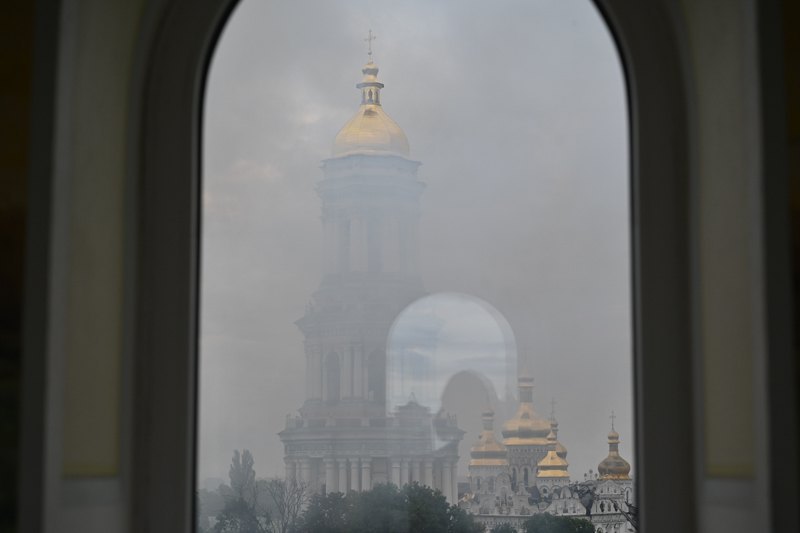
The National Kyiv Pechersk Lavra Preserve is a UNESCO World Heritage Site. Shelling it constitutes a grave crime against the world’s cultural heritage. Built between 1073 and 1078, the Dormition Cathedral originally served as the burial place of Kyivan princes. Over the centuries, it survived the earthquake of 1230, the Mongol invasion, and the great fire of 1718. During World War II, the building was almost completely destroyed. The cathedral was rebuilt in 2000.
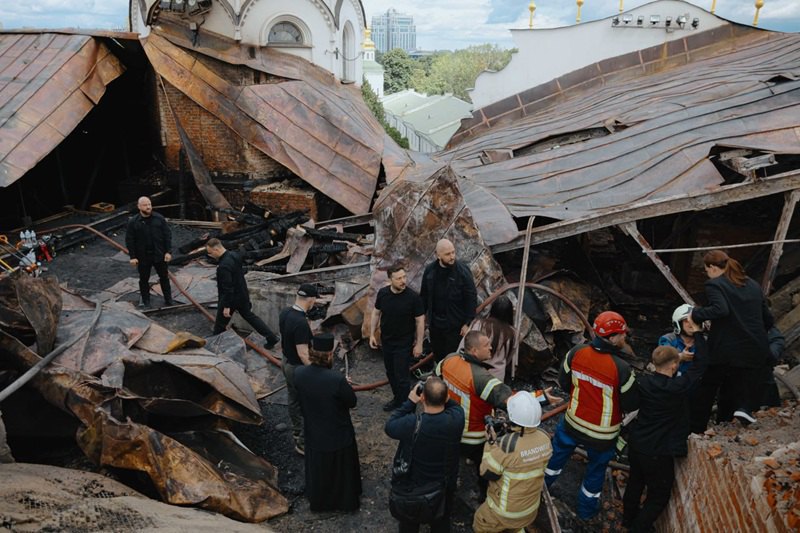
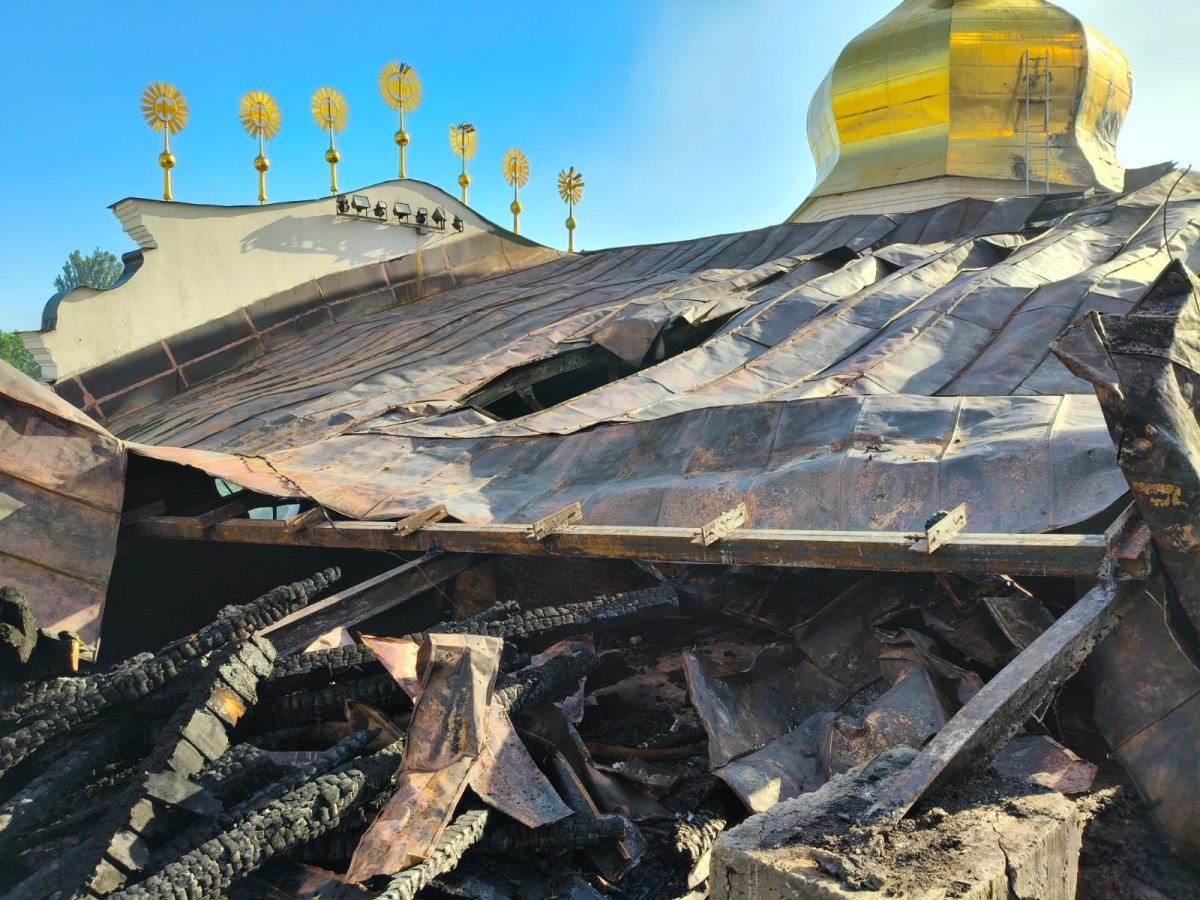
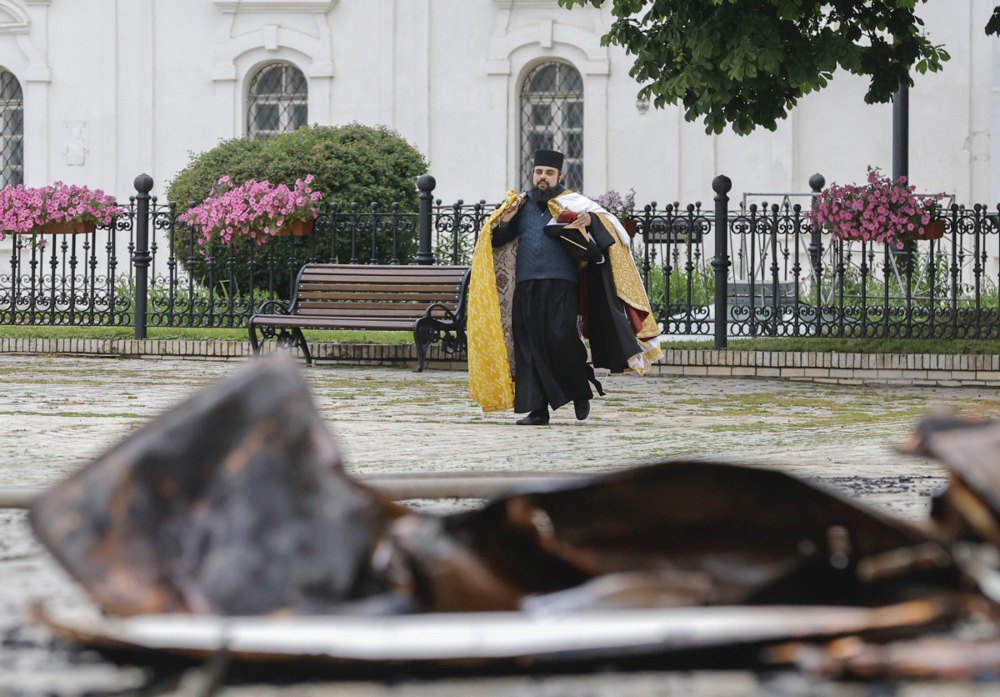
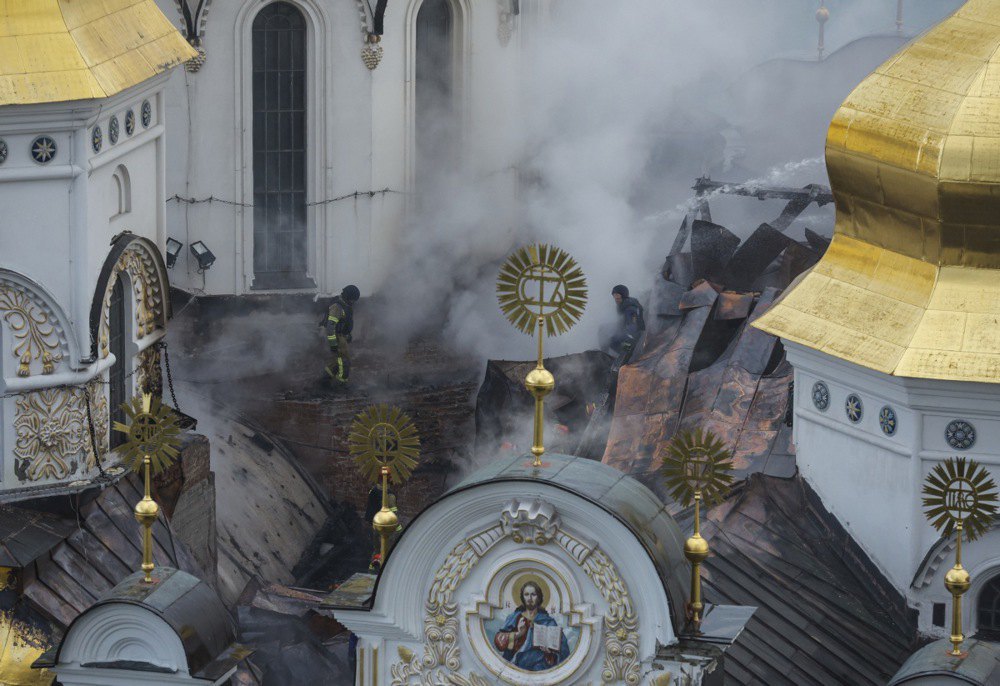
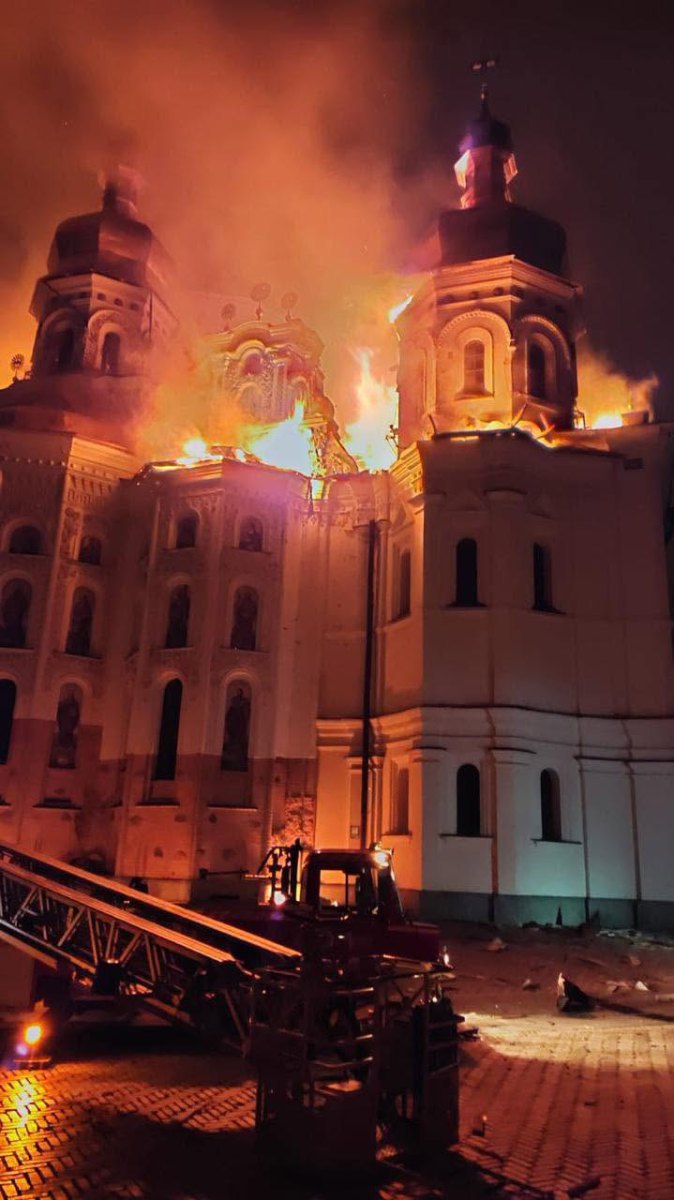
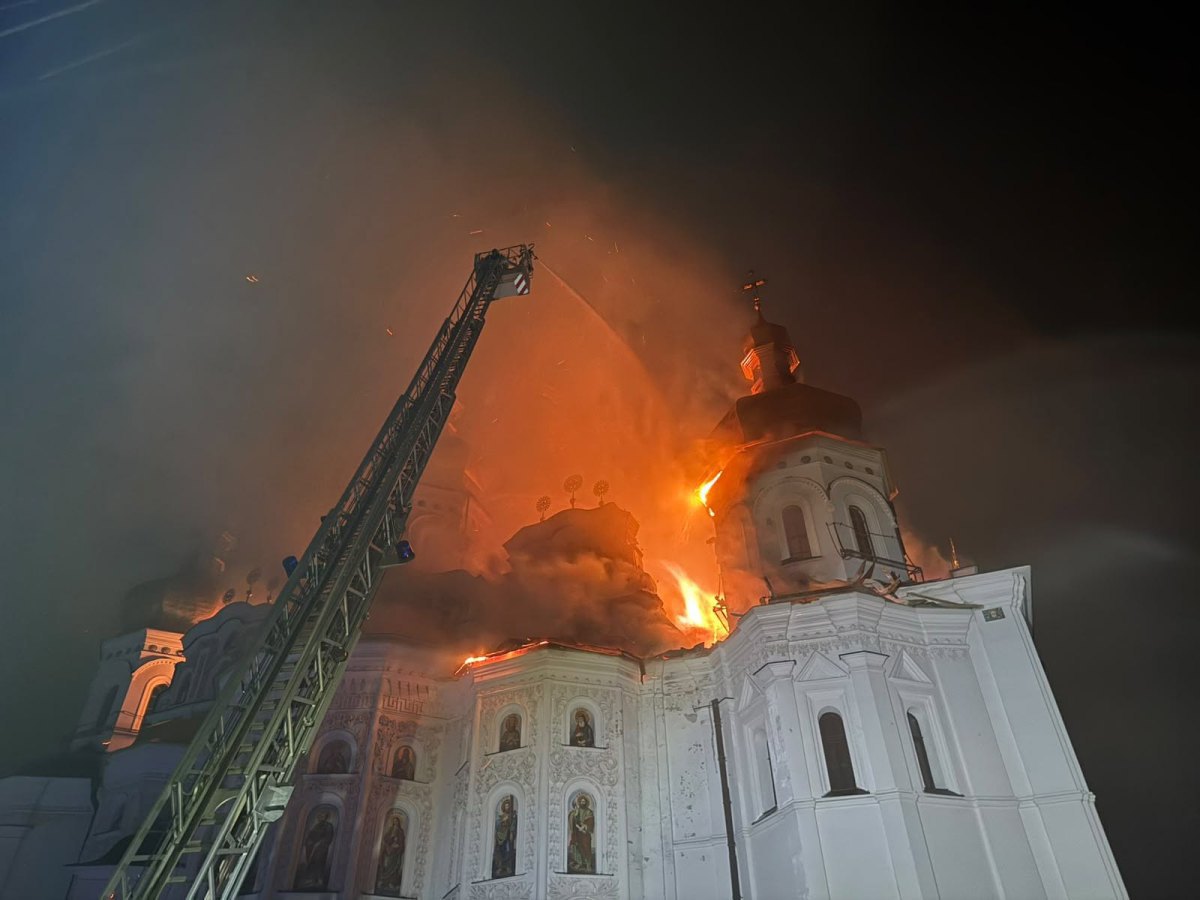
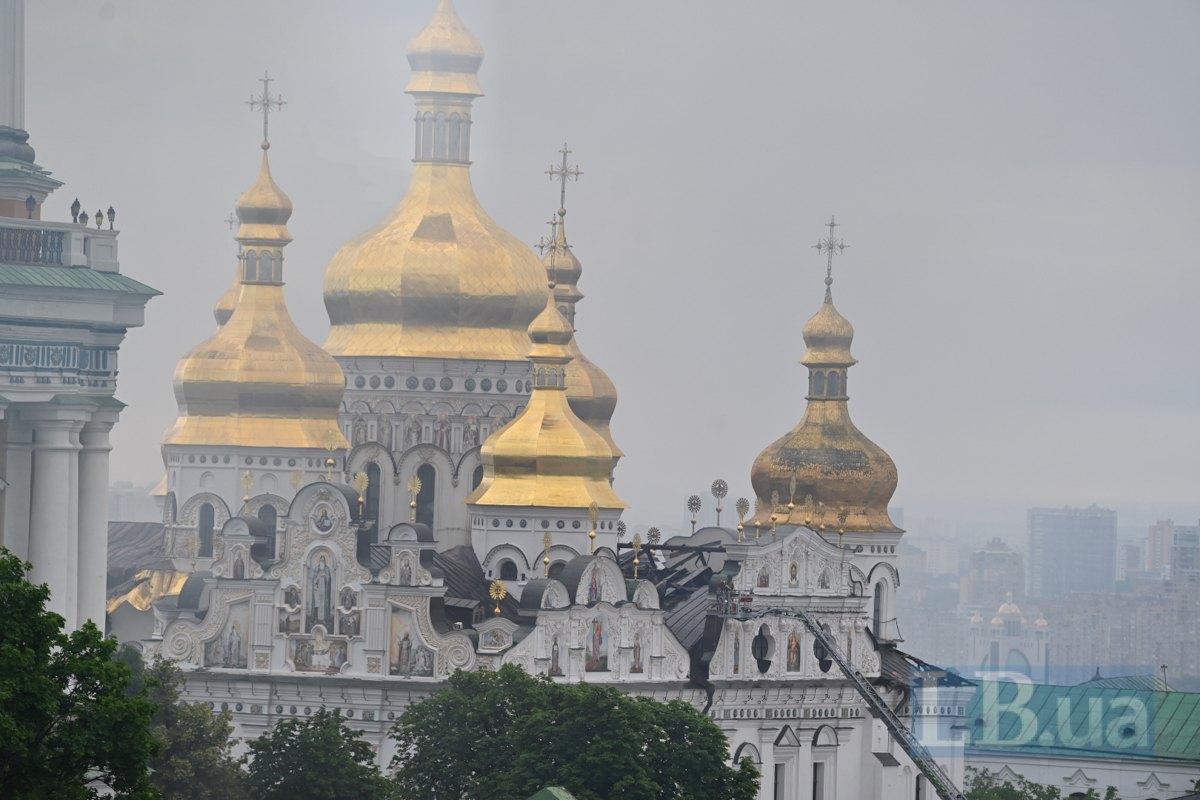
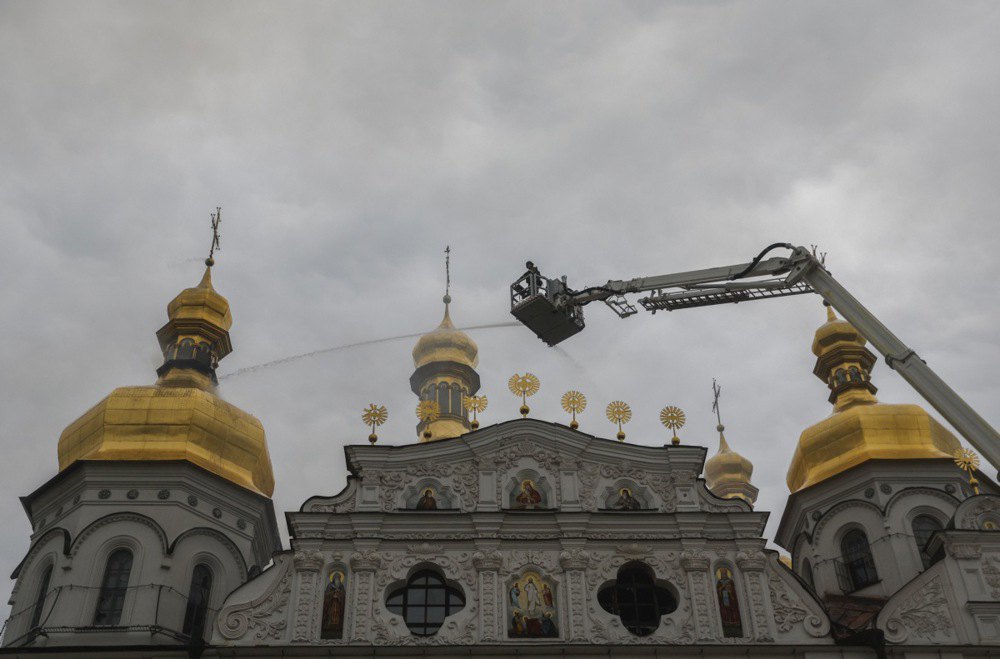
The enemy drone struck the altar section of St Stephen’s Chapel, causing flames to spread to the roof. The fire engulfed around 800 square metres. Complete destruction of the structure was prevented thanks to the swift response of firefighters. While the cathedral was still burning, museum staff, police officers and monks managed to rescue ancient icons. The blaze was extinguished at around 9 a.m. Fortunately, the fire did not reach the neighbouring Refectory Church — an authentic historic building featuring murals by Ivan Yizhakevych, created in the early twentieth century.
As Bishop Avraamiy, abbot of the Holy Dormition Kyiv Pechersk Lavra, wrote on his Facebook page:
“In the first hours following this emergency, we were unable to issue an official statement promptly. My full attention, along with that of the brethren, clergy, staff and emergency services, was focused on urgent measures to protect the holy site and ensure its safety. Our foremost priority was the emergency evacuation of sacred objects and liturgical items, including ancient icons, antimensia and other relics that represent not only ecclesiastical heritage but also national and universal human value.”
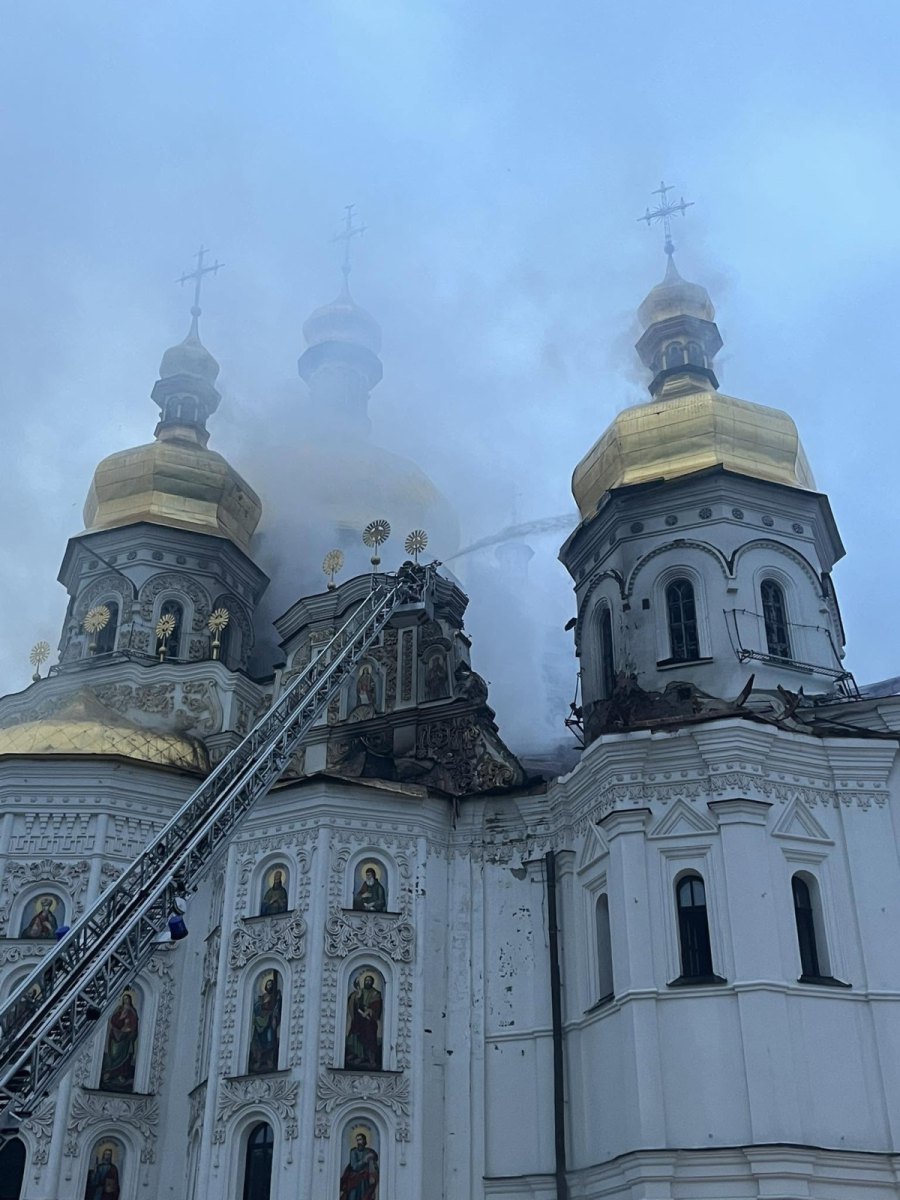
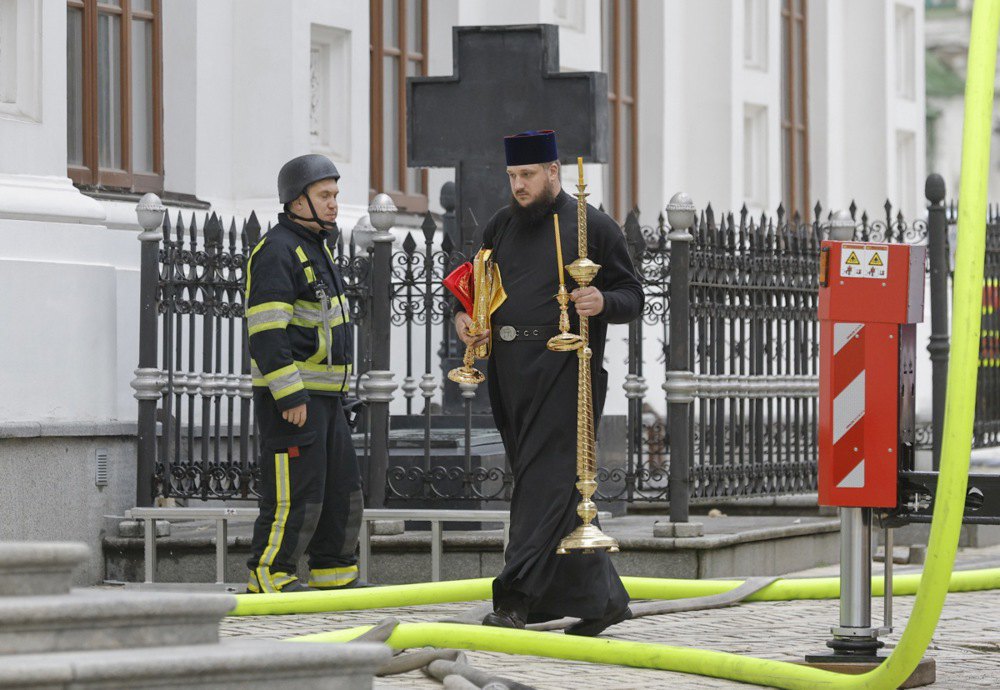
“Thanks to the coordinated efforts of the brethren, all those involved, and the dedicated work of rescue and fire services, it was possible to minimise risks to human life and preserve these sacred treasures. Efforts to deal with the aftermath of the attack are ongoing, while specialists continue to assess the damage and document all circumstances of the incident.”
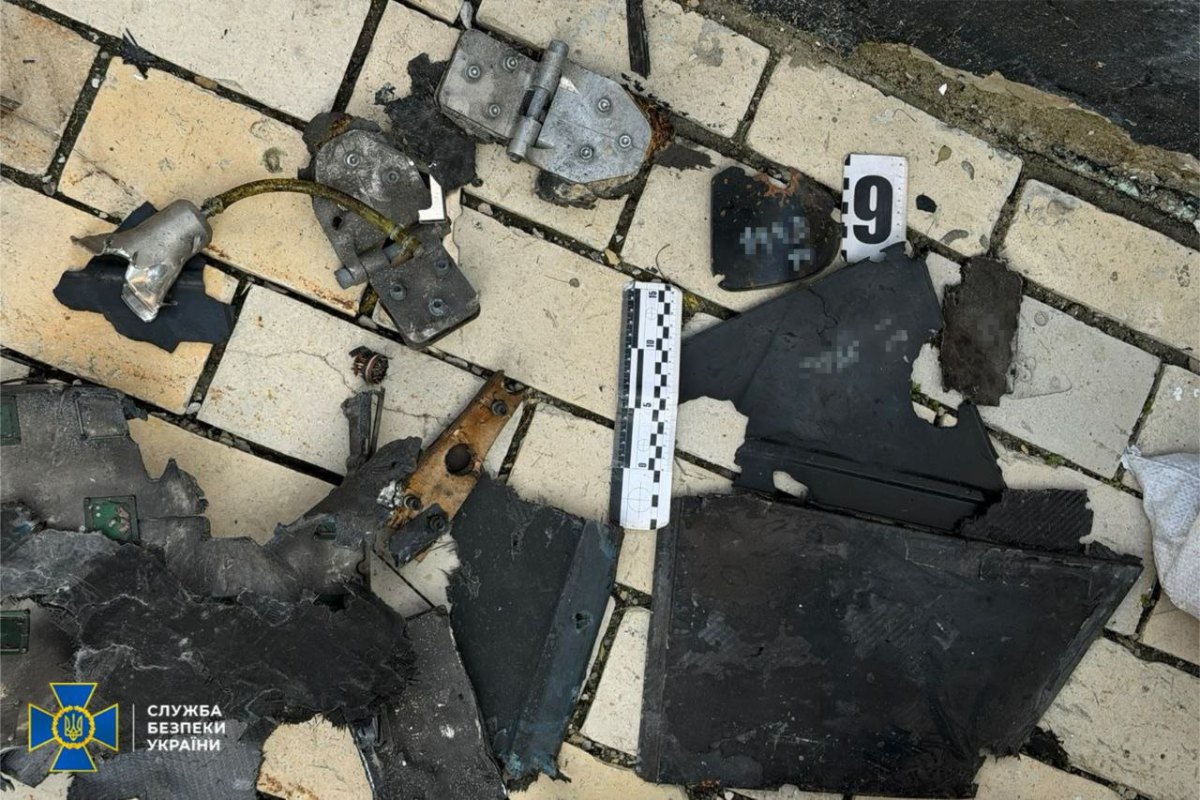
Russia’s Ministry of Defence responded in its usual fashion with false claims, alleging that drones had been assembled at the Dovzhenko Film Studio and that the Lavra had been struck by a missile from a Patriot air defence system. However, the Security Service of Ukraine presented documentary evidence showing that Kyiv Pechersk Lavra was in fact hit by a Geran-2 UAV — the Russian version of the Iranian-made Shahed loitering munition.
President Volodymyr Zelenskyy visited the site of the destruction at the Lavra and pledged a response to what he described as a barbaric attack. Culture Minister Tetiana Berezhna said the government was already working to secure funding for the cathedral’s restoration, including through the Cultural Heritage Fund and international partners. Meanwhile, French Foreign Minister Jean-Noël Barrot told reporters ahead of a meeting of the EU Foreign Affairs Council in Luxembourg: “For us French people, this would be equivalent to the bombing of Notre-Dame or the Basilica of Saint-Denis.”
At LB.ua’s request, Maksym Ostapenko, director of the Kyiv Pechersk Lavra Preserve, commented on the situation:
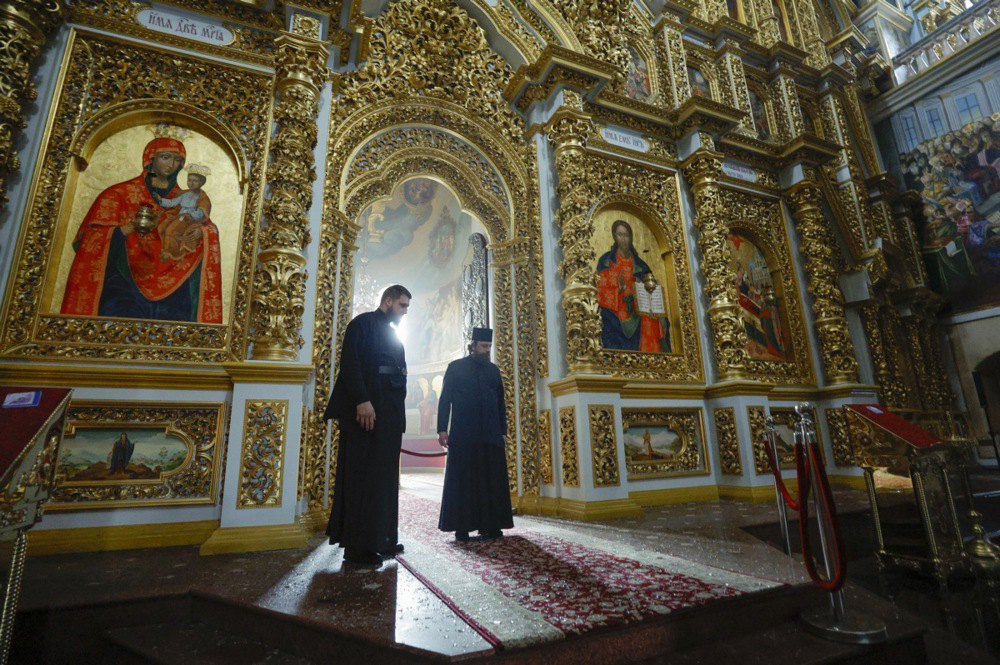
“I have repeatedly expressed my gratitude today to the State Emergency Service and the police, whose efforts prevented the fire from spreading. The flames never reached the interior of the cathedral, although several openings appeared through which the fire penetrated. This created an extremely dangerous situation because, had the iconostasis caught fire, extinguishing it would have been extraordinarily difficult, if not impossible. It is 25 metres high and richly decorated. This was an enormous challenge, and it was precisely the actions of the emergency services that prevented the worst-case scenario.
“All structural elements were cooled down and did not overheat. There was no collapse. That would have been the most catastrophic outcome. The blaze was extremely intense, and, as people say, both nature and the grace of God played a part. Almost the moment the fire broke through to the roof, a torrential downpour began and continued throughout the firefighting effort. The rain stopped only when it became clear that the blaze was under control. It felt like a true miracle of the Dormition Cathedral. I believe many faithful people see it that way.
“The cathedral housed major Orthodox relics on display, including the reliquary of Saint Stephen, engravings, icons and silver artefacts from the Kyiv Pechersk Lavra collections — truly unique exhibits dating from the sixteenth to the eighteenth centuries. All of them were successfully evacuated and are now safe.
“According to preliminary estimates, the total damage exceeds UAH 500 million, although assessments are still ongoing. The restoration will be highly complex and will require the involvement of numerous specialists to rebuild structural elements and restore the copper roof, much of which is gilded. In total, around five and a half kilograms of gold leaf were used on the Dormition Cathedral, covering its domes and parts of the roofing. A difficult and painstaking restoration effort now lies ahead to return the beauty of this unique monument, which has suffered destruction time and again throughout its history and has always risen again.”