







How the Russians are modernising their drones
Shahed-136 (Geran-2). The most recent strikes involving these drones took place in June 2026.
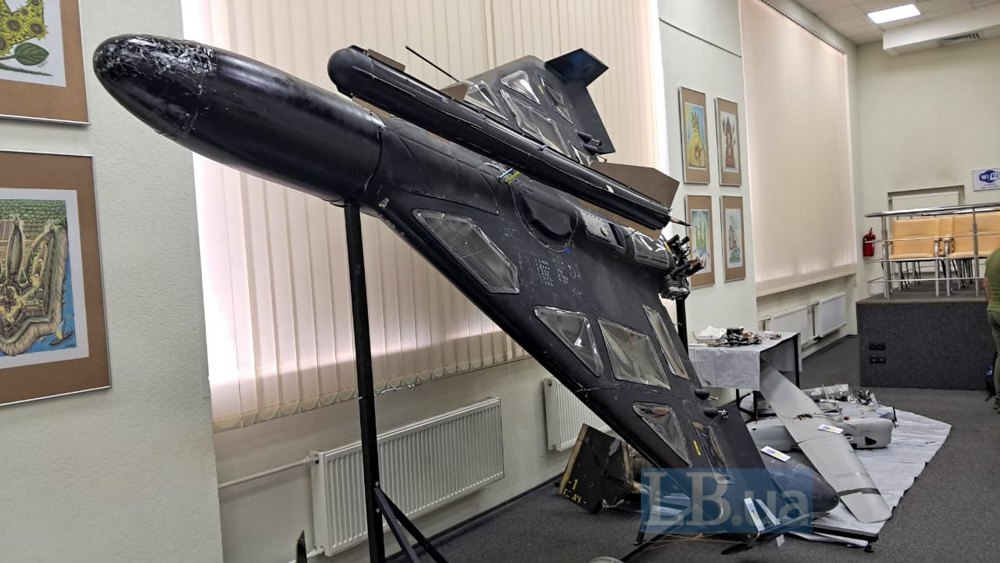
“The number of deployments in 2026 is increasing, culminating in strikes on a spent nuclear fuel storage facility on the night of 7 June,” noted Zaruba.
The first deployment was recorded in September 2022, while widespread use began in October–December of the same year. From July 2023, mass production was established at several facilities, with multiple variants subsequently developed.
Navigation and electronics. The manufacturer uses modern components, predominantly of American, Japanese, Taiwanese, German and Chinese origin. A gradual transition to Chinese-made components has been observed. From mid-2023, a four-element CRPA antenna was installed on board, while later variants featured 12- and 16-element antennas. Since 2026, models equipped with 4G modems have been recorded, using Ukrainian and foreign SIM cards to adjust flight routes in real time via mobile networks.
Additional equipment. Since early 2025, the following have been installed on board: two modems with SIM cards from different operators, mesh modems for transmitting information between units and enabling swarm operations, and Raspberry Pi microcomputers. Samples equipped with autonomous power supplies in the form of power banks, as well as video cameras, have also been documented, presumably for reconnaissance purposes and for transmitting information on the operation of air defence systems.
Warheads. In 2022, a penetrating high-explosive warhead was used. From mid-2023 onwards, a range of warhead types has been identified, including high-explosive fragmentation incendiary, high-explosive incendiary, high-explosive fragmentation thermobaric, and enhanced-power high-explosive fragmentation thermobaric variants. High-explosive fragmentation elements containing tungsten balls are also used to maximise casualties among personnel.
Geran-2 as a launch platform. In December 2025, fragments of a Geran-2 equipped with an R-60 missile and an APU-61 automatic launch device were discovered in the Chernihiv Region. The apparent purpose was to intercept Ukrainian aircraft and helicopters engaged in hunting Shaheds. The system was fitted with a Raspberry Pi microcomputer and a 16-element shielded antenna, likely of Chinese manufacture, but lacked a mesh modem.
“The use of such components is intended to complicate the identification of the aerial target, create a false impression of its combat capabilities, and exert psychological pressure on air defence forces and assets,” the colonel said.
A separate prototype has been equipped with the Verba man-portable air-defence missile system, featuring a mesh modem and a remote launch mechanism. Although the likelihood of successful deployment is currently assessed as low, Russian forces continue to work on its development.
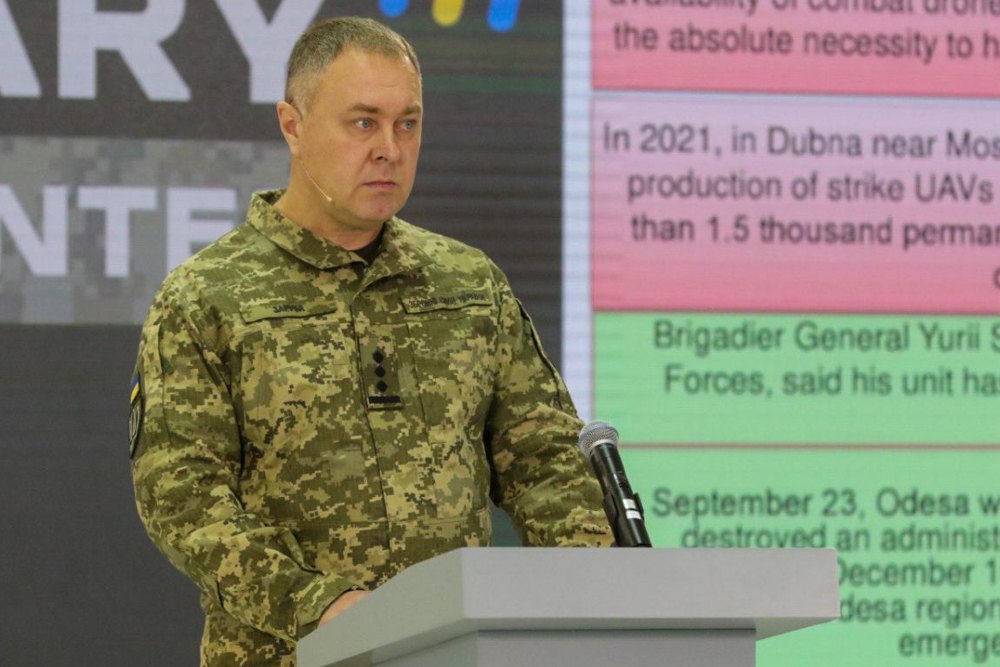
“This is yet another reason to remind the public not to touch the remains of drones or any suspicious objects found in the area. Even if they appear ordinary or are disguised, they may in fact be improvised explosive devices,” Colonel Oleksandr Zaruba noted.
The jet-powered Shahed (Geran-3)
Production began in April 2023, with its first combat deployment in January 2024. The design and component base are similar to those of the Geran-2, but it is fitted with a turbojet engine, enabling it to reach speeds of up to 550 km/h.
The aim of the modernisation is to complicate the work of air defence systems. The Geran-3 is a localised version of the Iranian Shahed-238 jet drone.
“The use of jet Shaheds in particular rose sharply in 2026. They are used to strike critical infrastructure targets in Ukraine,” added Zaruba.
The Geran-4 strike drone
A further development of the Shahed-type drones, featuring a more powerful engine and improved flight characteristics. The wing profile has been slightly modified. The installation of mesh modems is possible.
Analysis of the equipment has revealed no significant differences from the Geran-2. The possibility of integrating R-73-type air-to-air missiles is being considered.
“The use of the Geran-3 and Geran-4 indicates that the enemy is attempting to make drones faster, complicate the work of our air defence systems, and increase the effectiveness of target engagement,” noted the colonel.
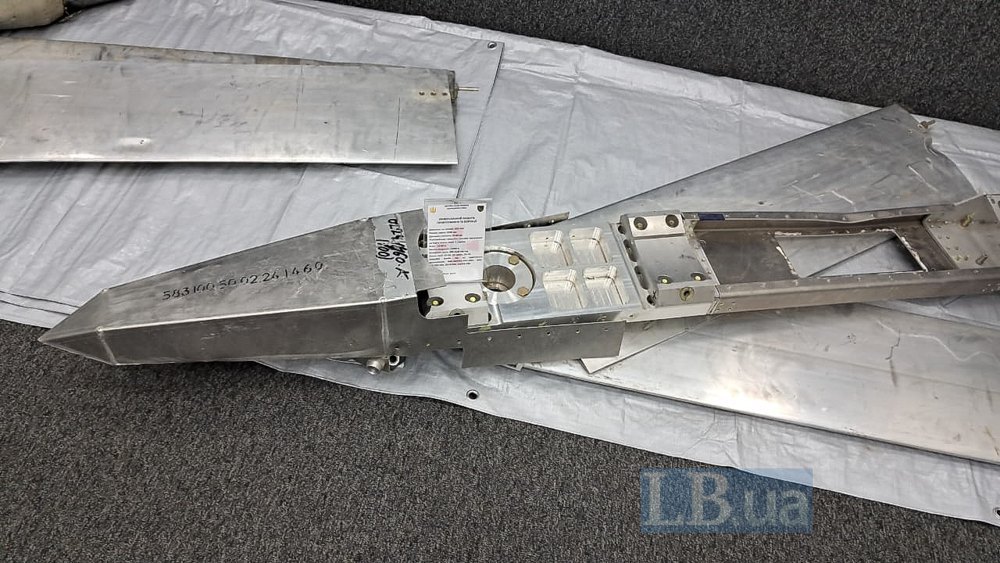
Geran-5
Found in a damaged condition. Built according to the aerodynamic design of a winged missile, it has an elongated fuselage. Speed — up to 600 km/h, warhead — 90 kg. The possibility of launching it from tactical aircraft is being developed, which will allow strikes to be carried out at a range of up to 1,000 km, effectively across the whole of Ukraine.
Electronics: 12-element CRPA antenna, controller, high-speed 3G/4G modems, barometric data collection module. It is possible to install two video cameras for real-time data transmission — no camera remnants were found in the damaged sample.
“The appearance of the Geran-5 indicates a further escalation of the technological standoff and the need to adapt the air defence systems we use to such high-speed, small-sized targets,” explained Oleksandr Zaruba.
V2U strike drone
It was deployed on 28 October 2024; prior to this, it had not been encountered. Subsequently, instances of its use became more frequent, particularly in the Sumy Region.
It was used in conjunction with the ZALA reconnaissance drone, which performed target designation and relay functions. After the ZALA was shot down, both V2Us crashed — indicating vulnerability to electronic warfare measures. Equipped with artificial intelligence components for terminal guidance.
“This drone contains no expensive components. Most components are dual-use items. This model can be rapidly upgraded and scaled up for production,” says the colonel.
It is likely that Russia will deploy these drones in swarms.
“Radar detection is also difficult, as it is quite small in size and therefore has a small radar cross-section, making it hard to detect by radar,” noted Zaruba.
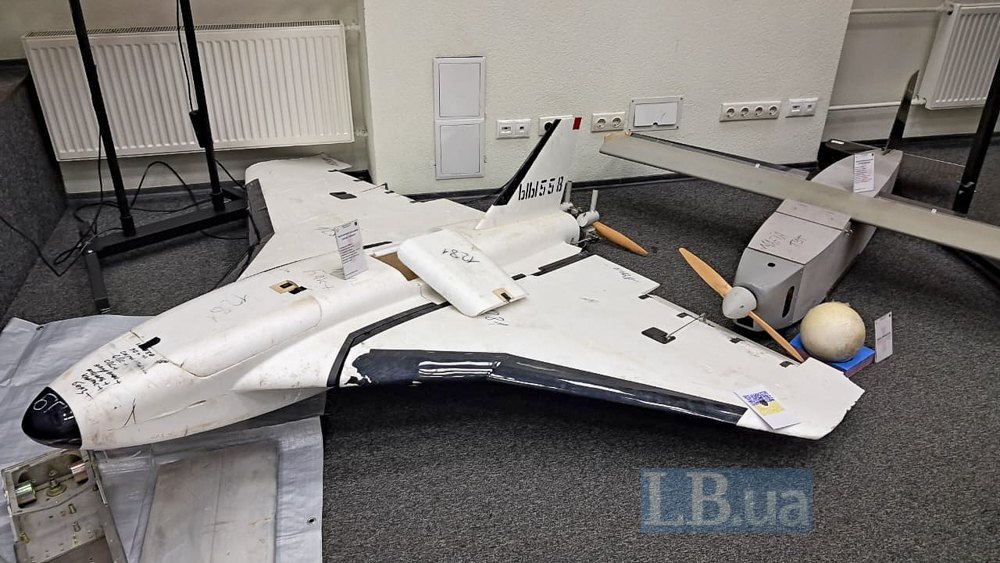
The Gerbera multi-purpose drone
Primarily used as a decoy, but capable of performing optical and electronic reconnaissance, detecting the positions of electronic warfare assets, and carrying out attacks as a kamikaze drone. The warhead is a high-explosive fragmentation type, weighing up to 2.5 kg. It is equipped with Chinese-made mesh modems.
Parodiya drone
A simple drone made of plywood and cheap materials, used as a decoy. It may contain a Lunnberg lens, which allows it to mimic larger targets — such as Shahed or other drones — on air defence radar screens. Some models are equipped with network video cameras and modems for reconnaissance.
Missile arsenal and aerial bombs
Iskander-M missile
Three areas of modernisation: improving resistance to air defence systems (primarily Patriot), increasing range, and scaling up production under sanctions.
An updated 9B899 module has been installed, which fires decoys in the terminal phase that mimic the missile’s signature. On-board systems have been adapted to detect radar blind spots.
New versions after 2023–2024 feature faster processors for target recognition and enhanced optical correction. A claimed range of up to 1,000 km is achieved through new propellant mixtures and a larger engine.
Seven warhead variants, including penetrator and concrete-piercing types.
“The enemy is using them against airfields to destroy tactical aircraft. They are particularly targeting F-16s. The Iskander-M has evolved into a complex quasi-ballistic system that learns to counter air defence systems virtually in real time during combat operations,” notes Alexander Zaruba.
Technical solutions from North Korean KN-23 missiles are being integrated. Production stands at 60–70 units per month; the proportion of Russian electronics has risen to 90%, though Western components are still present.
“Analysis of the remains of downed missiles indicates that the modernisation is systematic in nature. Russia has begun equipping missiles with homing heads and electronic countermeasure protection units, enabling them to receive satellite signals even whilst electronic warfare systems are in operation,” explained the colonel.
X-101
A fairly old missile, but it has also undergone a major upgrade. Specifically, its radar-absorbing coating has been updated to reduce its detectability. An on-board active defence system has been installed, capable of launching thermal decoys and dipole reflectors (observed over Kyiv).
It has a redundant guidance system comprising inertial, satellite and optical correction with digital terrain imaging. The Otblesk-U system scans the terrain prior to impact, enhancing accuracy.
Wreckage from 2024–2025 shows a shift from civilian chips to specialised components sourced via Asian intermediaries.
The warhead has been increased from 450 to ~800 kg by reducing the fuel tank; it is possible to install a second warhead with submunitions that detonate at an altitude of 100–200 m. Platyzol explosive is used, which is 30–40% more powerful than hexogen. Production stands at 40–50 units per month.
“And, judging by the latest strikes, it can be said that they are effectively attacking with missiles manufactured several weeks ago,” noted Zaruba.
Air bombs with UMPK
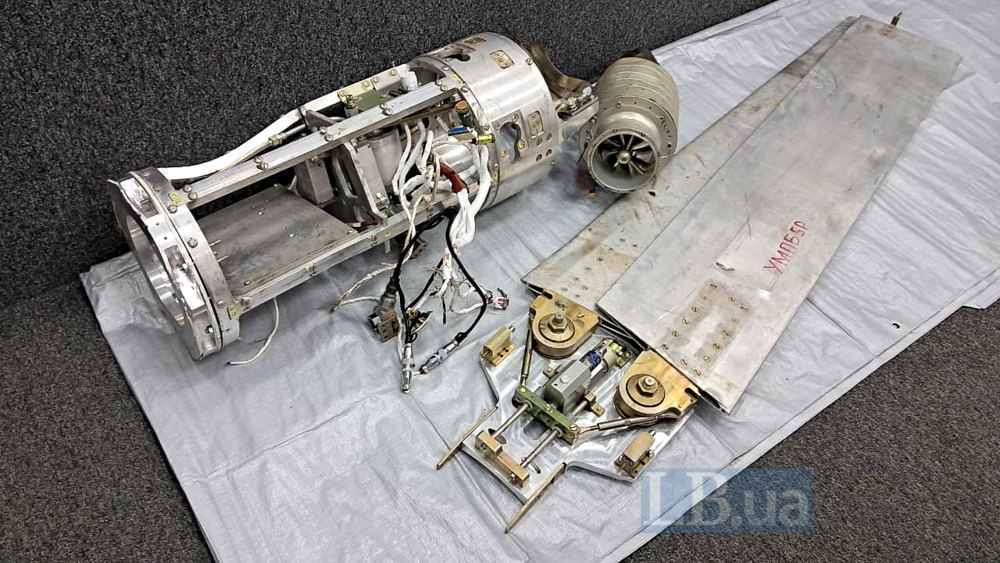
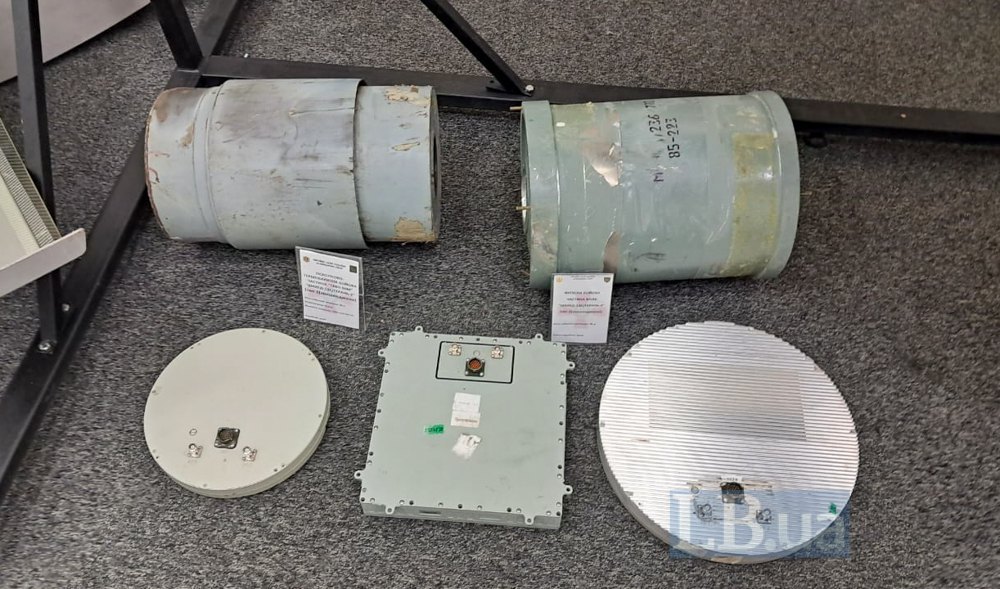
The widespread use of glide modules enables strikes to be carried out at ranges of up to 120 km without the aircraft entering the air defence zone.
Since May 2025, the configuration of the UMPK-PD has been updated: the antennas have been replaced from 8-channel to 12-channel. In addition to high-explosive aerial bombs, the use of cluster bombs has also been recorded.
“They are particularly dangerous for everyone, especially the civilian population,” noted Zaruba.
A separate category is the unified multi-role guided munition (UMPB): an autonomous airborne munition with its own wings, navigation system and engine. The carriers are the Su-34, Su-30SM, Su-35, Su-24, as well as the S-70 Myslyvets drone. The range is up to 100 km when dropped from an altitude of 12–15 km.
“The range depends on the calibre of the high-explosive aerial bomb and the drop altitude. If we trace the dynamics of modernisation, 2022 will see the mass introduction of simple correction modules, 2023 will bring improvements to navigation and guidance modules, and 2024–2025 will see the introduction of modular technologies, increased autonomy and resistance to electronic warfare,” the colonel explained.
Up to 80–90% of the critical microelectronics in Russian weapons are manufactured in the US, Taiwan, Japan, Switzerland, the Netherlands and Germany. These are predominantly dual-use components procured through a network of intermediaries. Despite efforts to disrupt supply chains, several new ones emerge to replace each one that is cut off, the colonel notes.
“The enemy relies on technological adaptability; it develops and optimises its designs to increase accuracy and range, using all available means to do so,” concluded Oleksandr Zaruba.