





On the transformation of Slavic studies
What stereotypes exist in the academic world regarding Ukraine?
I would say that the issue is less about stereotypes and more about gaps in knowledge — things that people simply do not know.
I do not think there are many stereotypes within academia. Rather, there has been a certain one-dimensionality in what has been studied. Today, however, we are witnessing a reorientation. Historians who were previously interested primarily in Russia are broadening the scope of their research.
If we look at the academic environment in the Czech Republic, it has traditionally been clearly divided between Ukrainianists and Russianists. This does not mean that there were inaccurate interpretations, but the Ukrainian context was often absent. That is now beginning to change.
Ukrainianists generally have a strong knowledge of Russian history, whereas Russianists often need a deeper understanding of the nuances of Ukrainian history, which they may know only superficially. That perspective is now evolving.
Take, for example, the gaps in our knowledge. Recently, together with a fellow historian, I have been particularly interested in the Holodomor of 1932–1933. Not so much in the broader historical questions, but in how Europe reacted to this catastrophe, particularly in what was then Czechoslovakia — from official circles to the general public. We have also examined how Europe as a whole perceived it and what the overall response was.
This is a fascinating subject because it concerns the recognition of an unimaginable catastrophe in which millions of people died from starvation. I examined newspapers from that period to see how the Holodomor was reported and how it was discussed in the public sphere.
If you delve into those newspapers, you find numerous testimonies from people who managed to escape. Emigrants possessed detailed information and worked to disseminate it, while journalists published their accounts. Yet by 1933, the subject gradually faded from public attention.
Ukraine has been shrouded in silence on more than one occasion throughout history. It has often remained outside the focus of international attention. This must change, and this knowledge should be brought into the public sphere. The same applies to many other important chapters of history.
How is Slavic studies currently being re-examined in the Czech Republic? What has changed during Russia’s full-scale war against Ukraine?
The imbalance between Russian studies and Ukrainian studies is gradually being redressed. I can see that the greater the emphasis placed on strengthening Ukrainian studies, the more progress we make — not only at the level of individual scholars and initiatives, but also institutionally.
Last year, Charles University joined the Global Coalition for Ukrainian Studies, an international initiative under the patronage of Olena Zelenska. This is one way of providing official institutional support for the field.
And, of course, this is not solely about academic education. It is equally important that we make Ukrainian culture and knowledge of Ukrainian literature, history and science part of our everyday lives. Ukraine should remain present in our minds not only while the war continues, but long afterwards as well.
This is a matter of great importance to me. If we look at the Czech educational environment, particularly secondary education, there has traditionally been a considerable focus on Russian history and literature. Almost everyone who has completed their schooling knows something about these subjects. By contrast, there is very little teaching on the history of Ukraine and almost none on Ukrainian literature.
I experienced this myself. When I entered university in the 1990s, I knew almost nothing about Ukraine, whereas I had already read a great deal of Russian literature. It was not universal, but it was widespread enough to form part of a general education.
We need to ensure that, through books, theatre and educational programmes, Ukraine becomes part of our very being. I use this metaphor because, around ten years ago, we hosted the Ukrainian poet Anna Malyhon. She published a book entitled Blood Transfusion, and that image has stayed with me ever since.
I believe Ukraine must become part of our very being so that we do not develop a sense of distance or rejection towards it. Russian culture can sometimes feel familiar to us, almost like home. Ukrainian culture, by contrast, remains unfamiliar, and people often fear what they do not know. Things are changing now, but the process is not always easy.
On broadening our perspective
What does the decolonisation of Slavic studies entail? Is it a change in curricula, methodology or mindset?
This remains a matter of debate. One important aspect is not simply to redress the imbalance between Russian and Ukrainian studies, but also to pay greater attention to other Slavic peoples, languages and cultures.
For example, it is important to know more about Belarusian culture and history, yet almost nothing about them is known in the wider public sphere. The same applies to the cultures of Southern Europe, the South Slavs and, more broadly, to a variety of languages, including smaller and minority languages.
I believe this helps foster empathy towards the unfamiliar and the unknown. In that sense, it becomes less important which specific culture or literature we focus on. What matters is that we pay attention to those parts of Europe that remain little known.
Fear arises from ignorance, and it is precisely in such circumstances that propaganda is most effective. It feeds on what people do not know and on the fear that accompanies it.
So, is another key aspect of decolonisation the willingness to recognise those who were previously overlooked?
Yes. And it does not matter whether these peoples once lived under an empire. Of course, it is important to study imperial structures as a historical phenomenon, but it is equally important to explore other experiences, because they always enrich our understanding by offering different perspectives.
Let me give an example. The international book fair The World of Books took place recently, bringing together six Ukrainian poets for presentations and discussions. Among them was Kateryna Kalytko, a Ukrainian poet and translator of South Slavic literature who is also interested in the literature of Bosnia and Herzegovina.
During one discussion, someone asked about the experience of war, drawing comparisons between the wars in the former Yugoslavia and the current war in Ukraine. She pointed out that, at first glance, war may appear to be the same evil everywhere, but in reality this is not the case. These are different wars and different experiences.
This diversity of experience is extremely important. It is essential for academic research because it generates ideas and perspectives that are then taken up by journalists, educators and cultural figures. In other words, everything is interconnected.
How would you describe the profile of a modern student of Ukrainian studies?
A large proportion are Ukrainians. Some left Ukraine after the full-scale invasion, while others are children of parents who settled here before the war. They want to learn more about their country’s culture.
There is also a group of students whose families arrived when they were around 10 or 12 years old. They attended Czech schools, speak Czech almost as a second native language, and this background has often sparked an interest in Ukrainian studies.
From time to time, we also welcome Slovak and Polish students, as well as some Czechs. Their motivations vary. Sometimes it is a matter of chance, sometimes the influence of friends, and sometimes they have already developed a connection with Ukraine, perhaps through work with particular organisations.
Our students are not only recent school leavers. We also have adults who support Ukraine and feel the need to gain a broader and deeper understanding of the country.
Following the full-scale invasion, we even had students from Russia who wanted to learn Ukrainian.
On translations from Ukrainian into Czech
Another significant area you’re involved in is translation. What do Czech readers like best?
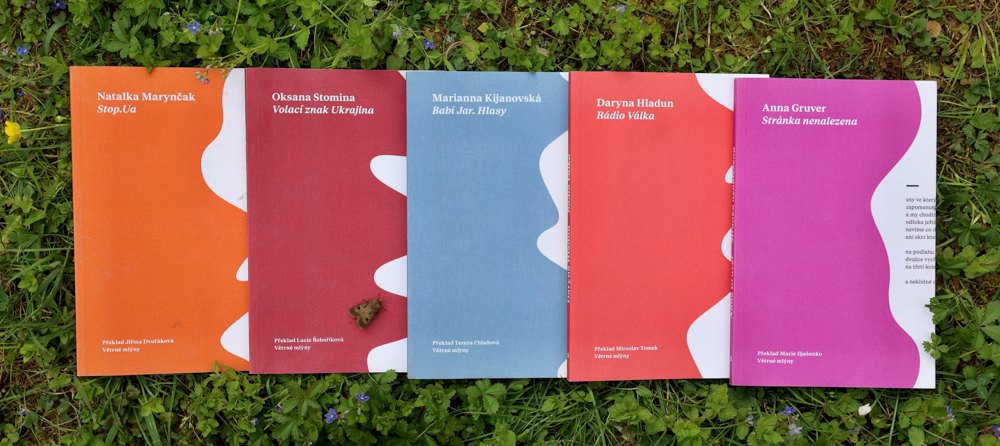
That’s a very interesting topic. I can focus on the situation over the last five years. The book that sold out (and we’re going to do a reprint) is a translation of Valerian Pidmohylnyy’s novel The City. I think this is linked to the interest in Ukraine, of course. And that interest isn’t waning.
We also translated, as an experiment, Maksym Dupeshko’s novel The Story Worth an Entire Apple Orchard. It is a novel set in Chernivtsi in Bukovyna, which describes various historical periods — the Austrian, Romanian, Soviet, and then the period of independence.
If you look at platforms where amateur reviewers and ordinary readers write micro-reviews, there were plenty of comments along the lines of: “Oh, how interesting, Bukovyna — we knew almost nothing about that.”
A gap, as you say. But do you think it might be the case that interest in Ukraine will continue to be driven solely by the war?
And that is precisely why we need books like this. Yes, we need to show Kyiv in the 1920s, we need to show Bukovyna from the 1930s to the 1940s.
Another book that sold very well is Taras Prokhasko’s The UnSimple. A novel about the Carpathians, which he wrote a long time ago. We thought that perhaps it was the Carpathians themselves that sparked interest, because Transcarpathia was once part of Czechoslovakia, and so there is a certain historical connection.
But I think it’s important to show Ukraine not as a monolith. It’s important to highlight regional characteristics. We currently have an initiative within the Global Coalition, which I’ve already mentioned: raising awareness about the Crimean Tatars. And colleagues will be coming to us to talk about Crimean Tatar culture. The aim is to create a comprehensive picture, featuring different regions.
Incidentally, my students recently organised a literary evening where they showcased the regions they come from. They called this evening From West to East. Transcarpathia, the Sumy Region, Odesa, Kyiv were represented, and they concluded with the Donbas. They briefly described the regions, found or selected authors from there and translated their texts.
The intention was to show Ukraine’s regional diversity, the fact that it is very multi-layered and that every region has its own history and dialects. They also touched on the language issue, choosing texts that reflect this complex situation.
This is also important because we have a lot in common with Ukraine, given that there was a significant Ukrainian emigration here. It is also one way of explaining who these people were and why they came. We had our own first republic, whereas they did not; they did not succeed, although they dreamed of it and wanted it. But we succeeded, and this makes the importance of what we have achieved all the more apparent.
On the history of Ukrainian intellectual emigration in the Czech Republic
The Ukrainian Economic Academy in Poděbrady, which existed in the 1920s, is a gap in the historical record that you have also researched. What can be said about the role of the Ukrainian intellectual emigration that arrived here at that time?
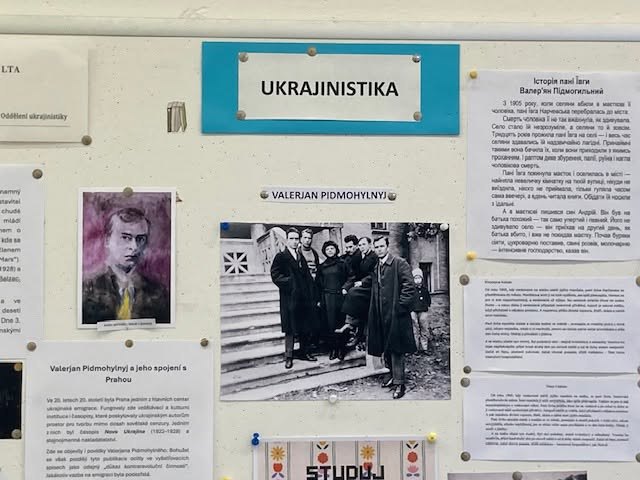
We need to look at this period from various perspectives — including how they built the state, culture and educational institutions. Because there was not just the Academy here: there was the Ukrainian Free University, the Ukrainian Gymnasium, the Studio of Plastic Arts, and the Mykhaylo Drahomanov Pedagogical Institute.
Dozens of different specialised communities, associations and organisations were active here. If I am not mistaken, there were around fifty of them in Poděbrady alone.
And the Czech state provided them with enormous support.
Yes, but they funded much of it themselves, although a significant portion was supported by the Czech government. And this is very important from the perspective of that time: there was an opportunity to develop knowledge and culture, and to build their own elite.
Secondly, studying this period and spreading knowledge about it is also very important for modern Ukrainians. Not in the sense of direct parallels with today’s situation, but it can serve as an inspiring example of the energy and, to some extent, even the optimism—which I myself do not fully understand—with which these people were able to create something so large-scale and significant back then.
I particularly like the example of the Academy: they started from scratch — a few professors arrived, the team gradually grew, there was financial support, but at first they had practically nothing. Incidentally, one of my students wrote her dissertation and noted that at the start they had only a few rooms in a hotel in Poděbrady, a single typewriter, two desks and no textbooks.
But they built a structured educational institution from scratch. There was a clear structure of faculties, departments, seminars, classrooms and laboratories. And they managed to do this between roughly 1922 and 1928–1929, when the process had already begun to wind down.
To me, this is absolutely astonishing. They wrote their own textbooks and set up their own publishing house. And there was professional, technical education — they developed a system so robust that the graduates posed serious competition to Czech engineers.
But that is only one part of the story. Alongside this, there was an extraordinarily powerful cultural movement centred on the Poděbrady Academy. Students were educated not only as specialists, but also as conscious individuals who knew their culture and language and were able to pass them on.
It was truly an incredible environment. Everything existed there: theatres, dance groups, bandura players (they even made banduras), ballet, art groups, music ensembles, sport, Plast members.
I always tell students: it was not an easy situation, not an optimistic one. It was a depressing reality. They hadn’t won the struggle for independence; they’d left behind parts of their families whom they’d never see again. They knew they wouldn’t return. People were losing their homes, families were torn apart—a real tragedy. But despite all that, they managed to create something incredible.
This is the Ukrainian perspective today, and at the same time the Czech one. It is also worth remembering that our young state was able to help back then: it is well known that we supported emigrants from the former Russian Empire. But it is less well known that during the famine of 1921–1923, the Czechs were among the initiators of aid for both Russians and Ukrainians. At that time, a major conference was even held in Geneva on the initiative of Masaryk and Beneš, aimed at consolidating international efforts to help the starving.
And when you hear people today saying ‘only for our own’, I think it is worth reminding them: look, we were able to do it back then. And the republic had far fewer resources than we have now, but we helped back then.
Now we live in relative prosperity: there are socially vulnerable groups, but overall the majority of society lives well. No one is starving; we have a state, a language, the opportunity to travel and relax. We can do a lot. That is our inspiration.
Who else from the Ukrainian diaspora do you think remains under-researched?
In recent years, many Ukrainian scholars have been coming here to research and analyse materials, but there is still a great deal that needs to be done.
There are also things I’d like to research myself. Everyone is familiar with Olena Teliha — I’m translating her poems and want to publish a complete collection. But few people are researching her journey towards Ukrainian identity.
Initially, she was Russian-speaking and maintained contact with Russian émigrés, as her family (despite her father being the rector of the Ukrainian Academy of Economics) was Russian-speaking. And she gradually came to embrace a Ukrainian identity — this is clearly evident from her correspondence, as well as in Ulas Samchuk’s memoirs.
I am particularly interested in this ‘crystallisation’ of identity — not just linguistic, but cultural as well. This applies not only to her: Yevhen Malanyuk also comes from this cohort of poets who began as Russian-speaking intellectuals. Had it not been for the 1917 revolution, many of them would likely have become Russian poets.
I think that, to some extent, something similar is happening now in the Ukrainian context. Many people grew up in a Russian cultural environment, and this is also important to explore.
Many of them offer very interesting emotional accounts: for example, they describe how the country is beautiful, but they do not yet know their own language. This is also present in Teliha’s work. In a late letter to Dmytro Dontsov from the late 1920s or early 1930s, she writes:
“I do not yet know my native Ukrainian language well.” This is a paradox, because her native language was Russian, but emotionally she had already identified herself with Ukrainian, even though she did not yet fully master it.
This identity crisis is very interesting, as it highlights the tension between cultural experience and linguistic affiliation. And I know people from eastern Ukraine who describe a similar experience—not just a linguistic crisis, but a broader identity crisis. They can learn the language, but what was culturally ‘their own’ often remains a gap, an empty space that needs to be filled.
Ukrainian studies in today’s Europe
What is it like to be a Ukrainian studies scholar today?
My colleague, the historian Stanislav Tumis, is leading a project in which the final stage of a major study will take place in June, involving researchers from Paris, Warsaw, Kyiv and other cities. We have been researching Ukrainian studies centres and scholars at various universities across Europe.
We covered Polish, Slovak and Hungarian universities (although Ukrainian studies are less prominent there), as well as Italian, French, German and Austrian universities. It was a broad overview of the state of Ukrainian studies in Europe.
We analysed whether Ukrainian studies exist as separate departments, whether they are integrated within broader Eastern European studies, whether there are separate courses, which specific topics are being researched, what challenges students face, and which universities have fully-fledged departments of Ukrainian studies, and where it is represented only in the form of seminars within other departments.
What struck you most about this research?
The difference. The huge difference between countries. There are countries where there is almost nothing, where even now Ukrainian studies are in a precarious position, and countries where it is actively developing, such as the Czech Republic; there are Ukrainian studies in Poland, which is also natural.
At the same time, there is a noticeable difference, for example, between Germany and Italy. In Italy, Ukrainian studies exist, albeit not on a large scale, but they are developing nonetheless. Ukrainian classics are being translated there (it is generally interesting to see exactly which Ukrainian texts are being translated in different countries).
Books are published in Germany, but Ukrainian studies there is not so straightforward; the habit of viewing things through a Russian lens persists there to this day. I cannot speak about this in detail, as I am not a specialist in the field, but that is what I have observed.
What other interesting international projects are you implementing?
I’ll tell you about one interesting international project led by Yaryna Tsymbal, a literary scholar.
Maik Yohansen wrote the novel Yugurta: A Story of Old Kharkiv — a text about pre-revolutionary Kharkiv. After his arrest, the novel disappeared: although during interrogations Yohansen claimed the work had been published, the issue of the magazine in which it was due to appear did not contain the text. It seemed the novel was lost forever.
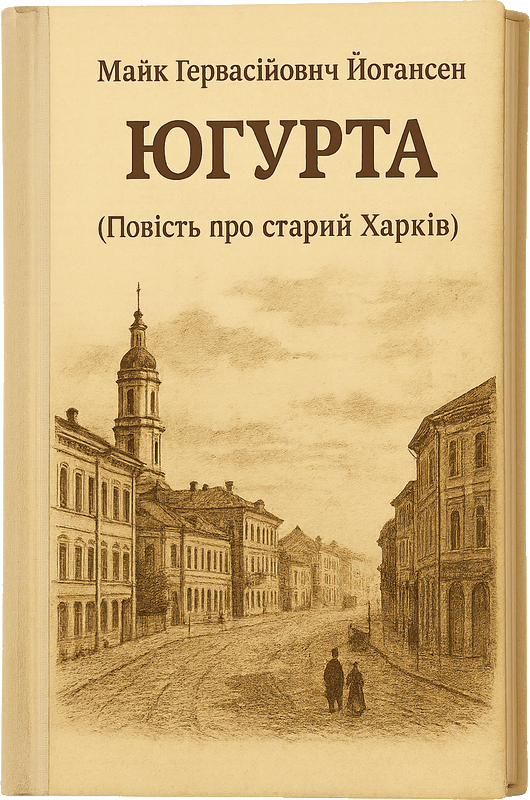
But an unexpected lead turned up in Moscow: the Polish translator Paweł Zienkiewicz, who translated Ukrainian authors into Russian in the 1920s, had left a manuscript of the Russian translation of this novel in his archives. It was discovered and handed over to researchers in Kyiv. At that point, Yaryna Tsymbal, who is very familiar with Yohansen’s style and language, proposed reconstructing the Ukrainian text based on this Russian translation.
Now this reconstructed text is being translated into various languages: I am translating it into Czech, others into Polish and Belarusian, and there are also translations into German and Swedish; a Dutch translator has also joined in. Last year we had a translation residency in Poland, this year in Sweden. We have already translated about half of the novel.
What impressed you about it?
I was struck above all by the extraordinarily vivid portrayal of pre-revolutionary Kharkiv. The characters are very vivid and distinctive, and it is also, to a large extent, an autobiographical text. The translation process itself is also very interesting: we cross-check the described realities with newspapers of the time, and Yaryna finds confirmation that some characters had real-life prototypes. It is a work of fiction, but it conveys the atmosphere and events of that time very well.
Yohansen wrote the novel in 1935, so there is a certain sense of self-censorship in it; some things are presented from the ‘correct’ perspective. But at the same time, the text features beautiful language and descriptions of the city and the characters.