






On individual and state cultural diplomacy
Mr Andrey, from my experience of speaking with journalists across Europe, your surname is often the first — or the only — Ukrainian author’s name they recognise. Do you feel a greater sense of responsibility now that you have become such a prominent and one of the few truly well-known voices from Ukraine? Has this affected the way you speak to foreign audiences in any way?
The first two years of the full-scale war passed in a rush, with the realisation that the only positive mission I could undertake was to speak constantly and explain what was happening in Ukraine. I explained the roots of this evil and the history of relations between Russia and Ukraine, including the campaign against Ukrainian identity that Peter I began in 1720, 11 years after the Battle of Poltava, and much more.
During this time, I have written hundreds of articles and essays that have been published around the world. I realise that this carries a great responsibility. One consequence is that it sometimes leads to self-censorship. In other words, I try not to speak or write about negative developments that occur from time to time and surprise everyone, including me. I mean the Mindich case, other cases of corruption, and similar issues. Others, including foreign journalists, focus on these matters.
And if you are asked about them, do you refuse to comment?
No, if I am asked, I comment. After all, I remain an independent person and always say what I think. Many people do not like this, and from time to time I receive hate because of it.
Apart from these cases, how have the topics or messages you have raised or communicated through foreign media changed during the full-scale war?
During this period, the situation in the world and around Ukraine has changed rapidly. At first, people did not understand what was happening or why. Over the course of a year or so, those who wanted to understand went through a kind of crash course in Ukrainian history and contemporary Ukrainian life.
During this time, many people became enthusiastic supporters of Ukraine and began mobilising others, setting up funds and civil society organisations, and negotiating with hospitals and other institutions to provide assistance.
A parallel world of support for Ukraine, separate from politics, emerged. These were not necessarily intellectuals. I met hundreds of pensioners who had once been engineers or, for example, worked in ports. They were helping to equip and dispatch lorries carrying aid from various countries to Kyiv.
Then came a period when support from politicians and governments became more active. The situation now is that the energy of foreign civil society has largely been exhausted; raising money for Ukraine has become extremely difficult. At the same time, politicians increasingly understand that if Ukraine is not supported, the war could eventually reach Western Europe.
And who is currently more active in promoting Ukraine’s interests: activists, civil society or the state?
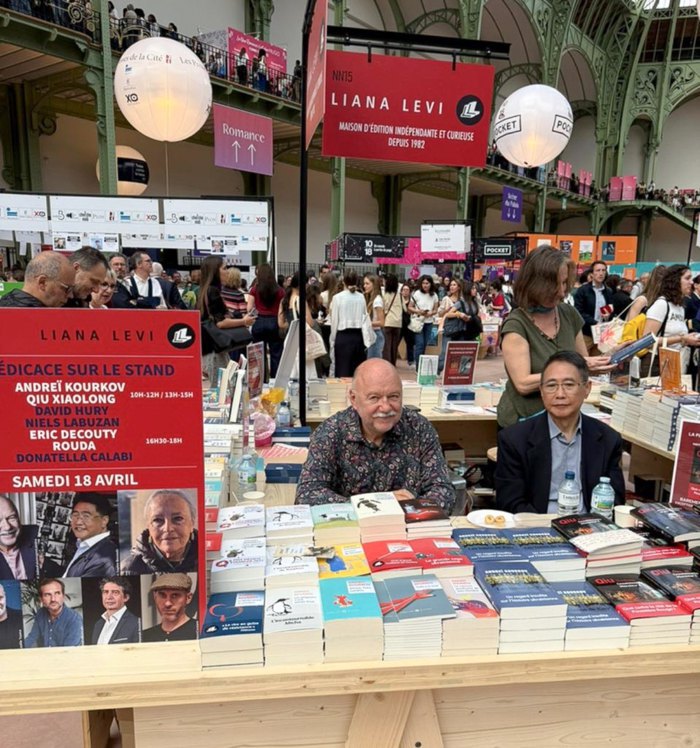
It seems to me that the Ministry of Foreign Affairs supports initiatives launched by independent representatives of the cultural sector.
Incidentally, they organise not only events for foreign audiences, but also meetings between our writers and Ukrainian communities abroad, as well as refugees. For example, in Rotterdam, the local authorities provided premises for a Ukrainian community centre, which has become something of a social hub. People gather there, and it often turns into a form of group therapy. After all, being a refugee or an internally displaced person is a serious trauma.
I can see active support from Ukrainian embassies and the diplomatic corps.
I have a trip to Brazil coming up. I received an invitation from my foreign publisher, but I was also approached by the Ukrainian Institute, which has become a co-organiser of the visit.
What is missing from state policy when it comes to promoting Ukrainian culture?
If we look back, until 2017 Ukraine had no cultural policy aimed at an international audience. In other words, we had little interest in presenting ourselves to the world; it simply was not a priority. By “we”, I mean the government and Ukraine’s political class.
Since 2017, however, the situation has changed. The Ukrainian Institute, the Book Institute, the State Film Agency and the Ukrainian Cultural Foundation were established, and more systematic work began. Before that, those who travelled abroad and represented Ukraine were generally people who had already gained recognition and been invited by foreign organisations.
Kyiv never sent a delegation of Ukrainian writers to the Frankfurt Book Fair on its own initiative until the Book Institute was established. That is happening now, although, of course, under the shadow of the war.
Today, every appearance by Ukrainians in the West is often perceived as an opportunity to talk about the war. For some audiences, this is already leading to a degree of fatigue and declining interest. However, this is relatively easy to address. Translations of Ukrainian books that are not centred on the war are already appearing. This does not mean that writers will stop talking about the war, but we also need to demonstrate that we are capable of talking about life beyond it.
In fact, Ukrainian culture now occupies a normal place within the cultural landscape of many countries and could aspire to an even larger role. This was not the case before 2017, or even before 2022. The war has, paradoxically, helped bring about this change.
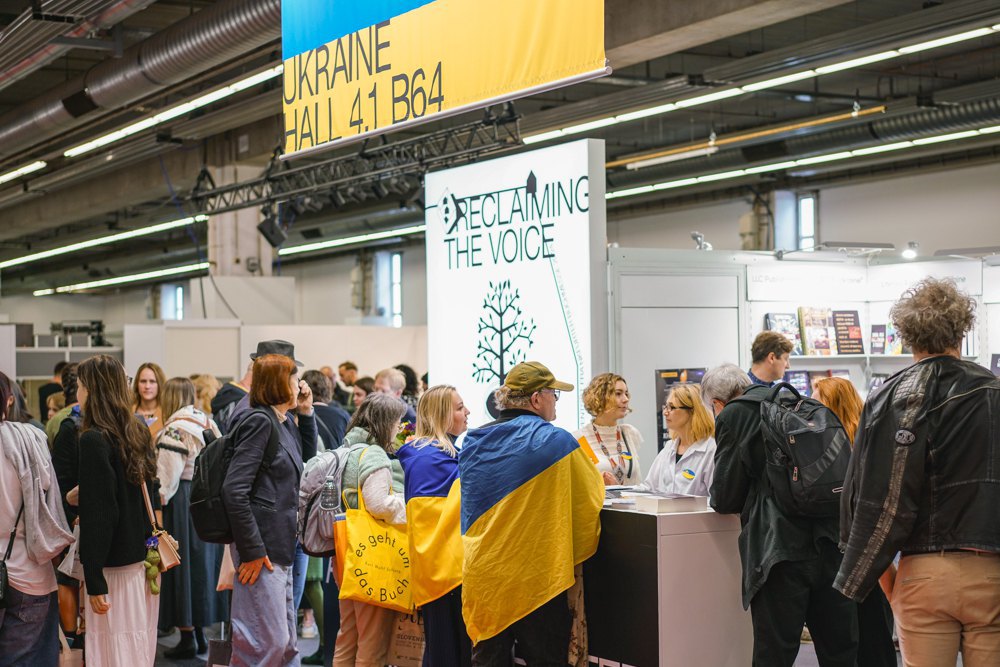
One of your most successful works abroad is Grey Bees, a novel about the period preceding the full-scale invasion. Do foreign audiences now understand that all of this is part of one long war?
In fact, there are still some people who view it as two separate conflicts. However, they are in the minority.
Those who are interested in Ukraine and follow current events understand that it all began with the annexation of Crimea and the attempt to seize Donbas in 2014. Sometimes I have to remind audiences of this; from time to time I deliberately include it in my talks so that people can connect these periods and see them as part of the same story.
In other words, there has not been a single moment of peace since 2014, and children born since then have not lived a single day in a peaceful Ukraine.
Have you noticed a decline in interest in Ukraine?
When it comes to books, interest in literature about the war in Ukraine peaked in 2022 and 2023. Since 2024, that interest has declined sharply. Publishers are no longer actively seeking books about the war in Ukraine.
There are countries where interest emerged later and faded more quickly. Spain, Portugal and Greece are examples of this.
There are also countries where interest has remained, but the focus has shifted. I am encouraged that the English-speaking publishing world continues to respond positively and remains interested in books about the war in Ukraine.
The French-language market has not turned away from literature on the war either. In other countries, however, it is becoming increasingly difficult to attract interest, including in Germany. Germany is a large and influential market where there has traditionally been a substantial readership for topical political literature. Yet even there, sales have now declined.
On returning to fiction and a new novel
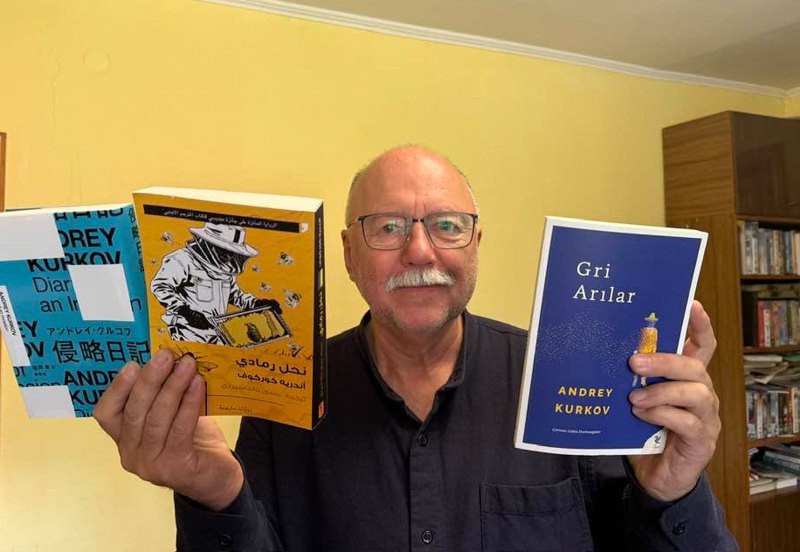
News recently emerged that your The Lost Soldiers is being published in English by a major publishing house. From your comments on this news, it became clear that you found it difficult to return to writing fiction after many months of writing extensively for the media. How are your time and energy currently divided between fiction and commentary?
I don’t quite understand my own state of mind yet, because for two and a half years after the full-scale war began, I couldn’t write fiction and I really didn’t like that. I was angry with myself, constantly irritable, but I could only write about the war, about Ukraine, about what was happening.
I started The Lost Soldiers in 2021; I’d written about 70 pages by the time the full-scale war began. I managed to finish it in 2024. And after that, I thought I’d start writing my next work of fiction straight away. It didn’t work out.
I’m calmer now, because I’ve just finished a new novel. It’s short, but it’s about Ukraine today, and it’s fiction.
I’ll try to maintain this balance. That is, devoting half my time to fiction, and half to journalism and essays.
Tell us more about this novel.
I’ve only just finished it and haven’t even given it a final title yet; for now, it’s The Song of Underground Birds. It’s a novel about memory, about the voluntary or involuntary loss of biographical memory.
Biographical memory always reflects the history of the country where you live, the history of your village, your street, and the people you used to interact with and those you interact with now.
It is the story of a man who regains consciousness in a private hospital in Kyiv, not knowing who he is or where he is from, and with no documents to his name. Naturally, whilst this unknown man was in a coma, he was photographed in an attempt to find out where he came from. But nobody knows him.
He wants to find out who he is and where he’s from, whilst our authorities want to be sure that he isn’t Russian.
It is also a somewhat philosophical text about general questions of memory and its various forms — cognitive and social.
Where did the idea for the book come from? The theme of memory is clearly very relevant at the moment.
Over the years, I’ve spoken to many of our refugees abroad, and my first experience was quite dramatic. I arrived in Montpellier in May 2022. The deputy mayor took me to a secondary school, where tents had been set up in the sports hall to house Ukrainian female refugees. It was a very strange sight.
I then got talking to a group of five women who had left Druzhkivka by car. An old car, some sort of foreign make. They’d taken their cats with them. Two women of retirement age, two approaching retirement. The oldest was 76.
They made it as far as Italy, where the car broke down; it was impossible to repair it. A Frenchman helped tow it to France, which is how they ended up here.
We kept in touch with one of the women afterwards. And she told me what was happening to them, about the past, about Druzhkivka. Eventually, these women were taken to some village, given a flat and social assistance. And so they remained cut off from the world around them, unable to speak to the locals in their own language.
At some point, the woman stopped replying to me. And ever since then, I’ve been thinking about them and their story. When they spoke of their home in Druzhkivka during our first meeting — they wept. It was a memory that paralyses the will and faith that anything can change. From that moment, I began to think about this topic, the various effects of memory and what to do with it.
Then I learnt that there are drugs for forgetting, used to help patients forget the pain after an operation. Science fiction writers abroad have already started inventing stories about similar drugs. But I was interested in this topic: what if it were possible to forget something and that made a person’s life easier in the future?
Because the past is always in our memory and can be paralysing. Memory imposes values and comparisons. It is never objective — the recollection of the same event changes. In other words, memory invents, adds meanings or embellishments.
And a person begins to believe in what they think they remember. Then memory manipulates the person.
There was another story that struck me and played a part in the writing of the novel. It is the story of a pensioner. During the occupation of the Kharkiv Region, he left for Kharkiv, but not before planting some potatoes. And so, during a lull in the fighting, he gets into his Zhiguli and drives to the occupied village, digs up the potatoes and returns to Kharkiv.
That’s quite a story. Are there already plans to translate this novel you’ve just finished?
There’s already a lot of interest from the French and Germans. But I haven’t told everyone yet that I wrote it.
On foreign publishers and diaries
What does your work with foreign publishers look like at the moment?
I’ve had an agent for a long time now — my Swiss publisher, Diogenes Verlag. It was its founder, Daniel Kihl, who decided to publish me, starting with The Picnic on Ice.
Under the agreement, I send all new texts to them. If they agree to publish a book in German, they automatically acquire the rights for all other countries and continue to act as agents.
As well as fiction and media columns, you also write and publish diaries. Is this an inner need or a response to demand?
If there were no demand, I would write less.
I’ve been keeping diaries since I was 15. But I write them intermittently and briefly. I first started writing a diary not for myself during the Maydan. Because in the autumn of 2013, I was writing a book about Ukraine for my Austrian publisher. It was to be a collection of essays on the history of Ukraine, on the national character, and on the differences between Russians and Ukrainians. And it was precisely at that time that the Maydan began.
I wrote to the publisher saying that I would probably take a break to try to understand what was happening. And he told me: ‘You must write down everything you see.’
Over the following weeks, I went to Maydan every day or travelled around Ukraine; in the evenings, I wrote everything down and sent it to the translator. By the next morning, we already had a translation of those few pages. That’s how the publisher pieced the book together. And so The Maydan Diary was published, later translated into 30 languages.
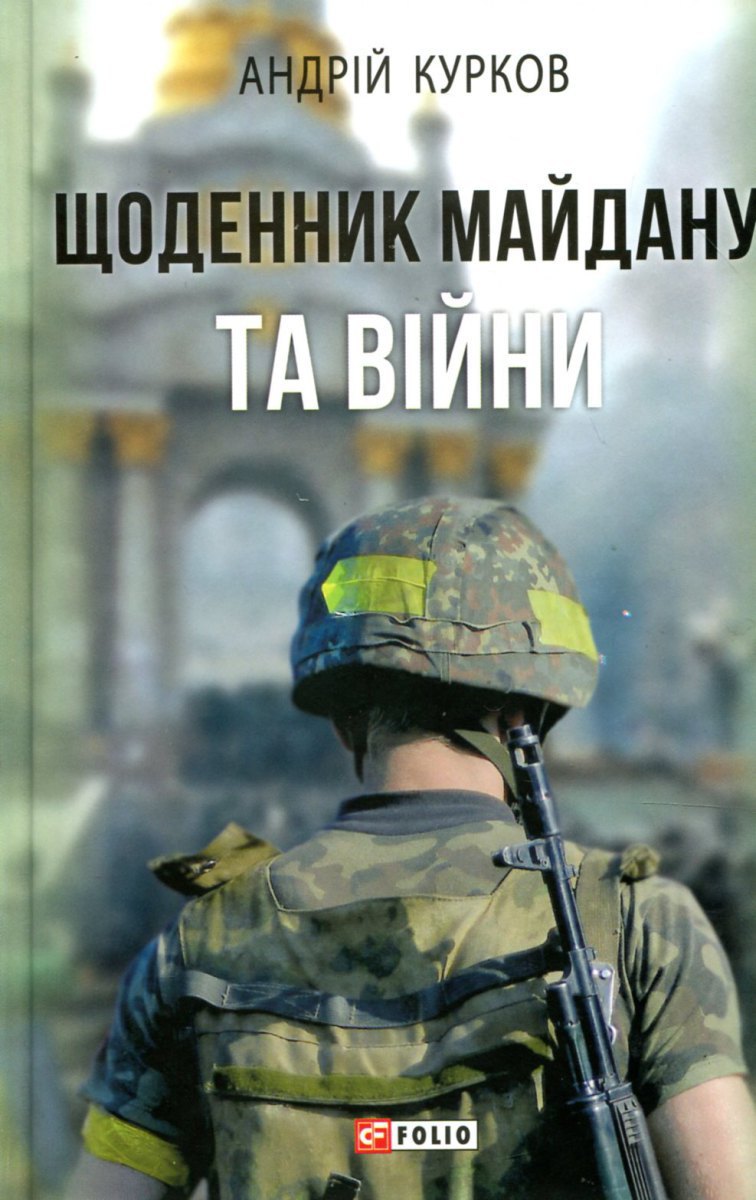
To avoid giving the impression that I was writing this diary artificially, I wrote it as I always do: about the children, friends, everything. I thought I’d eventually remove the stories about my private life before the book was published. But I forgot to do so. When the book came out in English, my daughter was terribly upset with me over a couple of episodes involving her. I, of course, regretted having done so.
Diary of an Invasion was also half-personal, half-political. But in Our Daily War and Three Years in the Fire, I wrote solely about history, as I researched and studied it.
On how the world’s perspective on Ukraine is changing
How do you adapt your texts and speeches when addressing audiences in different countries?
There is a big difference in how any speech or conversation about the war, or the current situation, is perceived in America and Europe. The American public is more politicised, less interested in human stories. They see everything as global processes.
In Europe, this isn’t the case; here you have to tell small stories, from which a larger story takes shape in everyone’s mind. And that is, perhaps, the biggest difference.
There are countries where it’s a bit harder to speak, for example, Poland. No matter what a Ukrainian might talk about there, they’ll eventually be asked about Volhynia and the UPA.
There are countries where the general public isn’t particularly interested in hearing our stories. For example, in Hungary, perhaps in Slovakia, in the Balkan countries. Take the residents of Sarajevo, who survived the siege: for them, that is the yardstick — they compare everything to their own war. It seems to me that comparing the causes of wars is pointless.
Is there a sense that, at this stage, the world has taken our resilience for granted, that our war has become the de facto norm, and that the intention to end it is very weak?
I think that any process taking place abroad for a very long time without major changes becomes the informational and political norm. And in that sense, yes, I think that most of those interested in Ukraine believe that Ukrainian society will hold out, that we are doing well. And there is a danger in that. It implies the logic of ‘let’s think of the weaker ones, those who need help more’.
We must fight against this.
I always explain that we currently have five Ukraines, five distinct large groups of Ukrainians. And everything they think about resilience and steadfastness applies to those Ukrainians who have remained in Ukraine and are living under bombardment. But there are those who have nowhere left to live, who have become internally displaced persons or refugees. There are those who have remained in the occupied territories. There is the army and the active part of society.
I do not support the prevailing view that Ukrainians will manage on their own and defeat Russia.
What should we be doing now to get this message across?
Simply explaining isn’t enough. We need to come up with stories and projects to involve Ukrainian nationalists and volunteers, to show that, firstly, we greatly value their help; secondly, we cannot manage without them; and thirdly, that our ties with them will last a very long time. In other words, that Ukraine is part of Europe.
Has Ukraine become a fully-fledged player in the eyes of the wider world? Is there still a perception that our fate is decided somewhere in the offices of Washington and Moscow?
After America abandoned us and Trump made it clear he no longer wished to expend effort or money on supporting Ukraine, we became a fully-fledged player.
Incidentally, the scandal involving Zelenskyy at the White House actually worked in our favour in this respect. Zelenskyy showed himself to be a man who was not afraid of Trump inside the White House, on foreign soil, and began to defend his own interests and those of his country. Merz, or a representative from Switzerland or Belgium, would not have been able to do that. This was something new for Europeans.
But, of course, it also raised eyebrows. The behaviour of our political elite, and sometimes Zelenskyy’s own statements, show that he is not bound by the usual rules. This means that we are a sovereign state, but at the same time anarchic and unpredictable.
On the other hand, the European path to us is no longer overgrown. Ukraine has become, to put it bluntly, a popular stop-off for all of Europe’s politicians. A trip to Ukraine is seen as a plus for one’s political CV ahead of elections.
On the new wave of Ukrainian works being read abroad
To conclude, I’d like to talk about literature again. Which Ukrainian authors, in your observation, are currently well-known abroad?
Artem Chapeye and Oleksandr Mykhed have made a big splash on the English-speaking market. In Europe as a whole, apart from Chapeye and Mykhed, there are Artur Dron, Kateryna Yegorushkina and Yevheniya Kuznetsova. People are talking about them, writing about them; their books are being bought and read. They are already seen as authors who have arrived and are here to stay.
I think Yaryna Chornohuz has also arrived and is here to stay. She comes across very well—she’s like an Amazon, a symbol. She has an energy that people can feel, even when she speaks through an interpreter.
The Guardian recently published a new list of the 100 best novels. What needs to be done, and by whom, to ensure that Ukrainian works start appearing in this and similar lists?
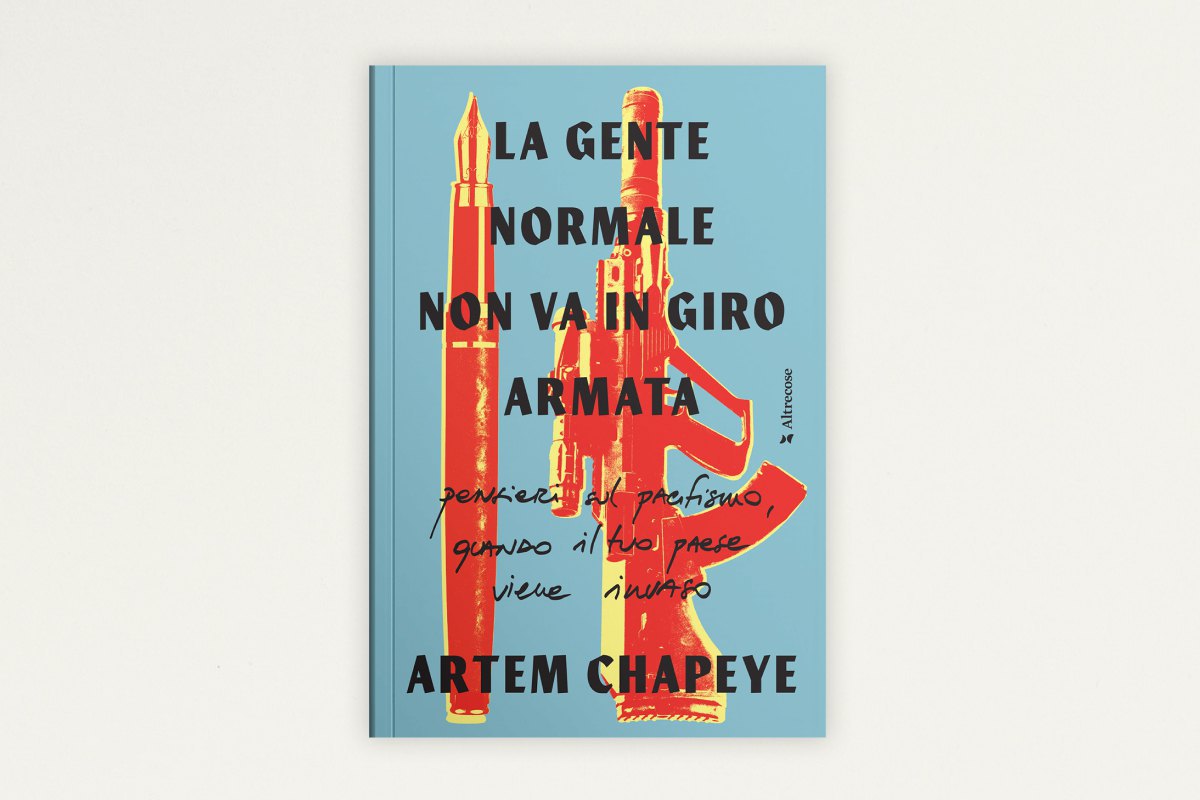
That’s a good question. The global market has its own rules. For example, when Chapeye’s La Gente Normale Non Va In Giro Armata appeared in translation and people began writing about it, it would have been logical for Ukrainian cultural institutions and embassies to get involved at that point, to continue with the events already planned for the tour and add appearances in other cities.
Every embassy has its own pool of journalists. You need to reach out to them and ask if they’d be interested in doing a piece with the author or writing a book review. Then the impact will be much greater, and there’ll be a chance of making it onto a ranking or winning an award.
Because when people hear about a writer, they first get used to the name, then start taking an interest in what they’ve written. The longer the media support lasts, the greater the chances for the book and the author to be read, recognised, and invited to festivals the following year. Half of a writer’s work consists of promotion.
What has impressed you most personally from what you’ve read recently?
I’m reading Artem Chapeye‘s T-happiness. It’s a bit like his first novel, Strange People. But I find it interesting because before that he wrote non-fiction about the war, and here he’s moving away from non-fiction.
Thanks to the Stretovich publishing house, I’ve read Agatha Christie’s autobiography. And also Victoria Donovan’s bookLife in Spite of Everything: Tales from the Ukrainian East about the fauna, geology and nature reserves of the Donbas before the war. It’s a very interesting, unusual book. It shows what the Donbas was like from an environmental perspective and what happened after the occupation.