



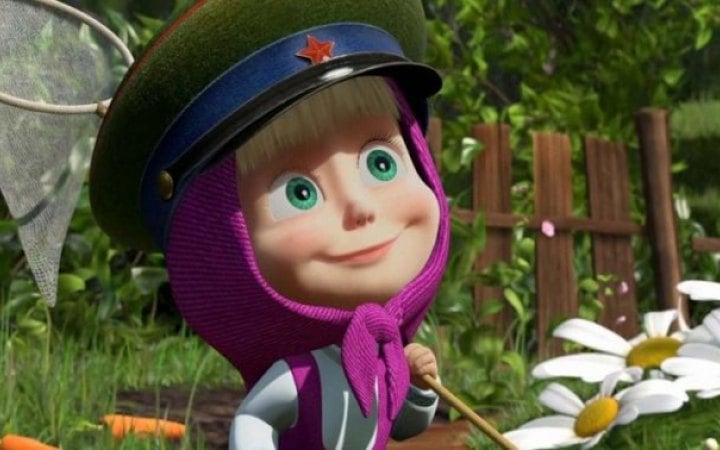
Ukraine is now seeking sanctions against Animaccord, the Russian studio behind Masha and the Bear. The initiative gained momentum after news of the Netflix deal.
Under the agreement, Netflix's rights cover more than 100 countries, including the United States and Canada. In Europe, the series will be available on Netflix in France, Portugal, the Nordic countries and the Benelux region, while in Asia it will be distributed in several markets, including India, Japan, South Korea and Malaysia. It will also be available in the Middle East and Latin America.
In comments to LB.ua, Andriy Kovalenko, head of the Centre for Countering Disinformation under Ukraine's National Security and Defence Council (NSDC), said his agency first conducted an analytical assessment of the cartoon in autumn last year.
At that time, experts concluded that the series was being used "as an instrument of Russian soft power and hybrid influence". According to the assessment, it promotes narratives aimed at "creating a positive image of Russia through the figure of the large, kind-hearted Bear; ridiculing neighbouring peoples through the infantile and destructive character of Masha; and normalising the Soviet past and military symbolism among children".
"We recently updated our assessment after analysing the new episodes and submitted a recommendation to impose sanctions," Kovalenko said. "Sanctions would provide us with legal grounds to ask YouTube to block this content in Ukraine. They would also enable us to engage with Netflix on a legal basis."
According to Kovalenko, the issue is currently being handled by Vladyslav Vlasyuk, the President's adviser on sanctions policy.
"The identified facts are now being incorporated into the legal framework. The work is ongoing, although not as quickly as the public might wish because of the workload," he said. "Everything must be legally impeccable, because Russia is highly skilled at exploiting legal mechanisms."
The Ukrainian-language Masha and the Bear YouTube channel currently has more than 18 million subscribers.
In addition to the NSDC's Centre for Countering Disinformation, Ukraine's Ministry of Culture also supported sanctions against Animaccord last autumn. At the same time, the National Police stated that Masha and the Bear had links to Russia and called for sanctions to be imposed. The request for an official assessment had been submitted by Yaroslav Yurchyshyn, chairman of the Verkhovna Rada Committee on Freedom of Speech.
Speaking to LB.ua, Yurchyshyn said:
"Following the Ministry of Culture's conclusion, we expected the Cabinet of Ministers, the Office of the President or the Verkhovna Rada to submit proposals to the National Security and Defence Council to add those involved in producing the cartoon to the sanctions list. For some reason, however, there was insufficient political will. There may be two explanations: either an unwillingness to take an unpopular step, given that the cartoon remains one of the most watched on Ukrainian YouTube, or concern about criticism that there are more pressing issues during wartime than dealing with cartoons."
After reports emerged that Netflix had acquired the rights to the new seasons, Yurchyshyn said he had submitted appeals to the Verkhovna Rada, the Cabinet of Ministers, the National Security and Defence Council, the National Police and the Office of the President, calling for sanctions against the individuals and legal entities responsible for creating and distributing the Russian production.
Under Ukrainian law, proposals to impose sanctions may be initiated by the Cabinet of Ministers, the National Bank, the Security Service of Ukraine (SBU), the Office of the Prosecutor General or the Antimonopoly Committee. The decision to place a company on Ukraine's official sanctions list is taken by the National Security and Defence Council and enters into force only after being approved by a presidential decree.