





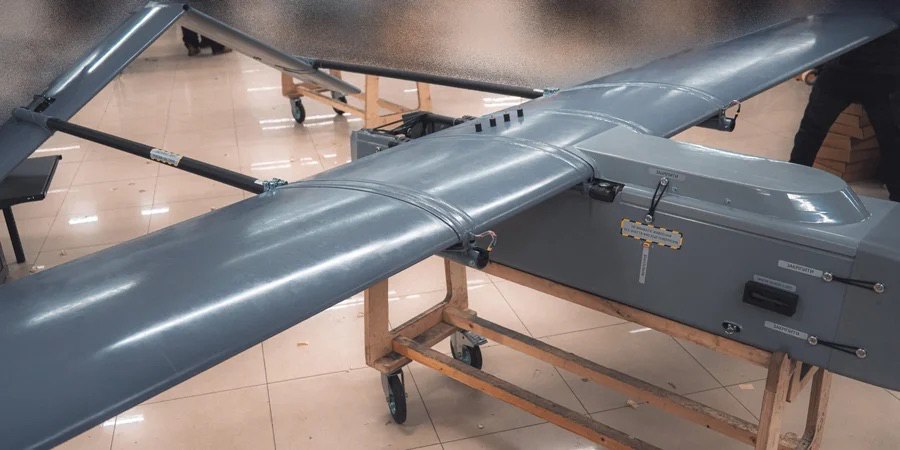
The first instinct, of course, is to use this capability to hunt down Russian mobile fire groups, electronic warfare units and radar stations. It is a classic case of hunting the hunters: mobile groups usually converge on a single point in order to concentrate fire on one target and keep it illuminated or highlighted by laser guidance.
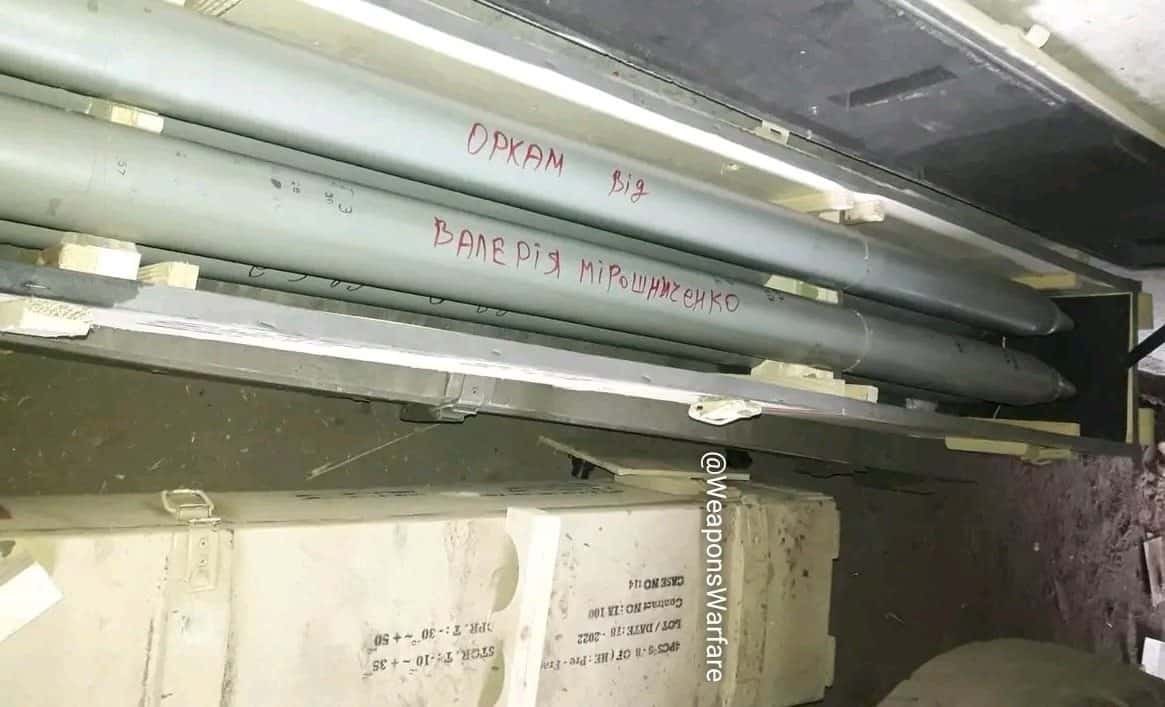
This creates an ideal target for fragmentation rockets. The S-8 arsenal includes an excellent warhead specifically designed for this task — 2,000 ready-to-fire arrow-shaped elements that can, within seconds, turn any pickup truck, crew or installation into a deadly sieve.
However, there is also an important mathematical consideration regarding ballistics. The wide dispersion of S-8 missiles is largely due to the fact that they are normally launched during a steep climb. The crews of Russian Crocodile and Grach systems are understandably reluctant to enter our air defence zone, so they raise the nose of the aircraft and fire along a high trajectory somewhere near the target area.
By contrast, the technical dispersion of a missile launched directly from a platform amounts to just 0.3% of the firing range. This translates into a deviation of up to 100 metres. In other words, at a combat range of 300 metres, the deviation would be a mere 1.8 metres. When two missiles are launched, one of them is virtually guaranteed to land within a circle with a radius of 1.8 metres.
A tactical jackpot on the railway
In other words, we now have what amounts to a tactical jackpot: four guaranteed hits on ‘hard’ targets measuring up to 8 metres in size. What exactly can we strike with such an arsenal from a distance of more than 250 kilometres behind the front line? For comparison, the Novoazovsk checkpoint lies just 150 kilometres away.
What are the Russians physically incapable of fully protecting with their air defence systems?
Railway logistics. The network is too extensive, and the open terrain too vast, for their fragmented air defence umbrella to provide full coverage.
With four precision strikes, we can destroy four ammunition carriages or heavy fuel tankers; with a single salvo, we can disable a shunting electric locomotive and calmly continue towards the traction substation, which can then be struck by 200 kilograms of explosives carried by the kamikaze drone itself.
There are other options as well: firing directly at the coordinates of rails and sleepers. The S-8 also includes concrete-piercing munitions capable of penetrating up to 800 millimetres of reinforced concrete. If a rail trolley or repair train carrying a crane crew arrives to restore the damaged track, the kamikaze drone can then target them as well.
Another tactic would involve operating in pairs: one drone acting purely as fire support and suppression, whilst the other serves as a carrier for FPV drones.
When a railway repair crew arrives, the same tactic can be applied to them as the Russians use in their cynical double-tap strikes against State Emergency Service rescuers.
I am also convinced that mines could simply be dropped at specific coordinates and left in place until a convoy approaches, or that tracks could be damaged and the area revisited a day later to target repair crews.
This creates remarkable tactical flexibility. We can strike fixed infrastructure or shunting yards. Thermobaric warheads are particularly effective against heated railway carriages — making it entirely possible to eliminate an entire unit of personnel whilst the convoy is still in motion.
A cascade of supply chain breakdowns
The main strategic objective of this approach is to push Russian logistics as far away as possible from the ‘last mile’. Let their transport become bogged down on the roads, let military lorries wear out their engines, and let repair battalions and emergency vehicle assembly points (EVAPs) be forced deeper into the rear.
The Russian KAMAZ factory has already laid off 1,200 workers and moved to a four-day working week. Against this backdrop, replacing mounting military truck losses under sanctions pressure becomes an increasingly difficult task. Moreover, large-scale attacks on railway depots, diesel locomotive servicing facilities, tanker parks and electric locomotive repair sites are astronomically costly and require months to restore.
Western allies were ultimately able to cripple Nazi Germany’s railway network only through sustained attacks on marshalling yards, where depots, rolling stock, heavy machinery and cranes were systematically destroyed.
The destruction of specialised railway equipment is an art form in itself. A recovery train includes specialised rail-mounted cranes with lifting capacities ranging from 80 to 250 tonnes, heavy bulldozers, and flatbeds carrying ready-made rail and sleeper sections.
These cranes are exceptionally vulnerable to destruction: hydraulics, cables and support booms fail almost instantly under blast damage. Two hundred kilograms of explosives would tear such complex machinery apart.
Read alsoAsymmetric response: what Ukraine can counter Russia’s mass glide bomb strikes with
The human factor also plays a critical role. A railway repair team consists of highly specialised personnel: crane operators, engineers and highly skilled welders. If a drone strike occurs whilst they are assembling or working on the tracks, the Russian lose far more than equipment. They lose specialists who require years to train.
The railway troops of the Russian Federation may appear formidable on paper, but each major transport hub relies on only a small number of experienced professionals capable of handling complex accidents and emergency repairs.
Electric locomotive drivers and recovery-train crane operators are not contract soldiers. They did not enlist to burn alive for three million roubles. These are civilian workers in overalls who may suddenly realise that escorting a military convoy near Rostov or Voronezh has effectively become a deadly lottery.
Once the first five to ten crews are eliminated, a quiet revolt within Russian Railways could begin: mass resignations on medical grounds, extended sick leave and deliberate slowdowns. It is one thing to transport coal across Siberia; it is quite another to sit in a locomotive cab knowing that you are carrying 200 kilograms of explosives whilst air defence systems offer no real protection.
The asymmetrical economics of losses
Even the destruction of just four fuel tankers and a locomotive represents an extremely attractive exchange ratio. The minimum estimated value of such a train — consisting of an ageing shunting diesel locomotive such as a ChME3, second-hand wagons and the fuel cargo itself — ranges between 400,000 and 600,000 dollars.
A more realistic estimate, particularly if the train is hauled by a full-scale mainline locomotive, rises to between 1.8 million and 3.5 million dollars or more.
What does this mean in macroeconomic terms? It places sustained financial pressure on Russia’s railway system, which is already experiencing severe strain, including acute staffing shortages, a lack of drivers and a deficit of operational locomotives.
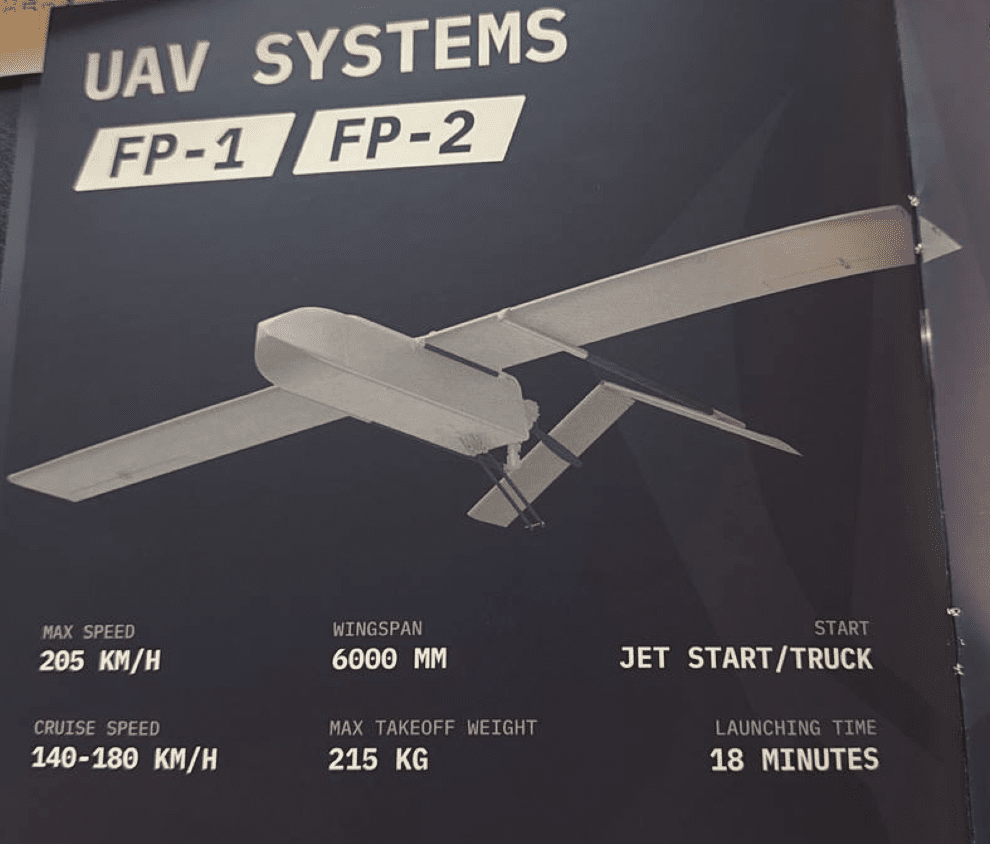
A single Fire Point drone costing 54,000 euros is capable of destroying a target worth between 10 and 60 times more than the drone itself.
And these figures reflect only the direct financial losses. They do not account for secondary damage: melted railway tracks, the complete destruction of overhead electrical lines, the paralysis of logistics across entire sections of the network, or the enormous costs associated with extinguishing large-scale fires.
The magnifying glass effect
We are effectively forcing all supposedly safe locations for unloading ammunition, fuel and spare parts to move 100–200 kilometres further into the rear. The burden then falls on Russian motorised infantry battalions, which Ukrainian forces systematically target every day using Hornet drones, Vampire mine-laying systems and Bulava strikes.
Of course, it is impossible to control every element of logistics. But that is precisely the point: sometimes expensive reconnaissance drone systems will burn inside a covered vehicle; sometimes batteries will fail to reach frontline positions; and sometimes troop rotations will suffer serious losses whilst on the move.
It becomes extremely difficult to plan an operational offensive when there is no certainty about what equipment or supplies a unit will actually receive on any given day, and what may instead be destroyed along the Novorossiya highway or lost during transport.
Nor is it possible to protect every vulnerable point. Long-range strikes continue, as does the systematic hunt for Russian air defence systems and radar installations. Russia does not possess unlimited reserve crews or endless missile stocks. Even if mobile air defence groups equipped with radar systems or interceptor drone crews are deployed, they will primarily be assigned to defend the key revenue-generating assets of the Russian state, leaving railway infrastructure and logistics personnel exposed.
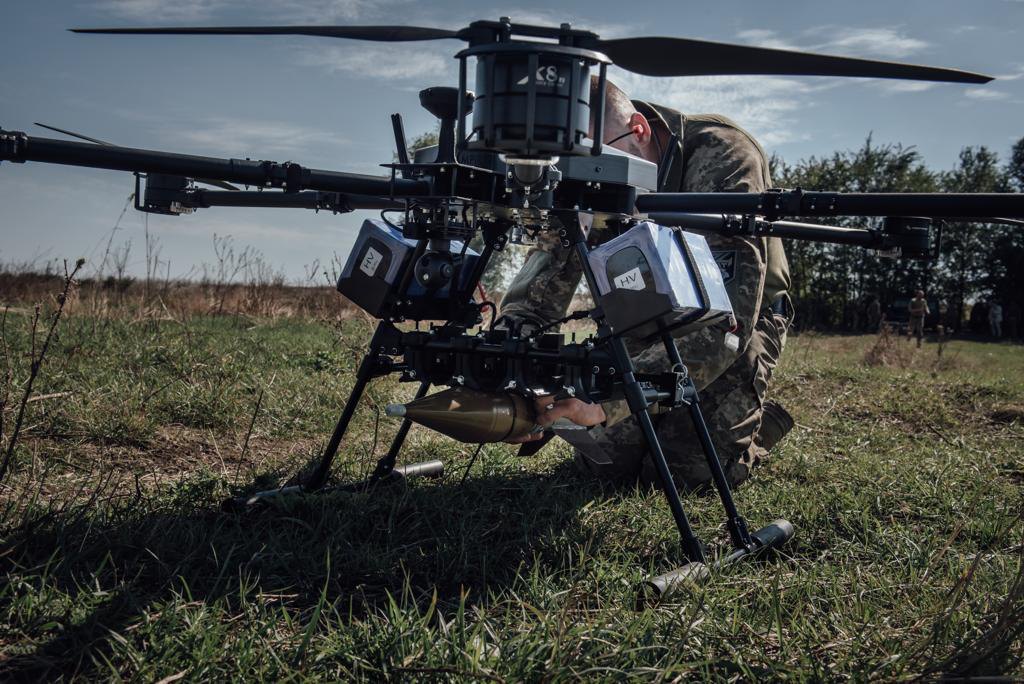
Moreover, from the perspective of direct infantry fire support, these capabilities fundamentally change the rules of the battlefield.
A circular error probability of just 1.8 metres corresponds precisely to the size of some of the most dangerous battlefield targets. This includes a standard pillbox capable of pinning down an assault group for hours, or a concealed anti-tank missile crew waiting in woodland for an opportunity to strike armoured vehicles.
Conventional artillery may require dozens of shells merely to land near such targets, tearing up the surrounding terrain and temporarily suppressing the enemy. Here, however, the operator simply marks the target coordinates, and a salvo of missiles is highly likely to land within a circle of less than two metres.
This removes the need to expose a helicopter or attack aircraft worth tens of millions of dollars to MANPADS fire simply to destroy a Russian stronghold. S-8 fragmentation munitions can eliminate anti-tank crews and infantry positions, whilst the kamikaze drone itself, carrying a 200-kilogram warhead, can deliver the final strike by destroying the main dugout entirely.
There used to be a grim childhood pastime in the Soviet Union: children would take a magnifying glass on a sunny day and focus its beam onto an anthill.
Modern medium-range strike systems function in much the same way.
Ukraine has pierced the Russian Federation’s air defence umbrella and is now beginning to methodically direct this concentrated pressure first against logistics, then against FSB headquarters and command centres, and finally against deep-rear infrastructure: repair bases, emergency assembly points, road services and railway brigades.
The Russian system is already showing visible signs of strain under this pressure.
If Ukraine succeeds in scaling up production in EU countries, it could secure several months of a highly significant advantage — one capable of undermining the Russian logistics system from within.