






Ukraine and Trump’s America
How do you view the current state of relations between Ukraine and the US? Have we learnt how to deal with Trump’s America?
I don’t think anyone can learn how to deal with Trump’s America. It’s a highly transactional America. Marci Shore describes this well as “gangster politics”.
It seems to me that the US has always had a quasi-colonial attitude towards Ukraine, and Trump has made this more pronounced. If you look at the agreement on rare earth minerals, it is, in essence, about enriching Trump himself and his associates. He views Ukraine as a resource. He seeks profit in relations with Ukraine.
That said, Ukraine is managing quite well. The main thing is not to place too much trust in America and instead build partnerships with Europe.
As Canadian Prime Minister Mark Carney said in Davos, middle-power countries — those that are not superpowers but possess significant capabilities — must stick together. I think that, thanks to its ability to defend itself and develop military technology over the past four years, Ukraine has proven its place among this group of countries. I believe this is precisely what Ukraine is doing now.
Has Ukraine, over the years of full-scale war, learnt to speak for itself to the world? Has it learnt from its mistakes?
The biggest mistake I see is that there are still journalists and activists making the same arguments they made in 2022. Of course, that approach worked at the time because everyone wanted to support Ukraine; after all, it was such an outrageous violation of international law. But the world has changed significantly since then.
Now Trump is in power, and the US is launching its own wars of aggression. Take Venezuela, for example: the US intervened in the country, yet it is presented as though it did not — they simply kidnapped the country’s president and imprisoned him. Then the rapper Tekashi 6ix9ine, after being released from prison in New York, claimed he had been imprisoned alongside President Maduro and described him as “a great bloke”.
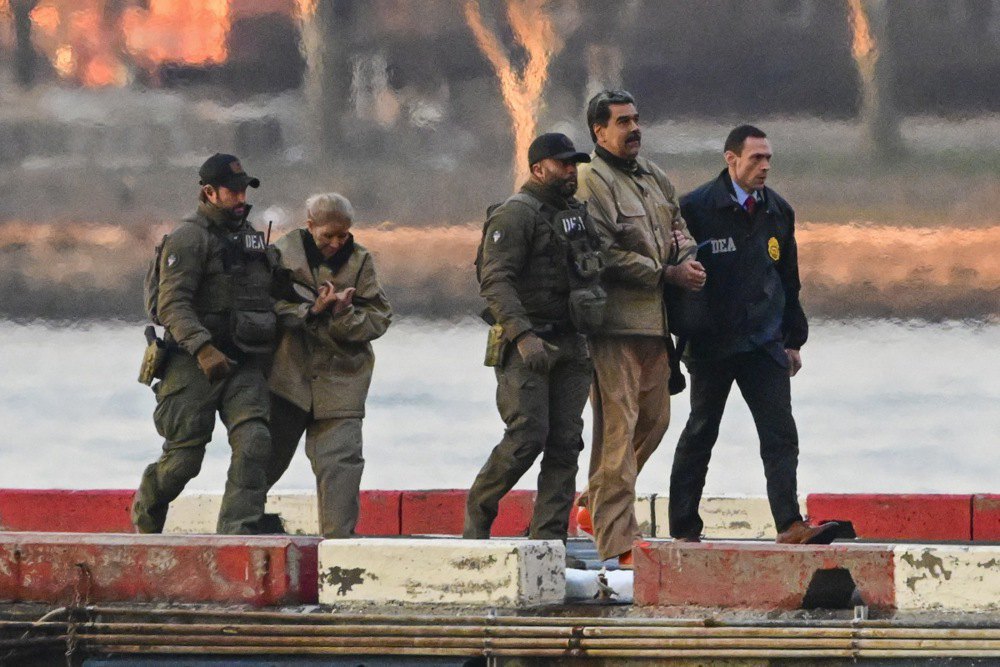
It is deeply strange to see an American rapper saying that a foreign dictator he met in prison is “a great bloke”. But that is the world we live in now.
Everyone is now worried about their own stability. People see the trajectory the world is on and realise it is far from positive. There is growing discussion about the AI bubble and fears that the world may be on the brink of another financial crisis similar to that of 2008.
As a result, people are anxious and frightened. That is why the messages of 2022 no longer resonate. When people feel secure, they are more capable of responding to moral obligations. But if I am shot in the leg and then asked to act according to those moral obligations, it becomes much harder to do so.
At present, many people around the world feel as though they are on the brink. I therefore believe that the most powerful thing Ukraine can do now is to show empathy towards others and express it openly. Everyone understands that war is terrible. To feel pain yourself, yet still ask others how they are doing, is an incredibly profound act. People do not forget that.
I have become best friends with people I met during very difficult periods in my life, whether related to physical pain or trauma therapy. People could see I was struggling, yet I still cared about them.
Since Trump’s election, people have felt especially vulnerable, and they notice when someone allows themselves to be vulnerable around them. I think that is what I am trying to do in Ukraine. Though I should clarify: I do not believe this behaviour should become an obligation for Ukrainians.
Ukrainians are enduring a war, an attempt to destroy their identity, erase them as a people, and indoctrinate their children. One cannot demand that people in such circumstances remain sensitive to the suffering of others. But if someone is capable of doing so, then it may be the most effective way to speak to the international community.
I am not Ukrainian and cannot become one. I cannot erase my own identity as a white American or be reborn as someone else. But I can make use of the privilege and comfort afforded to me by that identity. I can take on the task of speaking with empathy and refusing to remain indifferent to what others are going through.
You say you can take on this emotional work. But you’ve been living in Kyiv for nearly a year now and are also going through the physical and emotional experiences of its residents. How does that affect you and your approach?
In 2022, I was in a café in Lviv when I received a letter from Marci Shore, who was, I think, in Poland at the time. In that letter, she spoke about how she teaches her students: talent brings with it responsibilities. And my ethical, moral duty is to use my talent for the good of the community and society. That resonated with me, because I’d been thinking along similar lines myself.
Of course, I’m tired. I’ve been through the same winter as everyone else in Kyiv. And I’m not lacking in empathy for myself. But I’m convinced that I have a moral duty to do this work whenever I can.
Lately, I often recall Yuriy Shevelov’s phrase that Ukraine is not just a territory, but a collection of people who live here. So when I live here and participate in the life of society, I am not Ukrainian, but I become part of Ukraine.
But you are also an American who is deeply concerned about what is happening to his country right now. Doesn’t that add to the fatigue, bring you closer to burnout?
We have this term ‘WASP’ to describe white Americans of Anglo-Saxon descent who are Protestant. I belong to this group. And everything that happens in the world works to my advantage. This, unfortunately, is an inescapable reality.
So, whilst feeling exhausted and under pressure, I realise that this pressure and exhaustion are not as intense as for those who do not have the privilege of being in my position. I believe I have this duty, imposed not by the state, but by basic humanity.
On the stories that foster understanding
Have you changed anything in Ukraїner International’s editorial priorities since you took over the publication in December 2025?
What struck me about Ukraїner is that it is both a cultural project and a media outlet. Its aim is not merely to react to the news and whatever is happening in the world, but to build connections and lay foundations, to tell stories from Ukraine, and for Ukraїner International — also to tell the world’s stories to Ukrainians.
The publication’s previous editor-in-chief, Anastasiya Marushevska, had views on advocating for Ukraine abroad that were very similar to mine. However, when it comes to changes, the key one has been the focus we maintain when creating content. This change is also evident in how I and my colleagues conduct interviews.
I see interviews not merely as a journalistic practice, but as an opportunity to connect with someone.
This is already evident in my very first interview—with the historian Kimberly St. Julian-Varnon. I’m not shy about steering the conversation based on my own views and taking an interest in my interviewee’s perspectives. For instance, with Kimberly, I was interested not only in her expertise but also in her experience as a Black female academic.
Ukraїner is, in essence, an encyclopaedia of Ukraine and its life, the history of the diverse identities of its inhabitants. So, whenever possible, I try to learn something interesting about another person’s culture, and only then can I present the Ukrainian context through the prism of their experience.
For example, our Spanish team wanted to produce a piece to mark the anniversary of the bombing of Guernica, which took place in 1937 during the country’s civil war. At the time, democratic nations refused to intervene in Spain’s affairs, but all the fascist forces of the day did intervene. One of the worst atrocities was the bombing of the town and the killing of civilians.
Last year, the German president attended events commemorating this tragedy and said that it serves as a reminder never to allow such things to happen again. And if you look at this situation and what Russia is doing in Ukraine, it is easy to find common ground for solidarity with the Spanish people.
Because if any Spaniards are sceptical about supporting Ukraine, referring to this history and telling the Ukrainian story through the prism of this experience is far more powerful than constantly showing images of destroyed buildings and maimed people. Of course, these images need to be shown too. But you cannot force people to empathise simply by pointing out something bad.
Our French team had an idea for a piece to mark Victory Day, which is celebrated in France on 8 May. For them, this day marked the end of the Nazi occupation. And we decided to invite the French audience to imagine what it’s like: to be liberated from occupation and almost immediately find yourself under it again. Because Ukrainians, having been liberated from German occupation only to find themselves under Soviet occupation, felt no relief. Both regimes were totalitarian.
How standardised, or conversely, how unique is the content for each language version of Ukraїner International?
We treat each language version as a separate editorial team. Each has its own editor. We try to create standardised content for all major dates or holidays.
At the same time, we encourage these foreign-language teams to create more original content. After all, the material for 8 May cannot be identical in the German, French or English versions. The same applies to other teams, including active ones in Spanish, Turkish, Japanese, Portuguese, Polish and others.
For example, a Plast branch was opened in Japan, and the Japanese team went to speak with the founders. The Turkish team did not produce content about Christmas celebrations, unlike other European versions. For the Turkish audience, this was presented as a story of traditional rituals, but without an emphasis on Christianity.
How do you handle stories from the front line? It seems they don’t resonate as much these days.
It all depends on how you present them. Anti-Russian content performs very well. Social media influencers are gaining a large following by focusing on Russophobia. But we try to experiment constantly.
Stories about veterans’ experiences go down well with us. For instance, we recently published a story about the rescue of a wounded soldier — it received a lot of views because it showed footage from the battlefield and a sense of success. However, working with this topic is challenging. The challenge for Ukraїner is to show the audience a certain form of humanity.
For example, recently, together with a volunteer team from Ukrainian PEN, I was delivering books to libraries in the Kharkiv Region. One librarian showed us a video of a destroyed tank — there are millions of such videos in Kharkiv alone. The difference was that she knew the people who had been inside the tank and had died there. At that moment, she could barely hold back her tears.
This is a moment people can relate to, because it’s about human emotions. The story itself is very far removed from what an ordinary person might experience anywhere in the world. But the tragedy of someone who personally knew the four people who died in that tank can be understood. And the difference between this tragedy and many others is that it could have been prevented. After all, the war was caused by aggression intended to destroy other people.
Of course, I would like our project to grow and get millions of views. But I also don’t want us to chase after anything that is guaranteed to get a large reach, because such videos very often lack meaningful impact. For example, I’m proud that there are Black activists in New York who speak publicly about the genocidal nature of Russia’s war against Ukraine. That’s exactly how we talk about it.
How do you define your audience?
My ideal audience is people who are respected and influential within their social circles. For example, I want foreign journalists to know about our page and visit it when they think about Ukraine. They won’t necessarily quote us the next time they write about Ukraine, but they will have a certain emotional connection formed through our stories.
I think the way we tell stories resonates with people who would like to be treated with the same respect. We’re targeting those who consider themselves educated, who want to get one step closer to Ukraine, intellectually and in terms of information.
And, of course, I would like people to feel the desire to share our stories.
On Texas, Donetsk and personal decolonisation
I’d like to talk a little about your background. How did it come about that a white man from Texas became so interested in Ukraine?
It’s a very bad story, because it starts with the neo-colonial perspective that America has on Ukraine. I first learnt about Ukraine through a hockey video game; I think it was 2006. In that game, Ukraine was the worst team, and I played for them to try and beat the better players.
Later, I went to university. I studied history, philosophy of art and, eventually, ended up on the Russian philology course. My Russian teacher was from Crimea and advised me to go to Ukraine to finish my studies. Because there I could speak Russian without being part of Russian culture. At the time, it seemed like a good idea to me. Now I don’t believe you can separate the Russian language from the culture.
So in 2010 I went to Kyiv. By that time I’d already been to Voronezh, Moscow and St Petersburg. And in 2011 I moved to Donetsk for about a year. However, until 2014 I lived and worked mainly in Russia, working in advertising. And thanks to that, I studied the Russian audience.
I was at the Maydan in Kyiv in December 2013 and saw the Anti-Maydan in Donetsk in March 2014. It was obvious to me that the first gatherings were entirely spontaneous, whereas the second were orchestrated from Russia. At the time, I was still working in Russia, and my management forbade me from travelling to Maydan. Upon returning from Ukraine, I told my colleagues what I had seen, but they resorted to gaslighting, insisting that it was actually a small group of radicals who had taken to the streets.
In 2014, I went to Kyiv for a short while before returning to the States. Over the next seven years, I tried to understand how I could have failed to foresee that Russia would occupy Donetsk. Because that city had become very dear to me; I felt it was my second home. So the start of the war broke me, just as it did many of my friends there. Though I’ll say it again: I’m not Ukrainian, I just have a strong emotional connection.
In the years that followed, I worked in advertising and a bit in journalism. I advised some Ukrainian organisations. Around 2021, I realised I’d like to share my own vision of Ukraine, that it might be helpful to Ukraine. But I also realised it would be wrong to do so knowing only Russian. Because you cannot fully understand the context without knowing the language.
So I stopped using Russian and learnt Ukrainian. I went to do a master’s degree at Columbia University. When the full-scale invasion began, I was in New York. So I got involved in advocacy and human rights work.
I have to say that thanks to Ukraine, I’ve come to understand a great deal about my own identity as an American. I’ve learnt a lot about the colonial, imperialist framework. So now I realise just how wrong and strange it was to have once travelled to Ukraine to learn the language of that country’s coloniser.
But this was common practice.
Yes, I am fully aware that I was not morally at fault in this and that I am not unique in this regard. Nor do I deny or hide this experience.
If you look at the history of Ukrainian nationalism, many of its prominent thinkers were initially Russophiles before they came to understand the true nature of Russia. If Olena Teliha started out as a Russophile and became the person she became, I see no reason to be ashamed of my past.
You said you felt a special connection in Donetsk. Could you explain a little what exactly you saw and felt in that city?
Donetsk reminded me very strongly of my native Texas. That same sense of independence in the sense of self-reliance, self-sufficiency. When a person feels they can handle everything on their own, without needing others to intervene.
I sensed in this city the very same values that my grandfather instilled in me. He was incredibly proud to be a cowboy. He had a construction company, but also a ranch in Central Texas, where, upon retiring, he moved to look after the cattle. He was strict about the values of loyalty and self-sufficiency.
I remember once he was arguing with a business partner who asked if he was really prepared to lose a friend over a deal. And my grandfather replied: if I need a friend, I’ll get a dog. And loyalty is built on respect.
I am guided by those same values and felt them when I lived in Donetsk. People there could manage everything on their own, but they understood what loyalty meant. I think this is precisely what Russia manipulated in 2014 to justify its military aggression.
I think that’s what made this war personal for me — my own values were used against a place I felt was my second home.