





Citizens of third countries have fought on both sides of the Russia–Ukraine war since it began in 2014. After 2022, their numbers grew and their presence became more visible. Of course, in the scale of each of the two armies, a couple of dozen thousand foreigners is a drop in the ocean, but both sides devote a share of resources to recruiting them. According to Ukraine’s Defence Intelligence, in 2026 Russia plans to bring another roughly 18,500 mercenaries into its armed forces.
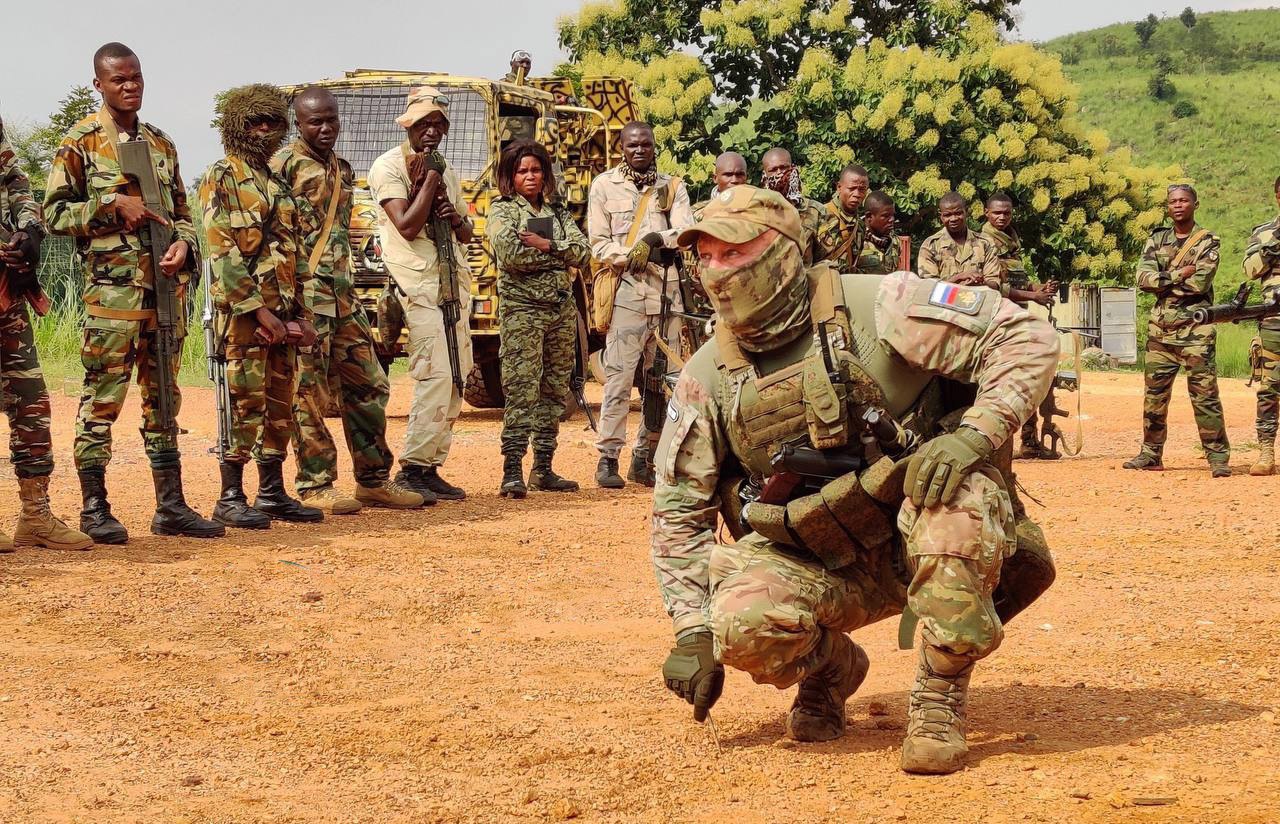
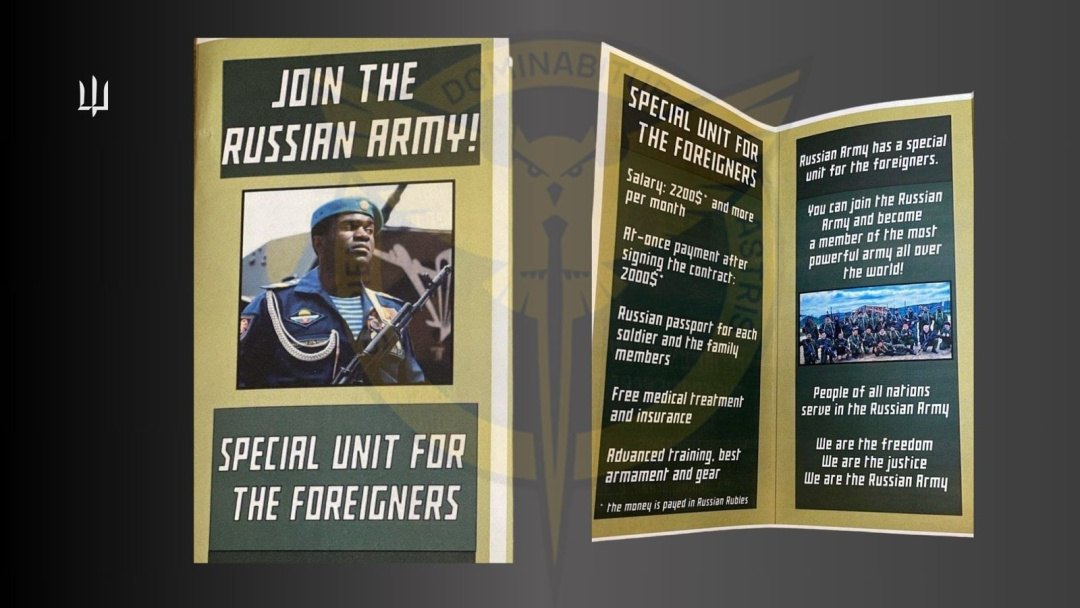
Russia approached the matter in its own way and organized recruitment through public channels, trying to reach as broadly as possible the audiences of poor countries in the Global South, especially in Africa. A couple of years ago, Russia’s Defence Ministry even created a separate unit to recruit mercenaries from the continent.
An African Solution to Russia’s Problems
Only Russia’s Defence Ministry can probably name the exact number of Africans in the Russian army. Publicly, we have several broad estimates.
Ukraine’s Foreign Ministry has voiced the available information on African recruits in Russia’s armed forces. In its latest such statement, it spoke of 2,965 citizens of African countries from at least 36 states. In early May, Ukraine’s Defence Intelligence (HUR) also cited an estimate of around 3,000.
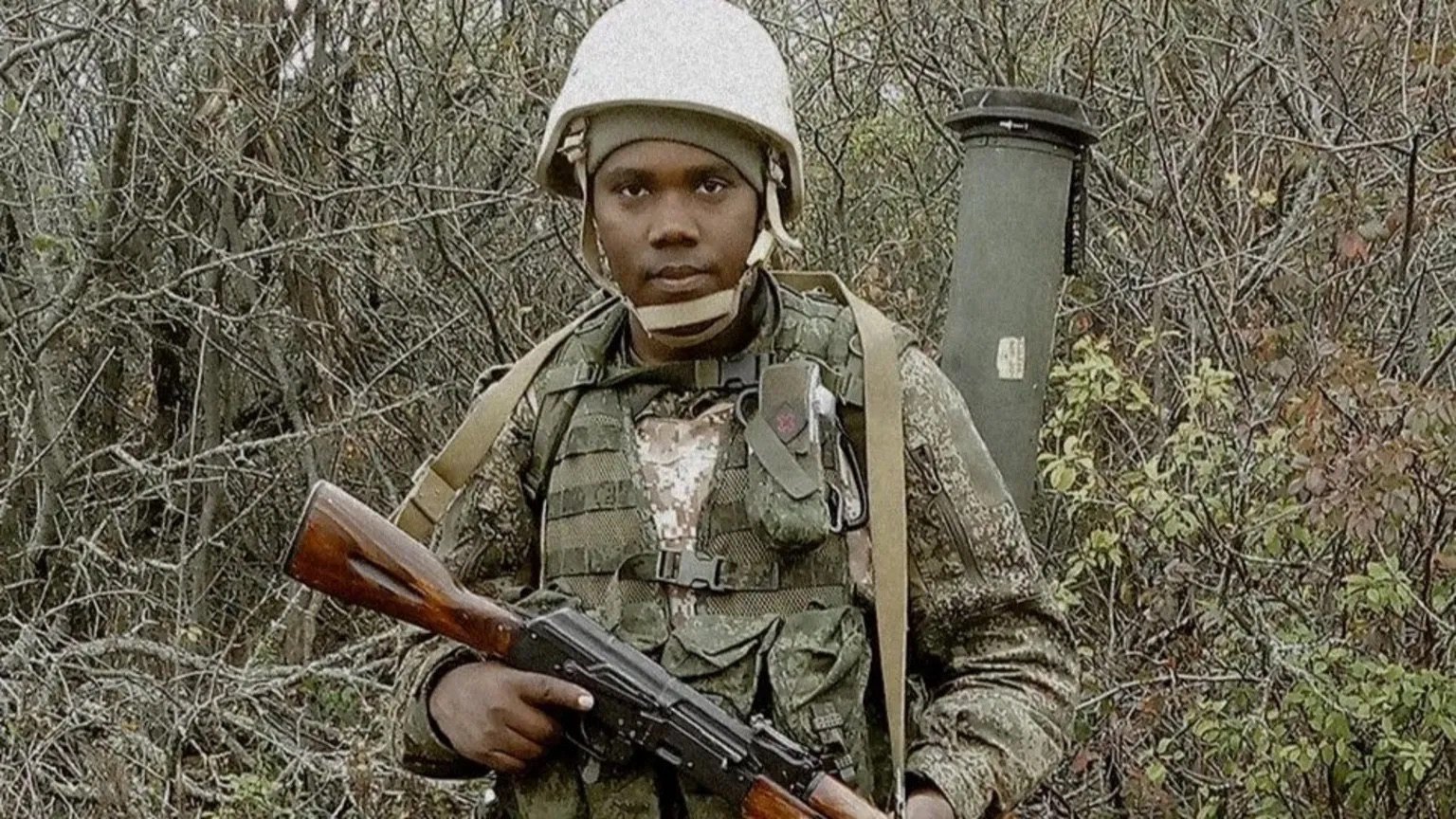
In February, as part of the “All eyes on Wagner” project, researchers from INPACT together with the “I Want to Live” project published a report on how Russia recruits Africans—so far the most substantive study of the topic. Among other things, it analyzed a list of 1,417 Africans who signed contracts with the Russian army. INPACT also provides country-by-country statistics: the largest number identified were Egyptian citizens—361 people—followed closely in second place by Cameroon with 335. These are verified and the most detailed data, but clearly incomplete, and the real number of Africans in the Russian army is significantly higher. For example, the researchers had information on 45 Kenyan citizens, while that country’s security services reported in the same month that there were approximately 1,000 mercenaries.
Africans serving in the Russian army can be условно divided into three categories. The first includes those recruited privately. These are professional mercenaries who are “hunted” individually—but not only them. As is well known, Russia systematically and deliberately searches for foreigners from the Global South, especially those with combat experience, who might be interested. Recruitment channels can be very different. In 2024, for instance, Russians recruited several South Africans via a Discord server they used while playing Arma 3. This category also includes ideological Russophiles or anti-Westerners who fight out of personal conviction.
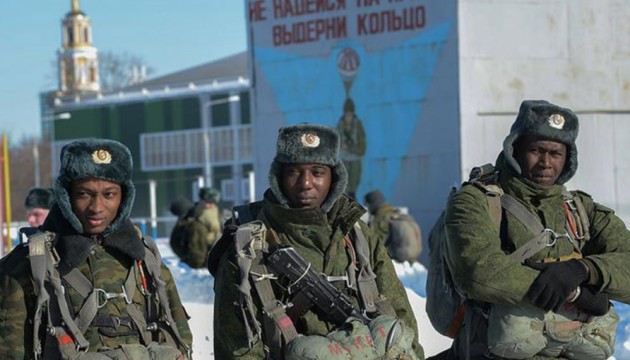
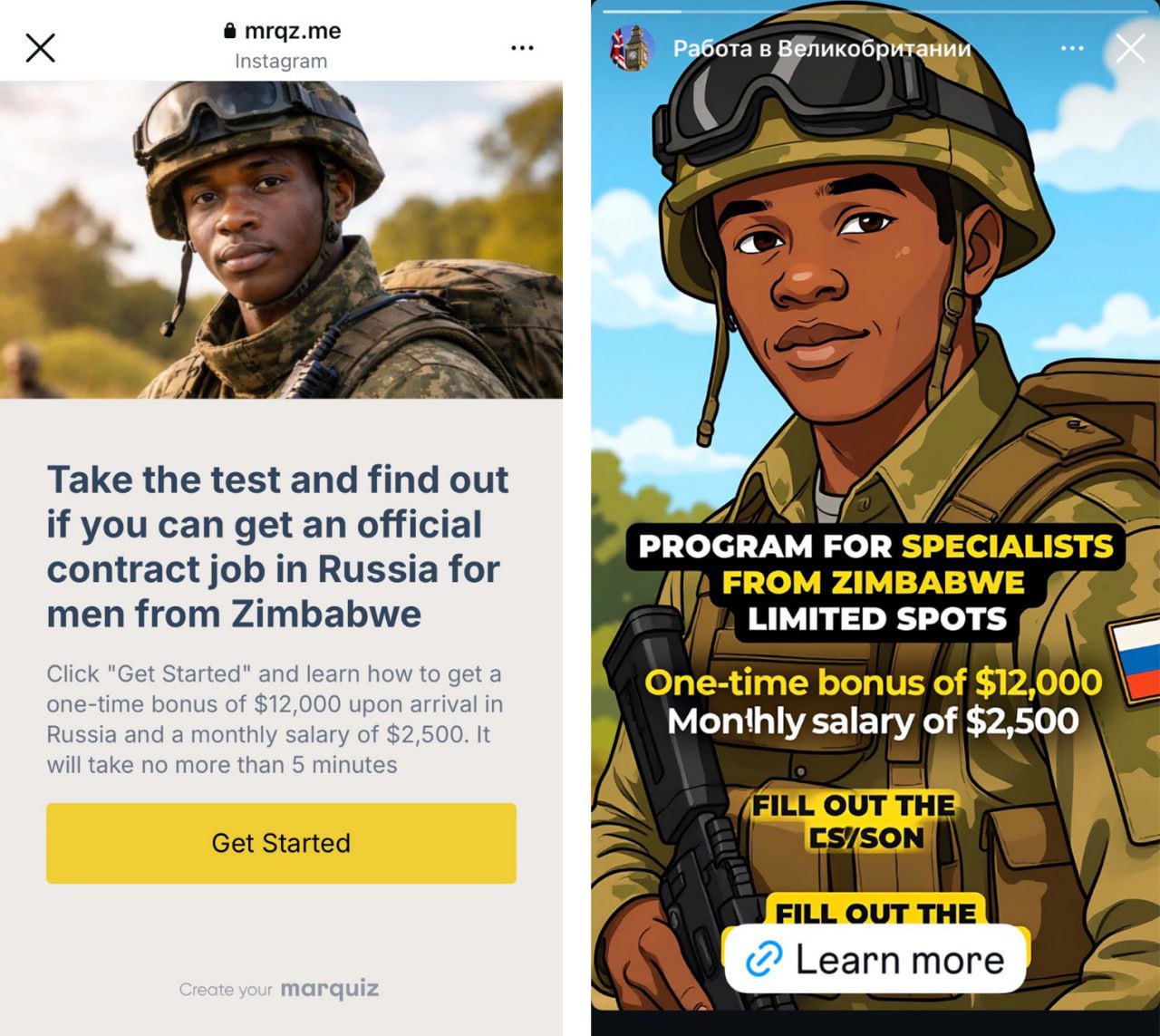
The second category is Africans who knowingly signed a contract with Russia’s Defence Ministry after learning about the opportunity through public channels. Russians conduct part of their recruitment efforts openly, spreading advertising and propaganda for mercenary service on social media, trying to reach unemployed men aged 20 to 50. Typically, potential mercenaries are offered the following: a monthly salary in the range of $2,000–$2,500, a one-time payment of $10,000–$40,000, a simplified path to citizenship, and health insurance. Africans agree to such offers for financial reasons, or in order to remain in Russia in the future.
Sometimes they are also offered military—or military-adjacent—work in the rear, but then the mercenary is sent, without appeal, to the front line.
The third category is Africans who were tricked into signing a contract under coercion. Typically, in such situations a Russia-linked employment agency offers a civilian vacancy in services, construction, cleaning, and so on, in Russia or another country. Or it may be vocational training courses, often with the possibility of staying and working in Russia afterward. In any case, it ends with a forced signing of a contract whose text the victim does not understand, because it is written in Russian.
The next step is organizing the trip to Russia. This is often handled by travel agencies which, as INPACT’s investigation found, may be shell companies overseen by security services and created for recruitment, or local partner agencies. Some do this openly; others do not publicize such activity. Formally, the trip is arranged as tourism. In addition, because such travel may arouse suspicion among airport administration inspectors, the African recruit may be sent to Russia not directly but in transit through a third country—the Democratic Republic of the Congo, Uganda, or the United Arab Emirates. Upon arrival in Russia, the recruit signs a contract, forcibly or voluntarily.
Some victims are recruited or forced to sign a contract with the Russian Armed Forces while already in Russia for other reasons—for example, studying at a higher-education institution, or as migrants who want to stay (and are looking for civilian work). This is more likely part of a broader practice of recruiting students and migrants, when they are given a choice: deportation or a contract. Ultimately, foreigners serving in the army have always had the option of obtaining Russian citizenship through a simplified procedure, and in November 2025 military service effectively became almost mandatory for those intending to obtain it—Moscow is trying to draw as many migrants as possible into the war, including those of African origin.
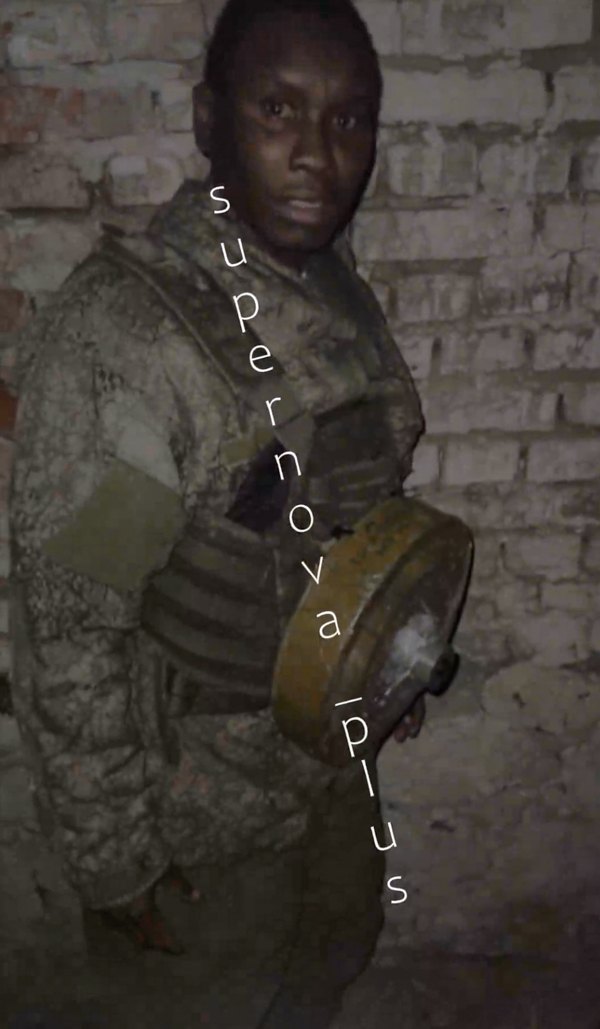
Then come a few weeks of basic training and the front line. Africans who have been taken prisoner mostly speak of racist abuse against them. There is also some video evidence. In one video that circulated online, a Russian serviceman shows a frightened Black man with an anti-tank mine tied to his body, explaining that his combat task is to be a “can opener” for a dugout. In another, a soldier shows a group of singing African servicemen, describing them as “one-timers” who will “sing differently” after being sent to assault.
However, recruitment directly into the military is only part of the story. Russia is also openly recruiting foreigners to work in its own defense industry at the Alabuga special economic zone, where Shahed drones are produced. The “Alabuga Start” program was launched to recruit young women from abroad to work in production. By some estimates, around 1,000 African women workers may be employed at the complex. In addition, the enterprise signed an agreement with the Ethiopian government on cooperation in employing young people there.
It also recently became known that Russia has revised its approach to recruiting foreigners and now intends to be more selective regarding country of origin. A kind of “blacklist” of 43 states whose citizens should not be offered service reportedly includes mostly countries friendly to Russia, including African ones. Although the list is not public, media reports say it currently includes South Africa, Kenya, Nigeria, Cameroon, Libya, Somalia, Algeria, Angola, Ghana, Guinea, Egypt, Namibia, Mozambique, Ethiopia, Tanzania, and Uganda—most likely because their governments asked or demanded that recruitment be stopped.
Exposure and Diplomacy
Russia is not recruiting people from some amorphous African space; it is recruiting citizens of specific African states. And states, as a rule, are interested in protecting the rights, interests, and dignity of their citizens abroad—at the very least because contempt for them is a manifestation of contempt for the state itself. Even setting aside the facts of violent pressure on Africans to join the army and racist treatment of them inside Russia, what Russia is doing is outright illegal and violates national legislation and international norms aimed at combating human trafficking and mercenary activity.
In practice, few countries have publicly taken any measures against Russian recruitment so far. Officially, Russia denies recruitment activity, and drawing attention to the problem means entering into some degree of confrontation with Moscow—something most states are not interested in. However, when the issue has been raised, Russia has made concessions.
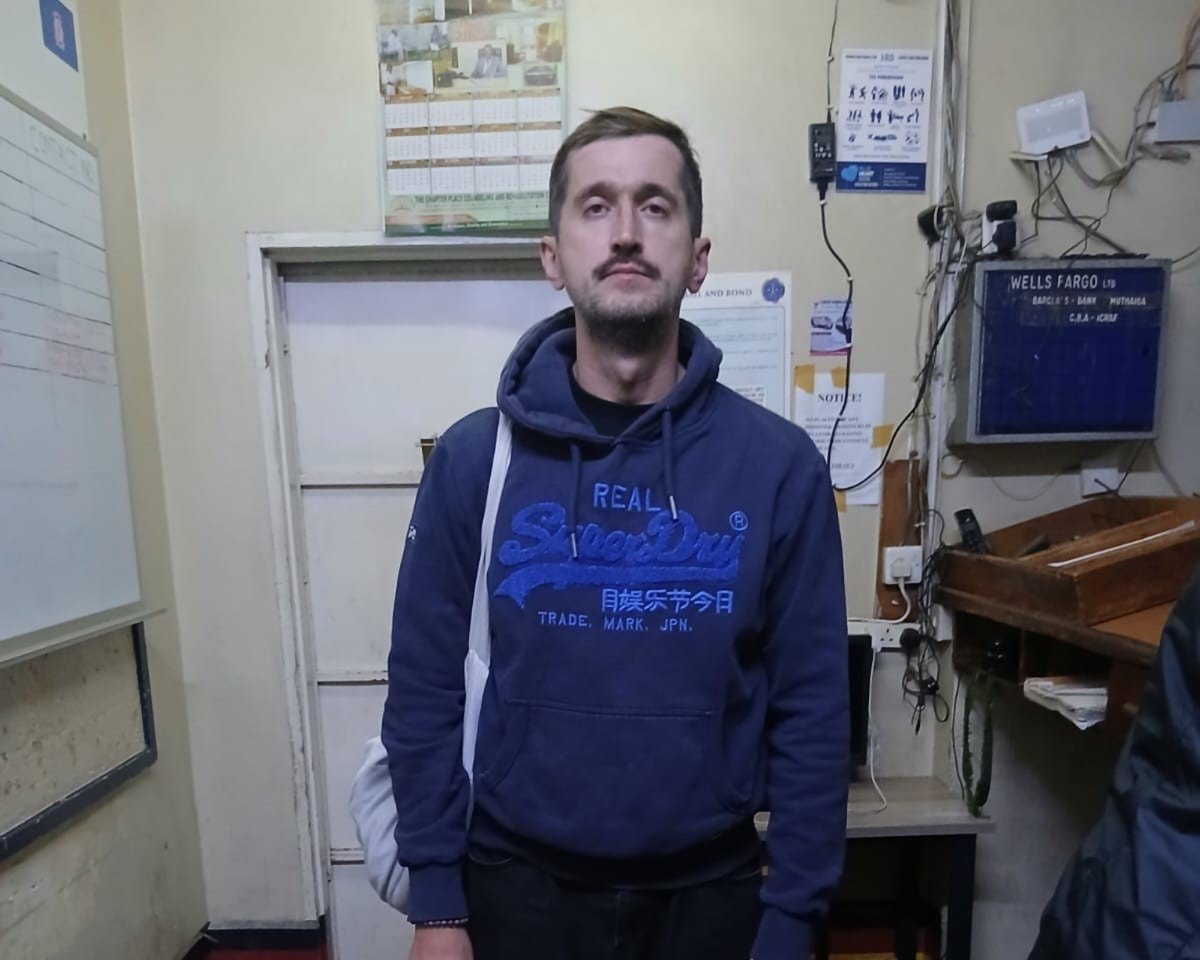
Kenya has addressed the recruitment problem most systematically. In September 2025, Kenyan law enforcement exposed a criminal network on the outskirts of Nairobi that arranged “employment” for Kenyans supposedly for work in Russia—that is, to fight at the front. Later, police also arrested and deported Mikhail Lyapin, a Russian citizen with ties to the Russian embassy.
In February 2026, the country’s foreign minister spoke about the closure of more than 600 employment agencies over suspicions of fraudulent recruitment for the Russians. Subsequently, the National Intelligence Service presented parliament with a report on the work of Russian recruitment networks, which included the above figure of 1,000 recruited Kenyans. As of publication, the report also identified 89 Kenyans at the front, 35 at military bases, 39 in military hospitals, 28 missing, 30 returned home, one detained, and one who had already completed his contract. In addition, it found that employees of a number of state agencies cooperated with Russians to prevent interception at the airport. The intelligence report also drew attention to networks working with staff at the Russian embassy to issue visas.
Despite Russia’s denials, Musalia Mudavadi, Kenya’s foreign minister, raised the issue during his visit to Moscow in March—and in response received a promise from Lavrov that Kenyans would no longer be allowed to sign contracts with Russia’s Defence Ministry.
South Africa is another country that was forced to respond to the problem of Russian recruitment. There was more political drama here. On November 6, 2025, the South African Presidency said it had received a request for help from 17 South Africans who had been forced into service in the Russian armed forces. Very soon it became known that the recruitment of this group (and two Batswana) involved Duduzile Zuma-Sambudla, daughter of Jacob Zuma—the scandal-plagued former South African president, during whose 2009–2018 tenure the country significantly expanded ties with Russia—a member of the National Assembly from his uMkhonto weSizwe party, and a generally pro-Russian politician. Moreover, her sister accused her of this as well, naming two other accomplices. Zuma-Sambudla herself resigned her parliamentary seat, claiming she had been manipulated and believed she was sending the men to civilian programs.
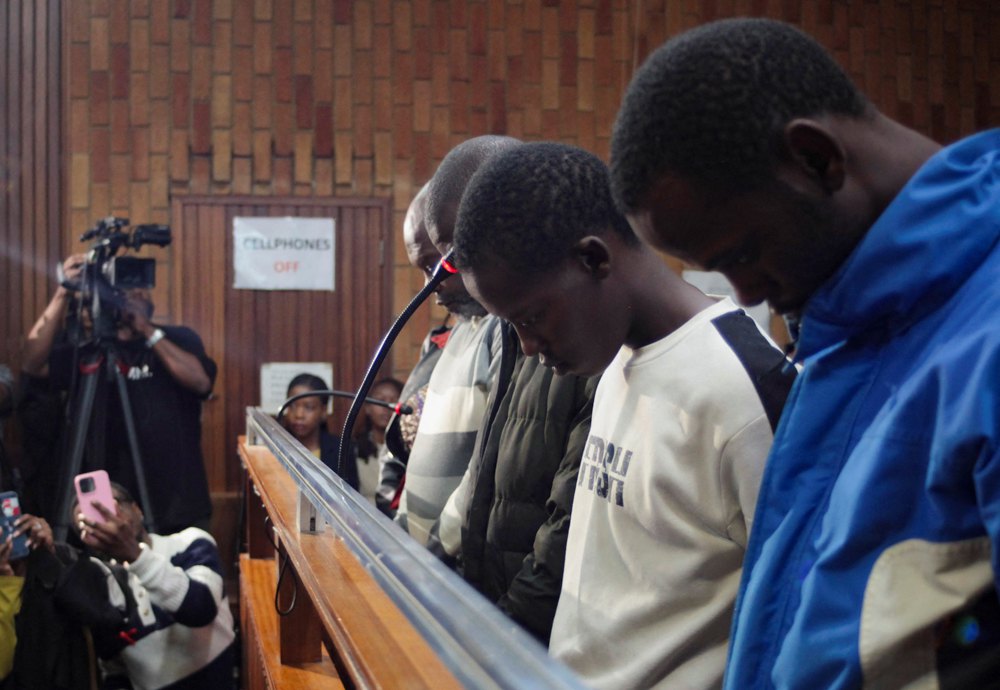
At the end of 2025, another group of five people was arrested, including a radio host from the state broadcaster SABC, who are accused of organizing a network to recruit mercenaries for Russia, as well as three South African citizens who were supposed to become recruits in the Russian army.
Efforts to bring the South Africans back were conducted through diplomatic channels and ended successfully. On February 10, South African President Cyril Ramaphosa held a phone call with Putin, during which the latter assured support for their repatriation. By the end of the month, 15 of the 17 men returned home to face trial—South African law strictly prohibits serving in foreign armies without state permission. That same month, the country’s foreign ministry announced the deaths of two citizens (not among those 17) while serving in the Russian armed forces.
The South African government had also previously said it would examine the situation of its citizens ending up in Alabuga.
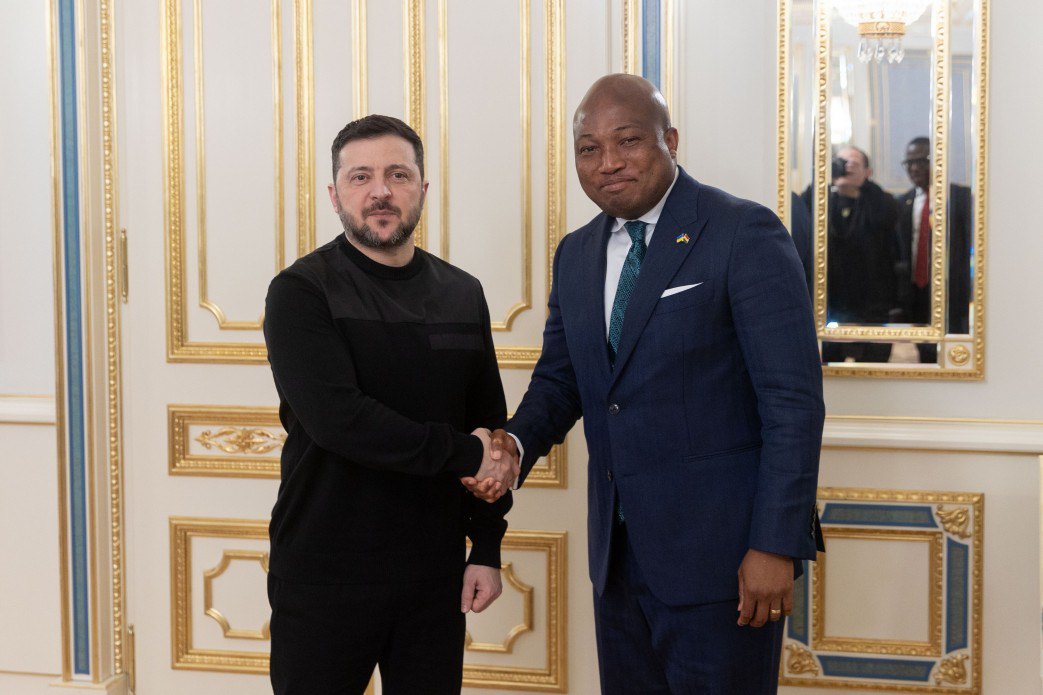
Ghana’s response deserves separate mention. Samuel Okudzeto Ablakwa, the country’s foreign minister, went to discuss the problem of Russian recruitment of Ghanaian citizens not in Moscow but in Kyiv, where he met with Andrii Sybiha and Volodymyr Zelenskyy. As a result, the sides agreed to counter further Russian recruitment and to continue working on the repatriation of two Ghanaians who ended up in Ukrainian captivity. After the visit, the minister also cited the statistics he had received: 272 Ghanaian citizens had served in the Russian army since 2022, of whom 55 were killed.
All three countries mentioned share something in common: they are stable Anglophone democracies with active civil societies that demand justice. Ghana and Kenya take pro-Ukrainian positions internationally; South Africa’s stance over the past four years has been rather ambivalent. But the problem is hard to ignore not only for them. The Nigerian government warned its citizens about recruitment; the activities of Russian networks were investigated in Botswana and Uganda—two countries with radically different positions on Russia’s war against Ukraine. Even such a loyal ally of Russia as the government of Zimbabwe recently published a warning about fraudulent Russian recruitment practices.
Conclusions
The entire phenomenon of mass recruitment of Africans is a very telling sign that Russia has built an extensive infrastructure on the continent to sustain its influence—one it can use to carry out various tasks. The Zuma-Sambudla case, in which a politician who spreads Russian propaganda suddenly begins organizing the recruitment of South Africans, is more of an extreme and an exception; but if Russia can afford to involve a member of a national parliament, what does that say about its ability to bribe an official in a local migration service?
If influence agents have spent years spreading disinformation, it will not be difficult for them to hire influencers to advertise contracts or to generate and distribute AI content with similar messaging. Moreover, some individual mercenaries who fought against Ukraine, upon returning home, themselves took up promoting recruitment on social media.
If the Ukrainian state intends to systematically counter the mass recruitment of Africans for the war, it should approach this less as a problem of geopolitical competition and more as a problem of transnational crime. Andrii Sybiha has already spoken about seeking EU sanctions against recruitment networks and entry bans for mercenaries; to inform people about recruitment schemes, a dedicated website has been launched. It would also be appropriate to create a special mechanism under which Ukraine would exchange relevant information about these networks with law enforcement agencies in African states—for example, data on travel agencies and employment agencies involved in recruiting Africans; and on specific individuals, both on the African and Russian ends of the network, who participate in this and bear responsibility for organizing the system.
The creation of blacklists of countries whose citizens will no longer be recruited suggests that the Russians themselves understand the destructive nature of such a policy for their influence. By using these methods, Russia is actively undermining the sovereignty of African countries, even friendly ones; it openly disregards the lives and health of their citizens, humiliating and abusing the dignity of these individuals and the societies to which they belong. For pragmatic reasons, states may tolerate this, but diplomatically it is a serious display of contempt—indeed, hostility.
In essence, it is self-sabotage of Russia’s “soft power.” The very fact that some Africans were forcibly recruited while in Russia already casts a shadow over all genuine work and study programs—who can know which of them hides a forced contract?
As a rule, African states take a realist approach to relations with others. Their leaders are well aware of their weakness on the international stage and understand that it is in their interest to maintain good, partner-like relations with Russia as a non-Western center of power and a source of investment. But there is another, more sentimental variable in these calculations. Among some political elites, the memory of Soviet “friendship of peoples” still lives on—how the USSR helped them in the anti-colonial struggle and educated African students at universities. But over time, as the events of the second half of the 20th century come to seem like ancient history, new leaders will remember something very different about Russia: how Rusal took over Guinea, how Wagner fighters killed in Mali, and how the Russian army turned African men into “can openers.”