





How many aircraft will we actually receive?
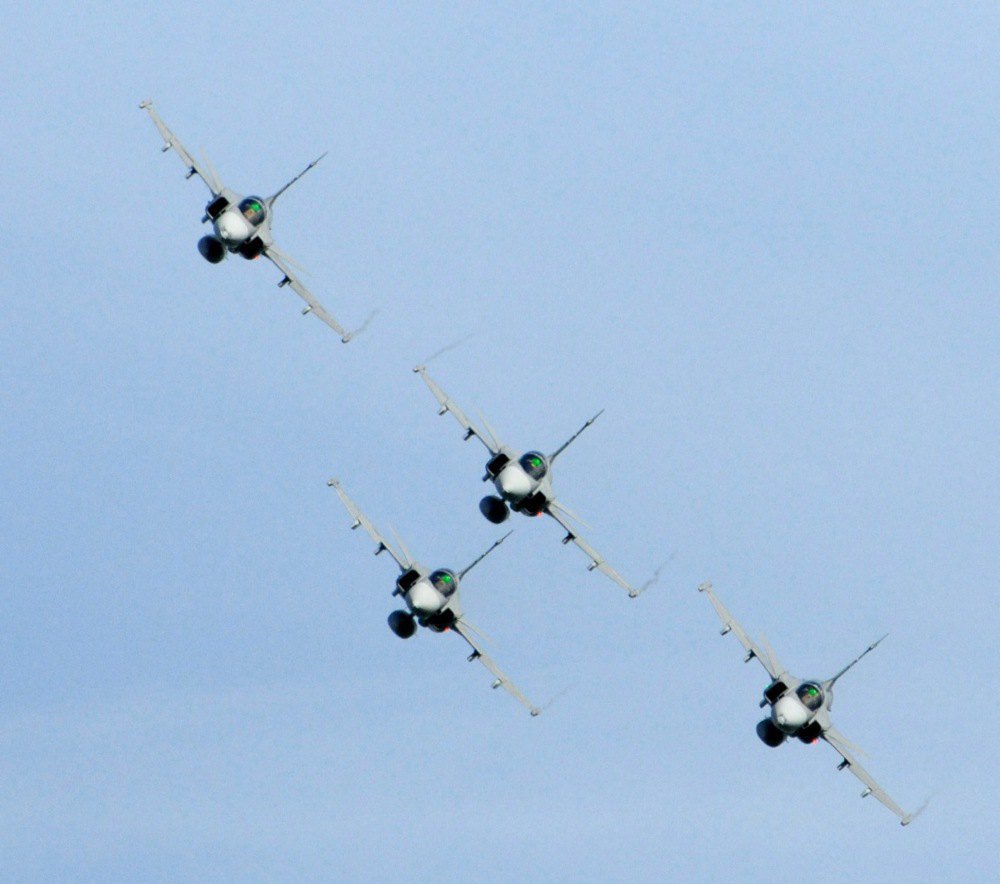
Let us look at the figures, as Sweden has now laid its cards on the table. Ukraine is set to receive 16 JAS 39 Gripen C/D aircraft — a full squadron — with deliveries scheduled to begin in early 2027. But that is only the tip of the iceberg.
At the same time, an agreement has been signed for the purchase of a further 22 aircraft of the latest Gripen E variant by 2030, financed through the same €90 billion EU loan programme. In other words, this is not a one-off ‘give and forget’ arrangement, but a systematic transition of the Ukrainian Air Force to the Saab platform, with the long-term goal of building a fleet of 100–150 aircraft.
This would constitute a fully fledged strike force and, crucially, buy Ukraine time: time to gradually retire its remaining post-Soviet aircraft, fully integrate the F-16 into the air-defence system, and use existing stocks of air-to-air missiles that are approaching the end of their service life.
Guerrilla aviation: taking off from the road
If the F-16 is a temperamental thoroughbred that requires a perfectly maintained runway, the Gripen was designed for the realities of Cold War paranoia.
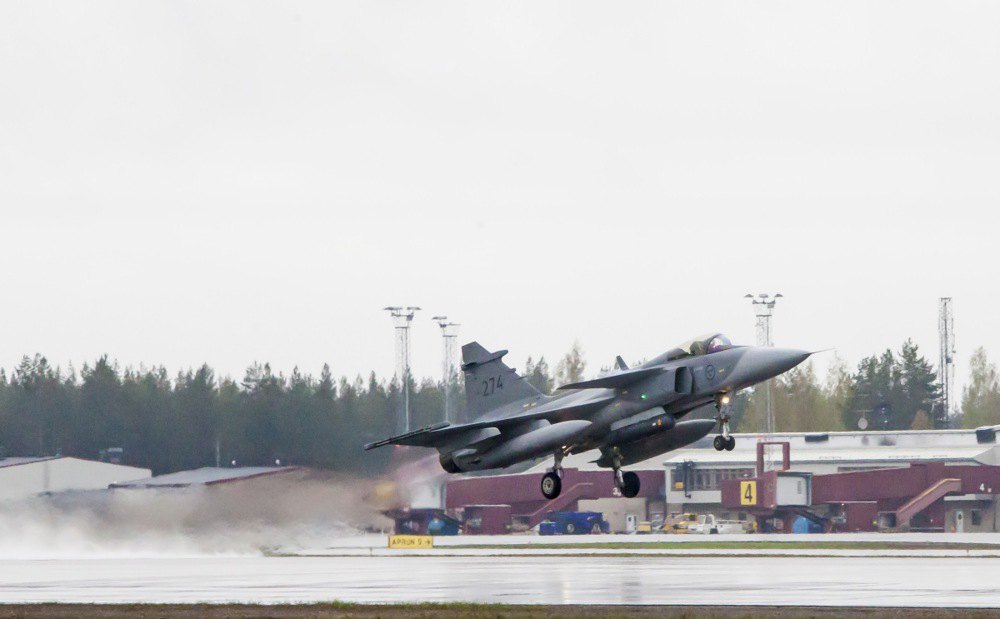
Swedish military doctrine assumed that the Soviets would destroy all fixed airfields within the first hours of a conflict and potentially strike them with nuclear-capable missiles. That is why the Gripen can operate from ordinary stretches of motorway.
All the infrastructure required for refuelling and rearming fits into a couple of lorries. They pull up, five conscripts refuel the aircraft in 10–15 minutes, attach the missiles, hand the pilot a flask and a snack, and he is back in the air. Russians cannot destroy aircraft that it cannot locate at fixed bases.
European missiles: independence from US political fluctuations
This is a major strategic advantage.
With the Gripen, Ukraine gains access to a European family of weapons, including the Meteor, IRIS-T and Taurus/Storm Shadow missiles. Given the unpredictability of US policy, recurring domestic political crises and delays in deliveries, the Gripen offers greater independence from American political fluctuations, while also providing the tactical flexibility that comes from not relying on a single supplier.
What about missile production?
The European defence group MBDA is currently investing heavily in expanding its manufacturing capacity. By the end of 2025, the company will have doubled missile production, and a further 40% increase is planned for 2026. This amounts to hundreds of additional missiles being produced annually.
New production lines have already been established, including at the plant in Bolton, United Kingdom, as well as facilities in France. No shortage of ammunition for Swedish aircraft is currently anticipated.
Why the Meteor is not just ‘another missile’
A conventional air-to-air missile — whether the Russian R-77 or older Western models — operates like a solid-fuel rocket. Its engine burns out within the first few seconds, accelerating the missile towards its target, after which it continues flying purely by inertia.
In the final phase of flight, as it closes in on its target, the missile rapidly loses energy. An experienced pilot can execute a sharp evasive manoeuvre, forcing the missile to turn, bleed off speed and ultimately lose its ability to intercept.
The Meteor, however, presents an entirely different challenge for Russian Su-34 and Su-35 crews. Its effectiveness is based on the combination of a ramjet engine and highly advanced guidance algorithms.
Ramjet engine. The Meteor does not rely on inertia alone. The missile regulates its fuel consumption throughout flight. It conserves thrust during the cruise phase and, upon entering engagement range, increases power and accelerates to speeds of up to Mach 4. It continues manoeuvring while maintaining propulsion.
Even if an Su-35 pilot executes a perfectly timed 9G manoeuvre and briefly forces the missile off course, the Meteor does not simply lose energy and fall away. Its onboard computer instantly recalculates the trajectory, adjusts thrust and continues pursuing the target until either the missile or the aircraft reaches its performance limits.
Data link. Many missiles operate largely on a ‘fire-and-forget’ principle. If electronic warfare systems succeed in disrupting the missile’s seeker, the weapon may lose its target.
The Meteor, however, is equipped with a two-way data link. If its seeker is temporarily degraded, the missile can continue receiving targeting information from the Gripen’s radar or from an ASC 890 airborne early warning and control aircraft operating well outside the range of Russian electronic warfare systems. It can therefore continue towards its target using externally provided coordinates until the final stage of interception, where jamming becomes significantly less effective.
Defeated by its own defences (Home-on-Jam). Imagine a Russian pilot detects a launch and activates electronic warfare systems at maximum power in an attempt to overwhelm the Meteor’s seeker with interference.
In this scenario, the missile can switch to a passive homing mode. Rather than searching for reflected radar signals, it tracks the source of the jamming itself. The stronger the emissions from the electronic warfare system, the more prominent the target becomes. In effect, the aircraft’s own defensive measures can provide a guide for the incoming missile.
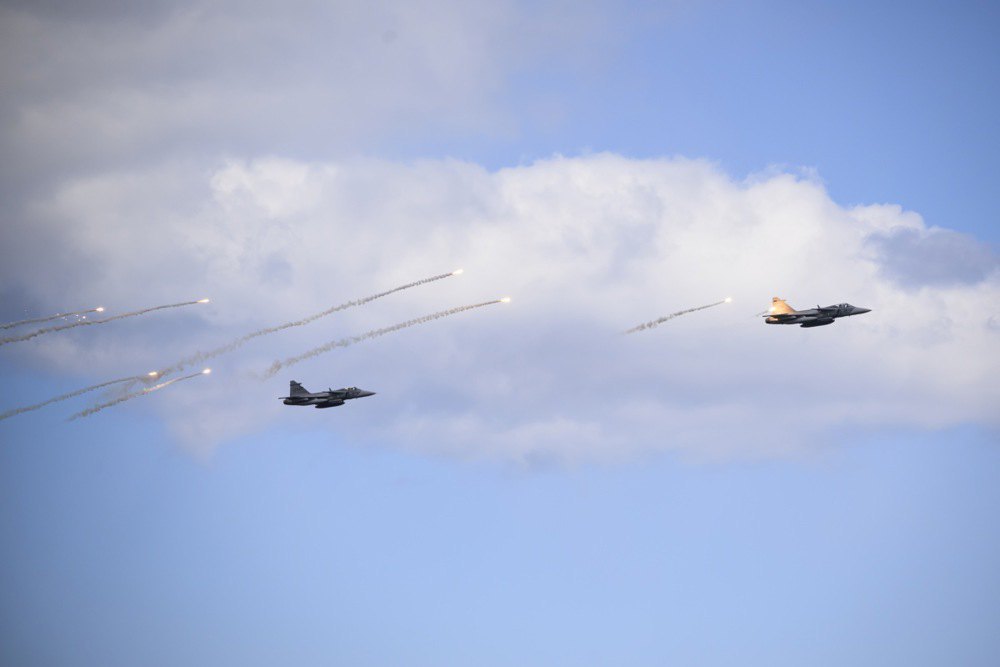
Doppler discrimination (filtering out decoys). A standard defensive tactic involves a sharp manoeuvre combined with the release of chaff — clouds of metallised strips designed to create false radar targets.
The Meteor’s radar and processing systems are designed to analyse Doppler shift data with exceptional precision. The missile can distinguish between a cloud of chaff, which rapidly slows down after release, and an aircraft travelling at high speed. Within fractions of a second, the system filters out objects that do not match the expected flight profile, allowing it to remain focused on the genuine target.
The bottom line for Russians. The Meteor is exceptionally difficult to evade because it retains propulsion throughout much of its flight. It is difficult to defeat with electronic warfare because it can exploit jamming signals. It is difficult to deceive with decoys because it can differentiate between false targets and a manoeuvring aircraft.
That is why the Meteor’s so-called No-Escape Zone is significantly larger than that of most competing air-to-air missiles. Once an aircraft enters that zone, the pilot faces a far more demanding interception problem than with conventional missile systems.
Rapid replacement of losses from operational inventories
Aviation inevitably involves losses. There are accidents, incidents of friendly fire, and aircraft that spend months undergoing major overhauls. Here, the Gripen offers a significant advantage thanks to the ability to replace losses quickly from the active inventories of the Swedish Air Force and other operator nations.
Ukraine would not have to wait years for replacements. Saab’s current production rate stands at approximately 18–24 aircraft per year, with plans to increase this to 36. More importantly, there is already a substantial fleet of operational aircraft in Europe. A pool of around 120 aircraft provides considerable flexibility. If necessary, Ukraine could rapidly receive second-hand aircraft or airframes for spare parts, while the training of technicians and pilots can be completed relatively quickly.
Hunting the KAB carriers
The Su-34 aircraft dropping guided KAB bombs on Ukrainian positions remain one of the most serious challenges on the front line.
The Gripen’s low radar signature, advanced radar system and operational flexibility make it particularly well suited to countering this threat. A likely tactic would see the aircraft flying at ultra-low altitude, remaining largely undetected by Russian air-defence systems while receiving targeting information from ground-based radars or Swedish ASC 890 airborne early warning and control aircraft already in Ukrainian service.
The Gripen could then execute a rapid climb, launch its missile and immediately return to low-level flight. By the time Russian operators determine the source of the attack, the aircraft may already have disappeared from the area.
Read alsoAsymmetric response: what Ukraine can counter Russia’s mass glide bomb strikes with
Networked operations and ‘silent kills’
The Gripen is equipped with an advanced internal data-link system designed to support dispersed and highly coordinated operations.
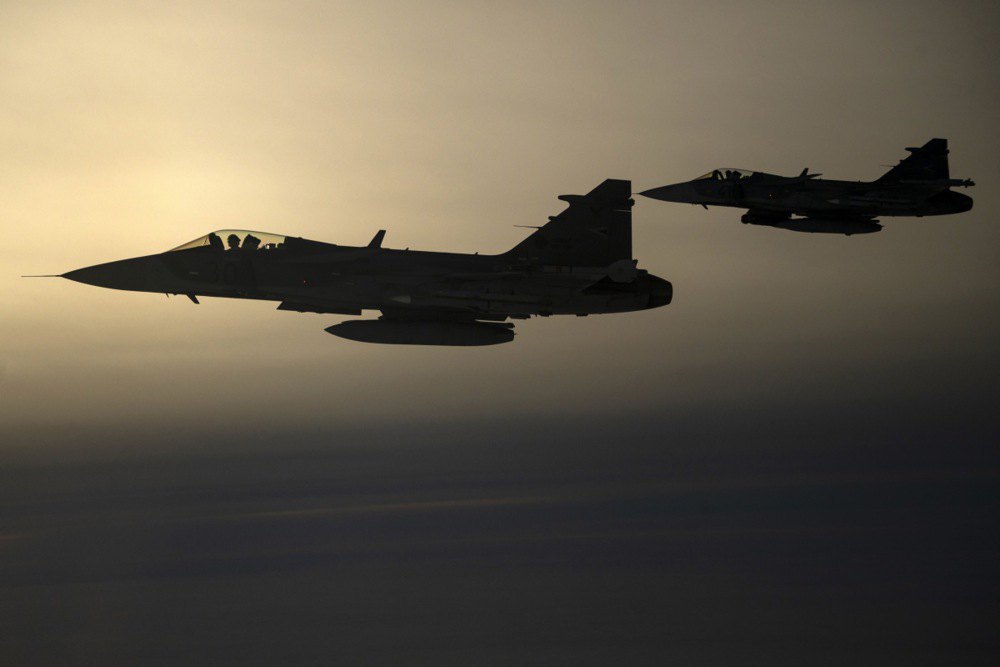
Four aircraft take off. Only one activates its radar or receives targeting information from an ASC 890 aircraft, transmitting coordinates to the other three through a secure network. This aircraft is protected by platforms carrying electronic warfare and reconnaissance systems, making its defence a priority.
The remaining aircraft operate in complete radio silence. The radar warning receivers aboard a Russian Su-34 detect no direct illumination because no radar is actively targeting them. One of these ‘silent’ Gripens can then launch a Meteor missile using targeting data received from the network at ranges exceeding 100 kilometres.
To the target, the missile appears to emerge without warning. It is, in effect, an aerial ambush.
The Gripen is also capable of acting as a stand-in jammer — an electronic warfare platform operating close to the contested area while remaining outside the most dangerous air-defence zones.
In practical terms, this could involve a swarm of Ukrainian strike drones or a salvo of Neptune cruise missiles approaching a Russian oil refinery. The Gripen would remain at a safe distance while using its electronic warfare suite to project highly focused jamming towards Russian radar systems along the flight path. This could create an electronic corridor through which drones and missiles are able to approach their targets with a reduced risk of detection.
Offensive electronic warfare: blinding the enemy
Sweden has long maintained one of the world’s most advanced schools of electronic warfare, and the Gripen’s built-in EW systems are designed not merely for self-defence but also for offensive operations.
They are capable of disrupting enemy radar systems, generating sophisticated jamming effects and degrading the effectiveness of ground-based air-defence networks, thereby creating more favourable conditions for drones, missiles and other aircraft.
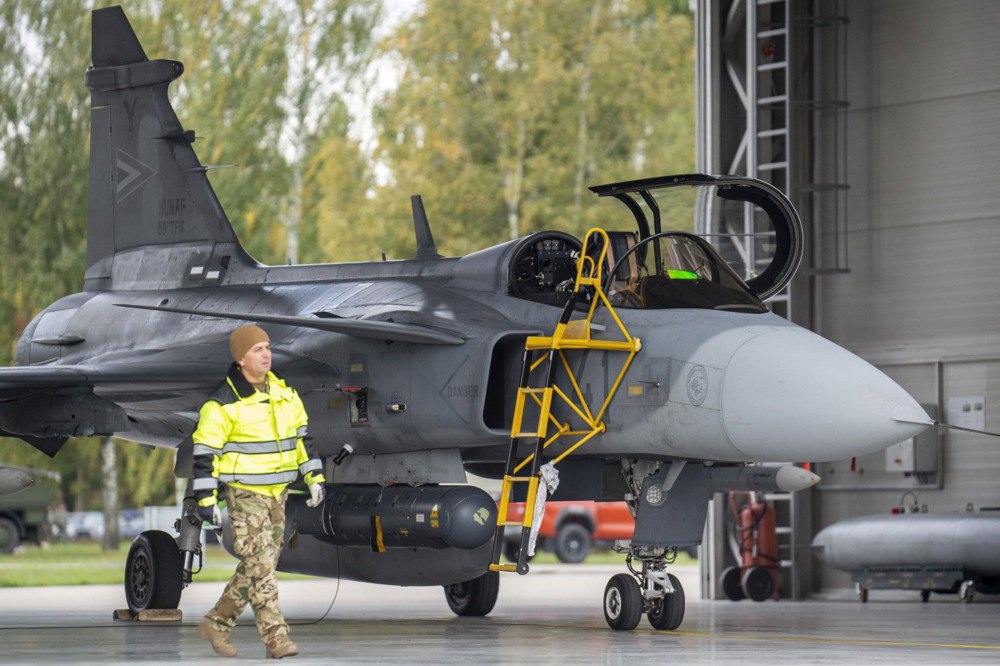
The Swedish approach differs markedly from both Soviet doctrine and traditional NATO concepts. Swedish planners assumed from the outset that their aircraft would have to operate within the engagement zones of sophisticated Soviet surface-to-air missile systems such as the S-300 and S-400.
Simply broadcasting powerful jamming signals across all frequencies would turn an aircraft into a highly visible target for missiles designed to home in on sources of interference.
For this reason, the Gripen’s electronic warfare system functions less like a hammer and more like a scalpel. At its core is DRFM (Digital Radio Frequency Memory) technology.
When a Russian radar emits a signal to detect and track a target, the Gripen does not necessarily attempt to overwhelm it with noise. Instead, it captures the signal, creates an instantaneous digital copy, modifies key parameters such as phase, timing and Doppler characteristics, and then transmits the altered signal back.
The result is that the radar operator may see multiple false targets, targets moving in incorrect directions, or target markers displaced from their true positions. The radar continues to function and may even launch a missile, but the engagement is directed towards a false location rather than the actual aircraft.
By continuously feeding deceptive information into the radar system, the Gripen seeks to undermine the effectiveness of enemy air-defence networks while preserving its own survivability.
***
The Gripen is about far more than achieving air superiority. It represents an asymmetric response to a Soviet-style military system that relies heavily on numerical mass.
Ukraine is gaining access to a low-signature, highly mobile platform that is less dependent on political developments across the Atlantic, capable of operating at long ranges and designed to complicate the work of Russian intelligence and air-defence systems.
The Gripen is not an isolated project limited to a single country. It is part of a global ecosystem of roughly 300 aircraft operated across several regions, from Southeast Asia to South America, where Brazil has established licensed production of the aircraft.
By adopting the Swedish platform, Ukraine would become part of a wider logistics and support network that includes spare parts, software updates, pilot and technician training, future modernisation programmes and long-term production capacity.
That is why the Gripen matters.