





Isolation of the theatre of operations and overloading air defences
We are currently carrying out numerous strikes against logistics infrastructure, railway traction substations, trains and lorries. This does not yet amount to the isolation of the theatre of operations, but rather to a full-scale blockade. Restrictions such as limiting fuel purchases to 20 litres per person per week and imposing controls on the sale of cereals, sugar and other goods are a clear indication of this.
At Chongar, the Defence Forces destroyed the bridge. It turns out that 200-kilogram munitions can indeed be used to demolish overpasses and create massive craters in road surfaces — who would have thought? Yes, pontoon crossings have been installed there, but they will slow movement across the route, while detours increase the risk of strikes by short-range drones operating from the right bank of the Dnipro.
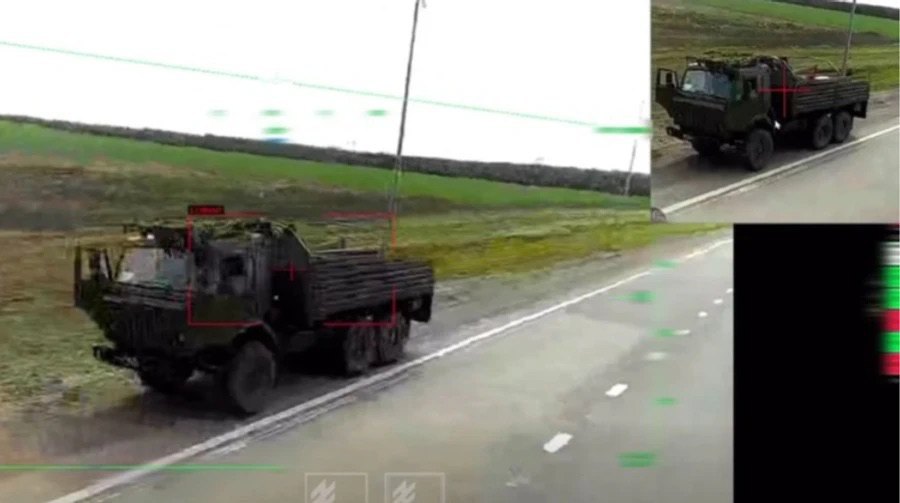
The entire ‘Novorossiya’ route is littered with burnt-out fuel tankers and lorries, targeted not only by medium-range missiles carrying substantial warheads but also by FPV drones from the Matrik and Hornet systems.
It is no coincidence that the DIU, SBU and USF have been closely monitoring Crimea, the Azov region and the Black Sea coast. There could hardly be a better decoy than the key revenue-generating assets of the Russian budget near Novorossiysk, Tuapse and St Petersburg, particularly as a major economic forum is taking place there.
The Governor of the Leningrad Region reported that 141 drones were shot down on the morning of 6 June alone. Even if the figure has been exaggerated in the traditional manner, it still suggests the launch of a massive swarm. St Petersburg and the surrounding region possess the second-densest air defence network in the Russian Federation after Moscow. To penetrate it, we have shifted from the tactic of isolated ‘stray birds’ to the large-scale saturation of target-acquisition channels. When 30–40 targets from different directions simultaneously enter the air defence system’s field of view at extremely low altitude, radars and operators become overwhelmed, while the shortage of interceptor systems remains unresolved.
The result is panic among the authorities. For the first time, St Petersburg Governor Beglov has urged residents not to go outside, while mobile internet services are being heavily jammed across the city in an attempt to disrupt the navigation systems of Ukrainian UAVs.
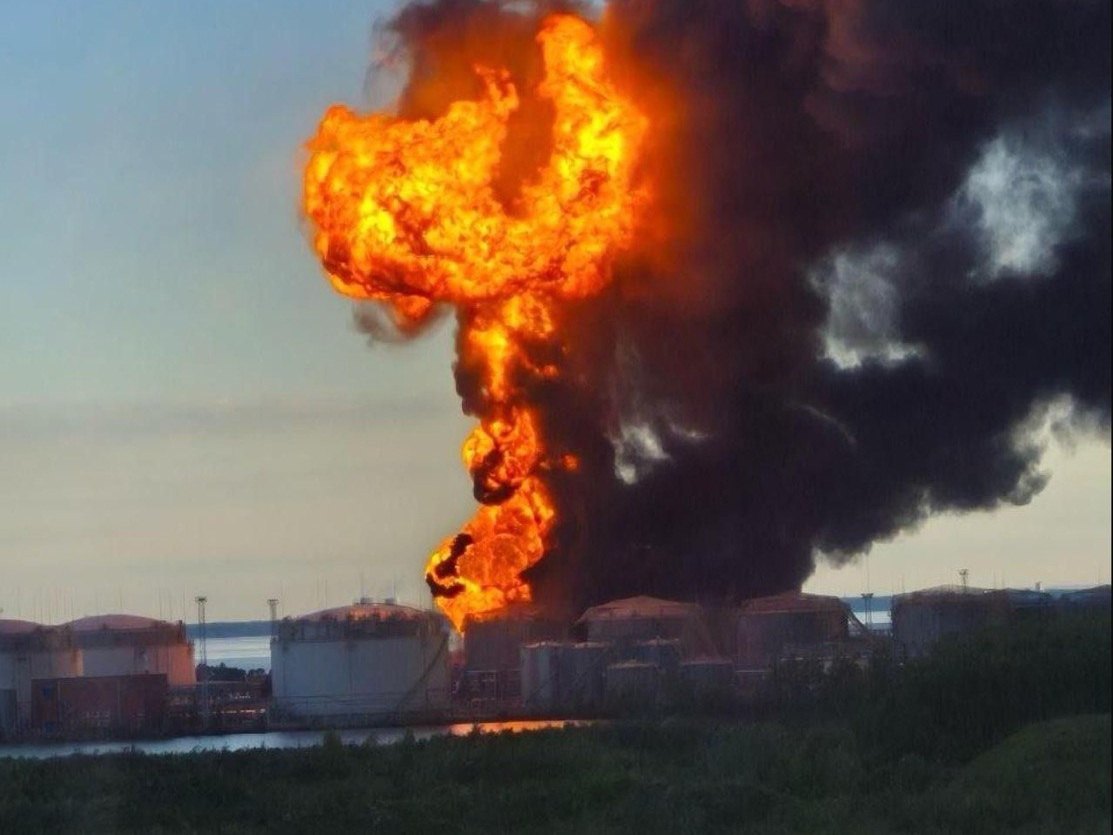
Whatever the case, it is expensive. And if the temptation arises to escalate pressure on Europe in an effort to halt the flow of millions of shells and drones to Ukraine, we will make it abundantly clear what awaits the Baltic Fleet — the same fate that befell the Black Sea Fleet, which continues to come under attack in Novorossiysk, even while moored at its quays.
Prime targets in the Baltic hub
Drones struck the Research Institute of Marine Thermal Engineering in Lomonosov. This is a key research centre and Russia’s leading enterprise for the development of long-range thermal torpedoes and propulsion systems for underwater weapons. The Baltic represents a strategic bottleneck: mines, barriers and anti-ship missiles deployed by Sweden, Denmark, Finland and Poland would almost certainly block any exit. In such circumstances, submarines would become the only viable means of inflicting damage on NATO naval forces. That, in my view, is one reason why these strikes took place. Perhaps planning underwater operations in the region will prove no easier than organising the much-discussed landing near Odesa, while those mysterious and remarkably effective drones continue to arrive.
Moreover, the laboratories, climate chambers, test benches for hydrodynamic trials and facilities used to test thermal torpedo engines are only part of the story.
The Russian Navy’s 15th Arsenal in Velikaya Izhora is a vast depot. Established in the 1930s, it serves as a heavily fortified ammunition storage base for the Baltic Fleet. Part of the infrastructure is located underground. The fire has spread across 1.5 square kilometres, has been burning for two days and is clearly visible in satellite imagery. Judging by the fact that only one section of the facility is ablaze, the damage appears to be concentrated in the open storage areas.
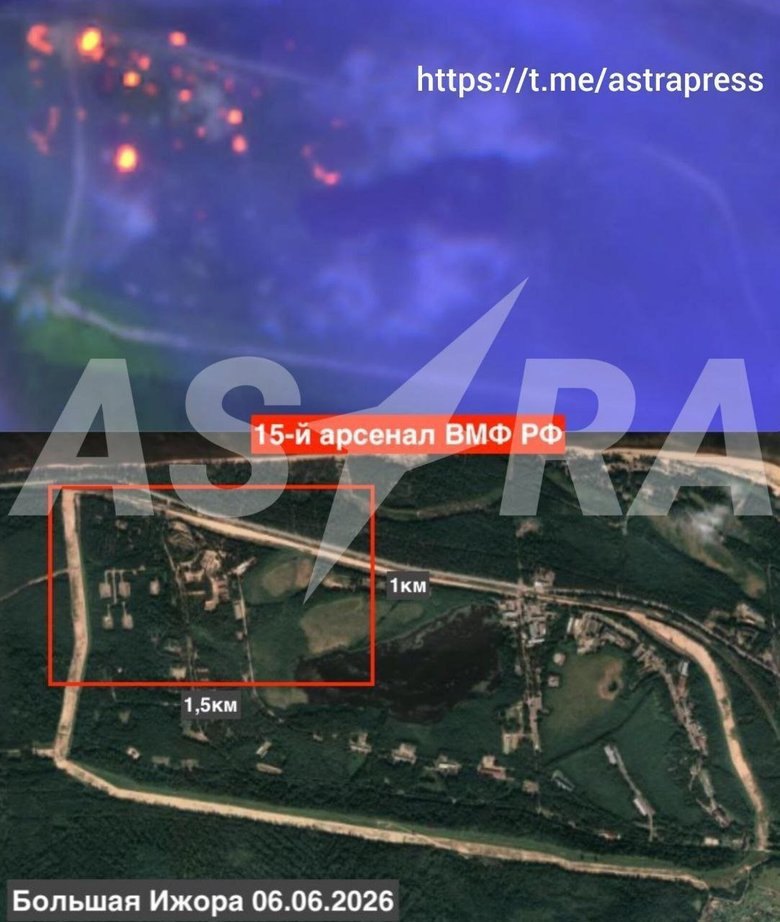
At the 15th Arsenal, mine and torpedo armaments are not only stored but also repaired and disposed of. Thousands of shipping containers, stacks of wooden crates, empty casings, lubricants, decommissioned scrap and ammunition are kept in the open air or in light hangars while awaiting dismantling or delivery.
Loading ramps, preparation workshops, cranes, railway sidings and shipping containers within the facility have been burnt or damaged. I am convinced that several thousand tonnes of ammunition have been rendered unusable, including shells, mines and depth charges. Even if the most valuable torpedoes or Kalibr missiles survived in underground storage, it is physically impossible to remove them, arm them and prepare them for launch from a base where secondary detonations are still occurring and large areas remain covered with burning debris. As a tactical unit, the arsenal has effectively been paralysed.
The 7082nd Technical Mine and Torpedo Base (military unit 81263) is a specialised combat unit — a Category 1 facility — responsible for the storage and operational supply of mine and torpedo armaments to the fleet.
There are hundreds of storage facilities within its perimeter. Locals habitually refer to the entire area as the 15th Arsenal. In reality, one railway line running through the forest leads to the disposal workshops of the 15th Arsenal, while a neighbouring line, just 500 metres away, terminates at warehouses containing ready-to-use missiles and torpedoes belonging to the 7082nd Base. The two facilities share logistics networks, roads and security infrastructure.
The underground bunkers are difficult to penetrate, but everything stored in the above-ground hangars had already been prepared for shipment. In other words, these included missiles and torpedoes that had undergone routine maintenance and were awaiting loading onto ships in Kronstadt.
By destroying these hangars at the 7082nd Base, we have physically severed the supply chain. The Baltic Fleet’s ships may remain operational, and its submarines may still be capable of putting to sea, but for the time being they have little to fire. Their arsenal has effectively been paralysed. The production cycle for a thermal torpedo or a Kalibr missile involves sophisticated electronics, engines and months of work by the military-industrial complex. Even if the majority of the detonating stock consists of conventional ammunition, the destruction of five thousand tonnes of munitions will impose a substantial financial burden on the Russian budget.
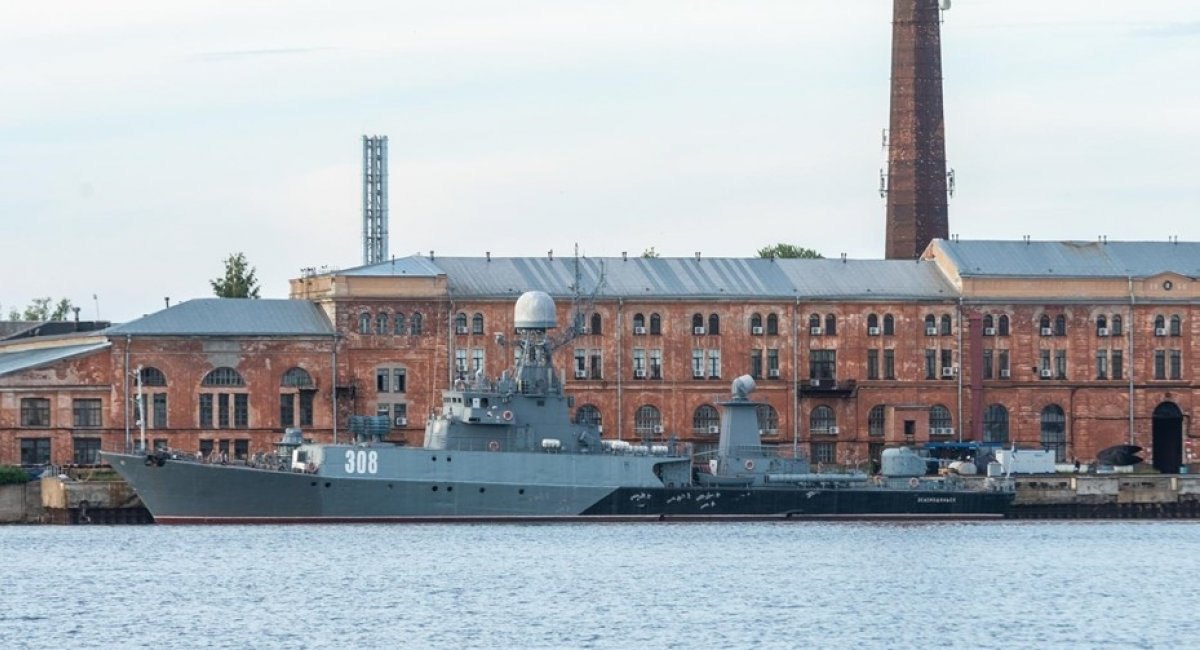
The Kronstadt Shipyard is the only facility in the Baltic capable of rapidly carrying out repairs on large vessels. In addition to the corvette Boyky, which was reportedly burnt out while in dock, strikes were also recorded against the shipyard’s power supply infrastructure and mechanical workshops.
The shipyard has experienced disruptions to its power supply, as well as damage affecting the compressor stations that provide air and water to the docks. As a result, repairs to other vessels currently undergoing maintenance have either been halted or significantly slowed.
If we reduce this Baltic campaign to hard figures, the empire has incurred substantial direct losses in the space of just a few nights. Restoring the metering systems at the oil terminal in Vugilna Harbour and sourcing sanction-compliant electronic components is likely to cost between $15 million and $20 million. Replacing the burnt-out radio-electronic equipment aboard the corvette Boyky could require a further $40 million to $50 million. However, the most costly blow was delivered in the forests of Velikaya Izhora, where Shoigu’s highly publicised arsenal modernisation project — reportedly worth $20 million to $30 million — went up in flames, along with five thousand tonnes of mine and torpedo munitions.
We are forcing the Russian General Staff into an unenviable dilemma: either allow St Petersburg to burn before the eyes of foreign visitors attending the St Petersburg International Economic Forum and watch the Baltic Fleet suffer further attrition, or leave the front line more exposed by withdrawing scarce air defence assets from Crimea and Tokmak to protect the deep rear while we continue striking traction substations near Gvardeyskoye or disabling locomotives near Oktyabrskoye.