





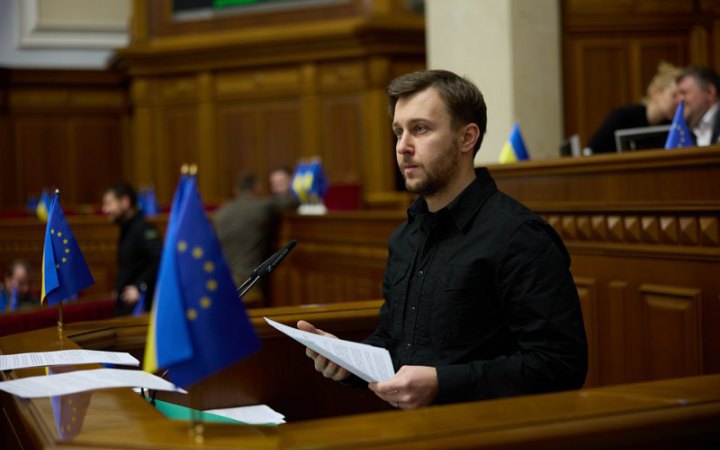
A working subgroup preparing electoral legislation for the first post-war elections has built in a number of safeguards against abuses, “carousel” voting schemes and commanders pressuring voters at special polling stations.
Roman Lozynskyi, First Deputy Chair of the Verkhovna Rada Committee on the Organisation of State Power and a serviceman in the Armed Forces of Ukraine, said this in an interview with LB.ua.
According to him, the first safeguard is the very procedure for establishing such a polling station. He explained that a special polling station is possible only on a substantiated submission by the Ministry of Defence in exceptional cases and by decision of the Central Election Commission, which must confirm the absence of ordinary polling stations and the impossibility of ensuring logistics and the transfer of voters.
The MP called the second key safeguard the procedure for compiling voter lists from among service personnel for the first post-war elections. Under the proposed rule, the lists for a polling station will include only those who are actually present in the unit at the time of submission — two to three weeks before polling day.
“If, God forbid, someone from this military unit has gone missing but is still on the books, and he or she has been absent for a long time (possibly in captivity, possibly with no information), then they are not submitted on the voter lists,” Lozynskyi said.
He stressed that this makes it impossible for potential “ghost voters” to appear — people in whose name someone could cast a ballot: “If we say that only those who are actually in the unit are included, then there will definitely be no such ‘ghost voters’ on the voter lists, and definitely no one will vote in their name.” He added that this also applies to those who have deserted their unit.
The MP acknowledged that in a hierarchical structure a commander may try to abuse their rank and direct personnel. He expressed hope that such cases will not occur or will be exceptional, but even for them the rules set out criteria under which a submission to set up a polling station is possible at all — in particular, to ensure that “10,000 voters do not suddenly appear in the form of three brigades”.
Lozynskyi also addressed observation, which is envisaged even at special polling stations, but must be regulated.
“A notional observer in a notional area” should not be gathering information in basements and garages and then “turn up, register, leave and dump intelligence to the Russians on Telegram,” the MP warned.
That is why such observers will undergo an accreditation procedure. At the same time, he stressed that accreditation must not turn into a way of filtering out inconvenient observers on political grounds.