





From Altruism to Hostility: A Familiar Pattern of Change
In your view, what are the main reasons Poles’ attitudes towards Ukrainians have shifted from support and warmth to scepticism and even hatred?
We see this in every situation of deep crisis in Poland: at first people respond very altruistically, with a strong sense of social responsibility, and become extraordinarily open. And then there is a shift in the opposite direction.
We saw it after the 2010 Smolensk air crash, when Poland’s president and the entire political elite were killed. In the first days everyone was together, showing care and support. But it quickly turned into a battle of conspiracy theories claiming it was an assassination and that Donald Tusk was involved. Bitter political wars began, leading to enormous polarisation in society and a wave of hatred and conflict.
Something similar happened at the start of the COVID-19 pandemic. In the first days there were countless support initiatives: people bought and delivered food to those in isolation. Then it suddenly stopped and conspiracy theories began — against vaccinations or about the virus itself — along with huge conflicts that politicians quickly started to exploit.
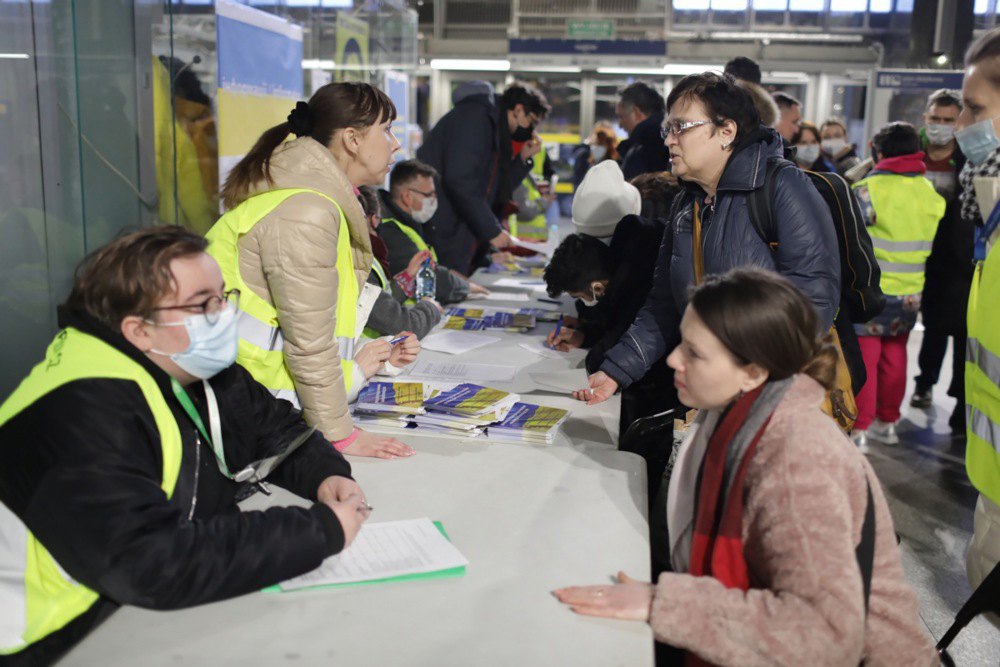
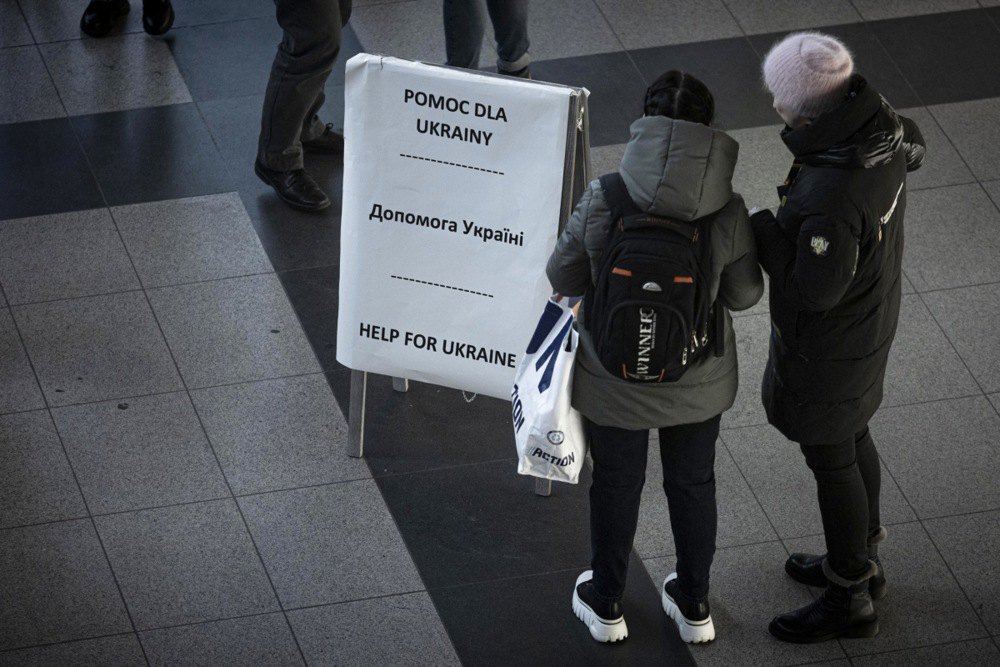
I think something similar happened in 2022. The moment of Russia’s full-scale attack on Ukraine and the horrific crimes in Bucha and Irpin deeply moved Poles. At first we had a period of very strong support. It lasted even longer here, didn’t it? When we conducted research, more than half of Poles were actively involved in volunteering, helping, transferring money to Ukraine, supporting the Ukrainian army, delivering supplies to the border, transporting people in private cars, setting up reception points at railway stations, and, finally, schools that began organising their own support spaces for refugees. And, ultimately, the people who took Ukrainians into their homes — according to research, about 5% of Poles, that is, one in twenty, hosted Ukrainian refugees at home. That, too, is an enormous responsibility — having someone in your home every day.
There is a model of responses to traumatic events developed by the psychologist Krzysztof Kaniasty: in natural disasters, people initially integrate very strongly, and then, conversely, disintegrate and develop conspiracy theories. In my book I also wrote that a similar dynamic is characteristic of societies historically traumatised by wars or genocides. It leaves subsequent generations with a tendency to explain various things in terms of conspiracy theories.
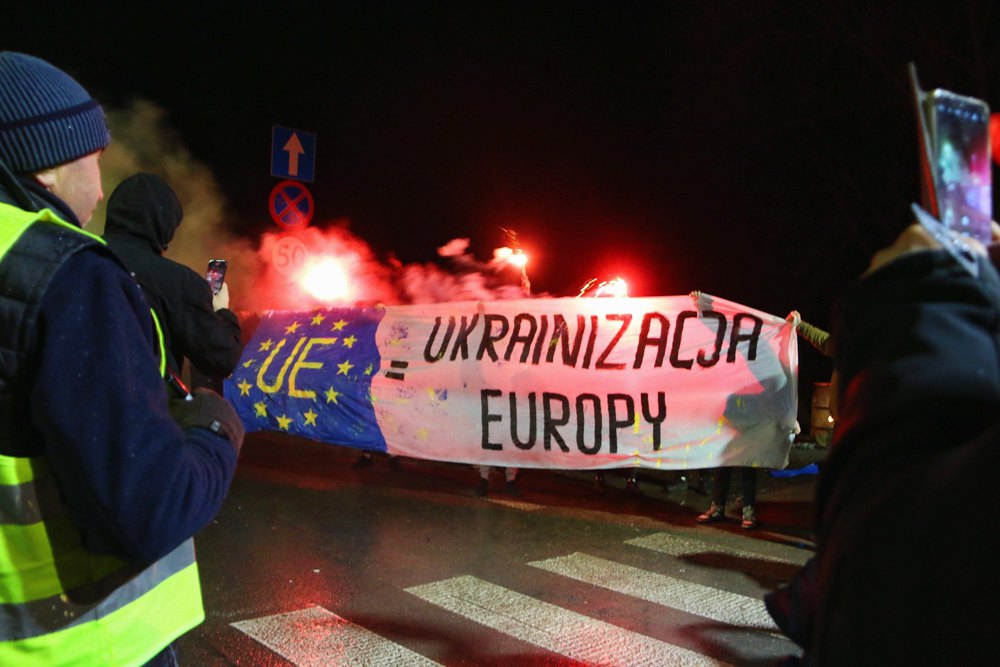
That is what is making itself felt in Poland today: the narrative that everyone is against us and you cannot rely on anyone. For me, an absolutely shocking moment was Grzegorz Braun winning 6% of the vote in Poland’s presidential election. That is, a million Poles voted for a man whose only views are hatred of Jews, hatred of Ukrainians, and hatred of Europe.
The second shock for me was research we carried out in spring this year in various EU countries. We presented respondents with different typical Kremlin propaganda talking points about the war in Ukraine — for example, that NATO provoked everything, that there is no point getting involved in the war. We also studied how people perceive humanitarian aid for Ukraine as a priority task for their government, and so on.
Which countries did you conduct the research in?
We included countries from different regions of Europe, including Poland, Hungary, Greece, Italy, Sweden, Germany, the United Kingdom, Finland, Belgium; in total we surveyed more than 20,000 people.
It surprised me that Poles, unlike most of the other countries surveyed, are quite resilient to Kremlin narratives about the war. But on the other hand, when we asked whether humanitarian aid for Ukraine should be a priority for Poland, we noticed that the share of people who thought so was low here. Poland ended up alongside Hungary and Greece, the most sceptical about aid. A few months later I saw politicians starting to speak in the same way — first the right, but later liberals such as Tusk as well.
Integration and Acculturation Stress
But there is also a part of society that continues to support Ukraine. We saw marches against hatred.
Yes, unfortunately very small ones. Perhaps because they were organised in the middle of the holiday season.
I have the impression that we are now reaching a level of polarisation as strong as during the COVID epidemic. Roughly half are sceptical about Ukraine; the other half consider support for Ukraine absolutely fundamental.
Still, I continue to believe we should not exaggerate the scale of this problem, because it is still not on the scale we see during major migration movements. Let’s recall 2004, when Poland joined the European Union. Then we had a very large wave of Polish emigration to the United Kingdom. And that triggered huge anti-migrant sentiment there and ultimately became one of the main reasons for Brexit. There were attacks on migrants, and politicians fuelled those sentiments.
I have the impression that Poland does not yet have anything like that. In particular because the integration of Ukrainians into Polish society is quite good. And that is, of course, the Ukrainians’ own achievement. In other words, this is the best immigration Poland could imagine. More than 2% of Poland’s GDP is already generated by Ukrainian immigrants and refugees working in Poland.
Of course, we should not ignore the increasingly frequent incidents. And we must remember that even if such an incident is still isolated — say, one in 100 people — for the person who experiences it, it is a very strong signal: “You are not wanted here, you are not welcome here, you are not at home here.” And even if it does not represent the position of the majority of Polish society, such outrageous behaviour strongly shapes how Poland is perceived by Ukrainians themselves and how safe it is considered as a place to live.
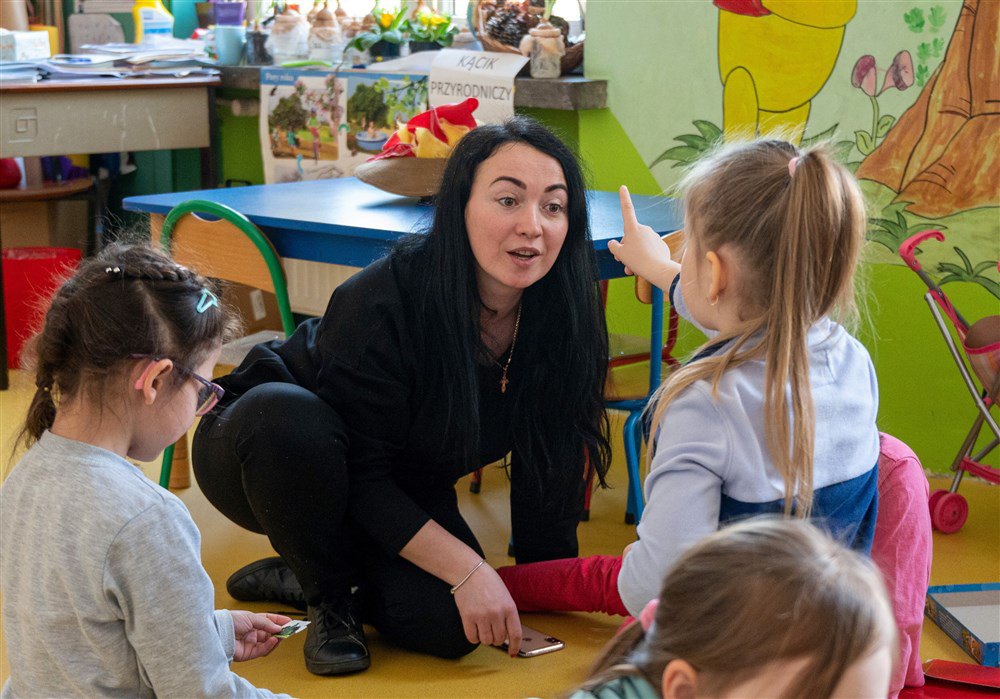
We have also studied this in recent years. For example, there is a phenomenon psychologists call acculturation stress. It is a specific stress experienced by immigrant groups, or immigrants in general, stemming from the fear of being judged negatively for who a person is. A person is afraid to speak, constantly feels they will mess up the foreign language they are speaking, that at work they are assessed differently because of their origin. A person feels cut off from their country and their support networks.
This acculturation stress is a powerful cause of depression among immigrants everywhere in the world. In our research we noticed that those Ukrainians who encountered hate speech about Ukrainians are more likely to have depression. But what depresses me most is that it intensifies post-traumatic stress disorder. I once even wrote an article saying that with words of hatred, Poles are, in a way, adding to those Russian shells.
The Power of Social Media Algorithms
Professor, which issues are the most acute — what triggers the strongest emotions among Poles regarding Ukrainians?
When we studied susceptibility to Russian disinformation, we saw that people who spread Russian disinformation talking points are people who spend a great deal of time on social media and draw a large part of their knowledge about the world from there.
Back in 2015–2016, when we researched hate speech, we noticed that hate speech about Ukrainians most often concerned the Volhynia topic. Interestingly, in 2022 this topic disappeared. And now it is returning in an intensified form. This is not based on the factual experience of most Poles. The history of Volhynia was never important to Polish identity in the way, for example, the history of the Warsaw Uprising is. Rather, this history was important to people who lived somewhere around Chełm — those localities where many people who fled Volhynia ended up.
Then this topic was heavily fuelled by Russian propaganda, but it all remained on the margins. Now I have the impression it has entered the mainstream. And it looks as if we are hostages to the collective memory of just one region of Poland. I have the impression something similar exists among Ukrainians. That is, that Ukrainians, by honouring the UPA today, are also hostages to the memory of people from Western Ukraine.
Part of my family comes from Kolomyia. There are different experiences, good and bad, that I know about from my grandmother. But I never had the impression this was some central narrative of Polish history.
This topic is, of course, very strongly fuelled by pro-Russian politicians. How else to explain that all this panic erupted in Poland at this level precisely after Zelensky granted a military unit an honorary name after UPA heroes, and not when Yushchenko or Poroshenko granted the status of Heroes of Ukraine to veterans linked to the UPA, right?
Those were far more serious acts of honouring the UPA than what Zelensky has done now. Nothing that has happened now is exceptional against the background of what has been going on in Ukrainian politics for many, many years, and Poland never reacted to it.
The greatest responsibility lies with social media and social media algorithms, which adore precisely such hysterical reactions. And Poles can very easily get drawn into such historical issues, because they do not have the immediate problems — the kind Ukraine faces today.
As someone who lives in Poland, I could name many problems — from housing to the decline of the healthcare system — that society should pay more attention to than the behaviour of some people from Ukraine.
This is what psychology often calls the scapegoat effect. When we have a problem that is very hard to solve — for example, an economic crisis we are unable to understand — we look for a simple explanation. And then we transfer this aggression onto a scapegoat, for example an ethnic or national group.
It is good you mentioned healthcare. Because when, due to the lack of reform or funding, a Pole gets a referral to a specialist for next year and at the same time sees a Ukrainian in the queue, they find an easy explanation for their problem.
Something similar happens with the housing market: people feel that it has suddenly become difficult to rent a flat or that rental prices have gone up. And they blame Ukrainians for it. But the source of the problem is that too little is being built, that people are buying up flats to rent out, and that drives prices up.
Be Afraid of Those Who Take Neither Side
Is it possible to describe a generalised portrait of Poles who are neutral, sceptical, or sympathetic towards Ukrainians?
Education level is a factor that plays a role here: better-educated Poles living in large cities are much more open to Ukrainians than Poles with lower levels of education, more religious, living outside big cities. This is reflected in a great deal of the research we do.
But I would not want to stigmatise like that, because in small towns there are also people who are very open.
Instead, I would also single out another category that is quite important here — people who try to maintain absolute neutrality. And this category is quite problematic for me. When we talk, for example, about stories from the time of the Holocaust in Poland, the group of collaborators was some 5–6%. The group of people who actively fought in the resistance movement, were involved in the Home Army, or were involved, for example, in rescuing Jews — that was also a few per cent. The absolute majority of people were completely passive: they watched this crime and tried to keep their distance, they did not react.
I had a very frightening experience. In Poland there are ponds where people come to fish, and there are little restaurants where you can eat fish dishes. Near one such pond I once saw three strongly built Polish men shouting at a woman that she was a “Russian whore” and should go back home. She snapped back at them too. I approached them and said we should call the police. It looked as if they wanted to fight me already.
What surprised me, first, was that the security guard who was there did not react at all. He should have told those Poles that it was they who were no longer welcome there. And the people sitting in that restaurant did not react either. Because if they had all stood up and approached those lads, they would certainly have changed their tone.
And then the woman told me that since early morning they had been approaching all Ukrainians and insulting them, and that only she had stood up to them. Only this older woman also answered them in a rude manner, and so in the end the conflict took on these forms.
I think to myself that these three men are not representative of Poland, they are not typical. But the worst thing is the passivity of the rest of the people who did not react.
Afterwards I thought that perhaps it would have been worth filming it on my phone, taking a photo of their car and filing a report with the police. After all, they violated an article of the Criminal Code. But I did not have that reflex. It seemed to me that the first thing I should do as a psychologist was to approach this woman, calm her down, tell her that she is at home here, that they do not represent all Poles. The woman told me: "I have worked here since 2012. I am from here, this is my place." I replied: "Yes, this is your place, madam."
This bystander apathy effect, which is generally characteristic of situations where someone can simply fall ill in the street, can negatively affect Ukrainians who are attacked. They feel more alone.
Thank you for sharing this story and for intervening.
I think I should have reacted more strongly. But my wife and child were there, and I thought I did not want it to come to a fight.
But it is also worth remembering your own safety.
But there is one very important thing I would like to say to our Ukrainian readers. First, each of us now has a mobile phone, so when we see such behaviour, we should immediately record it on video, so that we have what happened documented. Let’s try to film it in such a way that the attacker does not see us. Or so that the attacker does not see that I am recording him.
Second. Let’s file a report with the police or the prosecutor’s office. In Poland there is an entire network of prosecutors specialising in hate crimes. What is more, the police are also very well trained in these matters. It is important that we also see in police statistics the scale of this problem. Because when I hear the police say we have two hundred crimes a year of this type, I do not believe I would have witnessed one two-hundredth of all such crimes in Poland. There are probably far more. It is important that we have a sense of the scale, and that these people do not feel they can act with impunity. That they at least receive a summons to the station and understand they committed a crime.
The Responsibility of Elites
In your view, are far-right parties responsible for the rise in anti-Ukrainian sentiment, or, conversely, did such sentiment become the basis for these parties’ politics?
I think both are true. On the one hand, politicians constantly conduct opinion polling, analyse social media sentiment, watch what is happening on X. And they shape their politics in response to what is happening in places that are not representative of Polish society at all, but rather represent its worst side. Politicians get a false impression of how widespread this is and adjust their way of speaking.
Of course, if politicians speak in this way, then haters feel that it is acceptable, that there is a social norm allowing them to speak like that, that it is respectable.
This is the biggest problem when politicians start using certain terminology and, say, talk about deportations, and then someone in the street can say to someone: "You should be deported back to the front."
Questions Poles Need to Ask Themselves
Is there a discussion in Polish society about anti-Ukrainian sentiment and a search for solutions on how to get out of this crisis?
The discussion is taking place in more serious media — say, in "Gazeta Wyborcza", OKO.press, or "Krytyka Polityczna". There are many important conversations on television, on TVN or on Polish public television TVP. People talk about it a lot, but I do not have the impression that we have any constructive way of thinking about it. That is, we mostly talk about it as a problem, but I have not heard a good proposal or strategic thinking about the fact that Poland today is a migrant society. That every twentieth pupil in a Polish school is a Ukrainian pupil, and how the Polish school should change so that this Ukrainian pupil can feel at home here, rather than like a guest. How, for example, to tell Polish history in a way that includes the voice of Polish Ukrainians who helped build Polish history? Because for me this is the most important challenge and, in general, the most important question for the future. How to create a model of what it means to be a Polish Ukrainian?
Personally, I believe it would be good if a relatively large group of Ukrainians stayed with us. It is necessary for Poland even from a demographic point of view. But for it to make sense, Polish society needs to change too. We have stories of Ukrainians who created Polish culture and literature. We could integrate Ukrainian myths and stories into the pages of Polish textbooks. After all, they are part of my family history, for example.
I saw a little of this on the occasion of commemorating the anniversary of the Polish–Soviet War and the Battle of Warsaw, when stories were told about Petliura and about Ukrainians who were part of the Polish army and fought alongside Poles, fighting against Soviet Russia in 1920.
Speaking about this, I want to say that I personally would also like (and it would be strategically important for Poland) for educated Ukrainians to return to build their own state and to have good memories of their time in Poland. But we know well that every migration partly remains in the country where it has already put down some roots. Children went to school, people started working, and that is natural. When Poles ended up in the United Kingdom during the Second World War, a large part of that Polish emigration in the UK stayed. Or during martial law in 1981, a large part of Polish refugees who then left Poland for Germany or the United States stayed there.
I think Poles reflect far too little, and are afraid to speak openly about the fact that Poland today is similar to interwar Poland — it is a multi-ethnic society, and we must think about what Polish education and Polish culture should look like so that all these voices are included.
In your view, what is the recipe for slowly reversing the current trend and normalising Poles’ attitudes towards Ukrainians? Does it depend more on the authorities or on the actions of individual members of society?
On the one hand, I expect a little more courage from politicians in talking about this and confronting it. So that instead of reacting exclusively to incidents, politicians start talking about how they see the future of Ukrainians in Poland. How they see Poland’s future with Ukrainians. So that they build more optimistic narratives about Poland’s future. So that they can speak openly about the benefits for Poland that follow from Ukrainians being among us — economic and cultural.
And it would be good to encourage people to react when they witness anti-Ukrainian actions or statements. Not to leave it without comment.
What could the Ukrainian authorities do?
I do not actually see anything wrong in the actions of the Ukrainian authorities in relations with Poland today. It seems to me that this behaviour is exemplary, and from Poland’s point of view the main goal right now is that Ukraine does not fall, that the Ukrainian army holds out. That is the main goal, and Ukraine is achieving it. What more can one expect from a neighbour at war? I do not understand it at all.
We have no right to expect anything more when Ukraine is giving its best children in the war. I say this from the perspective of someone who had a wonderful Ukrainian scholarship holder who came and did excellent research with us, and later with the Germans, on conspiracy theories and belief in conspiracy theories. And then he interrupted his academic career and went to the front together with his father; they were in the same unit. For me, this is a great self-sacrifice that Ukraine is making at this moment for Poland, for Europe — defending us from a threat to our entire civilisation.
You probably expected me to express an opinion about honouring the UPA. But I am familiar with research by the Institute of Social and Political Psychology in Kyiv, which shows how strongly Ukrainians’ openness is increasing to talk about the negative sides of Ukrainian history. And, in my view, proof of this is the exhumations that are now under way in Volhynia, because politicians also see that they can decide on such acts — acts they probably would not have dared to undertake 15–20 years ago.
Ukrainian society has undergone an enormous transformation. There has been a national awakening, but also an absolutely new way of thinking about the nation has formed. Eastern Ukraine has changed dramatically. People did not even speak Ukrainian, but they went to fight and give their lives for Ukraine. This is something Poles somehow cannot understand. Perhaps this should be Ukraine’s PR — to show this great change that has taken place.