






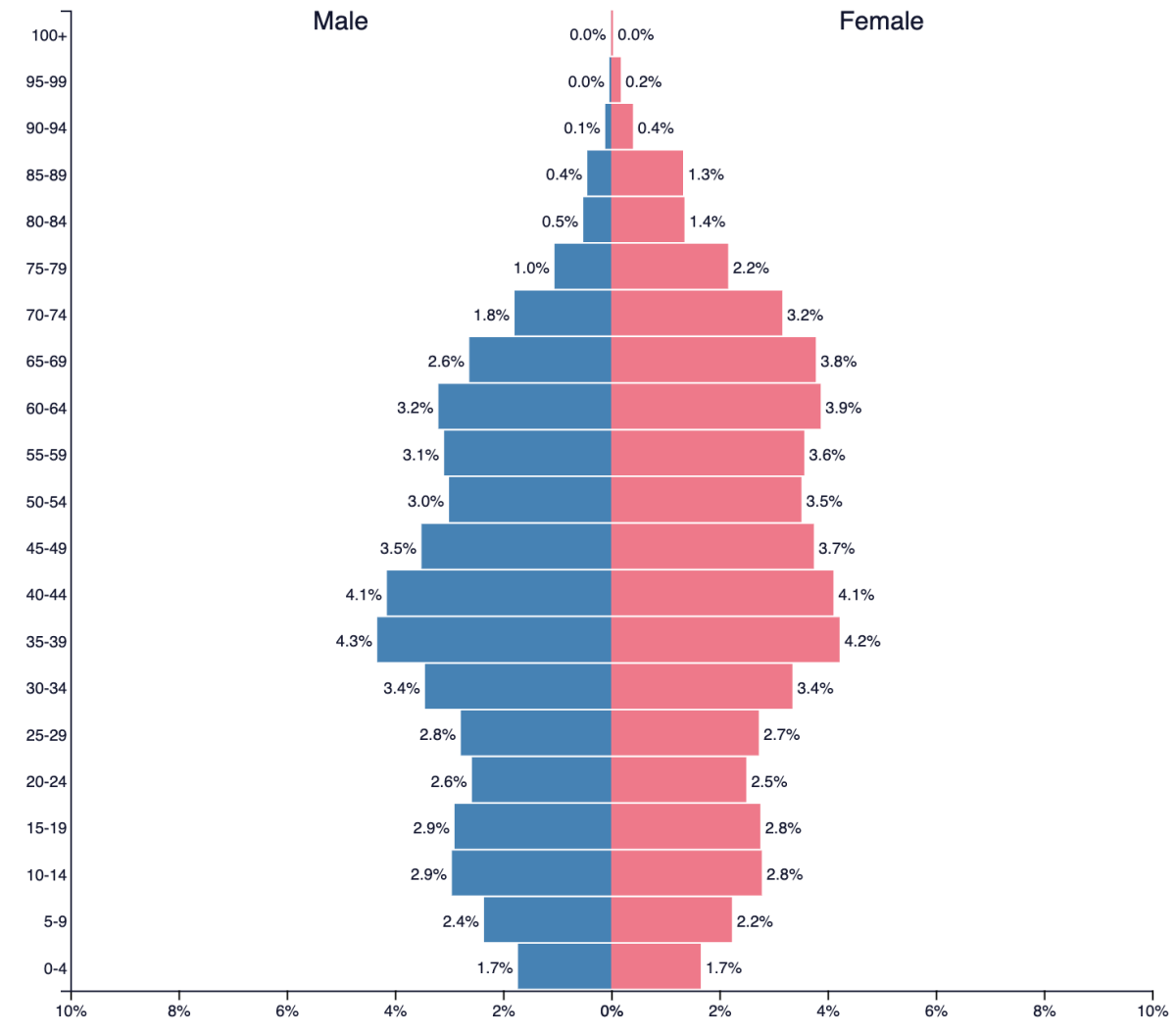
The state is people. Not only in a populist, demagogic sense, but literally. People work, create innovations, hold the front line — the state’s capabilities depend directly on the condition of its population. Ukraine’s population peaked at 52.2 million in 1993, after which it began to decline, and now around 29 million Ukrainians live in territory controlled by Ukraine.
The decline and changing structure of the population create serious challenges for the future of Ukrainian society in many areas, and at present the efforts the state is making to mitigate the problem are clearly insufficient. Population decline is a threat to Ukraine’s national security and to the preservation of the nation itself.
A Statistical Sketch of Ukrainian Society
The portrait of the median Ukrainian highlights the problem of simultaneous population ageing and a shortening life expectancy. The median age of a Ukrainian in 2010 was 39.5; by 2024 it was already 41.8. At the same time, life expectancy for men and women fell from 65.2 and 74.4 in 2021 to 57.3 and 70.9 years respectively.
Our situation is not unique — many developed countries are experiencing population decline and are trying to tackle it. Logically, a society can increase its population in two ways: attract migrants to move permanently, or have children. Let us look at the first option.
Ukraine’s efforts to attract migrants show similarly poor results. Since 1994, the country’s net migration has been consistently negative, although in some years the State Statistics Service could record near-zero or small positive values due to the specifics of its methodology. Russia’s invasion has only accelerated this negative trend. According to CES data, from 2022 to January 2026, 5.6 million Ukrainians left the country: 4.3 million to Europe, and 1.3 million to Russia and Belarus. It is also necessary to account for the share of men who crossed the border outside official checkpoints. This slightly increases the number of Ukrainians abroad.
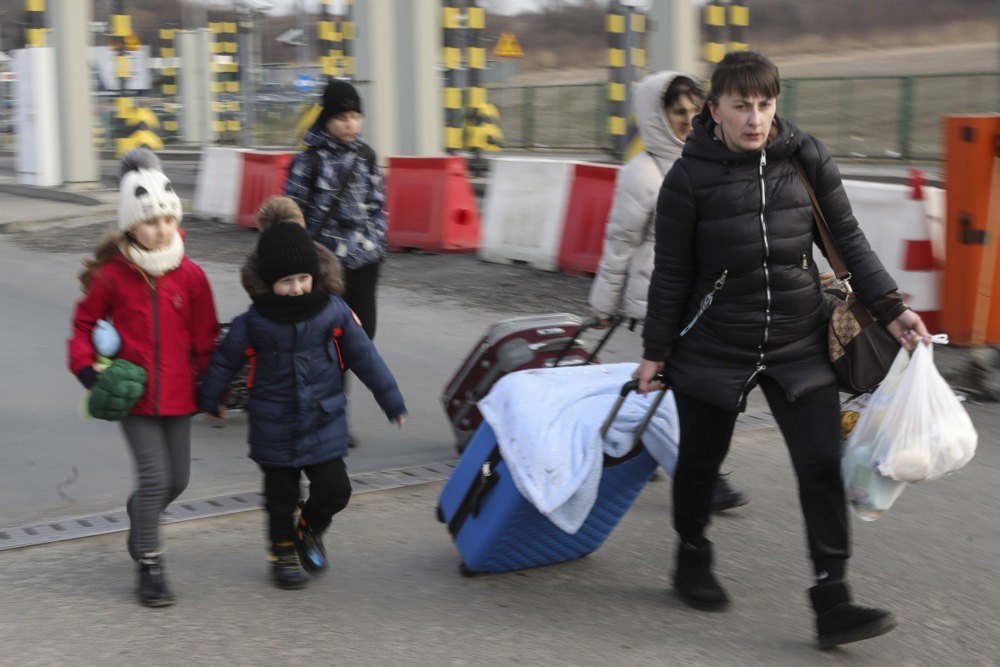
The vast majority of those who left are women with children, and therefore after martial law ends Ukraine, in the view of demographer Ella Libanova, faces a new wave of migration: men will go to join their wives, who over the years in the EU have managed to build a life there. Of course, there will be a counter-trend too, but it will be significantly weaker.
Ukraine’s Childbearing Numbers
Birth rates are traditionally measured as the ratio of births to deaths, or by the fertility rate — the number of children per woman. Both indicators have long been at levels that point to population decline, dating back to the 1970s in the Ukrainian SSR. During the years of independence, the fertility rate never rose to 2.1 — the minimum number of children needed to ensure the next generation is not smaller than the previous one. From 1991 to 2021, according to the State Statistics Service, the indicator fell from 1.78 to 1.16, and after the start of the full-scale invasion it dropped below 1.0 child per woman.
In the first half of 2026, the ratio of deaths to births was 3.55:1. During martial law, open statistics on causes of death are unavailable, but pre-war figures for 2021 indicate the following causes: cardiovascular disease (61%), COVID-19 (12%), cancer (10.6%), non-medical or age-related causes (3.98%), and other illnesses. The number of soldiers killed in the war, according to Zelenskyy, is between 50 and 55 thousand. At the start of 2026, the number of civilian deaths had reached 15.2 thousand. The number of missing persons in Ukraine is now 114 thousand. Before the invasion, this figure did not exceed 10 thousand, and most of the missing are military personnel. Therefore, the war is not decisive for the annual mortality rate, and Ukrainian demography will not recover naturally after hostilities end — it will only improve somewhat.
The decision to open the borders for young men aged 18–22, while not significantly affecting overall migration figures, has further harmed Ukraine’s demographic health, because the current generation of twenty-somethings is substantially smaller than older cohorts. That is why the need to support young families and pursue high-quality family policy is becoming ever more acute.
It is impossible to talk about birth rates without talking about the family more broadly. In Ukraine, around 75–80% of children are born within marriage. Although there are no clear statistics for our country, a general observation in demographic science is that married women have more children (per woman) than unmarried women. At the same time, the institution of the family is not in the best shape: in the pre-war years 2020 and 2021, there were 0.71 and 0.57 divorces respectively for every marriage registered. During the years of the full-scale war, this figure first fell to 0.41 in 2022, and then rose to 0.69, 0.94 and 0.75 in subsequent years. Importantly, 70–80% of divorces occur in families with at least one minor child. The loss of one adult family member, usually the father, negatively affects both finances and the process of raising children.
Moreover, a high divorce rate means that a significant share of women of childbearing age lose the conditions for having children, postponing this stage to later periods of life. At the same time, the average age at first marriage is also rising — in 2025 it was already, according to the Ministry of Justice, 30 for men and 28 for women.
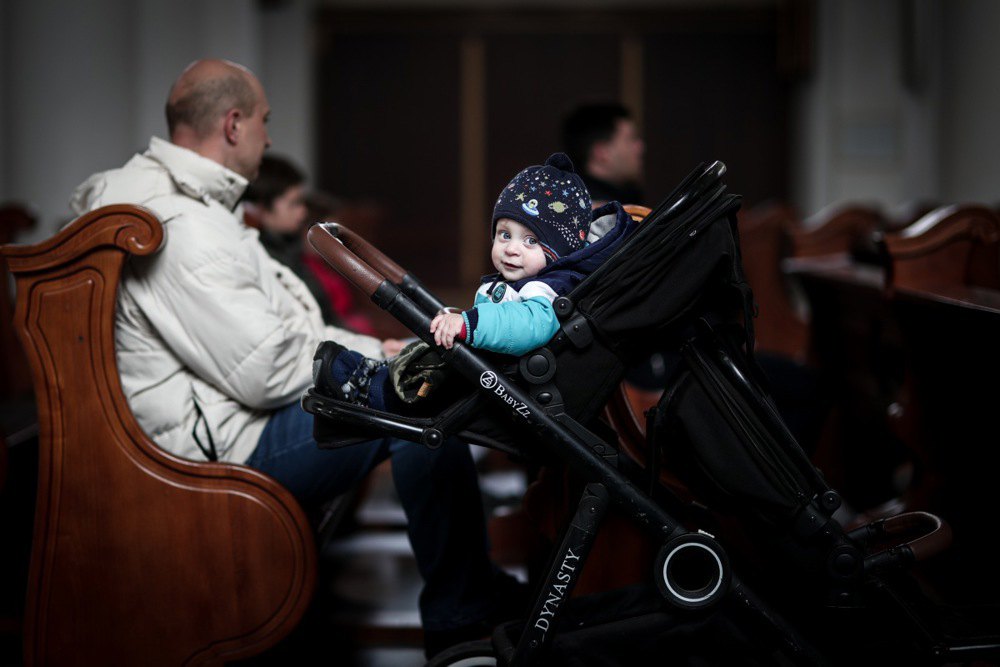
This is partly confirmed by another indicator — the average age at the birth of a first child, which has steadily increased from 23.8 in 2009 to 26.2 in 2019 and 29.4 in the last pre-war year, 2021. Naturally, the war has only accelerated the negative trend. This indicator is also important because it narrows the reproductive window: a later start to motherhood statistically reduces the likelihood of having a second and subsequent child in the family. In addition, delayed parenthood shifts the burden onto the healthcare system and requires families to devote greater financial and time resources to supporting pregnancy and caring for a child when parents are older.
The State’s Response to the Crisis
As noted above, the phenomena we describe are a trend in developed countries. People marry later and have fewer children due to the rising cost of living, higher expectations for children’s futures in a post-industrial economy that requires greater financial “investment” in a child than was the case a few generations ago. A major factor remains the global housing crisis, which makes it increasingly difficult for a young family to obtain their own home and, in some cases, delays marriage — both because couples want to save for housing first and because they fear buying property together given high divorce rates and the division of assets that can follow. Economic and political uncertainty also makes the prospect of a woman’s temporary inability to work (at least in the later stages of pregnancy and for some time after childbirth) risky for families’ financial stability.
That is why Western states resort to measures to support birth rates and families. Ukraine is no exception. Such measures are закреплюються in legislation and include state guarantees, financial incentives and social services. A high-quality, coherent regulatory framework can turn declarative intentions into real mechanisms that influence the demographic situation and the overall social climate in the country.
Despite the long-known and already mentioned problems, Ukraine first set out a distinct demographic policy only in 2024, by adopting the Strategy for the Demographic Development of Ukraine up to 2040. Can we guarantee the success of such measures over such a long-term horizon? It is a rhetorical question. Still, the document is one of the key indicators for implementing Ukraine’s Plan under the European Union’s Ukraine Facility initiative, aimed at reforming the labour market and raising living standards, and therefore already matters as part of European integration co-operation.
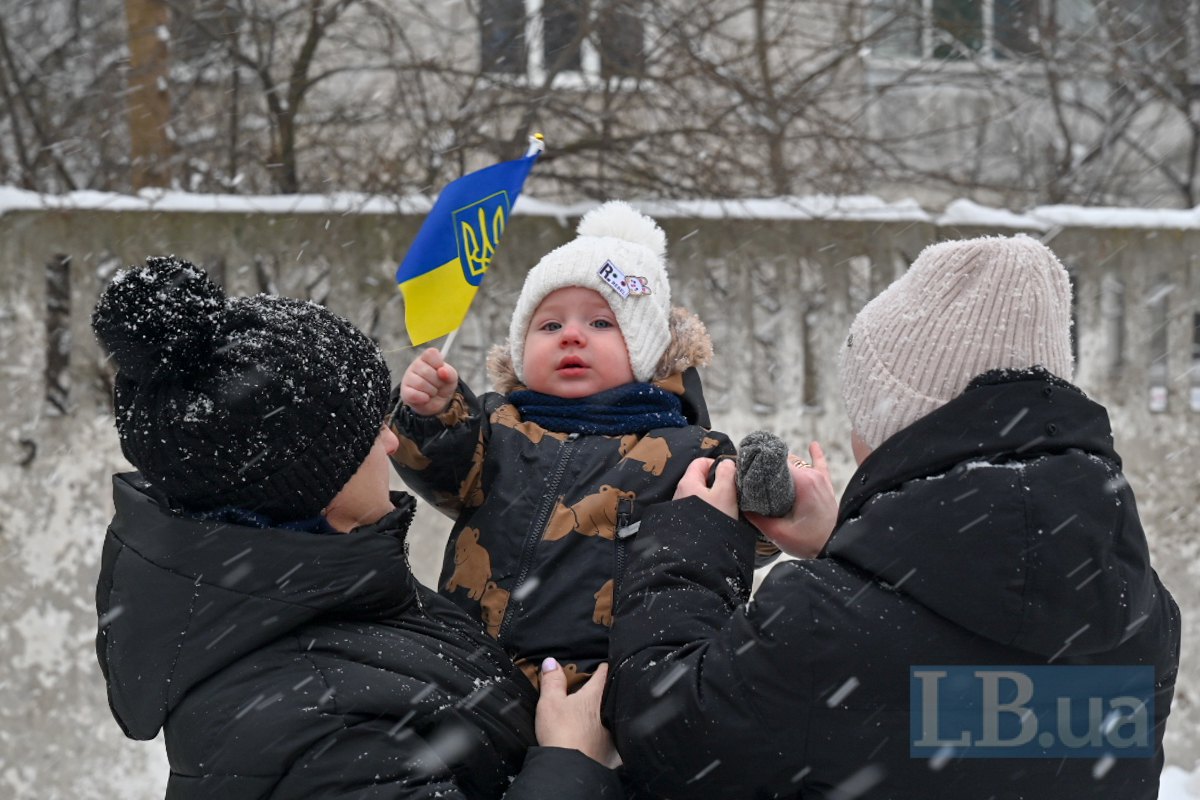
By its legal nature, the Strategy belongs to “soft law” regulatory acts. It sets out a general framework and priorities for executive authorities, but does not establish rights and obligations for citizens or businesses.
It is an obvious fact that the overwhelming majority of demographic policy measures depend critically on the capacity of the state budget and, in our circumstances, also on attracting external financing. However, purely financial instruments have only a short-term effect and cannot ensure sustained growth in birth rates; therefore, introducing or increasing payments more often leads not to long-term qualitative growth in births, but to “bringing forward” families’ plans to have a child.
The Strategy highlights key problems such as the systemic rise in poverty among families with children, which in 2021 stood at 22.4% (against an average poverty level of 20.6% nationwide) and, in the context of armed aggression, has become a significant destructive factor. Difficulties in combining work or study with raising children remain acute due to the lack of flexible working arrangements, opportunities for remote work, and low availability of quality childcare services. This barrier affects employment among women aged 25–44: for those with children aged 3 to 5, it falls to 51.5% compared with 71.1% among those without children of that age. The situation is further worsened by the destruction of nurseries and schools as a result of shelling and chronic problems with enrolment in those that remain, where resolving the issue often requires a corrupt element.
The Strategy is supplemented by targeted measures scattered across numerous laws. Under the Law “On State Assistance to Families with Children”, a benefit of 50,000 hryvnias is paid upon the birth of each child. In addition, the “baby box” is provided — a non-repayable targeted social benefit delivered either in kind or as cash compensation.
The law “On the Specifics of Using Leave Related to Pregnancy and Childbirth” expanded the amount of leave available to families. To support large families, the Law “On the Protection of Childhood” is in force, defining a system of social benefits, including discounts on utility bills, the purchase of fuel and travel. The State Policy Strategy on Internal Displacement up to 2030 is intended to stabilise “internal demographic potential through the housing, social and economic integration of the affected population”, with plans to equalise the financial burden on territorial communities “by improving the budget planning mechanism”.
These diverse initiatives build a system of demographic policy in which each law or strategy is responsible for its own area. First, the state seeks to implement comprehensive support for the family, birth rates and parenthood, which through the provisions of the Family Code and laws on child protection and leave is intended to create a reliable social shield for every Ukrainian family. Another pressing demand is migration policy and the reintegration of displaced citizens — this area is based on legislative guarantees of the rights of internally displaced persons and state strategies aimed at bringing Ukrainians back and involving them in the country’s recovery. Finally, the third strand of state policy focuses on preserving human potential and adapting society to ageing, implemented through the law on social services and a large-scale accessibility programme.
Western European Experience: France
Improving demographic policy inevitably requires turning to international experience. Choosing a successful global model with the best track record is not, in itself, a sufficient guarantee of overcoming a demographic crisis — all the more so for a country at war. Still, even such examples are always useful for checking whether the chosen tools remain relevant.
French demographic policy is built around the unacceptability of a family’s living standards falling as a result of having children. For decades, France has maintained high birth rates thanks to an integrated family policy focused not on one-off payments but on long-term support. The foundations of this policy were laid during and after the Second World War, when the state faced an acute shortage of conscripts and a large-scale struggle to improve working conditions.
The compromise between national security and social justice resulted in the adoption of the Family Code, which turned support for parenthood into a long-term national strategy. This created a system of state support that includes grants and extended maternity leave, the length of which increases progressively with the birth of a third child, as well as childcare infrastructure: subsidised crèches, nurseries, professional nanny services and the ability to attend pre-school institutions without barriers from the age of two and a half.
A key element of French demographic policy in supporting families is the “family quotient” (Quotient Familial, QF). Compared with countries where each person’s income is taxed individually, in France the basis for calculating income tax is the household’s total annual income divided by the number of “family shares” (parts fiscales), which depends on the number of family members.
The calculation mechanism works as follows: the family’s total annual taxable income is divided by the total number of shares (typically adults receive 1 share each, the first and second child receive 0.5 each, and the third and subsequent children receive 1 each). The resulting amount per share is taxed on a progressive scale, after which the calculated tax is multiplied by the household’s total number of shares. Artificially “splitting” total income into smaller parts allows the family to fall into a lower tax bracket, while state child benefits are entirely exempt from taxation.
For example, imagine two French two-parent families: the first has 2 adults and 1 child, the second has 2 adults and 3 children. Let the pre-tax annual income of each adult be €30,000 — the median figure for France. Thus, the income of both households is €60,000 per year. Next, the income is divided by the shares the family has: for the first family this is 2.5 (2 adults at 1 each and the first child at 0.5), for the second it is 4 (2 adults at 1 each, the first and second child at 0.5 each, and the third child adds 1). As a result, after dividing by shares, the first family’s figure is €24,000.

Under the French progressive tax scale, the rate on income up to €11,600 is 0%, and on income from €11,601 to €29,579 it is 11%. Therefore, of the €24,000 of income per share for the first family, €12,399 is taxed at 11%, which comes to €1,363.89. This amount must then be multiplied by the number of family shares (2.5), and the total tax for a family with an income of €60,000 and 1 child is €3,409.73.
By contrast, the second family, with the same annual income but three children, after dividing income by shares will have not €24,000 but €15,000. Given the progressive tax scale, only €3,399 per share is taxed at 11%, which after multiplying by the number of shares (4) gives €1,495.56 — around two-fifths of the first family’s tax.
The French model of family benefits provides clear age differentiation of payments, targeted at periods of greatest financial pressure on parents. From 2026, increased state payments for families with two or more children are provided once a child turns 18 and are paid until the age of 20, because the main additional costs fall precisely during the period of higher education and young people’s transition into adulthood. Depending on household income, the monthly top-up during this period ranges from €18 to €75, providing additional support of €216 to €900 per year.
As of 2026, France has one of the highest fertility rates in the European Union: 1.85 children per woman. On the other hand, even this policy has its critics: the introduction of stricter income checks for receiving basic payments in 2014 led to a statistically proven decline in birth rates among middle-income families and caused a timing shift in family planning. In addition, at certain income levels the family quotient can discourage mothers from entering the labour market, because the wife’s additional earnings increase the household’s total taxable base and offset part of the tax relief.

A common counterargument from opponents of the French model is the claim that high figures are achieved mainly through mass migration. Birth rates among first-generation immigrant women are indeed higher than average in the first years after moving. However, by the second and third generations their fertility converges towards the national norm, demonstrating only a short-term impact of the migration factor on overall demography.
A Neighbour’s Experience: Czechia
Historically and geopolitically, Czechia is far closer to Ukraine, and until recently could have been considered a model of successful demographic policy. In 2021, the country’s fertility rate reached 1.83, the second-best result in the European Union after France. Even then, Czechia allocated around 2.1% of its GDP to family support. Here, demographic policy rests on financial support and advanced medicine.
The Czech system is based on several structural measures. First, the country uses a childcare leave model under which standard paid maternity leave lasts 28 weeks, during which the mother receives a benefit equal to 70% of her average wage. This is followed by parental leave, which can last until the child turns three, and employers are prohibited from dismissing a mother during such leave. During this period, families receive a total parental benefit of 350,000 Czech korunas.
In this way, parents receive payments while retaining the ability to work. The model supports the family not only at the infant stage but for years ahead. Means-tested child benefit can be paid to a family until the child turns 26 if the child is studying full-time in higher education. The situation is also supported by the trend towards using reproductive medicine, thanks to which more than 5% of children are born. However, such a systemic policy did not save Czechia from a sudden drop in fertility: if 110,000 babies were born in 2021, then in 2025 there were only 77,600, and the rate fell from 1.83 to 1.37. The decline is linked not only to a fall in living standards in 2022–2023, but also to a loss of the sense of security after Russia’s full-scale invasion of Ukraine: if in 2021 the threat of war worried only 11% of Czechs, then in 2023 this figure roughly rose to 43%.
Czechia has not escaped broader European socio-cultural trends: whereas in 1993 the average age at marriage was 23.2 for women and 25.4 for men, by 2021 it had reached 32.1 for men and 30.3 for women, and in 2023 it was 32.7 and 30.8 respectively. Like many other developed countries, Czechia also feels the impact of population ageing. These factors led the government in 2024 to adopt a major pension reform, which provides for a gradual increase in the retirement age from 65 to 67. Czechia has experienced the fifth-fastest decline in birth rates in the world since 2020, after Kuwait, Latvia, China and Ukraine.
The government of Andrej Babiš and the ANO party promised steps to raise birth rates in the country: from increasing parental benefits to subsidised mortgage loans for young couples, as well as other financial incentives and tax breaks. However, even generous financial payments have only a moderate and short-term impact on birth rates, while their effectiveness depends on whether such measures remain in force over a long period and whether they might have the opposite effect if policies are not consistent from one government to the next. In the local information space, there is a proposal that Czechia would need to invest at least 10% of its GDP to raise birth rates from today’s level to the 2.1 threshold.
For a long time, the combination of generous state demographic policy in the form of extended leave, together with traditional ideas about women’s roles, did indeed incline couples towards forming families. However, difficulties with pre-school childcare, an unfair distribution of domestic labour and employers’ reluctance to hire women on part-time contracts motivate many to choose a career path instead. Reproductive medicine is also not universally accepted due to its cost, legal restrictions, and ethical and moral views, while Prime Minister Babiš has been criticised for his de facto control over a third of the local market in reproductive medicine.
Czech society is also concerned about labour shortages which, combined with an expected decline in domestic demand due to population shrinkage, will likely increase pressure from Czech business to further open the country to immigration from third countries — so Ukrainian refugees, despite right-wing politics, are still actively welcomed. But even their impact will not be a universal long-term спасение for the region.
What Should Ukraine Do?
Using France and Czechia as examples, we can see that overcoming — or at least slowing — a demographic crisis is not possible through purely targeted financial incentives or migration alone. In both cases, long-term success comes not only from financial policy, but from a stable system that integrates families’ interests into the state’s overall policy.
It also remains indisputable that war creates danger: to life, financial wellbeing and the future. This is a factor that negatively affects birth rates, and its impact cannot be offset through state programmes. Nevertheless, the state can offer at least institutional security — continuity and stability in funding family support programmes are the foundation on which further measures can be implemented, and the framework documents of “soft law” must be followed by legislative mechanisms and, for example, protected budget lines.
Ukraine should consider introducing a system of long-term financial support for families with children, both in the form of tax relief with a regressive rate relative to the number of children in the family, and in direct assistance that can be tied to a specific age threshold for the child, following the French model.

In addition to financial assistance, which addresses the lack of resources, the state should focus on improving and restoring social infrastructure most in demand in the first years of a child’s life. The goal should be adequate provision of nurseries, polyclinics and primary schools, as well as an appropriate level of professional competence among their staff.
To reduce the negative impact on the career paths of mothers with young children, it would be sensible to consider measures that encourage employers to offer such employees flexible working hours on request, as well as the option of remote work, so that mothers can more conveniently plan time to care for a child, pick them up from nursery, and so on. At the same time, state policy should aim to help women reintegrate into work by guaranteeing the possibility of working part-time during the first three years of a child’s life.
Although young families often face the problem of not having their own housing, we do not consider it advisable to additionally propose preferential mortgage lending measures, since the existing state “eOselia” programme offers terms significantly better than the market, and further expansion could negatively affect the property market overall. At the same time, it would be sensible to consider including the category of young families (for example, those with children under 2) among those eligible for a 3% mortgage.
The primary goal of family policy should be to raise birth rates overall, in order to minimise the future economic shock from a sharp decline in the working-age population. Attracting migrants and the return of Ukrainian refugees from Europe can also have a positive effect on Ukraine’s demography, but as of today the prospects for both processes are uncertain, and the nearest-term goal should be to reduce the emigration of young and working-age people.
It is unlikely that the set of measures described will make it possible to reach population replacement levels in the medium term, but it will at least slow the process of shrinkage and ageing of the nation.