





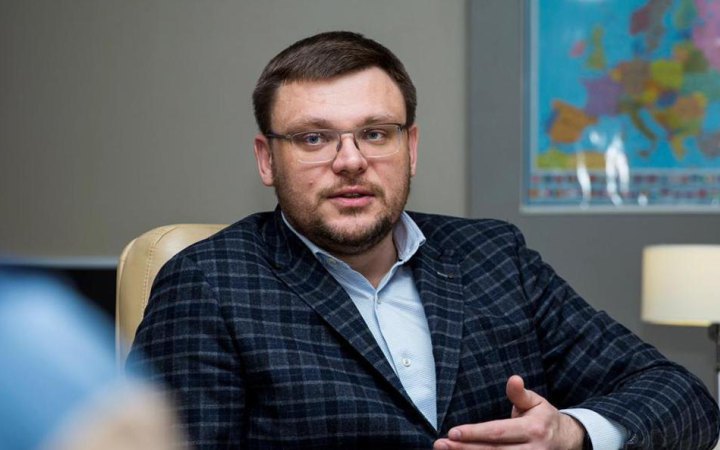
The challenges of autumn and winter are the same for everyone: security and the overall security situation. For NABU personally, the challenge is the shaping of a narrative about the Bureau’s politicisation and its influence on decision-making in the state.
Some individuals are using this topic in an attempt to shield themselves from investigations. NABU Director Semen Kryvonos said this during the discussion “Autumn–Winter 26–27: the main challenges of war, politics, society, business, and life-support systems” held as part of the “New Country” project by LB and EFI Group.
“I consider the topic of politicising our investigations extremely dangerous,” he said.
Commenting on the fear some officials have of the Bureau, Kryvonos stressed that, in order not to be afraid, one simply should not commit corruption offences.
“If our investigations in one way or another lead to political consequences — and that happens because we expose senior officials — it does not mean the investigation itself is politically motivated,” the NABU Director emphasised.
He noted that claims suggesting NABU investigations may supposedly have been linked to the date of arrival of American negotiators are merely “an artificial stretch” designed to create the impression that the Bureau is a political player, undermine trust in it, and shield people from criminal prosecution.
“That will not protect you in any way. If you commit corruption offences, there is absolutely no guarantee — no matter how much you talk about a politically motivated NABU — that’s the first point. The only guarantee of not becoming a subject of a NABU case is not to commit offences that fall under NABU’s jurisdiction,” he said.
The Bureau acts autonomously and impartially, its director stressed. If the law requires a criminal offence to be investigated, the Bureau must do so. There can be no leniency because of martial law — on the contrary, it increases responsibility.
“Every hryvnia stolen reduces the country’s defence capability. That’s all there is to it,” he noted.
Semen Kryvonos also commented separately on when high-profile anti-corruption cases can be expected to be sent to court. In the case of the “Midas” case, in which the suspects include businessman Tymur Mindich and two former government officials, Herman Halushchenko and Oleksii Chernyshov, the pre-trial investigation is due to be completed in October–November — a year after the first notices of suspicion, as provided for by law. After the parties review the case materials, it will be referred to the High Anti-Corruption Court.
Kryvonos stressed that corrupt officials should not be dismissed “quietly”. All cases are publicised in order to prevent further offences by officials.