





What gaps exist in last century’s conventions, and what changes do these documents need?
If we talk about the 1972 Convention, we are now actively working on the List of World Heritage in Danger. I consider it a major achievement of previous sessions that the historic centres of Kyiv, Lviv and Odesa were added to this list (namely “Saint Sophia Cathedral and Related Monastic Buildings, Kyiv-Pechersk Lavra”, “Lviv – the Ensemble of the Historic Centre” and “The Historic Centre of Odesa”. – Ed.).
Globally, this status is mostly perceived as a state’s failure: when it has not done enough, and a site of outstanding universal cultural value for humanity ends up at risk of losing authenticity, integrity or other criteria.
We managed to ensure that the full-scale invasion itself was named as the threat to preserving these sites. It may sound like just words — “full-scale invasion”. But at UNESCO level, it was a very difficult story.
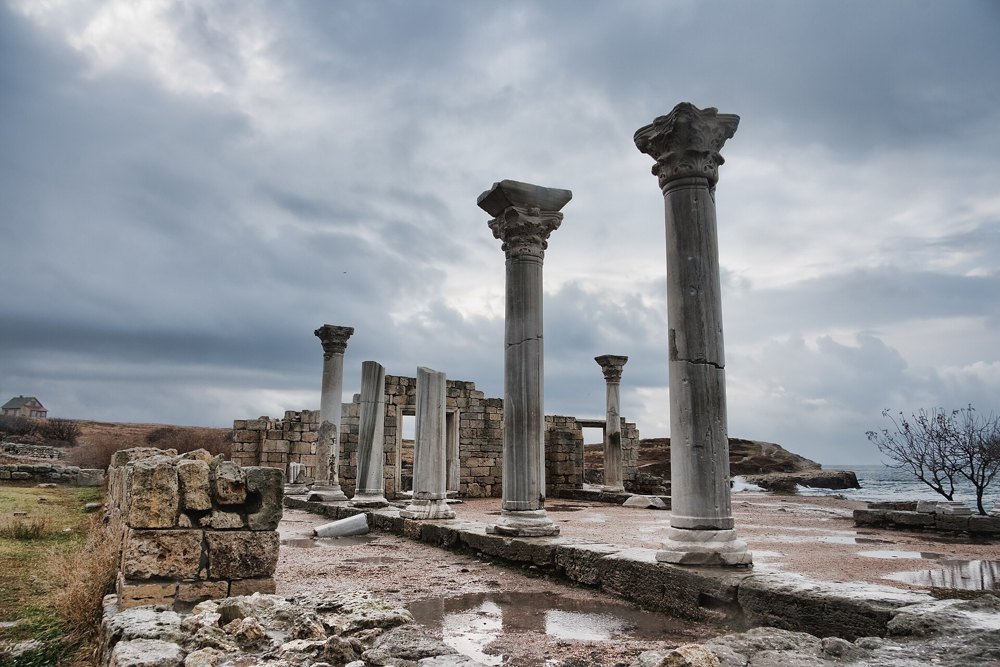
This year, “Tauric Chersonese and its Chora” was also added. The very fact of occupation, however obvious and illegal it may be, is not automatically grounds for adding a site to the danger list. Under the Convention, you have to prove something else: that specific processes and interventions create an established or potential danger precisely to the site’s outstanding universal value — that is, to the characteristics for which Chersonese was recognised as the heritage of all humanity.
We needed to show not only that illegal actions are taking place in the occupied territory, but how each identified intervention affects specific attributes of Chersonese’s outstanding universal value.
The decision adopted (to add “The Ancient City of Tauric Chersonese and its Chora” to the cultural properties in danger, – Ed.) became international confirmation of serious and specific threats to the site’s outstanding universal value as a result of Russia’s temporary occupation of the Autonomous Republic of Crimea and the city of Sevastopol.
After a site is added to the List of World Heritage in Danger, the state must prepare a draft of the desired state of conservation for its removal from the list. At present, the procedure for working with “in danger” sites that ended up on the list due to factors beyond the state’s effective control is not properly set out. That is why, as a state, we are promoting the idea of improving these procedures.
Because we are not to blame for having an inadequate neighbour. We are trying to meet all our obligations. But our sites are under threat specifically because of Russia’s actions. For us, this is obvious. For the international community, not always.
In our work with the 1954 Hague Convention, we opened a discussion about responsibility. Ukraine submitted a draft decision, “International legal responsibility for violations of the immunity of cultural property under enhanced protection” — it was supported last year. Now amendments are being developed to the guidelines for implementing the Second Protocol to the Hague Convention, including on criminalising liability. They will concern Articles 15, 16 and 21 (namely “Serious violations of this Protocol”, “Jurisdiction”, “Measures regarding other violations”. – Ed.).
Ukraine is the first country to have tested the Ad hoc monitoring mechanism — a relatively new special monitoring mechanism carried out by international experts for sites included on the list under enhanced protection.
Beyond monitoring for monitoring’s sake, this opens up opportunities to use convention-based and international funds to provide both preventive and urgent measures to protect and preserve cultural property.
An important area of work is the issue of indirect damage — when blast and sound waves pose a significant threat to World Heritage sites and cultural property as such. Architects and experts understand this. However, there is no evidence base and no clear response mechanisms. We are advancing this research this year — the vote is due in December. (A meeting of the Committee of the Second Protocol to the Hague Convention for the Protection of Cultural Property in the Event of Armed Conflict will take place from 9 to 11 December 2026. – Ed.).
Why does the international community not always understand that our cultural heritage is under threat? Why is it not obvious to them?
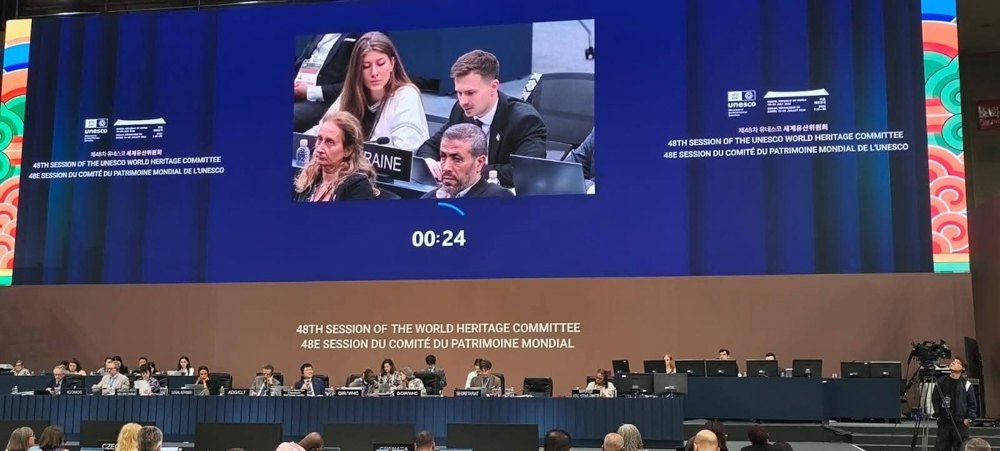
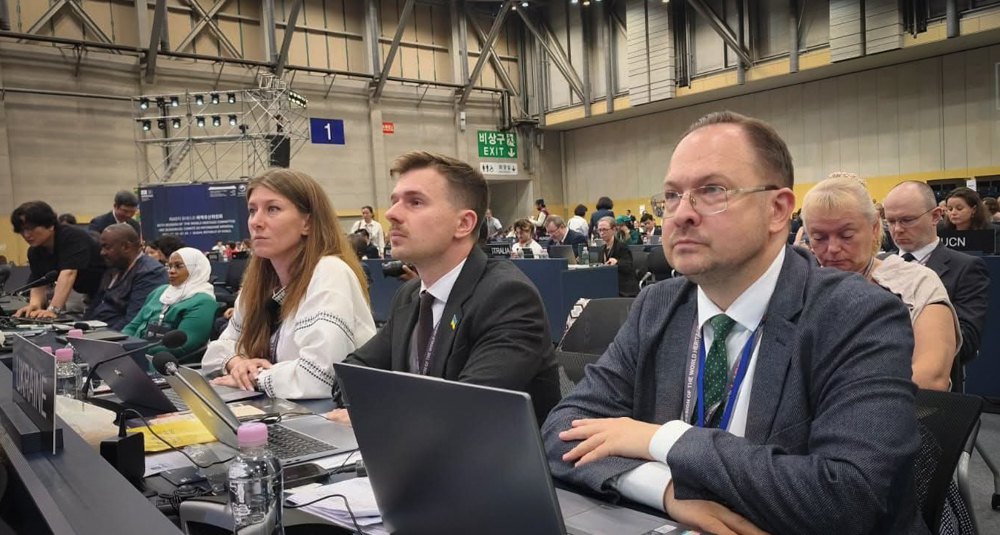
There is a political component. Work in committees is, first and foremost, expert work. But diplomatic and political elements remain in any case. We try to remove Russia and its delegations. However, as observers, they are always there. There are always many of them. They bring expert organisations and the diplomatic corps with them. For each of our points, they usually have cynical counterpoints — they openly say they are not destroying cultural heritage and that Ukraine is doing it itself.
This year, it was particularly cynical regarding the Kyiv Pechersk Lavra. On 15 June, we all saw the Dormition Cathedral burning. The committee meeting was in July. Their (Russian. – Ed.) delegation said it was all our Armed Forces (of Ukraine. – Ed.). And that they had done nothing at all. That their weapons were not there. They do not listen to the point that the object seen in the photographs that struck the site was not ours (Ukrainian. – Ed.). For us, it is obvious because we see it from the inside. But on international platforms, you have to show it and persuade people.
Plus, UNESCO is about a huge number of rules. For every story there is some procedural mechanism. We managed to add Tauric Chersonese to the list because it was perfectly drafted in terms of procedural mechanisms.
For Russia, it was diplomatically difficult. They said that for Chersonese they were risking their lives, protecting it from Ukrainian drones, and that they had installed some mechanism there to preserve it from natural impacts. They broadcast claims that they ensure full protection of cultural property and are ready to co-operate with all international organisations; that Ukraine has invented everything and they have not destroyed a single cultural site; that they are using only lawful targets within this war. It looks very cynical and absurd if you understand from the inside how it is really happening.
On adding Chersonese to the list: what concrete benefit does this decision bring Ukraine, and what does it mean for Russia, which is carrying out archaeological excavations and construction there? What will the consequences be?
We do not expect Russia to say: “We’re terribly sorry. We’ve stopped doing what we were doing. We are not destroying the monument. And we’ve repented deeply.” Still, there are several pragmatically valuable outcomes for us.
First, it is a diplomatic success. Because things have been called by their proper names (in the cultural sphere, that is very difficult).
Second, this mechanism provides for maximum mobilisation of international efforts to stop the loss of the site’s authenticity and integrity. This is especially relevant for Chersonese. Because all construction and archaeological work is a critically complex matter. Because the archaeological value — the system of development — is a core value of this site. Preventing further destruction is now more squarely in UNESCO’s focus. They called for stopping actions that harm integrity and authenticity.
Russia says it is doing nothing wrong. Yet, on the other hand, it says: “But we are ready to co-operate with UNESCO to ensure the desired state of conservation of the site, as procedures provide.”
The next important step for us is to see how UNESCO will work going forward. Most likely, Russia will not stop. But now, as a result of the change in legal status and the physical actions taken, it will constantly trip over this decision.
In addition, it provides extra arguments on the issue of responsibility — in bringing those guilty of attacks against cultural property to justice.
How will Russia’s responsibility be regulated in future?
As of today, it is very important to document everything. We are trying to record as much as possible what is happening. Because the quality of documentation and the collection of evidence will help in future (I hope) to identify and hold to account those responsible for crimes against Ukraine’s cultural heritage.
This is a war not for territory, but to erase our identity — against Ukrainians as a nation. Activity in the sphere of cultural property demonstrates this very vividly. Russia is carrying out illegal archaeological work. They appropriate, unlawfully move cultural property, incorporate it into their legal regime, and try to reinterpret history. Cultural property is a very effective tool that they are trying to use to the maximum.
So, speaking about the present: maximum documentation and work with procedural mechanisms, so that they meet the demands of the time and leave no loopholes that would allow responsibility to be avoided later.
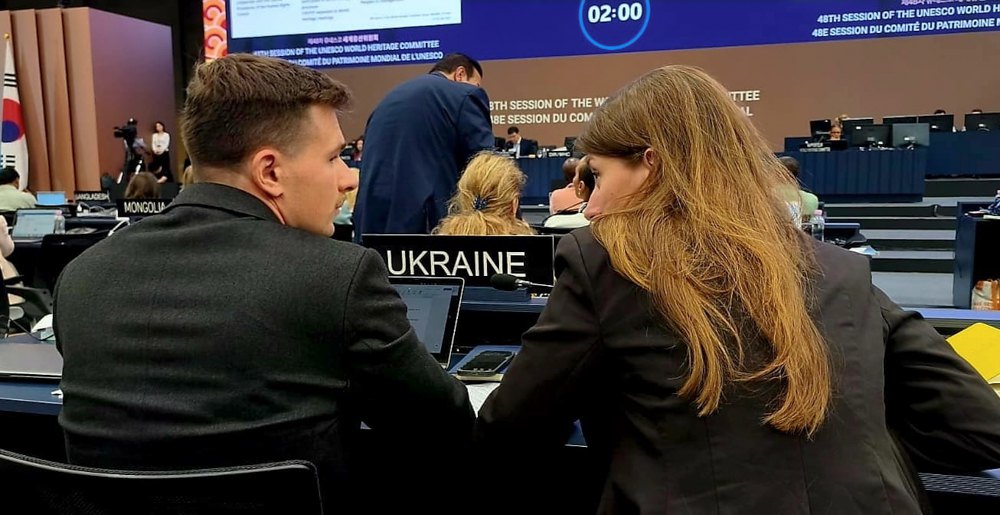
As for the International List of Cultural Property under Enhanced Protection: in one interview you said that such status increases the level of responsibility for damage inflicted on monuments. What kind of responsibility are we talking about here?
Within the Hague Convention, several levels of protection for cultural property are established: general, special and enhanced. Enhanced protection was introduced to grant it to particularly important sites with the highest cultural value for humanity. That is, if a monument from this list is destroyed, it is a loss not only for Ukrainian self-identification, but for all humanity.
This highest level of immunity should imply inevitable responsibility. We conducted research on “International legal responsibility for violations of the immunity of cultural property under enhanced protection” in order to open a discussion about the need to develop a Third Protocol or improve the Second Protocol.
Because as things stand, 11 Ukrainian sites out of 46 on the list of cultural property under enhanced protection have suffered destruction since the start of the full-scale invasion. That is, we are talking about systematic attacks on sites with the highest level of immunity.
We are refining accountability instruments that still leave room for such cynical acts against sites recognised by the world.
And what will Russia face for this in future?
At present, convention mechanisms are mostly oriented towards holding people accountable at the national level. That is why the Office of the Prosecutor General and the Prosecutor’s Office of the Autonomous Republic of Crimea are working actively. There are already certain notices of suspicion.
We are raising the issue of international responsibility. There are precedents from the International Criminal Court (ICC) that have shown successful prosecution of criminals. UNESCO’s interaction with Mali would be a useful case for us (in 2012, the armed group Ansar Dine led by Ahmad al-Faqi al-Mahdi seized the Malian city of Timbuktu. The unit destroyed UNESCO World Heritage cultural monuments. In 2016, the ICC sentenced Ahmad al-Mahdi to nine years’ imprisonment for the destruction of ancient shrines in Timbuktu. – Ed.). Back then, UNESCO did not merely ensure documentation and respond to specific actions. It consolidated all evidence and monitoring results and passed them to the ICC, which effectively strengthened the evidentiary base.
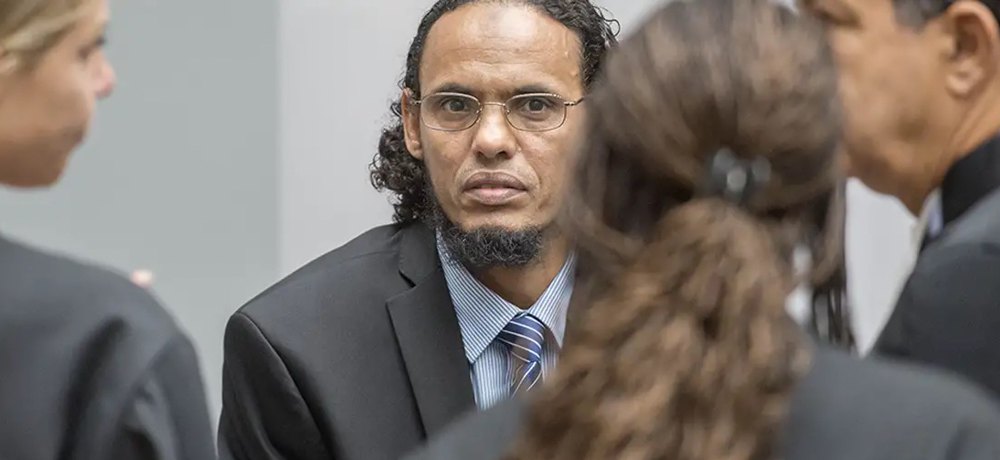
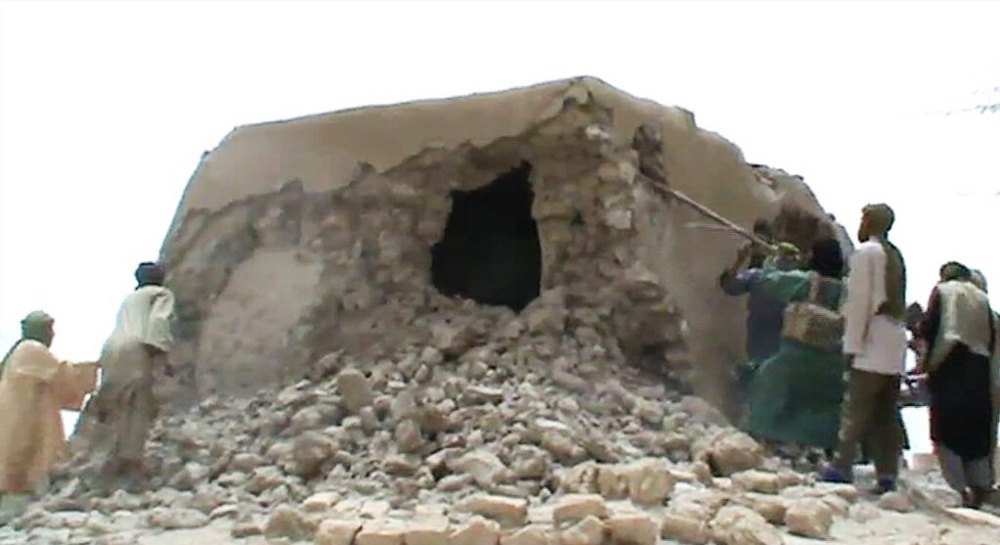
Documentation and the use of all mechanisms will give us the opportunity to seek accountability for those responsible and compensation at the international level. We have been working on this for more than a year now. It is moving. But it is a very slow process.
I share the view that responsibility should not be only at the national level, but also international. So that those guilty are not only punished in accordance with international law, but the state also has the right to various compensation mechanisms.
But this is still in progress, right?
Work for years. Chersonese took 10 years. We managed to activate these processes when we became a full member of UNESCO’s World Heritage Committee in 2023. But the work of gathering evidence and ensuring procedural compliance with the mechanisms lasted more than 10 years.
However, I am a supporter of the theory that if you keep chipping away at the rock and move in small steps towards a big goal, results will come. Our work proves it. Because the world does not operate on the principle of “It’s all obvious to us. It has to be very fast. Everything at once.”
UNESCO is often associated with “concern” and “deep concern”. In your view, what practical role does this organisation play in preserving Ukraine’s cultural heritage?
Whether we like it or not, UNESCO remains a UN agency responsible for education, science and culture. I also do not like seeing a cathedral burning and then seeing a statement of deep concern that does not call things by their proper names.
However, our experience shows that if you stand up for the truth while following UNESCO’s established rules, progress is possible. Interaction with UNESCO demonstrates this. We can point to successes of recent years: the state has forced UNESCO to see and call things by their proper names; a number of studies have been launched; there have been a number of successful committee decisions.
I think December this year and July next year (the 49th session of UNESCO’s World Heritage Committee will take place from 27 June to 7 July. – Ed.) will be indicative in terms of how UNESCO improves its mechanisms and allocates funds from various sources to preserve our sites.
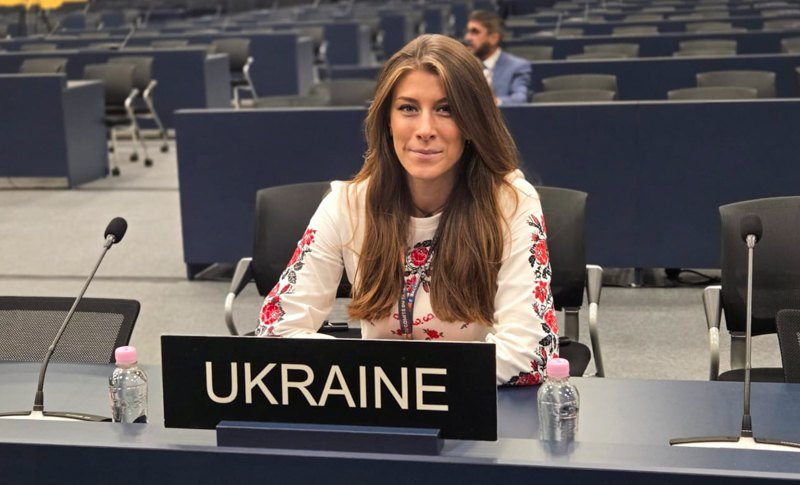
Since the start of the full-scale invasion, UNESCO has mobilised 79 million dollars through partners for Ukraine’s recovery, according to its website as of 16 August. How are these funds distributed and what do they cover?
There are two ways of engaging with UNESCO: convention-based international activity and the Antenna Office (the UNESCO Antenna Office is UNESCO’s representation in a specific country, opened when UNESCO needs a direct presence. – Ed.), which has been operating in Ukraine since the start of the full-scale war. Almost all funds go through them.
There are six main areas of engagement. Among them, besides the protection and preservation of cultural property, are digitalisation, education, science and the creative industries. Within these areas, projects are recorded that are implemented together with civil society representatives and state authorities.
Many resources have been directed towards restoring damaged sites, strengthening institutional capacity and other areas. In most cases, resources are channelled precisely through the Antenna Office in Ukraine. On the one hand, for restoration; on the other, for preparing staff and state institutions to respond in emergencies.
A series of trainings and exercises are being conducted to build institutional capacity. I consider this very valuable. Although I know a number of sceptics who believe this money goes nowhere. But in my view, expanding people’s ability to respond is an important element.
Alongside this, there are funds, including the World Heritage Fund and the Fund of the Committee of the Second Protocol (meaning the Fund for the Protection of Cultural Property in the Event of Armed Conflict. – Ed.).
There are currently 46 Ukrainian cultural sites on the International List of Cultural Property under Enhanced Protection. How many sites does Ukraine plan to add to it?
I’m going to give a spoiler. We are preparing a new package. We wanted to hold an extraordinary meeting. Most likely, it will not happen. Because it requires the support of two-thirds of countries to convene it. As of today, we have four of the eight needed. This is about the political component.
However, I do not see this as a problem. Because December is already close. The documents are being developed and agreed. If all goes well, by the end of the year (as a spoiler) we will have around 80 sites.
This package is particularly valuable to me. Because it includes many frontline sites. I hope it will help us further in preserving cultural property.
As for Russia’s appropriation of Ukraine’s cultural heritage left in the occupied territories — what is Ukraine doing?
As the Regional Centre for Human Rights, we systematically monitor and pass on information about cases of unlawful seizure and transfer of cultural property. We work with investigative bodies, in particular with the Prosecutor’s Office of the Autonomous Republic of Crimea and the Office of the Prosecutor General. From this side, an important part of the work is sanctions policy. There are successful cases of sanctions being imposed on people involved in this activity.
At the level of the Ministry of Culture, we co-operate with the OSCE and Interpol. This year, Interpol published on its website cultural property seized during the war. The Ministry of Culture’s website has launched a museum fund register, which includes, among other things, a register of stolen cultural property.
A complicating factor in this process is that Russia has stolen not only cultural property and museum institutions, but also inventory documentation. To prove that something was stolen from us, we have to prove that we had it. This is work for decades. But it is producing certain results.
In June this year, Ukraine’s Defence Intelligence (HUR) reported that the Kremlin is using UNESCO to advance its own interests in Africa. It concerned a voluntary contribution of 250,000 dollars to the International Programme for the Development of Communication.
HUR then claimed that, in practice, such funding gives the donor the ability to shape project content, set thematic priorities and ideological emphases. In other words, it is effectively about promoting Russian propaganda in Africa through UNESCO. How is Ukraine countering this?
This is not quite my area, but I know about this story. It cannot be viewed as simply “black” and “white”. There are clear rules and procedures.
Where we can exclude Russia from participation, we do so. But we also cannot simply say: “We are against it. Because we see that in this way it is acting against us, the world and common sense.” Under clear rules, we remove it from those places where it can be removed.
Politics remains politics. It is not that simple. You cannot eliminate Russia everywhere it integrates itself.
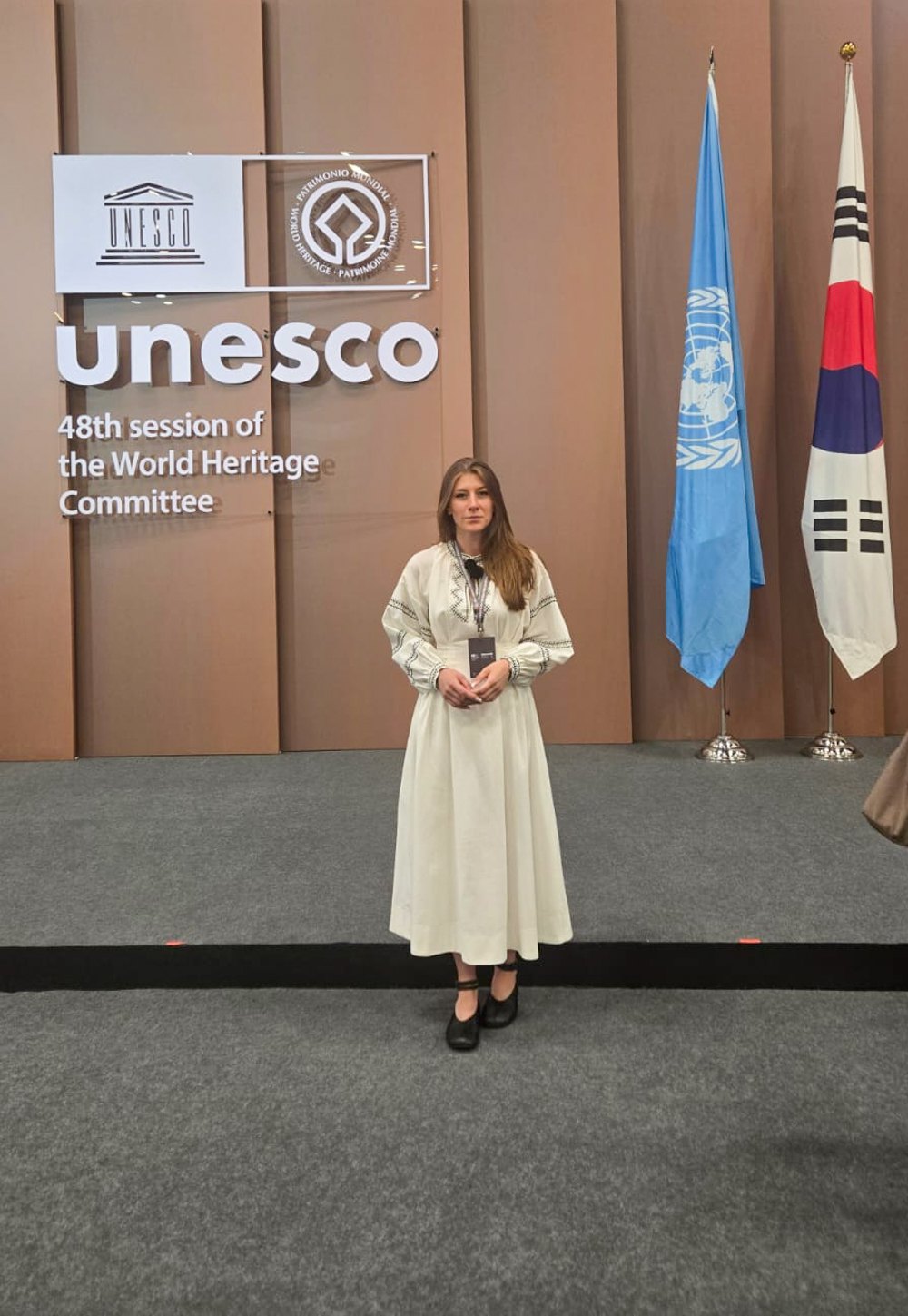
Recently, Ukraine prevented the Russian organisations RAIPON and the Expert Council on Protected Areas from participating as observers at UNESCO. How many such organisations are there overall that try to influence decisions? What share of Russian influence within UNESCO is it possible to suppress? And how much work still lies ahead for Ukraine?
Russia has very powerful government delegations — effectively for every committee. This year, the list of organisations proposed as observers was published literally just a few days before the meeting. Everything looked like an innocent story about involving civil society.
We effectively saw who they were only on the last night and realised that this “civil society” was closely linked to state mechanisms and the machinery for promoting their (Russian. – Ed.) narratives. They (the organisations. – Ed.) openly supported Russian aggression, including against indigenous peoples.
We introduced an amendment and did not allow it to go to a vote. It was an unpopular decision for most committee members. But it matters. Because when independent civil society representatives, as experts in a narrow specialism, speak, the international community listens.
Ukraine has prevented Russia from participating in UNESCO’s Executive Board and in UNESCO’s World Heritage Committee.
But this is ongoing work. Because elections to these bodies are usually held every four years. Each convention, each committee has its own rules.
If we are talking, for example, about the percentage ratio of Russian influence that exists and what can be suppressed — how much has already been overcome and how much remains?
A percentage ratio will not work here. Because everything changes month by month: meetings and foundational processes take place. The process is very dynamic.
Russia tries to be everywhere. Its support remains fairly strong. This is visible in certain votes. However, if everything is properly substantiated, it can be removed.