





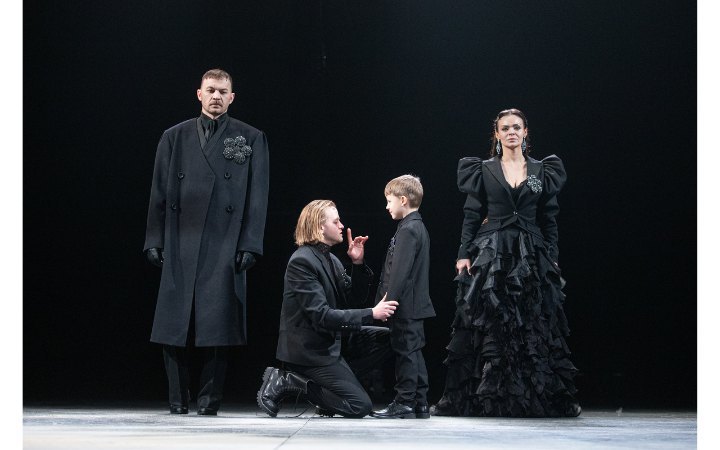
On 25 September, at the Andrej Bagar Theatre (Nitra, Slovakia), as part of the opening of the anniversary 35th International Theatre Festival Divadelná Nitra, a performance of ‘Macbeth’, based on William Shakespeare’s tragedy and directed by Ivan Uryvskyi, will be staged. The production was created by the Ivan Franko National Academic Drama Theatre.
The Ukrainian Institute reports this, noting that it is organising the performance in cooperation with the Divadelná Nitra festival.
Ivan Uryvskyi’s ‘Macbeth’ is a contemporary interpretation of one of the best-known tragedies in world drama. At the heart of the production are themes of power, its destructive impact on the individual, manipulation, and responsibility for one’s own choices.
After the performance at the Andrej Bagar Theatre, a reception organised by the Embassy of Ukraine in the Slovak Republic will be held. The reception will continue a series of cultural events marking the 35th anniversary of the restoration of Ukraine’s Independence.
A discussion panel featuring the production’s authors and creators will also take place as part of the festival. During the discussion, audience members and representatives of the professional theatre community will have the opportunity to talk about the director’s vision for ‘Macbeth’, the specifics of working with a classic text, the production’s stage language, and the context of its creation in contemporary Ukraine.
The Divadelná Nitra International Theatre Festival has been Slovakia’s key cultural event for 35 years. The festival programme focuses on current stage practices, socially and politically sensitive themes, and dialogue between theatre and civil society. In addition to performances, the festival includes discussions, lectures, professional meetings, and educational formats for artists and critics.