





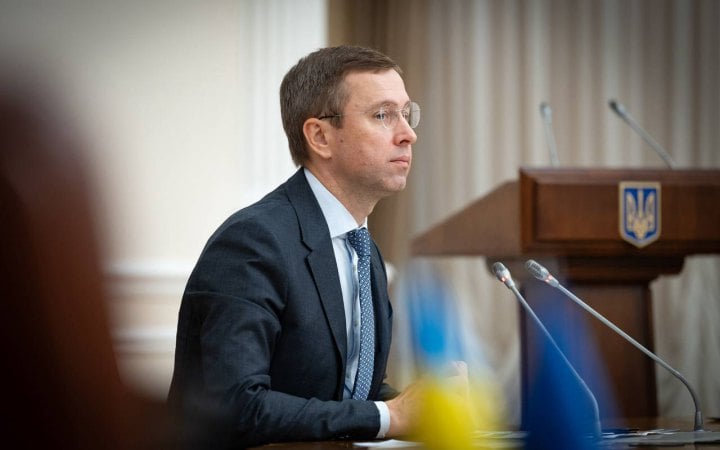
Ukraine is planning to create a separate state financial reserve to compensate businesses for losses caused by Russian attacks. The sum in question is about $1bn, which they plan to increase with support from international partners.
Ukraine’s Prime Minister Serhii Koretskyi said this at the YES conference, LB.ua reports.
The head of government spoke about the state’s plans to help businesses suffering losses due to Russian strikes, the destruction of infrastructure and logistical problems.
He said Ukraine needs to prepare for a prolonged war and already create conditions that will allow businesses to operate over the long term.
One such area, the Prime Minister said, is underground construction, which could become part of protecting infrastructure, logistics and the energy sector. At the same time, implementing such projects could take years.
"If we don’t start today, then in two years there still won’t be anything," Koretskyi noted.
The Prime Minister paid particular attention to insuring businesses against war risks. He said the classic War Risk Insurance model does not work properly under the conditions of a full-scale war.
Therefore, the government is considering creating a separate budget programme to which the state plans to allocate about $1bn.
They then want to increase these funds with the help of international partners.
According to Koretskyi, the relevant mechanism предусматривает attracting resources through a Ministry of Finance programme and cooperation with the World Bank.
In this way, they plan to form a financial reserve to cover business losses caused by Russian attacks and the war.
According to the Prime Minister, the state could cover up to 40%, and at most 50%, of the losses incurred. At the same time, the procedure for receiving compensation should be as simplified as possible.
"There must be an immediate response here," Koretskyi stressed, explaining that traditional insurance companies can take months or even years to assess risks and losses.
The Prime Minister also emphasised the need for ongoing dialogue with business, practical assistance from the state and a rapid response to new challenges arising from Russian aggression.