





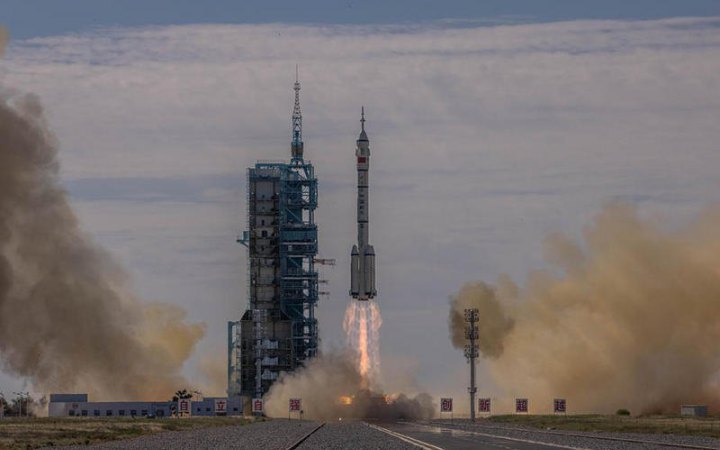
On 15–16 September, over the course of 45 hours, four different carrier rockets were launched from three different Chinese spaceports. Two of them were built by private companies. All four launches were successful, Space.com reports.
The first to lift off was the "Zhuque-2E" carrier rocket, built by LandSpace. The rocket uses liquid methane and liquid oxygen as propellants—the same propellant combination used by SpaceX’s super-heavy Starship rocket.
"Zhuque-2E" placed 10 satellites into low Earth orbit for China’s "Qianfan" ("Thousand Sails") broadband satellite constellation.
According to the plan, the constellation is ultimately expected to comprise 15,000 satellites.
Another nine "Qianfan" satellites were delivered to orbit by the Gravity-1. It launched from a barge off the coast of Shanghai. The rocket is operated by Orienspace.
Gravity-1 is the world’s most powerful solid-fuel rocket.
The next to launch was the "Changzheng-12" (Long March 12) rocket, developed by the state-owned China Aerospace Science and Technology Corporation (CASC).
It lifted off from the Wenchang spaceport on Hainan Island. On board were nine spacecraft for China’s SatNet broadband satellite constellation in low Earth orbit.
According to the plan, the network will ultimately consist of 13,000 satellites.
The series of launches concluded with the "Kuaizhou-11" rocket, which lifted off from the Jiuquan spaceport.
The carrier rocket is operated by a subsidiary of the state-owned China Aerospace Science and Industry Corporation (CASIC).
"Kuaizhou-11" placed two radar Earth-observation satellites into orbit belonging to the Chinese company Spacety.
- On 5 August 2024, a Chinese state-owned enterprise launched the first batch of satellites for a mega-constellation intended to compete with Starlink. The launch was carried out by Shanghai Spacecom Satellite Technology (SSST). It took place from the Taiyuan spaceport, one of China’s main centres for launching satellites and rockets.