





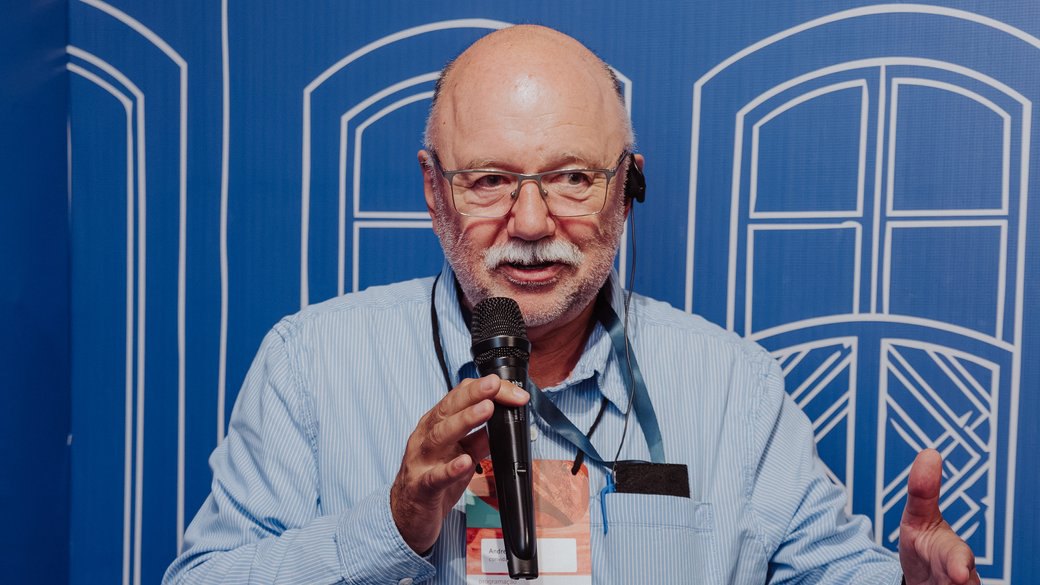
What do people in Albania know about today’s Ukraine and its culture?
In fact, very little. Ukrainian writers are virtually unknown — neither the classics nor contemporary authors. But they (Albanians. — Ed.) are open to learning more about Ukraine, Ukrainian culture and literature.
But do they know anyone at all?
Albanian writers know Andriy Lyubka. Because he came there and they spoke with him. One of the writers mentioned Yuriy Andrukhovych’s novel Recreations. People who are more literarily educated mentioned Taras Shevchenko. That’s all.
Do they have any cultural associations with Ukraine?
There are almost no cultural associations. The thing is, in Albania there are two cultures they have traditionally followed — Russian and Italian. Many people among the older generation still speak Russian. And many speak Italian. Those two cultural reference points have remained. And very little is known about Ukraine.
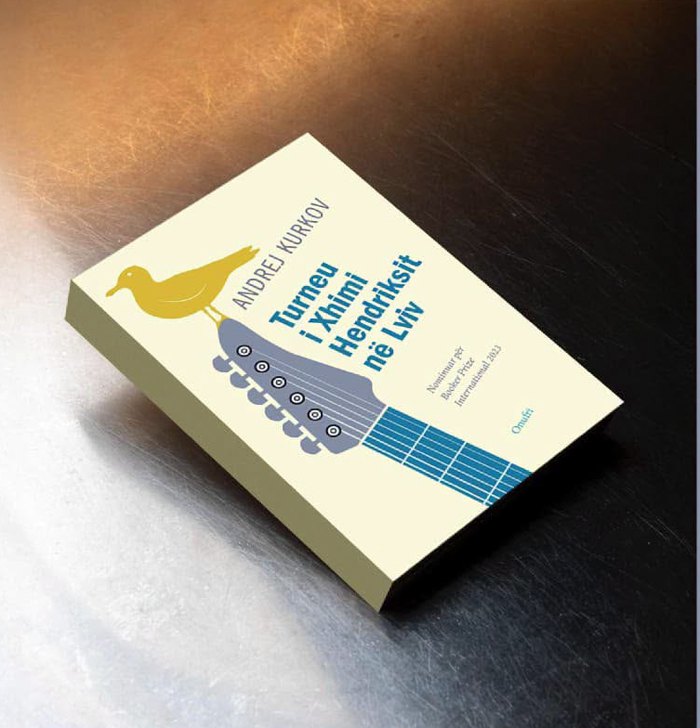
What do Albanians understand well about the Russo-Ukrainian war, and what needs explaining?
For them, it is not entirely clear that the war is also being waged against culture. But they do, on the whole, follow political developments. I mean people who read and keep track of the situation in general.
Politically, they are on Ukraine’s side. Although after Zelenskyy stated that Ukraine would never recognise Kosovo, there has been a bit of distancing from the Ukrainian government.
And which topics about Ukraine evoke greater understanding and sympathy, and what remains completely unclear?
I can’t generalise. Because I only spoke with people who came to the meetings — colleagues, friends of the publishers. They know all the basics about the situation (the Russo-Ukrainian war. — Ed.). They understand it well.
I did not meet a single person who doubted that the Ukrainian side is in the right in this war. I did not hear a single pro-Russian voice. And as far as I know, there aren’t any there (pro-Russian voices. — Ed.). People are either neutral or on Ukraine’s side.
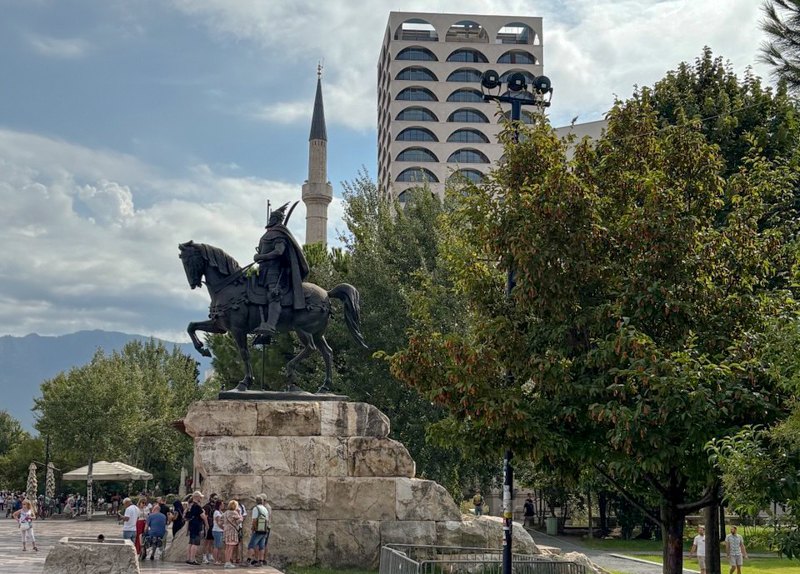
Is that about Albanians in general — not only the intellectual milieu?
It’s in general. Because I asked about the media — how everything is described. Overall, they reprint many articles from the French and Italian press. In the Italian press there are both pro-Russian and pro-Ukrainian views. But overall they reprint those that mostly show the real situation.