





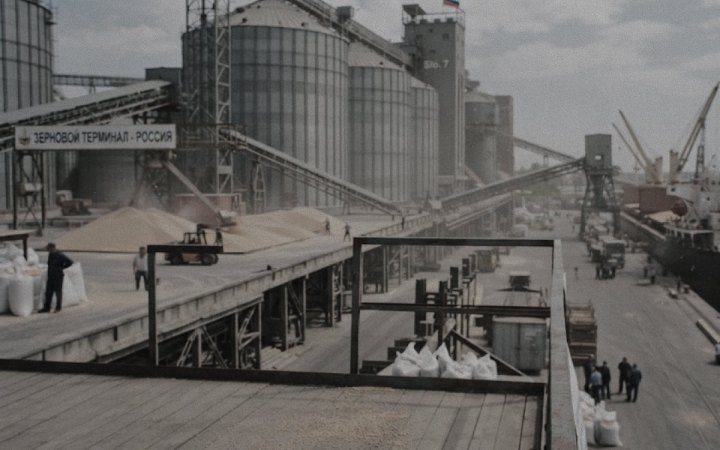
Russia is looking for alternative routes for grain exports after a sharp drop in shipments via the Black Sea.
This was reported by Ukraine’s Foreign Intelligence Service.
According to the intelligence service, in the second ten-day period of September Russia shipped 347,000 tonnes of wheat, compared with 1.3 million tonnes over the same period in 2025.
Russia is trying to reroute some cargoes to Baltic Sea ports, to the north of the country and to the Far East. In particular, the “Ultramar” terminal in Ust-Luga has begun accepting grain. In September, applications were submitted to transport around 260,000 tonnes of grain there by rail.
At the same time, according to the SZRU, even at maximum capacity this route can handle about 500,000 tonnes a month. The capacity of Russia’s southern ports exceeds 60 million tonnes a year, and last year almost 90% of Russia’s seaborne grain exports passed through them.
Russia is also considering Murmansk as another alternative route. The rail transport of the first 40,000 tonnes of grain from Stavropol Krai has been approved for shipment there. However, because of the considerable distance from the main grain-producing regions, this route is more expensive: delivery costs rise by $18–25 per tonne, or up to $1 million per shipment.
In the east, Russia is also increasing grain supplies to China via the “New Overland Grain Corridor”. Its volume rose from 2.3 million tonnes in 2024 to 5.8 million tonnes in 2025. About 9 million tonnes are expected this year.
At the same time, this route has a number of constraints, including those linked to the capacity of railways and terminals, tariffs, phytosanitary requirements and Chinese quotas.
“Russia cannot quickly create a replacement for the Black Sea system,” the SZRU said.
The intelligence service noted that this would require rail infrastructure, grain elevators, transhipment capacity, insurance, vessels and steady buyers.
Earlier, Ukraine, together with the Baltic states, tightened controls on the origin of grain to prevent products that Russia may have stolen from temporarily occupied territories of Ukraine from reaching international markets.
On 27 September, Germany’s Foreign Minister Johann Wadephul raised the issue of the grain blockade in the Black Sea during a meeting with Russian Foreign Minister Sergei Lavrov. However, the talks produced no concrete results.