





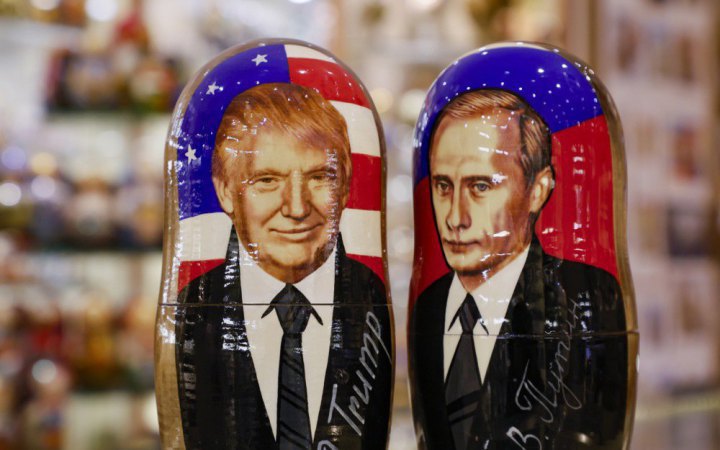
US President Donald Trump has decided to strike a deal with Russia on diesel fuel after Ukraine’s President Volodymyr Zelensky refused, at Washington’s demand, to unilaterally stop strikes on Russian oil refineries.
This is reported by Axios, citing a US official familiar with the situation.
According to the outlet, Ukrainian strikes on Russian refineries over recent months have been effective and have triggered an energy crisis in Russia. In response, Moscow banned diesel exports, increasing pressure on global energy markets amid the war in Iran.
Volodymyr Zelensky told Trump and his envoys, Steve Witkoff and Jared Kushner, that Ukraine is ready to stop strikes on Russian refineries if Russia, for its part, halts attacks on Ukrainian power stations.
However, Trump insisted on a unilateral halt to Ukrainian strikes, as they were contributing to rising petrol prices in the United States. At the same time, the US president did not view attacks on Russian refineries as equivalent to Russian strikes on Ukraine’s energy infrastructure.
“President Trump decided to strike a deal with Russia on diesel fuel after Ukraine’s President Volodymyr Zelensky ignored half a dozen US requests to stop attacks on Russian oil refineries,” the Axios source said.
In an interview with the outlet after the agreement was announced, Zelensky said it had come as a surprise to him. The president called the deal an unjustified gift to Russian dictator Vladimir Putin.
During eight hours of talks in Miami, Witkoff and Kushner told the Ukrainian delegation that Trump plans to speak with Putin and lift sanctions on exports of Russian diesel.
According to one Ukrainian official, the US envoys also threatened that the United States could cut off Ukraine’s access to intelligence if Kyiv continues to ignore Trump’s demands.
At the same time, the US official claimed that Witkoff and Kushner stressed the reliability of the United States as a partner that provides Ukraine with ammunition and intelligence. Therefore, in their view, Kyiv should not take actions that harm American consumers.
During the talks, the US intermediaries also presented a package of measures for Ukraine for the post-war period. It envisaged funding for the country’s reconstruction and the development of its army, covering the budget deficit, as well as discussions on Ukraine’s prospects for joining the EU and future relations with NATO.
In addition, the sides raised the issue of creating a post-war security system between Europe and Russia that could satisfy both sides.
According to the US official, Washington hopes that energy arrangements with Moscow will help bring down energy prices and encourage Russia to make concessions in peace talks.
The Axios source also said that Witkoff and Kushner are considering visiting Moscow and Kyiv next week to discuss peace proposals. However, it is still unclear whether the dispute surrounding the energy deal will affect these plans.
“Putin is striking Ukraine hard, but we believe he is open to discussing an end to the war. We want to develop a new proposal that will be attractive enough to him to make him stop,” the US official said.
Context
- On the evening of 9 October, President Trump said he had reached an agreement with Putin on supplying Russian diesel fuel to the US and global markets.
- According to him, Russia will “immediately” deliver more than 300,000 tonnes of fuel, another 500,000 tonnes during November, and 1 million tonnes straight after that.
- Zelensky said that any easing of sanctions against Russia without a clear and lasting de-escalation agreement is an obvious sign of weakness, and that Russia will inflict even more damage and losses on the world.