





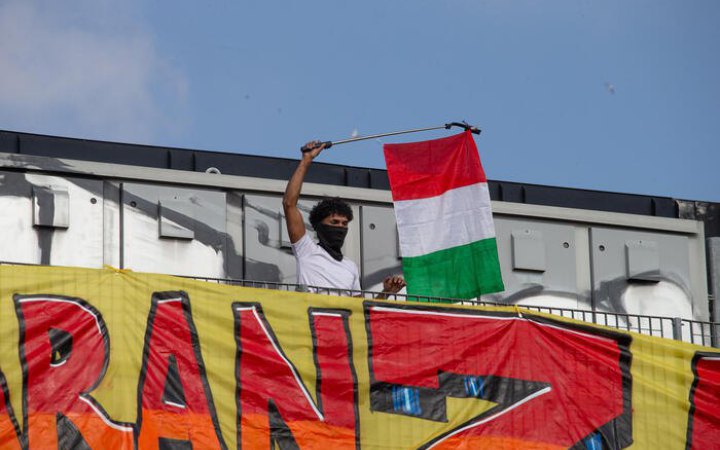
More than two million students and workers took to the streets in over 60 cities across Italy during a general strike organised by the Usb trade union.
Protesters voiced opposition to the high cost of living and military conflicts, the ANSA news agency reports.
Port workers in Genoa and Trieste joined the protests actively, speaking out against the transport of weapons and saying they were ready to block operations.
In several major cities, demonstrations were marked by tension and clashes with law enforcement. In Rome, near the Colosseum, a group of protesters set fire to rubbish bins and e-scooters and threw bottles and firecrackers at the police, after which officers used water cannons.
In Vicenza, clashes broke out during an attempt to block the ring road, leaving four police officers and three demonstrators injured.
In Turin, following clashes in the central square, police detained five people, and two injured protesters were taken to hospital.
- On 24 October, protests against the rising cost of living took place in Turin, Rome and Bologna and were accompanied by clashes with the police. In Milan, the demonstrations were largely peaceful. Ahead of the protests, the authorities tightened security measures due to the risk of fresh unrest: it was decided to send an additional 500 service personnel to Milan, and demonstrations were banned in the city centre.
- Earlier, on 17–18 October, the largest-scale unrest took place in Milan, where law enforcement officers and demonstrators were injured during clashes with the police, and more than 50 people were detained. The unrest also spread to Turin, Bologna and Bergamo. Prime Minister Giorgia Meloni condemned the riots, stressing that the right to protest does not justify violence.