





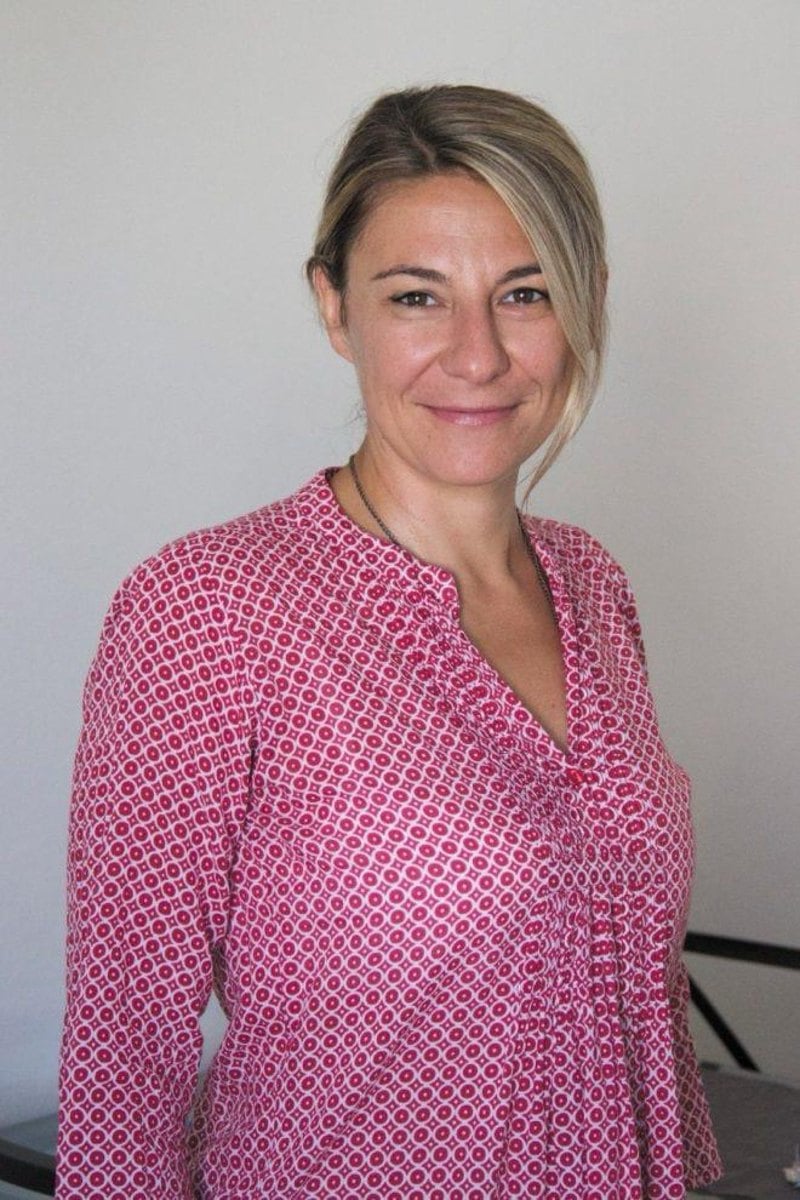
A few years ago I read Francesca Melandri’s book “Cold Feet” — an autobiographical essay-novel in which family memories are woven together with contemporary events, including Russia’s full-scale invasion of Ukraine. Watching reports from the front, the heroine begins to recognise the names of towns and villages she once heard from her late father, who took part in Mussolini’s fascist campaign alongside Nazi Germany. What struck me at the time was that this recognition only came to her in 2022, even though Ukraine supposedly should not have been so invisible over the previous few decades…
That is all true. Until 2022, we did not study this topic either at school or at university. Ukraine was bypassed or not given enough attention. It is a cultural and historical problem.
For example, at the university where I studied — a state educational institution — history was taught very well, but the lecturer himself had been shaped in an environment and at a historical moment when Russia was synonymous with the Soviet Union. And the entire territory of the Soviet Union was viewed as a single bloc and was of interest only as a political model. Individual countries or cultures were not given attention.
In my view, this is beginning to change now. However, it had already started to change back then, when I was studying, when I was 26 — and I am 46 now, so a lot of time has passed since then — but it was not yet happening as a fully fledged process. These things do not happen overnight.
The year 2022 changed a great deal, but still not enough. In particular because Italy is an “old” country. That is, most people here are older, and they continue to think along the same pattern: Russia is still a general political model. For them, there is no difference between the Soviet and this new space. They probably do not travel in that direction either. You can write a few books, but it is not the same as seeing everything with your own eyes. For me, this is an extremely important point, because I am a journalist and assignments on the ground matter a great deal to me. You only understand many things then.
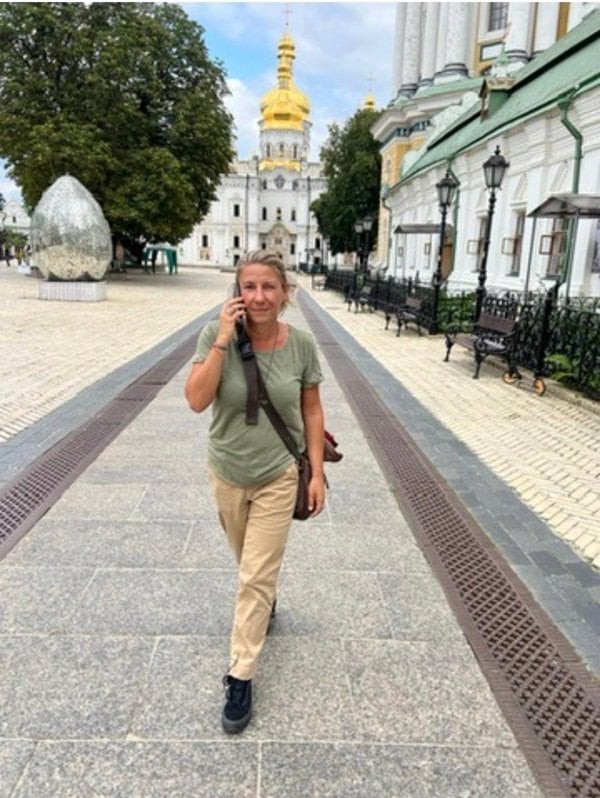
Being on the ground is very important for covering a war, but also for learning and understanding countless unknown things. For example, I was very surprised when I saw the monument to Catherine II, because during my history course this historical figure was not presented as particularly significant.
So I began to look into it, because in southern Europe the focus is primarily on the war in the Middle East. From a geographical point of view that is understandable, but it is important for us now to realise that the world is much wider.
In addition, we should bear in mind that after the Second World War, the Soviet Union became the model of resistance here. For example, the swastika and Soviet symbols still have radically different meanings for us — and not the same as for you. That is how it turned out. And it partly shapes today’s perceptions.
So perhaps the problem lay in the lens through which Europe looked at Ukraine?
Until 2022, Donbas seemed like something distant and, in the imagination of politicians and the mainstream media, it was not associated with Europe. Of course, after 2022 this viewpoint changed radically. Interest in Ukraine rose sharply.
And how has Donbas changed, as you see it during your trips?
For me, Donbas now resembles a patient who becomes sicker every time I return. Even the geography of the cities is changing.
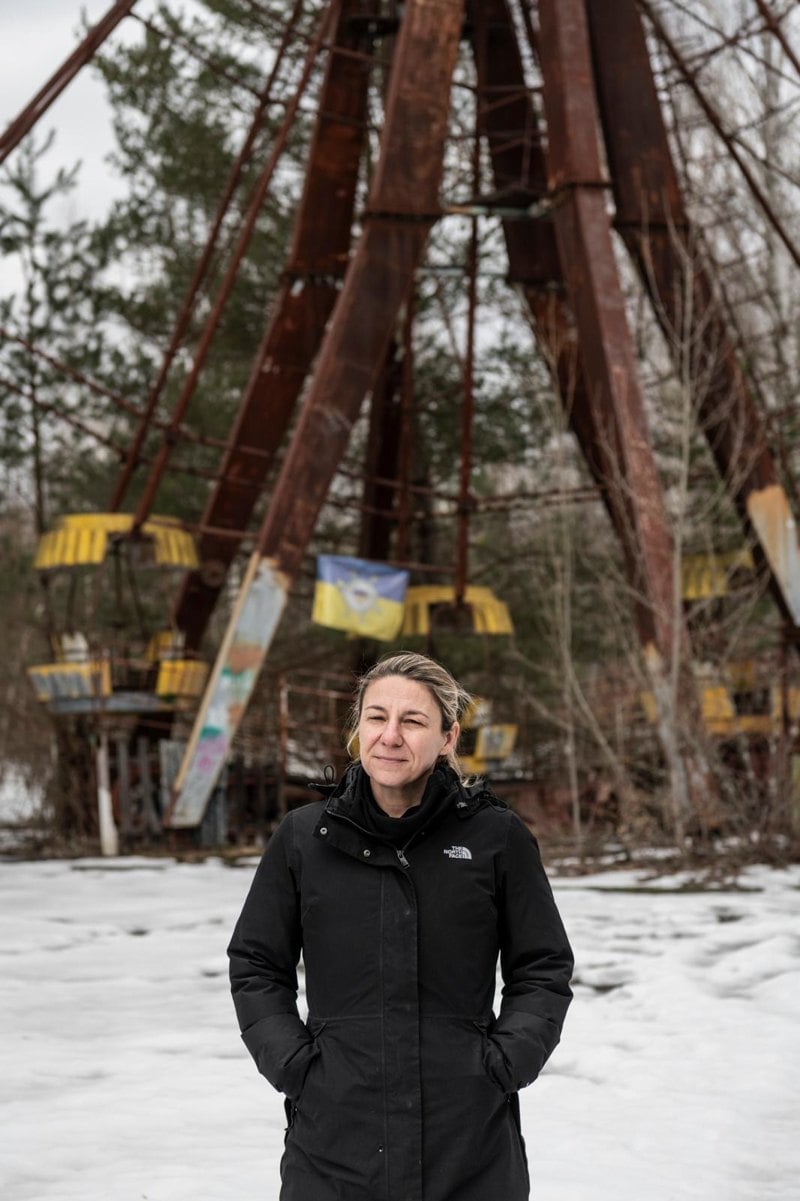
Is there a lack of information about Ukraine today?
I do not have a definitive answer. But I can say that we cover the Russia–Ukraine war as more than just a conflict. Every square kilometre of the war demands attention, so it is impossible to claim that there was no information or that there is none. The information is there, if you want to understand it. So I think it is more about prejudice — or rather a “state of mind”.
Of course, a lot has changed in my understanding of Ukraine, because part of its history was not entirely clear to me. Let’s compare it with the Balkans — although that is a generalisation, of course. Knowledge about the Balkans began to change when, after the wars, the Balkan countries started moving towards joining Europe. And the Balkans are very close to us.
It will probably take longer for Ukraine, but I am sure that one day Ukraine will mean Europe. Because that is normal. It is geography.
Do you remember the moment when Ukraine made you reconsider what you knew about its history?
In 2022, during a long train journey between Odesa and Zaporizhzhia, I got talking to a right-wing man. I was curious to understand his position. He had a Cossack-style haircut. And later, in Zaporizhzhia, I found myself in front of a monument to the Cossacks and suddenly connected the two. And I thought: I probably need to read more about this. Because until then, “Cossacks”, “Catherine II” were for me simply names and concepts from history. And here was the same haircut on a thoroughly modern man.
You spend a lot of time in Ukraine. In such a situation, does a conflict arise between personal involvement and professional distance? Is journalistic neutrality possible at all during a war?
Of course, I have different thoughts and views. But when I prepare an article, I try to be objective. I am a journalist, not an activist. So first and foremost I have to report events, understanding that during a war each side engages in propaganda. But complete neutrality is impossible, if only because you never have all the information. For example, I have never worked from the other side. Sometimes you really want to go to the other side to understand the situation better. When you see things with your own eyes, you understand better. But it is impossible.
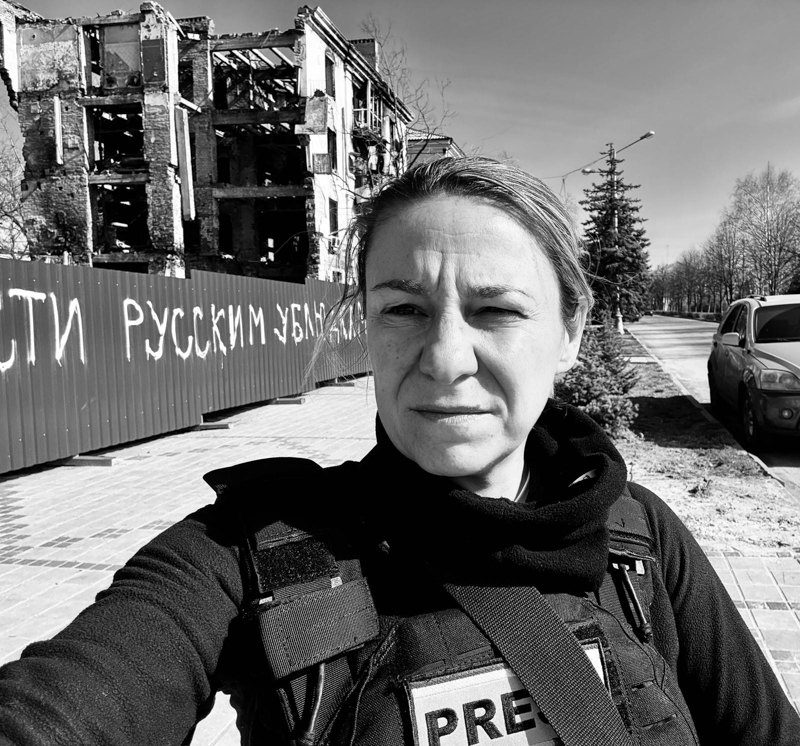
However, I do everything within my power. I take into account that the Ukrainian authorities, like any authorities during a war, also engage in propaganda. So neutrality matters — not towards civilians, but towards the government. Civilians are a different matter for me. If I tell people’s stories, I give them the opportunity to speak. Criticism of Russia from an ordinary civilian and the words of a politician are different things. The same applies to covering issues of war. The army is not created only to protect the civilian population. It is part of the authorities.
In the book you write not only about the war itself, but also about memory: renamings, monuments, school textbooks. Has Ukraine changed your own understanding of how historical memory and decolonisation work?
The Balkans. The Middle East. Afghanistan. In every conflict, truth suffers. But so does the vision of history. The same is true in the case of Israel and Palestine: the stories are told differently, and that concerns both the present and the past. So it is always interesting to know another point of view. And as for the Russia–Ukraine conflict, here — especially now, after it began — this is one of the most important components. For example, at the beginning I often heard Russian spoken by Ukrainians. Now you hear it less often in public. Sometimes such processes frighten me. The same goes for “cancel culture”. When you see a monument to Catherine II being dismantled in Odesa, the first reaction may be: “But this is part of your past, your history.” Yet I understand that for Ukrainians it may be similar to how we in Italy related to the past after Mussolini fell. I spoke about this a lot with people in Ukraine. My point of view has not changed, but my lens has become broader.
At the same time, you talk about “war fatigue”, which became noticeable in Europe from around 2024. If there is enough information about Ukraine, why do people stop taking it in?
It is a combination of the rise of populism in Europe and Russian propaganda, because the Kremlin is one of the earliest inventors of the propaganda machine. So the problem certainly exists. But we also see that many journalists and commentators have begun to defend Moscow. I do not know why. It is all spreading on social media, especially among older people.
I understand when Ukrainians tell us: “Come on, you are tired of us fighting for you.” But we also have to take into account that we are talking about countries in southern Europe — very “old”, unforgiving, with no thought for the future — which, as it were, respond: “Enough! These are not our problems. What do we care about a war with Moscow?” Although, in fact, these are problems for all of us. But that is the mood.
After four and a half years of the full-scale war, what story from Ukraine can still make the front page of an Italian newspaper?
Stories about civilians attract more attention than military events. For example, at Corriere we put on the front page a photograph of an elderly man standing by a window at the Academy of Sciences during shelling. It is an image readers can relate to. Kyiv is a European city. The protagonist is an older man. The situation is imaginable even outside war.
But in my view, civilians evoke more empathy in every war. A soldier is a person with a weapon. So the reader has a sense that he can defend himself. In Italy, this is compounded by the propagandistic claim that we have given Ukraine too many weapons, so they do not need our help.
Did you yourself choose Ukraine as a topic you wanted to work on?
No, I did not choose Ukraine. I was asked to go there to work — and that is how a very long story between us began. Now I do not know when, or whether, this story will end at all. Ukrainians — the people, the life of this country — are in my heart. After four years, it is hard for me to imagine that this relationship could simply end. It is already part of my heart.