





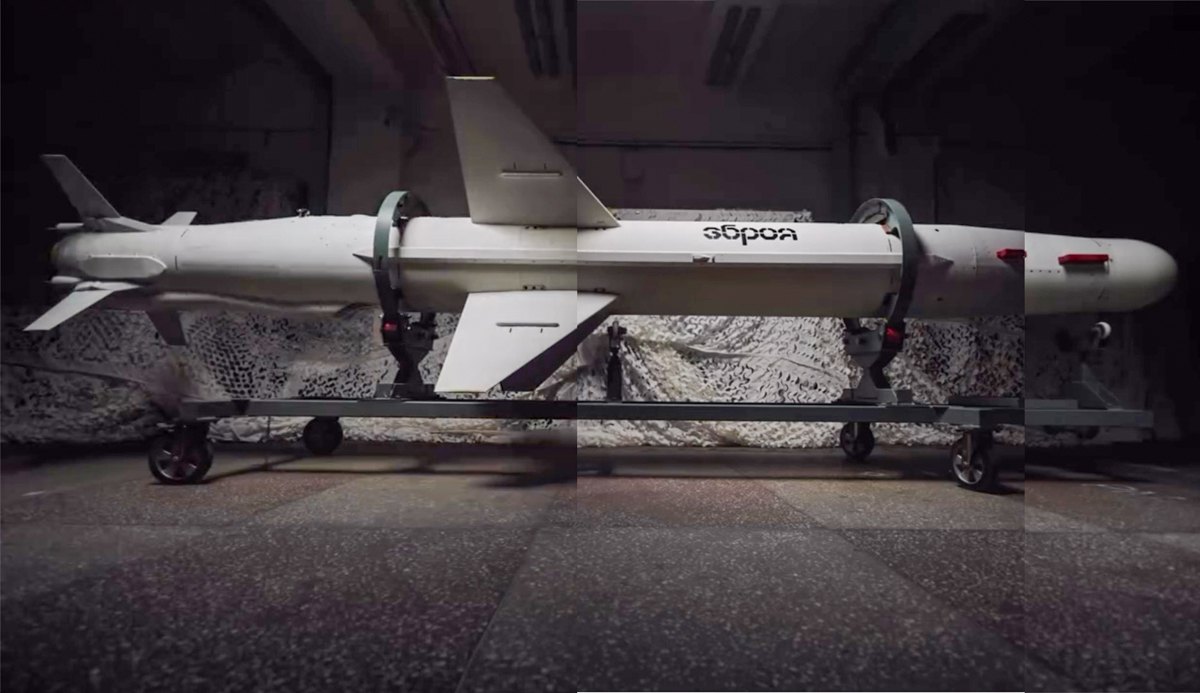
The development of the land-based version of the R-360 missile of the Neptune system (often called the “Long Neptune”) has enabled Ukraine’s Defence Forces to take the war directly to the parking aprons of Russia’s tactical aviation. If Britain’s Storm Shadow works against fixed factories and bunkers, our modernised Neptunes have assumed the role of the main tool for knocking out Russian Su-34s, Su-30s and storage sites for guided aerial bombs (KABs) on the ground.
That is because a missile battalion can quickly move to a launch area, it is protected by its own air defence from drones, and knocking it out by catching it after a salvo and feeding the coordinates into an Iskander is quite difficult — it will relocate faster. This gives us the flexibility to reach enemy aircraft at a forward operating airfield or at a base, at their most vulnerable moment — during refuelling and re-arming.
Here are the latest successful strikes:
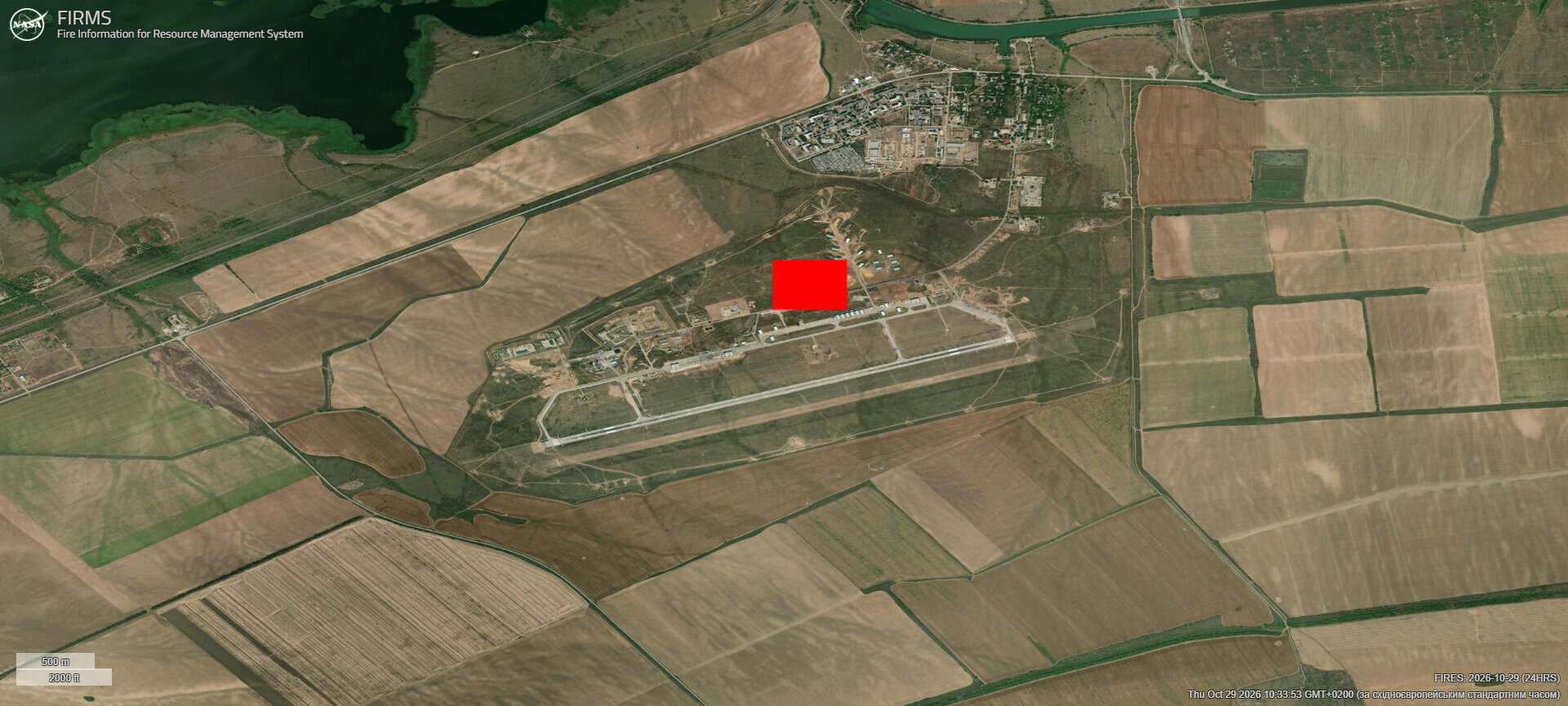
1. Strike on Marinovka airfield (29 October 2026). Volgograd Region, the settlement of Oktyabrsky (more than 400 km from territory controlled by Ukraine). Target: the base of the 11th Mixed Aviation Regiment of the 4th Mixed Air Division (4th Air Force and Air Defence Army of the Russian Federation).
Before the missile strike, a UAV raid warning was declared in the region. Most likely, swarms of drones were used to drain and distract the base’s air defence — overloading the engagement channels of the surface-to-air missile systems. Under this “umbrella”, the low-flying long-range Neptunes broke through to the parking areas.
NASA’s FIRMS satellite system recorded an abnormal thermal spike and a large-scale fire at exactly 02:28 — the aircraft parking stands were burning.
The Ukrainian Navy officially confirmed the destruction of two Su-34 fighter-bombers.
It is also known that at least two servicemen of the 11th Aviation Regiment were killed and two more were wounded. I hope at least the duty technicians, if not the pilots — digging in the rear is necessary too.
2. Rout at Borisoglebsk airfield (15 October 2026). Voronezh Region (about 300 km from the border). Target: a training and operational airfield hosting Su-34Ms, which were being prepared directly for sorties to drop KABs.
This was one of the most effective single Neptune strikes against tactical aviation in the entire war. The missiles managed to hit aircraft that were standing out in the open, already loaded with munitions.
Six modernised Su-34M aircraft were hit at once. Of these, four were completely destroyed, and two more sustained serious fragmentation damage.
To understand the scale: throughout 2026, Russian industry managed to deliver only a few new aircraft of this type to the troops — literally three airframes in each of two batches. In other words, one Neptune salvo wiped out more than a year of work at the Novosibirsk aircraft plant (NAPO named after Chkalov).
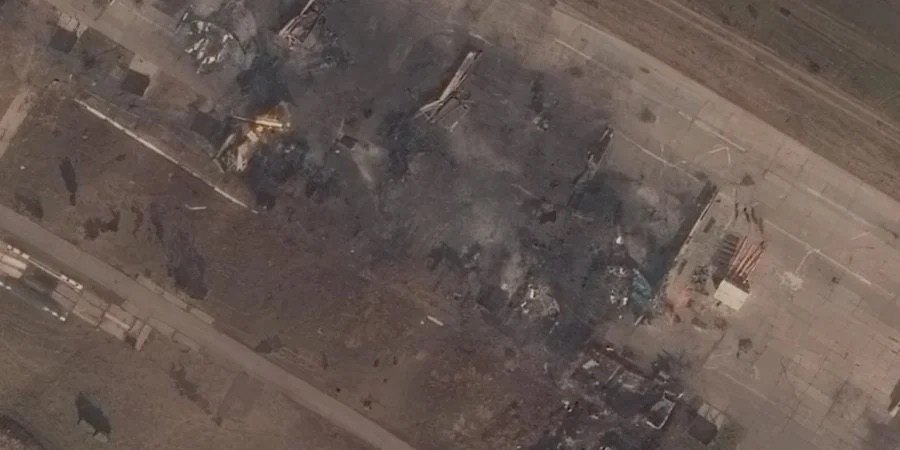
I very much enjoyed how navigator Ilya Tumanov, a well-known Russian blogger who never made it to the war for the “Russian world”, failed to see any confirmation or fragments of torn-apart aircraft in the satellite image. A comrade major’s fist inside the puppet works wonders.
Our task remains the same — to ease the pressure on the line of contact from hundreds of KABs, to hit scarce equipment and to knock out tactical aviation. If the enemy pulls back deeper into the strategic rear — good: that means less resource, fuel and flight hours, fewer combat sorties per day, greater pilot fatigue, and more accidents.
If not — not that many Su-34s are delivered per year, and the Neptune has enough power and accuracy to pick at a concrete revetment; it is entirely realistic. For fans of the special olympics — “why not Flamingo” — I’ll write it straight away: these are different niches. A heavy missile with a large RCS (radar cross-section), which can be continuously illuminated by an FCR (fire-control radar) even of the earliest S-300s, is a stopgap. It is suitable for striking workshops, chemical plants, communications nodes, oil refineries, blast furnaces, group targets such as an FSB headquarters, boats and repair bases.
Even if it arrives imprecisely because of CEP (circular error probable) and electronic warfare, a one-tonne warhead detonating nearby is more than enough for clean rooms and crystal-growing chambers.
But it has to be employed differently — studying radar activation schedules, the reaction of air-defence aviation, electronic warfare, analysing past failures. Here, at airfields, there will be point air defence; it is clear that modern SAM systems plus small-calibre anti-aircraft artillery — they must be penetrated at low altitude and used to peck at earth-banked revetments. The warhead of the modernised Neptune (high-explosive fragmentation, weighing about 350 kg) works differently: with a surface detonation it generates a storm of high-velocity fragments. It is an ideal tool for area targets — fragments turn the thin duralumin skin of the Su-34 into a sieve, shred pilot cockpits, detonate KABs lying out in the open and punch through fuel tankers. Or a penetrating “head” takes out the revetment.
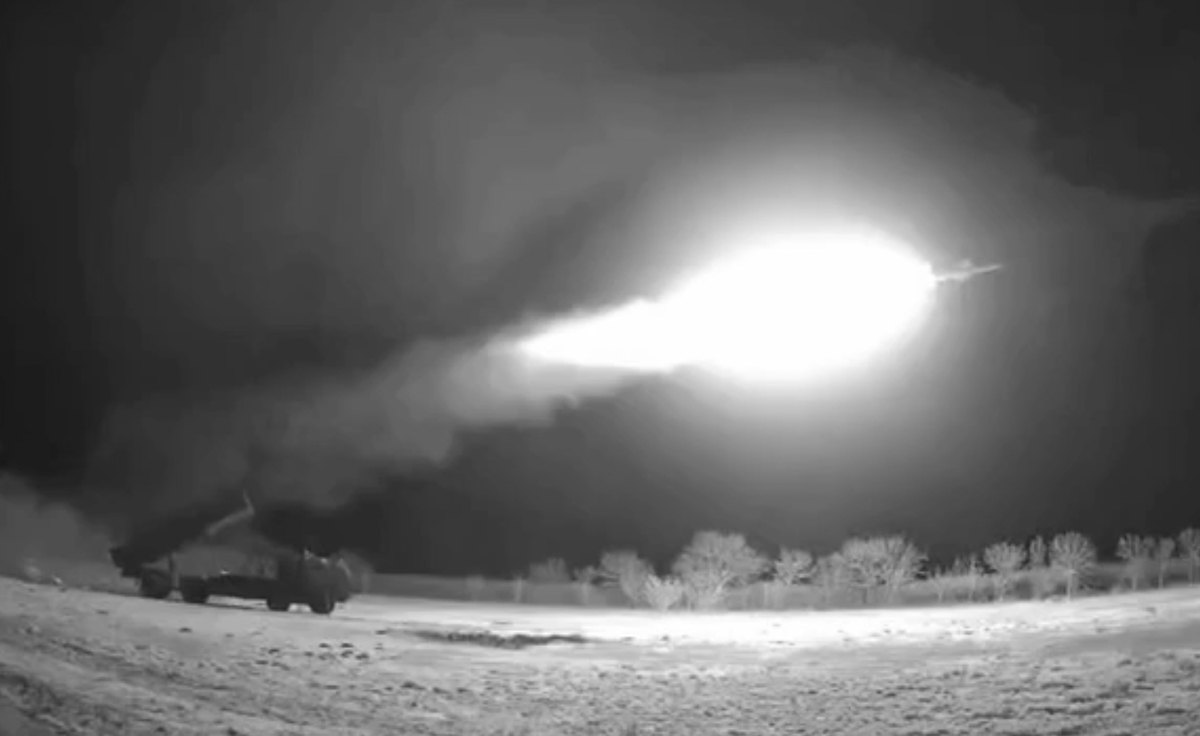
An important point: strikes by Western long-range weapons deep in Russia’s rear often require approvals so as not to cross allies’ “red lines”. Neptune is sovereign Ukrainian weaponry. The Armed Forces of Ukraine do not need to ask London or Washington for permission to wipe out an air base in Volgograd or Voronezh Region.
And the transferred stocks of Storm Shadow are severely limited, and they are being saved for unique, well-protected defence-industry production lines (such as machine tools in Oryol and Yelets). Domestic production of Neptunes, despite the complexity, makes it possible not to depend on pauses in Western supplies and to methodically knock out the logistics of Russia’s Aerospace Forces.
Annual production of Su-34 frontline bombers is assessed by intelligence at 14 units, but because of sanctions and strikes on subcontractors it is stalling badly. In less than a year, Ukraine’s Defence Forces physically destroyed ten aircraft (and damaged two more), while Russia’s defence industry managed to squeeze out and bring into service a maximum of six new bombers. That is not counting accidents and scheduled factory overhauls. The balance is negative: Russia is losing aircraft faster than it can produce them.
For our infantry on the zero line, this is absolutely concrete survival maths: it means dozens fewer KABs every day that physically will not fall on the lads’ heads in trenches near Orikhiv. Every bomber burned on the apron is direct help to our front.
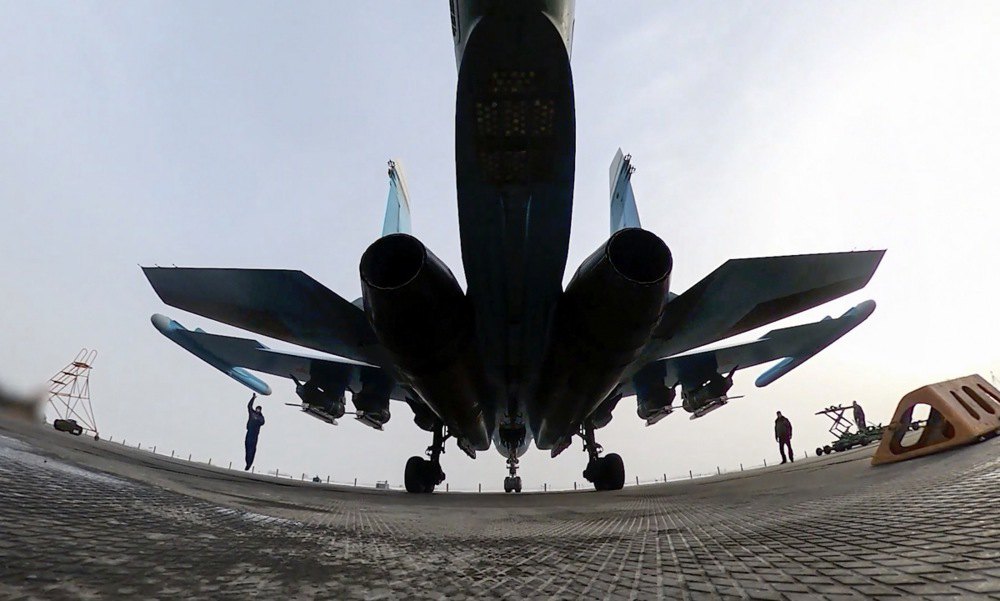
Burnt metal is only half the job. The explosion of a warhead inside an alignment workshop or a duty-shift room means the guaranteed death of unique specialists. Technicians who calibrate seeker heads or pilots do not respawn at the snap of a finger — they are trained for years. The death of such people is a loss the Kremlin will not cover with any signing bonuses or petrodollars.