





Russia is showing no readiness to conduct peace talks in good faith, while putting forward maximalist demands. Europe therefore needs to ensure a balance of positions at the negotiating table and demand concrete concessions from Moscow.
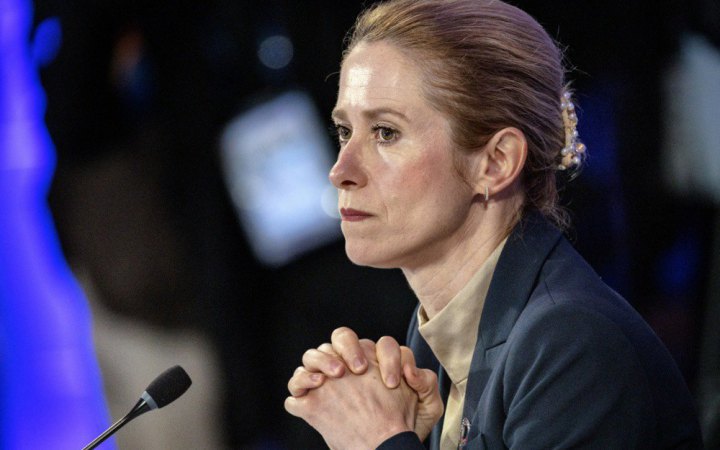
This was stated by the EU’s High Representative for Foreign Affairs and Security Policy Kaja Kallas in Paris, where a meeting of G7 foreign ministers is taking place, Ukrinform reports.
Commenting on the upcoming round of talks in Abu Dhabi, Kallas noted that she is not placing high hopes on it, as she sees no signs of Russia’s willingness to reach an agreement.
"We would like to see a ceasefire and a genuine negotiating process. We also expect Russia to show goodwill – for example, by stopping the daily killing of civilians and attacks on civilian infrastructure. So far, we have seen nothing of the kind," she stressed.
Separately, Kallas commented on reports about possible US intentions to discuss the architecture of European security with Russia. In her words, such a system of arrangements already exists, as Russia has signed at least 30 international agreements in which it undertook to respect the sovereignty and territorial integrity of other states.
"The problem is that Russia does not abide by these arrangements," the diplomat noted.
She recalled the Budapest Memorandum, under which Ukraine gave up nuclear weapons in exchange for security guarantees, including Russia’s commitment not to attack it.
Kallas also emphasised that Europe must take part in discussions that concern its security, including sanctions against Russia and frozen Russian assets. According to her, there is an agreement not to unfreeze these assets until Moscow pays reparations.
To achieve a just and lasting peace, the diplomat stressed, it is necessary to ensure accountability for war crimes and guarantees that Russia will not carry out a new attack.
Kallas added that the European Commission, together with EU foreign ministers, has already drawn up a list of key European interests. This should help balance the parties’ positions during negotiations, as the absence of clear demands on Russia cannot be an effective strategy.
Talks Between Ukraine, the US and Russia
On 10-11 November, the UAE will host the first in-person trilateral talks between Ukraine, the US and Russia since February. Negotiations in this format began in autumn 2025, after the Americans brought a peace plan to Kyiv, part of which was categorically unacceptable to Kyiv because it proposed giving up Ukrainian territory. The meetings were suspended after the start of the war against Iran and a shift in the American focus to the Middle East.
During the talks, Ukraine and Russia failed to fully align their positions: Moscow continued to insist on territorial concessions, Ukraine rejected this option and proposed halting hostilities along the current lines, while the US pushed for a "demilitarised zone" with foreign monitoring. The parties developed a 28-point plan but were unable to approve it. However, a significant outcome of the negotiations was the resumption of prisoner exchanges.
On 3 November, Steve Witkoff announced a new round of talks between Russia and Ukraine.
US Secretary of State Marco Rubio said the talks would address post-war security guarantees and reconstruction issues.
Volodymyr Zelenskyy has repeatedly stressed that the issue of ending the war can only be resolved at the highest level, but he believes that meetings between teams can bring negotiations at presidential level closer.
Trump’s special envoys Jared and Witkoff, ahead of the trilateral talks on Ukraine and the Russian Federation in Abu Dhabi, will hold a meeting with representatives of Ukraine, the EU, NATO, Germany, France, the United Kingdom and Italy to coordinate positions on European security and Ukraine’s future after the war.