





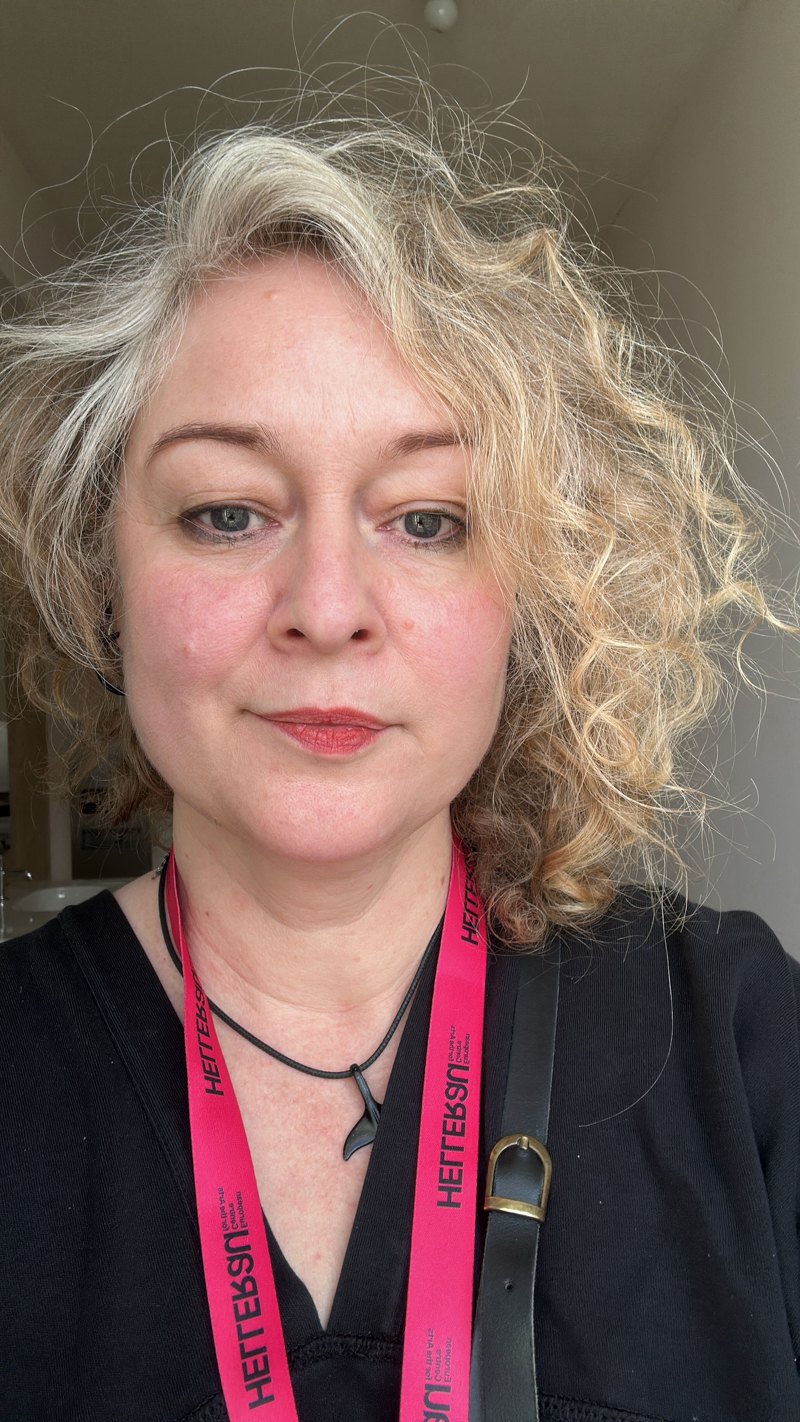
How and when did Sirenos emerge, and what is its place on Lithuania’s performing arts scene?
In 1991, Lithuania regained its independence. It was also the year when borders opened for culture: some of our most prominent theatre artists, such as Eimuntas Nekrošius and Oskaras Koršunovas, began touring internationally in earnest.
While on tour in Chicago, the idea arose to launch an international theatre festival in Lithuania, and in 1993 it was realised: the LIFE festival was born, bringing a breath of fresh air to our venues and streets—different theatre, dance, circus. The festival was a huge phenomenon, and its impact is still felt in our community today. It ran until 2000, when it closed due to a lack of funding.
For four years we had no theatre festival at all, until Sirenos appeared in 2004. It was a joint initiative launched by the Oskaras Koršunovas Theatre (OKT) under the leadership of Elona Bajoriniene, the first artistic director. It began as a festival with two programme strands: it presented not only international work, but also Lithuanian artists to international curators.
I joined the festival in 2012 and worked as a freelance member of the team until 2019, when I was appointed artistic director. From 2004 to 2019, under the leadership of Elona Bajoriniene and Audra Žukaitė, the festival brought in a wide range of Europe’s most influential artists and companies, including Tadashi Suzuki, Romeo Castellucci, Krystian Lupa and many others.
I arrived at a moment of major generational change: a new generation of theatre-makers, mostly born in the first years of independence, was coming in with its own ideas, values and stage language. On top of that, the festival was going through a difficult period financially, and it was becoming increasingly hard to bring in large-scale productions. So it was obvious to me that we needed a new system for curating showcases, selecting and presenting the younger generation of artists and different disciplines—not only drama theatre.
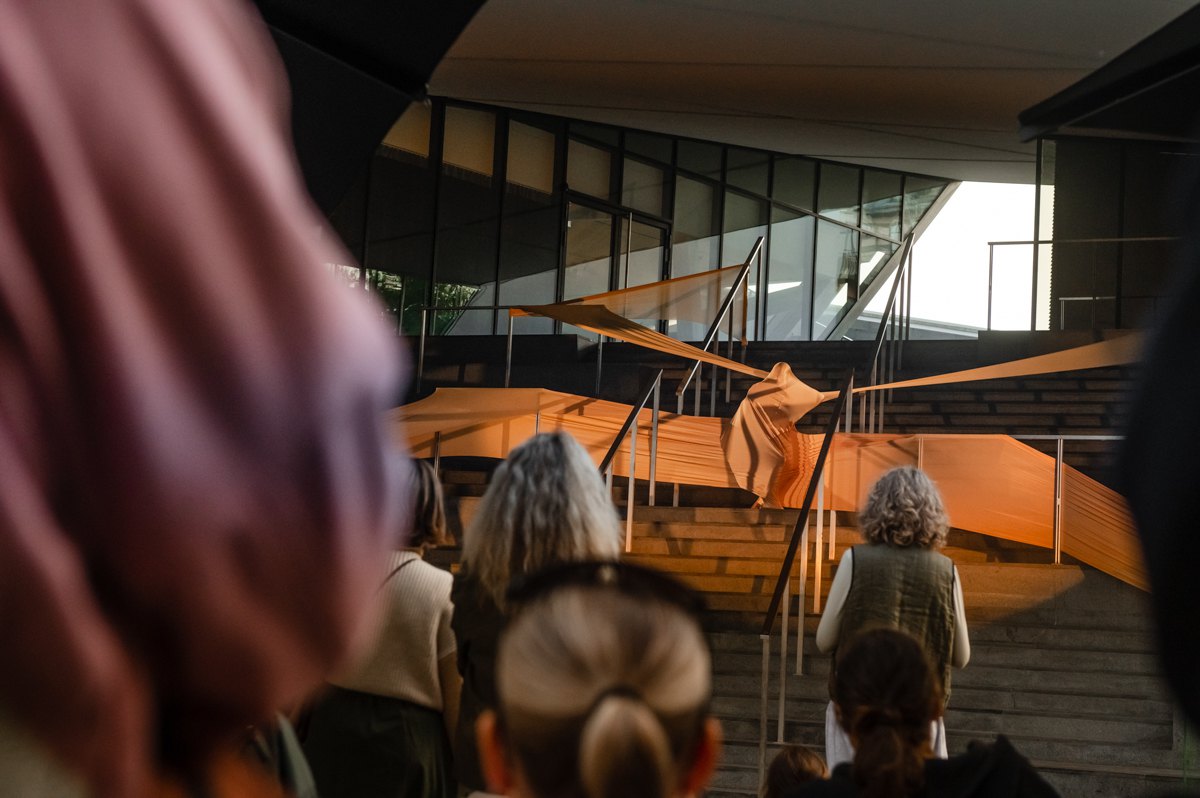
In international programming, I aimed to present more women, early-career artists and lesser-known voices from outside Europe, while maintaining the tradition of showing the most important European work. That is the path I chose for SIRENOS.
How does SIRENOS differ from other festivals in Lithuania and abroad, and what does it have in common with them?
Working as a festival in a small country on the edge of Europe is not easy. We have a small audience, but a devoted one. At the same time, as the country’s leading festival, we are expected to meet every demand, even though financially we can only present 3–5 international productions a year.
SIRENOS differs in that it has always placed a very strong emphasis on Lithuanian work, and we present it every year: it is a chance not only for international audiences, but also for local audiences to see work from other cities. We also have an international jury that awards three prizes to the most significant works of the season.
In the international programme, we usually show work that differs sharply from Lithuanian theatre—in content, standpoint or form. For example, we have presented works that cannot be classified as theatre, dance or circus, such as Rimini Protokoll’s “Uncanny Valley” and “Remote Vilnius”, Phia Ménard’s “Dry Season”, and Mario Banushi’s “MAMI”.
We have seen how these works inspired a generation of young artists to search for new forms of expression. We also organise many workshops, artistic meetings, discussions, forums and so on to support the development of the local ecosystem.
What were your strategy and priorities as artistic director and producer in strengthening the international presence of Lithuanian performing arts?
I focused on creating a very strong Lithuanian showcase: independent curators (we appoint new ones every year), an international jury (they watch and assess the work, prepare statements about our theatre, and sometimes become ambassadors for our small country), and a series of performances and pitches that form a panorama of the Lithuanian scene. It was very important to take into account the representation of women and queer artists, and to train local artists in the practical aspects of touring abroad with lightweight productions.
From the outside, it looks as though the Lithuanian and Ukrainian performing arts sectors face similar challenges and have similar infrastructure. How did Lithuania define its artistic voice after the Soviet occupation? What are the main trends in the sector today?
I would say that in the first decade of independence, Lithuanian theatre was known for directors who used a metaphorical language and could reframe classic literature through a completely different, visual lens rooted in the local context.
Today, however, in my view we are best known for experimental theatre that crosses formal boundaries (such as the opera “Sun and Sea” (2019) by composer Lina Lapelytė, with a libretto by Vaiva Grainytė and directed by Rugilė Barzdžiukaitė, which won the Golden Lion at the Venice Biennale), as well as for our young women artists.
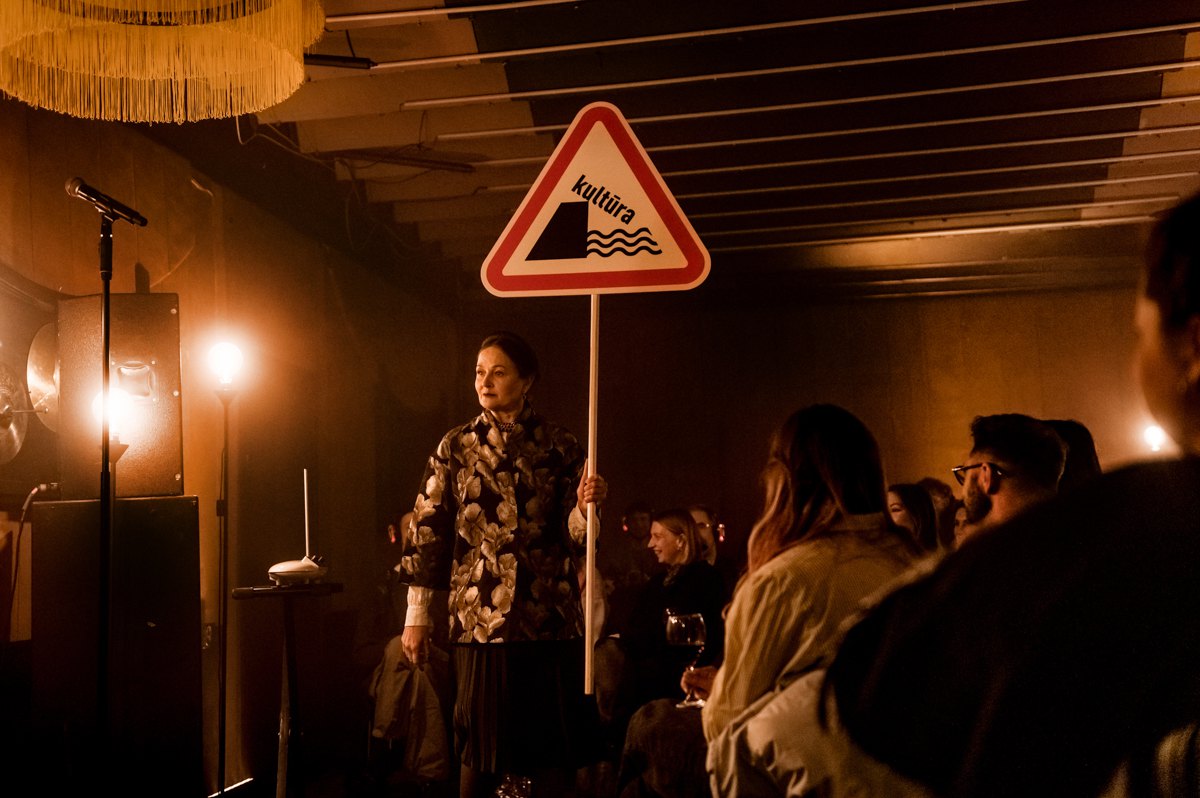
The most interesting names right now are Kamilė Gudmonaitė (her work “Feast”, featuring actors with disabilities, won the Sirenos jury prize and is touring Europe extensively), Laura Kutkaitė (the productions “Silence of Sirens” and “Tremolo”, dedicated to women’s rights and feminism), Lina Lapelytė (a composer and performer who creates work not only for major galleries such as Tate, but also for theatres), and Agnietė Lisičkinaitė (a choreographer who delves into protest culture: her work “Clap and Slap”, created together with Igor Shugaleev, was also recognised at Sirenos and has been travelling widely ever since).
Lithuania and Ukraine
What has your experience been with Ukrainian performing arts? How did Lithuania’s artistic community respond to the full-scale invasion of Ukraine?
After 2022, everything changed in Lithuania. From the moment we thought the Russians would reach our borders within a few days, to the moment we witnessed Ukraine’s heroism and strength. We are deeply convinced that Ukraine is fighting for us and for all of Europe, and we try to do everything we can—personally, in culture, and at the state level—to support Ukraine in this horrific war being waged by a country we know all too well.
What changed?
Most cultural organisations stopped including anything Russian in their programmes—literature, artists and so on—even if the works were supposedly opposed to Putin’s regime. We believe that for far too long the stage was occupied by endless productions and revivals of Russian playwrights, Russian ballets, Russian methodologies, to the point where we stopped recognising it as Russian influence.
For example, since 2022 the Lithuanian National Drama Theatre and many other theatres in Lithuania have not staged a single work by a Russian playwright, based on Russian literature, or directed by a Russian director. We say that while the war continues, all resources and central stages belong to Ukrainians.
In most texts, we refuse to capitalise “russia”. In most conversations while travelling abroad, we have to explain again and again what the nature of this war is.
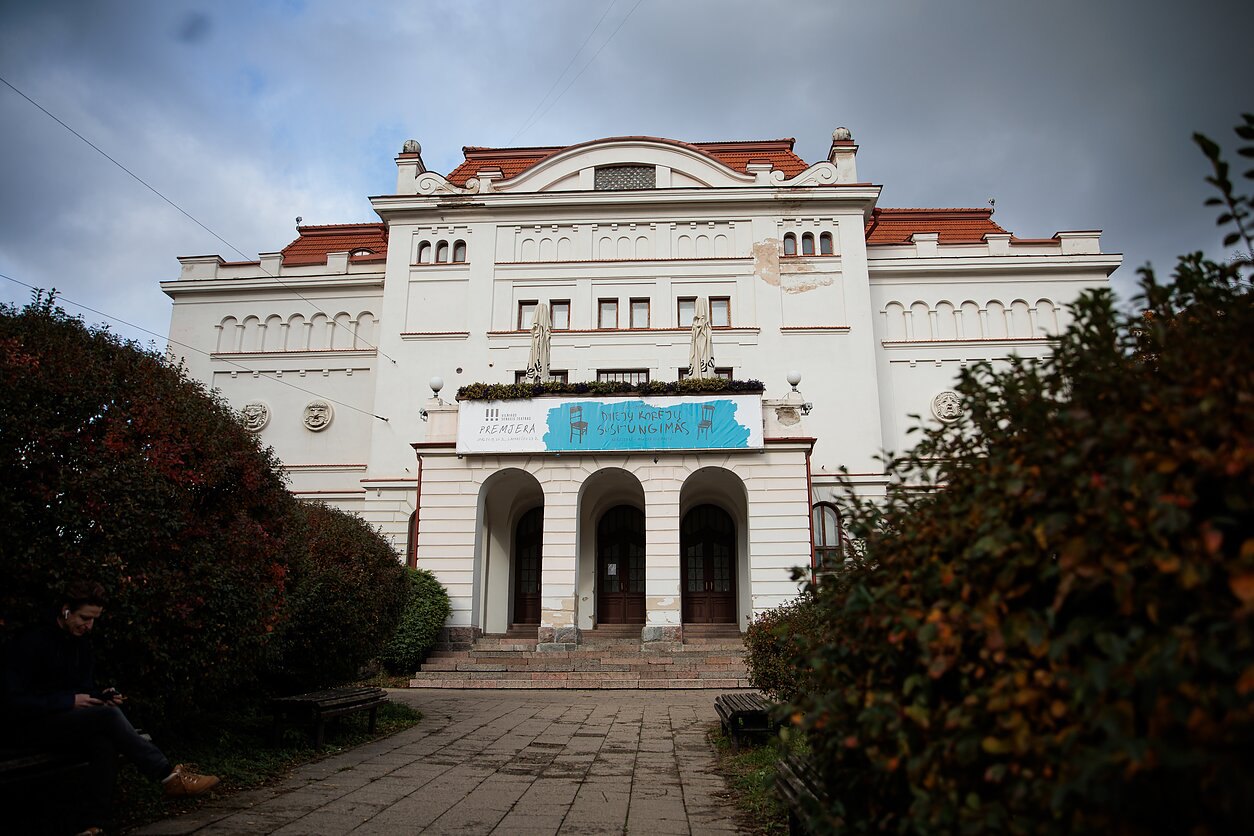
We renamed the Russian Drama Theatre as the Old Theatre of Vilnius, but it will take time to change the structure and nature of this theatre, which is in fact the oldest theatre in Vilnius, but was seized by the occupiers along with their cultural propaganda.
Many people I know are still deeply involved in volunteering and helping Ukraine: from regularly driving aid vehicles to Ukraine, to providing shelter for artists, translating texts, spreading information and advocating for support in Western Europe. Many people in my circle took Ukrainians into their homes immediately after the full-scale invasion.
In recent years, SIRENOS has presented Ukrainian work and collaborated with the Ukrainian Institute. All the artists and works we have shown have been very important to us, because they help build a connection through individual experiences rather than through headlines or statistics.
Lithuanian culture is facing many urgent developments at once, such as protests in defence of cultural and media institutions and security threats from Belarus. How are artists and institutions adapting? Are you personally preparing for threats, and how do you assess the possibility of an invasion of Lithuanian territory?
We have different levels of preparedness, but it seems that they are mostly formal. Formally, we have air-raid alerts and shelters, but when alerts happen, many people simply carry on as usual, and many shelters are not prepared for people to be able to enter. But this takes time, and, slowly but surely, we are all becoming more prepared, more militarised, beginning to normalise and internalise that this is our reality and that anything can happen on any day. We always know and remember that we have peace today only because Ukrainian fighters are holding it for us.
Personally, I find preparation difficult. I have three children, a dog and a cat. At first I thought I had to pack the essentials and keep them ready so I could escape. After all these years, I still do not have a packed bag, and I do not stockpile food. I have made a decision: if war breaks out, I will not run. This is my home, and I will defend it as best I can. We have learned many lessons from our colleagues in Ukraine and understand that seeking refuge abroad is only a temporary solution.