





I’d like to start with the most recent news — the Lithuanian translation of your book Zero and the Bulgarian translation of My Women. Using these two editions as examples, tell us the story of how a new translation comes about. Who initiates it, and how long does the work take?
These are two completely different stories.
I handed over the translation rights to Zero to Ranok Publishing, because it was a book that was meant to come out back in spring 2022, and we signed the contract long before that. So the Lithuanian edition is thanks to my Ukrainian publisher and the translator Donata Rinkevičienė, who actively translates many Ukrainian authors and proposes them to publishers in Lithuania herself.
With My Women it’s a different story, because I deliberately kept the translation rights. From the very beginning I looked for publishers abroad myself. For instance, the Bulgarian translation came out with one of the country’s best publishers, Janet 45, which also publishes Georgi Gospodinov. I approached them, offered the manuscript, and they agreed. But the preparation process took more than two years — that includes the artist’s work and the translator’s work on the text.
Do publishers agree the design with you?
Usually they agree the cover with me, but, for example, I only saw the cover of the Dutch edition when the book was already out. The Dutch publishers bought the entire layout with illustrations from Bilka Publishing, and used one of the images from inside for the cover.
But in most cases they show me both the drawings and the cover. I’m generally not confrontational — I agree to almost everything. The most important thing for me is that the book gets published.
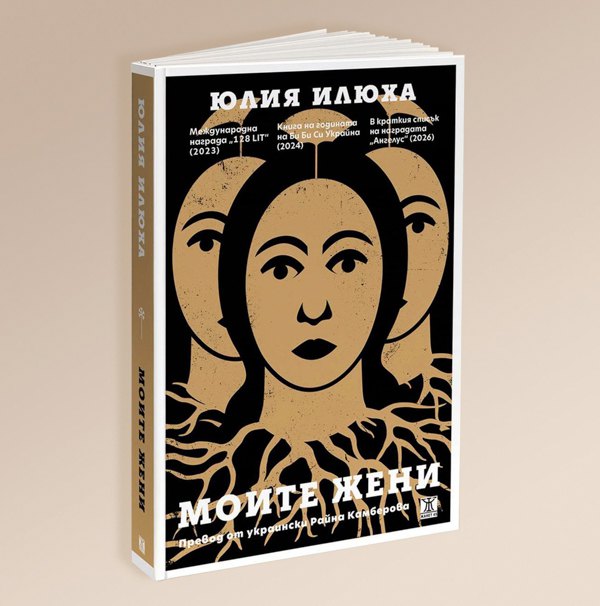
If we’re talking about My Women, most often it’s published without illustrations, but there are, of course, illustrated editions too. And the illustrators can be either local artists — most often women — or Ukrainians. More precisely, it’s one Ukrainian: my friend, the poet and artist Iryna Sazhynska, who created the illustrations for the first Italian edition. Those same illustrations later appeared in Lithuania and Greece as well, I believe.
The cover of the Bulgarian edition makes me think of Greek myths and the aesthetics of Ancient Greece. Did anyone explain the concept to you?
I didn’t speak with the artist — only today I added her as a friend on Facebook. But for me, on the contrary, the first association was with Oranta.
In any case, I don’t argue, because publishers know their market better and understand what kind of design will help them sell the book.
Let’s go back to your decision to keep the translation rights. Why?
Because when I finished it, two translations were almost ready already — English and Italian (the English translation was done by Hanna Leliv, the Italian by Maryna Sorina; both offered to translate the stories themselves back when I was still publishing them on my personal Facebook page. — Ed.). And I realised I wanted to try doing it myself. Besides, it seemed to me that this book was more geared towards the international market — that through short women’s stories it could explain what the war in Ukraine is.
Before that I didn’t have a single translation, even though I have children’s books, two novels had been published, poetry, a short-story collection. And I thought: if it isn’t working through publishers, I’ll try on my own.
And it turned out that it really is achievable. Of course, not in every market (for example, it’s hard to break into the UK without an agent), and not always with big publishers, but it’s entirely possible.
How did you search for and choose publishers to whom you would offer the book for translation?
I would pick one country, open a list of all publishers that publish fiction and short fiction, go to their websites, find contacts and send it to them.
Of course, at first I tried to send it to publishers that had already published something Ukrainian, but then I realised I shouldn’t limit myself — I should just send the manuscript even to places that had never published Ukrainians before. For example, in Slovakia and Sweden the book came out with publishers that had never published Ukrainians previously.
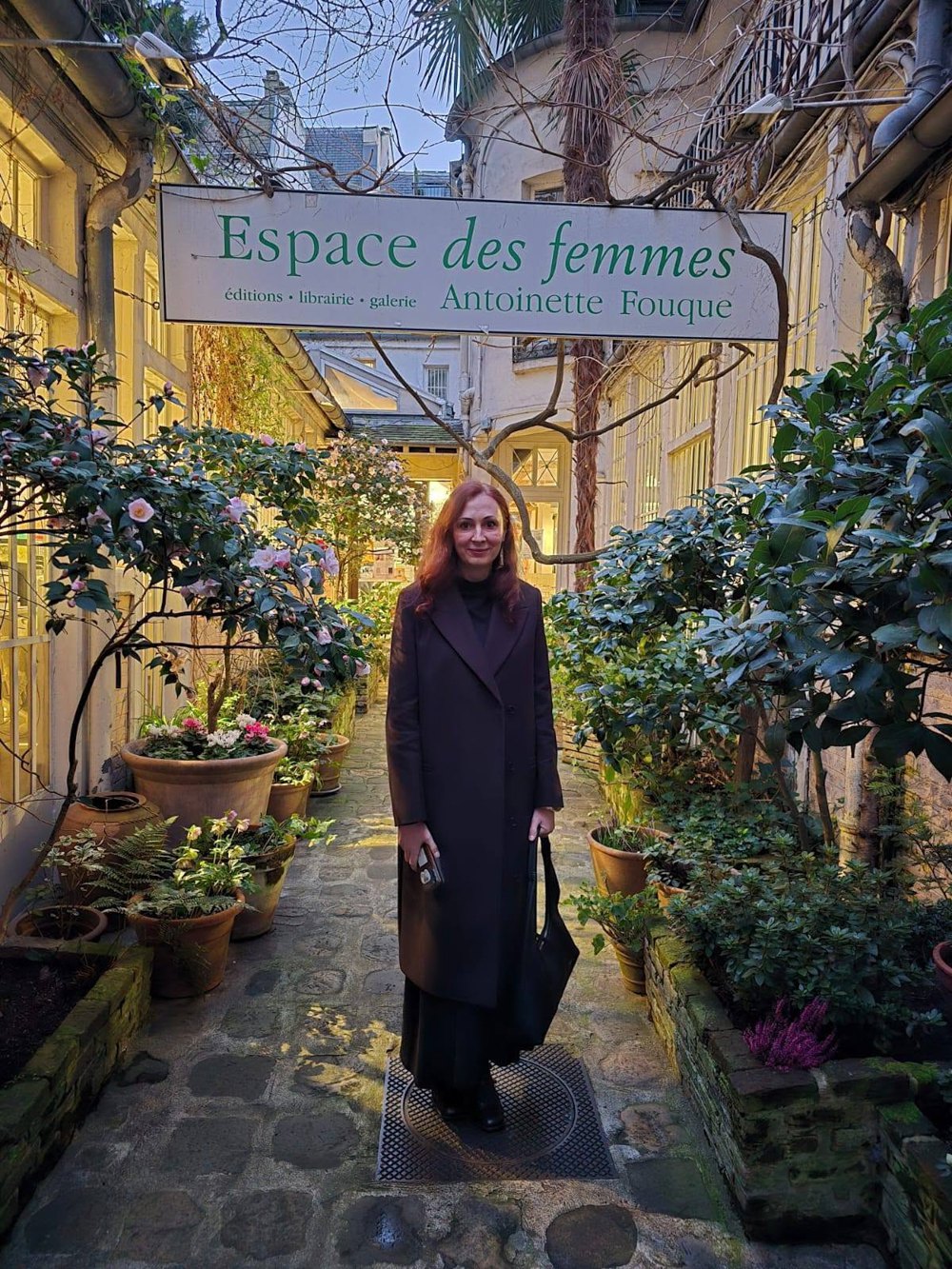
I sent not dozens but hundreds of emails. Sometimes physical letters. For instance, in France the book came out with Éditions des femmes – Antoinette Fouque (translated from French as “Women’s Publishing House – Antoinette Fouque”, — Ed.). When I first saw their name, I thought I would definitely send them the manuscript. But they accepted only printed manuscripts by post. So I printed it out and sent it. It cost me €11.20 — I’ll be honest, I hated spending the money. But three months later they emailed me and said they were interested and asked for the full manuscript. And less than a week after that they offered to sign a contract.
What print runs do foreign editions have?
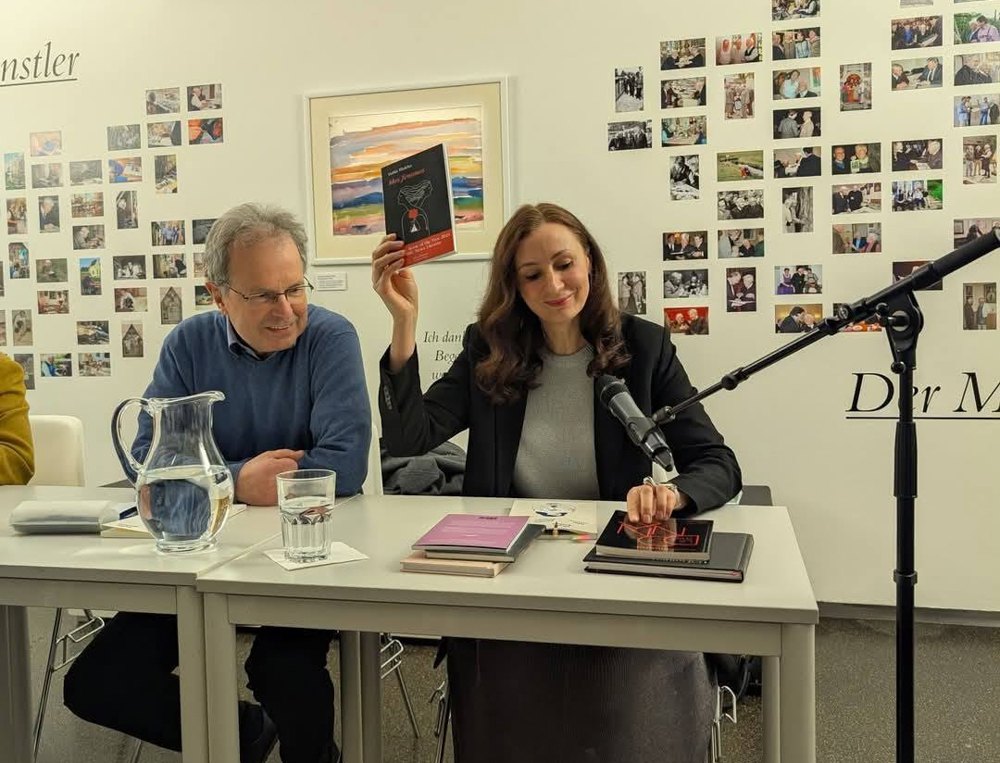
Sometimes they’re very small. For example, with an Austrian publisher the book came out on grant funding, with a print run of 400 copies. They’ve already sold out, and we’ll be looking for a publisher in Germany to do a reprint.
There are print runs of a thousand; the biggest, I think, was two thousand. I don’t remember very well and don’t keep close track, because in the case of My Women I understand it’s not a book that will sell in huge numbers.
But the fact that people do read it is shown by the reviews on Goodreads. There are more reviews in different languages there than from Ukrainians. It was especially noticeable from the reviews when the book came out in the UK. In general, that’s a very important market. If a book is published there, it can be eligible for the International Booker Prize.
You’re now working with a literary agent. How did you find each other?
When I was in New York, Razom for Ukraine and Mariia Henkin helped organise my trip. I gave Mariia my books in Ukrainian — poetry, and the American edition of My Women. And she gave books to the agent Emma Shercliff, who read them and contacted me straight away, offering to work together.
After New York I had an event with the French translation in Paris. Emma came there, and we met. I hesitated about whether to agree. Because I sort of enjoy doing it myself. At the same time, I understood there are markets I won’t get into without an agent. Besides, many people told me, “Are you mad? It’s Emma — of course you should agree.” She also works with Oleksandr Mykhed, Artem Chapai, and the rights holders of Viktoriia Amelina. So now we work together.
So you don’t write hundreds of emails any more?
I do — just not to publishers. Now I write to festivals, literary houses, all sorts of places where it might be possible to organise a talk, a reading, a discussion.
For example, I have a book in Spanish. I wrote to the Austrian Cultural Forum in Mexico with a proposal to invite me for an event. They replied that they’d be delighted, but I probably don’t have a book in Spanish. And I told them I do.
And now I’m going to the Guadalajara Book Fair in Mexico. The Ukrainian Institute has joined in organising the trip. And I’ll have quite a lot of events there.
I think it matters, because Mexico is a very distant market where we’re unknown and uninteresting. And it’s not even about entering that market — it’s simply about marking our presence. Telling people that Ukraine exists, that there is a war going on, but that there is also literature, books are being published. At least some people will learn something, will hear about it.
How do you divide your time between writing itself and the managerial work?
Before, when I was writing hundreds of letters to publishers, I did it at night. Now I’m at an age when I want to sleep at night. But I’ve also understood certain rules — for example, it’s better to write in the morning, of course during working hours. An email sent at the weekend or at night can get lost.
Now I don’t write those letters every day; rather, once a week or every two weeks I do a big mailing if I come up with a specific idea for how to promote the book. The rest of the time I try to write. I don’t have weekends.
How do you prepare for meetings with audiences in different countries?
A lot depends on whether the people who come to listen to you know anything about Ukraine at all, or not.
It’s one thing to talk about a book about war in Sweden, Norway or Finland, and quite another in South Africa, where people come to listen to you but have no idea where Ukraine even is on the map.
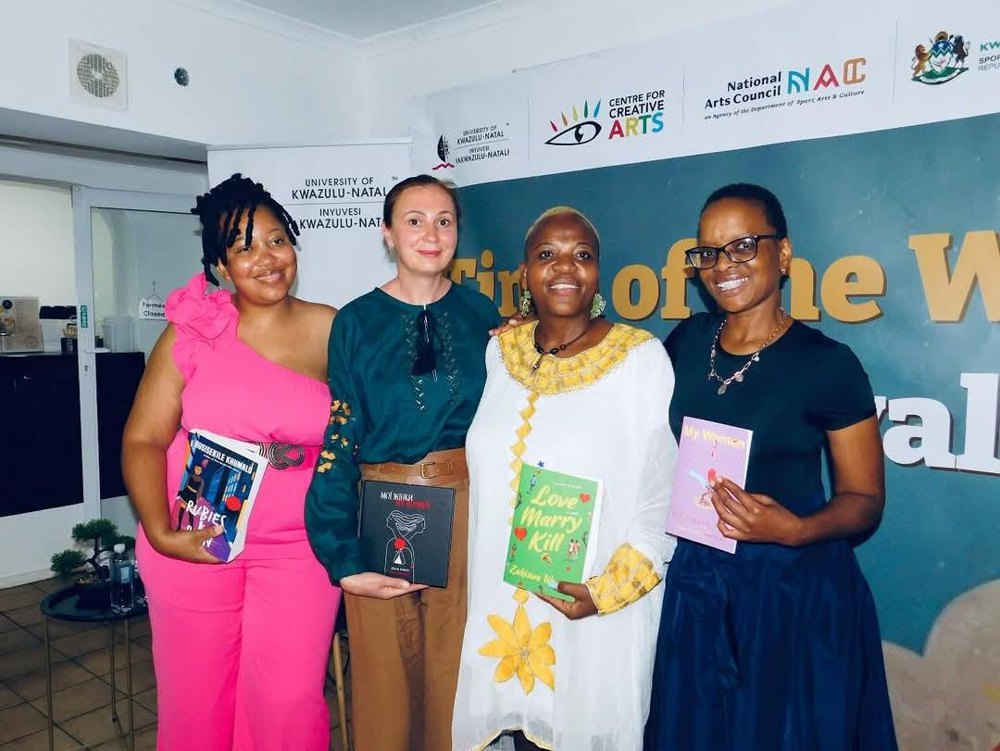
It makes the conversation much easier when there’s an interpreter. Because when everyone at a meeting is speaking English, which isn’t anyone’s native language, certain limits in language proficiency kick in.
Very rarely does it happen that, wherever the event is, no Ukrainians come. At the same time, many of my colleagues are afraid that someone pro-Russian might show up. That has never happened to me. Because people who come to an event with a Ukrainian author are, a priori, positively disposed towards Ukraine — those who support it.
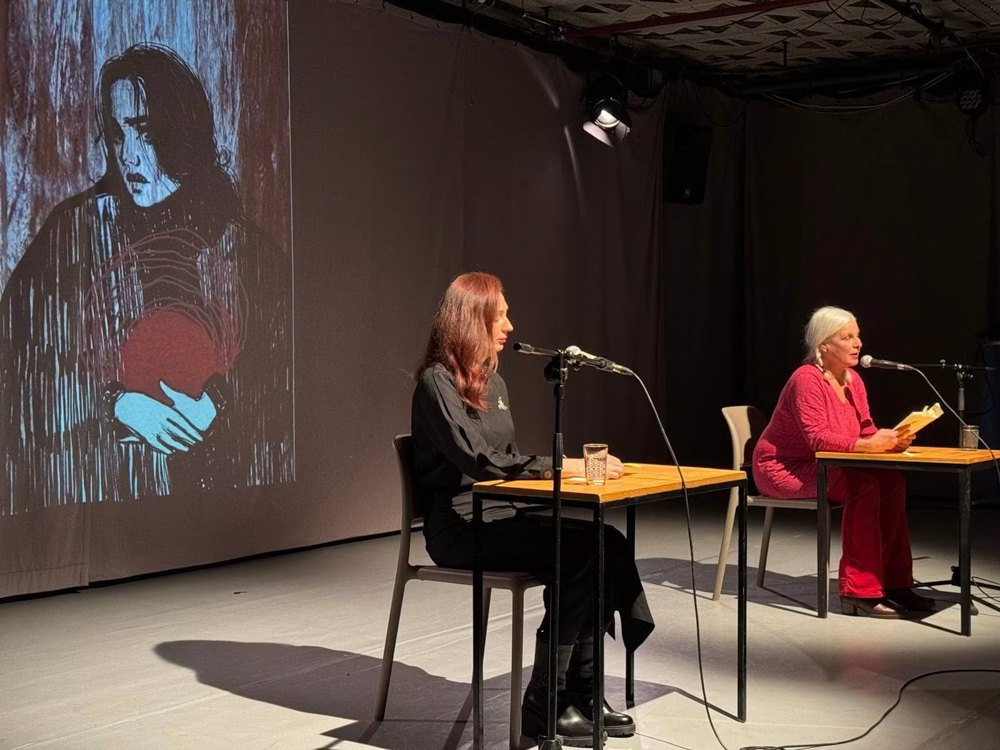
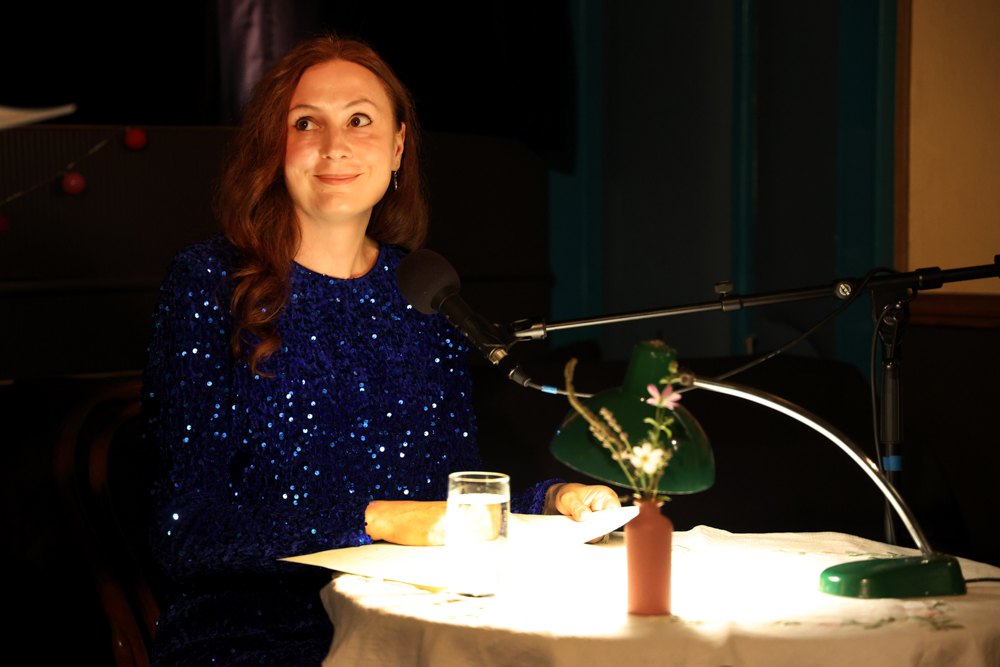
Sometimes, as it was in South Africa, the event is shared with local authors. Then people are more likely to come for them, and you can try to win them over. For example, a month ago I had an event in Vienna with two Austrian authors. That was the case where there wasn’t a single Ukrainian in the room. I read in English, and my book was the only one that wasn’t entertainment. But I wanted to create contrast, so I wore a short, sparkly blue sequin dress. When I started reading about the war, it broke people’s expectations. I like drawing attention in this way — it helps people remember better.
At meetings, do you talk more about your texts or about Ukraine?
My aim is to talk about Ukraine and about the war. I’m not travelling in order to promote my book; I use my book so that I can travel and talk about the war. Very often I say things people don’t like hearing.
And while I’m talking about literature, the book, everything is fine — I’m a writer. But when I start talking about uncomfortable things about the war, about the fact that they may soon have to experience these things themselves, it’s as if, in their eyes, I stop being a writer and become a person deeply traumatised by war.
By the way, even from your social media it’s clear you don’t smooth over sharp edges and you don’t play at diplomacy. Does that help you achieve your goal?
Absolutely. People can be so shocked that they immediately start thinking about something. I don’t care how I look in someone’s eyes — whether I look like a person traumatised by war or like a hysteric.
I have messages I want to convey to any audience, wherever I am. Of course, I can adapt them slightly. There are countries — the Baltics, Scandinavia, for example — that understand us very well and support us. With them there’s no need to smooth anything over; on the contrary, you need to frighten them even more.
Last year I was at the Gothenburg Book Fair and had a discussion with two Swedish journalists who wrote reportage books about Ukraine after the full-scale invasion. We were sitting on stage, discussing, and the moderator asked each person how they saw the situation developing. I, of course, poured all my pessimism onto them — advised them to start preparing for a possible war, to sign up for tactical medicine courses, learn to shoot, do anything that could help them protect not even their own country, but their own lives. I told them then that we have a phrase: “You don’t need to die for Ukraine; you need to kill for Ukraine.” I advised them to think about it and apply it to themselves. And they were shocked.
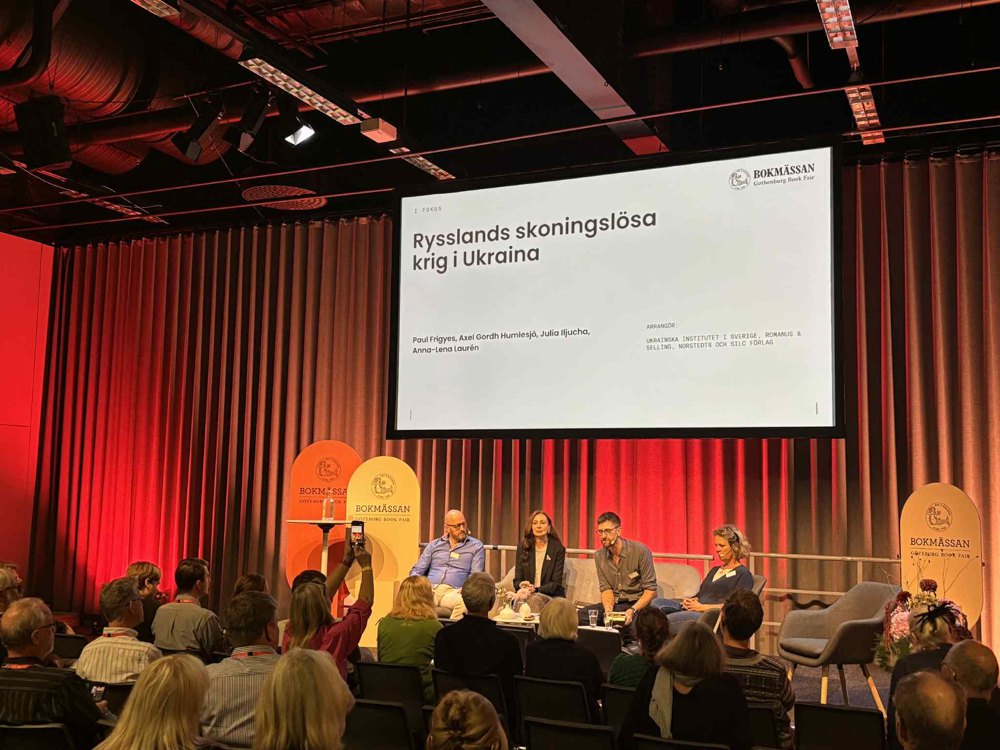
I hadn’t planned to say that. But before that, one of those Swedish journalists, listening to my pessimistic forecast that things would only get worse, remarked: “You know, all my friends in Ukraine tell me the same thing, but I don’t believe them.” After that I just couldn’t hold back.
I can understand your mood. Recently you were also at the Frankfurt Book Fair. From observing audiences there and at other foreign events, what attitude towards the situation in Ukraine is dominant now?
I don’t have the feeling that attention to Ukraine has decreased. But again, it’s a kind of bubble — people who come up to the stand in Frankfurt are people who support Ukraine. I don’t know what other people in other halls of this huge book fair think. It’s like thinking that everyone in Kharkiv knows about Serhii Zhadan. They don’t. But lots of people came up — no fewer than last year or than to other stands.
I had an experience in February this year in Vilnius, where I had an event at the book fair. The hall was full, but I noticed a man of about 80 sitting in the front row in a suit and tie. When it was time for questions, he stood up and said he had been a political prisoner and had been in camps with Ukrainians, was friends with them. When he was released and allowed to travel, he deliberately travelled to Ukraine to see the country of the people he had befriended in the camps. And he still goes to events like this, still supports Ukraine.
Do you have strategies for getting beyond that bubble of people who already support Ukraine?
All methods are good — shocking people, for example. I wore a sparkly dress to an event and felt people looking; they were curious who I was and why I was so dressed up. In our case, you can use any methods to get noticed and to be given the floor.
I’ve encountered the fact that a great many people abroad, even those connected with culture, think Ukrainian literature appeared after the full-scale invasion. And that the full-scale invasion was some kind of chance for Ukrainian literature, for its development. They don’t know that we have our own literary tradition, our own classics. But they can’t know it, because they can’t buy it and read it. Because when you walk into any bookshop in Europe, what greets you? A huge display of Russian classics in different editions, from cheap to expensive — but almost nowhere will you find translations of Ukrainian classics, because there were almost none.
Now they’re starting to appear, because enthusiasts are working on it, and most new translations — both of contemporary Ukrainian literature and of the classics — are the work of enthusiasts. It seems to me it’s very important to try to publish not only books about the war. It’s very important to translate the classics, to show that we had, have and will have our own literature. And it isn’t on the shelves of these European bookshops precisely because it was silenced and destroyed.
Once in France I went into Fnac — it’s a big multi-storey book supermarket. I was told my book was there. But I couldn’t find it. Then I asked a manager; she checked and told me my book was in the Russian literature section. I found that section — my book was standing next to such Great-Russian cringe that I didn’t even take a photo then.
But this year my agent took me to one of London’s oldest bookshops. And there I saw a big shelf of Russian literature, and a separate small, half-empty, but still Ukrainian shelf. So — small steps.
Amid all the cultural and diplomatic work, what is your nearest writing goal?
I’ve just spent two months on a residency in Vienna — I wanted to finish a novel. But the residency was for poetry; they expected poems from me to translate into German. So I wrote a few poems, but I also kept writing prose. My nearest goal is to finish the novel I’ve been writing for more than a year. But it keeps stretching out.
My agent asks how much there is already. She hears it’s 90,000 words and says I should cut it down. And I say I haven’t finished yet.
I conceived this book as a novel in three parallel stories of women living in Kharkiv during the first summer of the full-scale invasion. These women don’t know each other; they hardly cross paths, but they live in the same building.
But the first of these stories turned out so large that it will probably be a trilogy. My task now is to finish this first story about an artist who comes to Kharkiv from Kyiv because her studio burned down and she lost the ability to draw. She comes to care for her paralysed grandmother and accidentally learns a family secret that explains a lot to her.
This is a story about Kharkiv, where you yourself lived before the full-scale invasion began. Watching your social media, I noticed how often you change cities now. May I ask where your home is now?
That’s a very difficult question. Recently I went to a screening of a film about Thomas Mann — about how he returned to post-war Germany (Paweł Pawlikowski’s 2026 film Homeland. — Ed.). They asked him exactly that question: where is home.
I don’t have an answer, because home seems to be where it was in Kharkiv. But it was a rented flat; it still exists, my things are still there, but I can no longer say it’s my home.
Now I could say that Kyiv feels more like home to me. At the same time, my parents still live in Kharkiv region. I don’t have a clear, unambiguous answer to the question of home.
In these circumstances, is your travel-heavy work communicating the subject of Ukraine more inspiring or more exhausting for you?
I like it. I’m always ready to go somewhere and talk. I can’t stay in one place for very long without going anywhere. Then I feel like something is missing, as if I’m losing something. Although sometimes I wake up somewhere at night and, for the first second, can’t understand where I am — what city, what country.
But, you know, I recently heard this phrase in English: “You can’t complain you have too much on your plate, because your goal was to eat” (“You shouldn’t complain there’s too much food on your plate, because you wanted to eat”). And I can’t complain. That was the goal: to write books and travel to talk about them. Although, of course, I’d much rather simply talk about books, rather than use them as a pretext to talk about the war.