






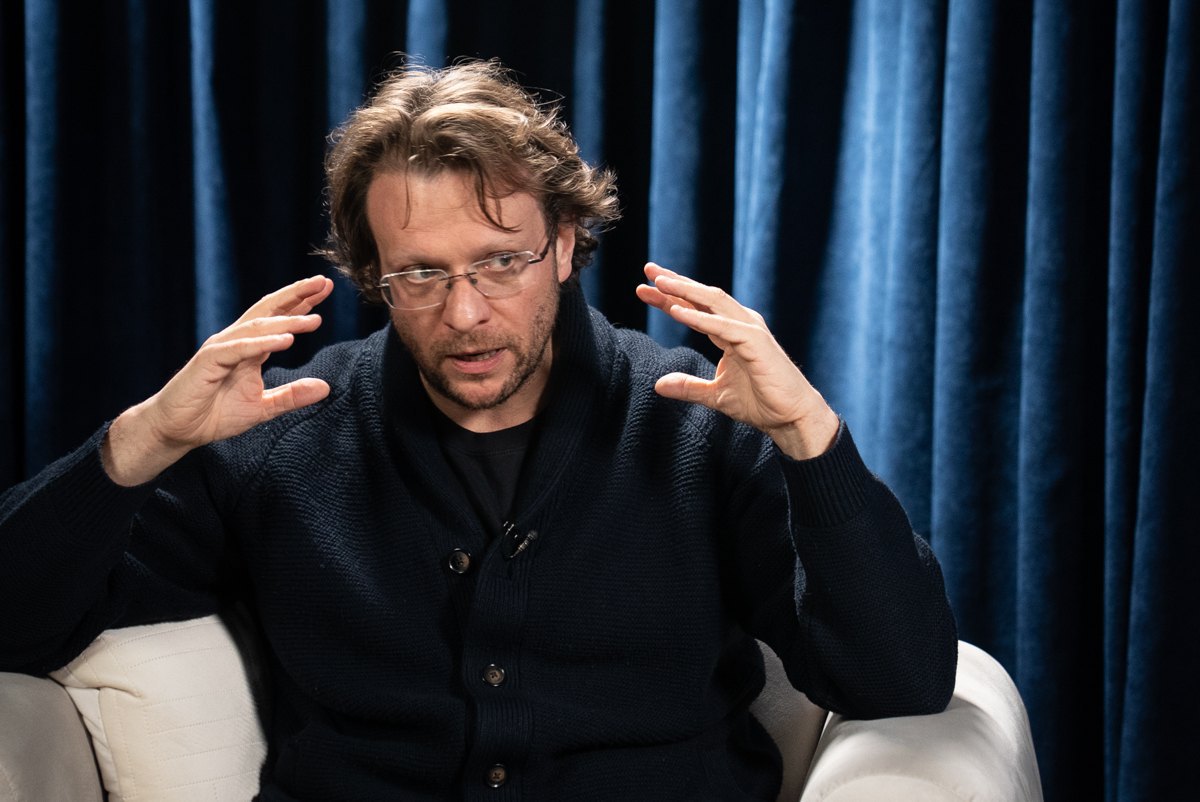
“We now have a digital trail of propaganda, and I think we can do more than the Nuremberg Tribunal did.”
We live in a digital age in which disinformation aimed at shaping public opinion to be more loyal to the enemy is easily accessible through social media. How can disinformation be countered? Is this primarily a matter of culture and education?
When we discuss disinformation, we do not need to focus solely on how content has changed or how to combat it. What is new, and what we still do not fully understand, is how this content is disseminated. We do not know who is behind particular content. We do not understand what data is being used to manipulate us, and we do not know why social media algorithms show us one piece of news rather than another when we open the internet.
Disinformation is not only about content, but also about actions, patterns of disinformation behaviour, bots, and similar mechanisms. It is also about the opacity of algorithms, because we do not know how our information space is constructed. Disinformation exists when we do not know who is behind the information. This is not primarily a content issue.
We think too much about content, when in fact there is almost nothing new there. What is new are the technologies, and we need to understand how we are going to live with them.
We know about the experience of Rwanda and RTML. Researchers have shown that in areas where the radio station’s signal was available, the number of genocide victims was significantly higher than in areas where it was not. Can Russian propaganda kill?
The link between propaganda and action is very complex. You gave a very interesting example with Rwanda, but there are not many cases like it.
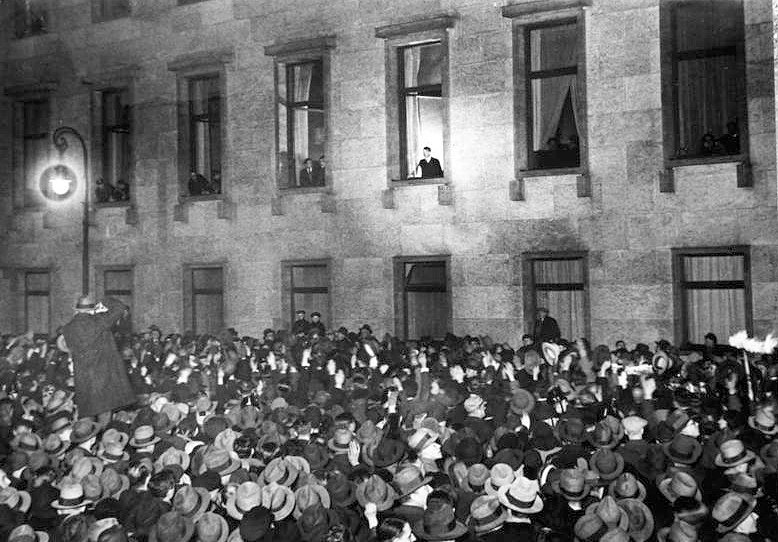
Often, when it comes to legal responsibility, it is extremely difficult to secure convictions against propagandists in court. As I explain in my latest book on propaganda during the Second World War, How to Win the Information War: The Propagandist Who Outwitted Hitler, one of the Nazi government’s propagandists, Julius Streicher, was found guilty at Nuremberg. Another, Hans Fritsche — one of the book’s antiheroes — was found not guilty by the tribunal because two elements were missing. There was insufficient evidence proving that his words were directly linked to criminal actions. He claimed that he did not know about the Holocaust, that it was not his fault, that he was merely following Goebbels’ instructions, and that he was a civil servant.
Today, we have a digital trail of propaganda, and I believe we can do more than the Nuremberg Tribunal did.
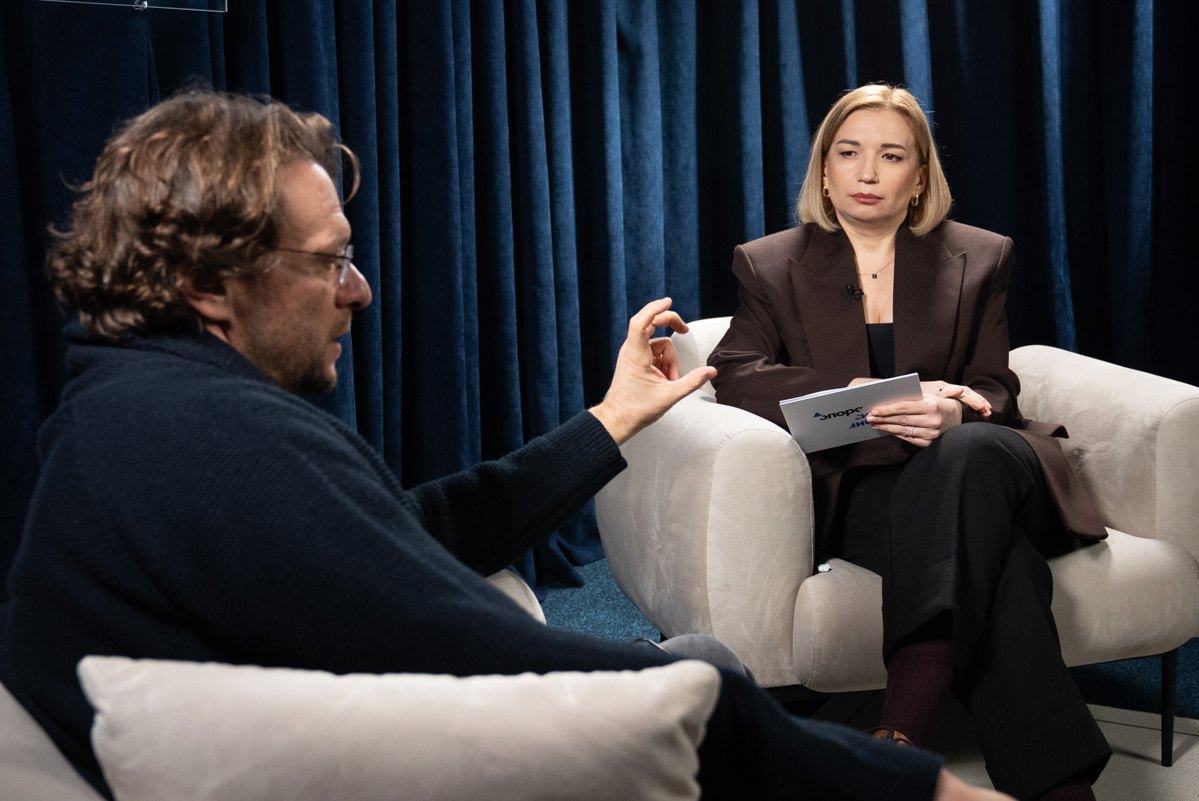
At the beginning of the war, I helped to create a new public initiative called The Reckoning Project, a non-governmental organisation that brings together journalists and lawyers. Together with the law firm Global Rights Compliance, we conducted extensive research into what we call an “information alibi”. This is when Russia spreads disinformation in advance of committing crimes.
For example, even before the destruction of the Kakhovka dam, there was a wave of disinformation claiming that Ukrainians and the British (Russians have a fixed idea about British intelligence services) were planning to blow it up. There are many such examples. Russian representatives at the UN, state media, and Telegram channels work together in this process.
Our argument is that we can demonstrate that propagandists play a supporting role in crimes. Not as in the case of Rwanda, where propagandists acted as initiators, but rather as enablers. With digital technologies, this is now possible: a week before a crime, we can observe a coordinated wave of disinformation and identify its patterns. This is not spontaneous — that is not how the internet and digital ecosystems function.
It seems to me that there are now far more opportunities to demonstrate the connection between crime and propaganda in a rigorous way, and therefore a real chance to prove it in court.
“We often ask why people like sadistic, aggressive, unpleasant leaders. It is because such leaders give people permission to be sadists too.”
In your book, you write that under the Nazis, German society was saturated with hatred and dehumanisation, because in order to make killing easier, the enemy first had to be reduced to the level of objects. What social, religious, and historical foundations does this phenomenon have in our current context?
Unfortunately, if we look at Nazi Germany, Russia today, Rwanda, and what we witnessed in Burma, this pattern appears again and again.
We all know the formula for normalising mass crimes within a society: first, you dehumanise others and declare that they are not fully human. Then you normalise sadism.
We often wonder why people are drawn to sadistic, aggressive, and unpleasant leaders. It is because such leaders give people the opportunity to indulge in sadism themselves, to be filled with hatred.
At the same time, you need to remove the sense of personal responsibility. This is remarkably easy to do, which is why it is so frightening.
In Europe over the last 60 years — if we set aside the experience of Yugoslavia — there has largely been a taboo on this kind of propaganda. Today, that taboo has eroded, and in the world of social media it does not exist at all.
“When we say that propaganda has an impact, it often sounds as if people are passive. In reality, it is more complicated. People want this propaganda. They enjoy it.”
Which societies are more susceptible to propaganda — those with lower levels of education or deep historical trauma, or does it work on everyone?
To answer this question properly, we would need very provocative sociological experiments. Such experiments were carried out after the Second World War. In the 1960s and 1970s, researchers conducted numerous studies in which groups of people were subjected to various forms of influence. The Yale experiments are particularly well known. These studies demonstrated that, unfortunately, such mechanisms can work on almost everyone.
There is, however, another important factor. In some countries, there are many safeguards, checks, and balances because societies have critically examined their own past. Germany is a clear example, where this process has been supported through education and a continuous reassessment of history. In other countries, pluralism exists because it is simply very difficult to control all media.
But if you control all media and have never seriously confronted your totalitarian past, as in Russia, then all the necessary conditions for totalitarian propaganda are in place.
Is it necessary to destroy the source of propaganda in order to stop its influence?
When we say "propaganda influences," it seems that people are passive and propaganda is manipulated by manipulators. But in reality, everything is more complicated, completely different. People want this propaganda. They love it.
This was the most important insight of the hero of my new book, Sefton Delmer. He said that Germans like Hitler's propaganda. They like what the Nazis are doing. It gives them a sense of superiority. It gives them a chance to be evil and sadistic. It's what they want, what they're looking for.
The idea that people are good and fluffy, and when an evil manipulator comes along, everything changes, is not true. But we can fight it. Censorship in democracies is a last resort, but as I describe in my book, the British were successful in combating Nazi propaganda when they stopped trying to find what they called "good Germans." As long as they were looking for "good Germans," the democratic and moral foundations of the Germans, nothing worked for them. When they started playing a completely different game, then they had some success.
Can we draw an analogy with "good Russians"?
It's very similar. In 1939, the British thought that there were many Germans who were actually pro-democracy and against the war, and that they needed to be convinced that Hitler was a bad guy, that war was bad, and that they would stop Hitler. That was the theory.
My hero, Sefton Delmer, lived in Germany for a long time, grew up there, and knew the Germans well. He said it wouldn't work. The Germans want this leader, so we need to work with other instincts.
“After the crisis, Ukraine became more democratic, while Russia decided to be authoritarian. It is a choice — how you respond to a crisis.”
In the 2000s, you worked in Moscow, where you interviewed political strategist Gleb Pavlovsky. What methods were used to create a pro-Putin majority in Russia?
Pavlovsky was a highly influential figure in Russian propaganda in the 1990s and early 2000s. He served as an adviser to Yeltsin during the 1996 elections and later to Putin in 1999. Subsequently, he hosted his own television programme and exerted significant influence over broadcast media. He was an adviser to the president within a system in which the media became increasingly centralised year by year.
If you can dictate to the president’s office which language to use and how to frame narratives, then you exert influence over all sources of information — that is an authoritarian system. It was built gradually, and Pavlovsky was able to wield influence at its very centre.
Russian liberals speaking in Western forums often argue that Putin must be allowed to save face, because punishment or humiliation of Russia would reproduce trauma and lead to renewed aggression in the future. Do you agree with this view, or do you see it as an attempt to shift responsibility away from society?
Russia needs a moment comparable to the end of the Second World War, when its limits became clear. In every sense — that it can no longer play the role of an aggressive empire, or of an empire at all.
Russians need to understand that as long as they continue to indulge imperial dreams, their situation will remain disastrous. They must see the direct connection between empire and total collapse.
I do not know what form Russia should take afterwards, but this connection must be broken. If we are looking for historical parallels, this is the kind of moment that is required.
There is also a widespread narrative that Russians are acting out of revenge because the collapse of the Soviet Union and the liberal market reforms of the 1990s led to widespread impoverishment. Ukraine also experienced a very difficult period in the 1990s, yet it did not attack its neighbours.
I hear this argument often, and I always respond the same way: Ukraine went through the same catastrophic collapse, but it became a democracy.
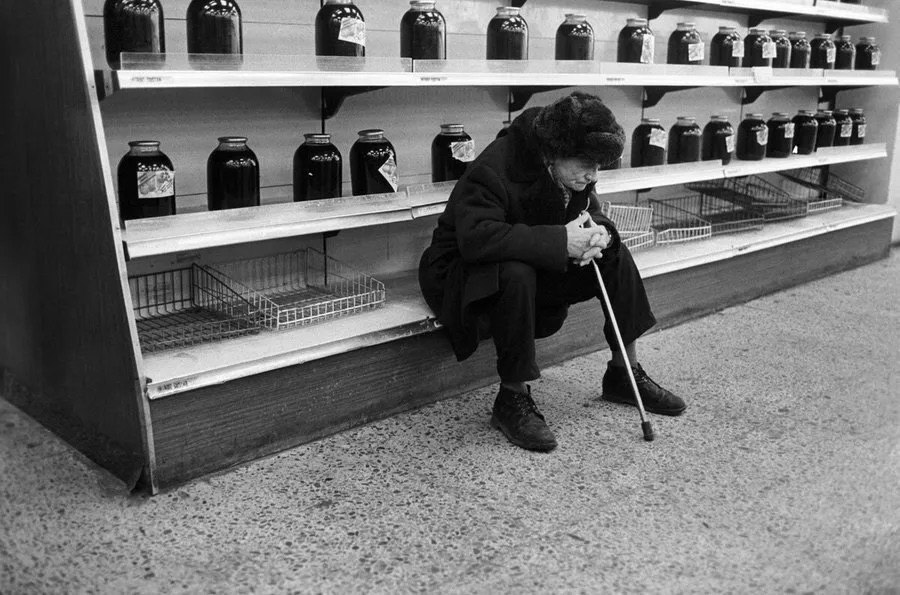
All societies experience crises. The question is how they respond to them. After the crisis, Ukraine became more democratic, while Russia chose authoritarianism. It is a matter of choice — how you respond to a crisis — and that choice says a great deal about character. The problem is not the crisis itself; the problem is the character of the nation.
The hero of your book, Sefton Delmer, attempted to create divisions within the Nazi Party through communication, and to some extent he succeeded. Could Russia’s large-scale aggression against Ukraine lead to a situation in which internal and external communications undermine the Russian government?
Delmer never aimed to create a broad democratic movement against Hitler. His specific objective was to demonstrate tensions between the Party and the army, so that the military would fight less effectively. He wanted to expose cracks in the system, so that people at various levels would ask themselves whether cooperation in such a chaotic war was worthwhile.
We saw something similar during Prigozhin’s rebellion and the advance towards Kursk. Many Russians followed these events as if they were watching a reality show. They did not support Putin, but they did not support Prigozhin either. They were simply fascinated by the chaos.
Delmer’s objectives were narrow and pragmatic: to weaken military effectiveness, disrupt the war economy, reduce public support for the government, diminish people’s willingness to make sacrifices, and encourage them to focus on their own interests and corruption. He spoke extensively about corruption in order to amplify it.
If Delmer were working against Russia today, he would do everything possible to increase corruption within the system. He had a non-linear way of thinking and employed non-linear methods. He often spoke about one issue, while pursuing an entirely different goal.
Is there any potential for self-cleansing within Russia, or should this hope be abandoned altogether?
We know that Delmer himself addressed this question, and he held a rather cynical view of human nature. He once told his BBC colleagues — with whom he frequently disagreed — that once Britain won the war, all Germans would say: “We knew all along how terrible this government was. We never liked Hitler.”
We saw something similar in 1988, and I believe the same will happen in Russia. When Putin is gone, many will say: “I never liked him. They always lied to us. It was awful.” Responsibility will be shifted entirely onto Kremlin propaganda.
In reality, everyone knew everything in the Soviet Union. And in modern Russia, everyone knows everything. When people need the truth, they will use it. For now, they do not need it.
“It is a paradox: it is easy to lecture about the truth, but real intellectual effort is required to conduct pragmatic, cynical information campaigns.”
Why is propaganda so effective?
At present, we must think about communication with Russia primarily in terms of war: how information can undermine its economy, its mobilisation efforts, and its relations with China.
We also need to analyse why authoritarian propaganda works so effectively. When you lecture about the truth, you often fail to consider the audience, focusing instead on abstract values. That is admirable — I fully support high values. Yet there is a paradox: to be truly pragmatic and cynical, one must undertake deep research into psychology, sociology, and communication.
During the Second World War, Delmer’s team analysed the psychology of Nazi soldiers and ordinary citizens. He worked with a Cambridge professor of psychoanalysis, leading philosophers, and linguists who examined how language could be used to make Germans fight less effectively. He also collaborated with performers from Berlin cabarets who understood which jokes would resonate. Delmer devoted considerable thought to humour and language.
This is the paradox: delivering lectures about the truth is easy, but designing pragmatic, cynical information campaigns requires serious intellectual labour.
Do you see any positive trends since 2022 that suggest Europe or the United States will be able to counter Russian propaganda effectively? Or is the Russian machine becoming more efficient?
It is functioning — and functioning well. In authoritarian states such as China and Russia, propaganda operates continuously, both in peacetime and in wartime. For these regimes, it is a core element of governance.
In democratic countries, by contrast, counter-propaganda mechanisms tend to activate only once there is a clear signal that a war has begun.
I wrote a book to explain to Western audiences what democratic propaganda can look like. It is possible — and we have historical experience. We saw it during the Second World War and the Cold War. The United States had the US Information Agency. Once wars end, however, democracies dismantle their strategic mass-propaganda structures. As a result, we no longer have permanent institutions dedicated to this task.
At present, Russia appears to be operating very effectively in Europe and the United States. This is a one-sided game: only one side is actively engaged. At best, Western countries expose what Russia is doing. That is important — it is a first step — but it is not counteraction. It merely signals to Russia: we see you.
Russian television channels have been shut down, but in today’s world there are countless other ways to disseminate propaganda. You can lose a television channel and still rely on Telegram and many other platforms.
For now, this remains a one-sided contest. There is no European Union information agency, and no British Ministry of Information comparable to the one that existed during the Second World War.
Gradually, year by year, more people in the West are beginning to realise that Russia is not only at war with Ukraine, but with them as well. They see this through hybrid operations carried out in Poland and the United Kingdom, including cyberattacks, acts of sabotage, and disinformation campaigns surrounding elections.
The debate about how to resist is only just beginning, and it is moving very slowly. Exposing how harmful Russian actions are is the first step. The next is to decide what to do and how to do it. We are progressing at a glacial pace, and I do not know whether it is already too late.
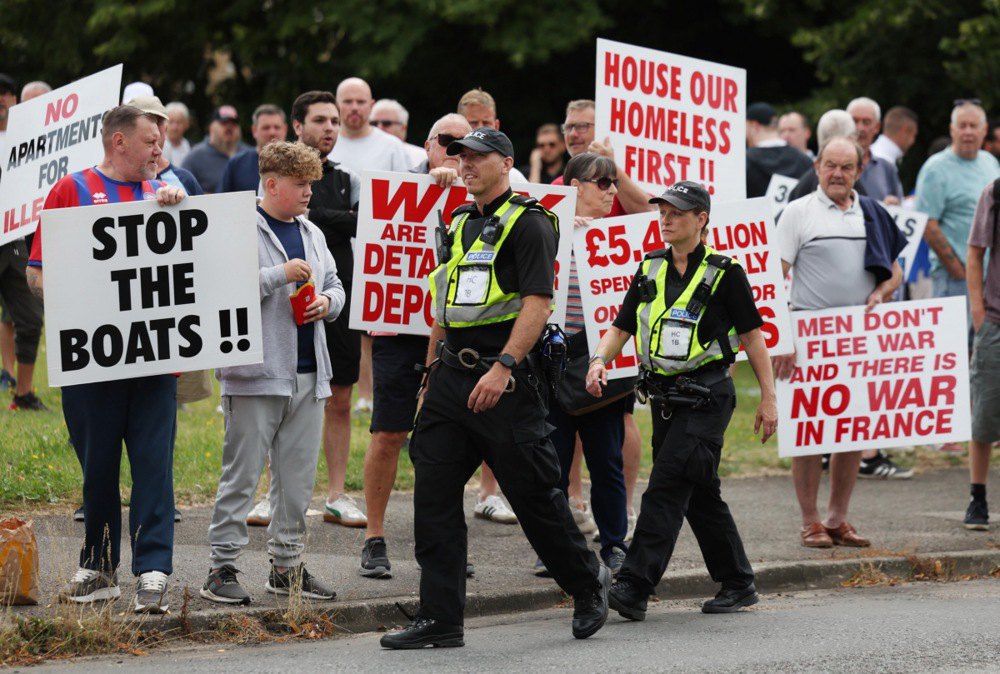
What do we see today? The AfD party (Alternative for Germany — Ed.), which Russia supports financially and otherwise, is leading in opinion polls. In the United Kingdom, a major scandal has erupted: the Reform UK party, whose leaders have received Russian money, is polling in first place. In France, many expect the National Front, now without Le Pen, to remain in power.
We still have time — but not much. Three or four years at most. The next elections in England are in four years. If England is lost, Germany follows. And then what remains?
“People are beginning to understand: without social media and without your own artificial intelligence, you are not a superpower.”
Is it possible to win an information war without control over social media, given that Europe does not have a single social network of its own?
Only now are people in Europe beginning to grasp that nuclear weapons and a strong economy are not enough to qualify as a superpower. Everyone already understands the importance of an army. Now they are realising that without social networks and domestic artificial intelligence, true sovereignty is impossible. If you lack these tools, others will influence you and shape your public space.
Europe has come to this realisation only recently — particularly after Elon Musk began using X to influence anti-immigration protests in the United Kingdom and elections in Germany. That was the moment when many finally asked: can a platform really be used this way? Is it not just a neutral space, but a tool capable of shaping democratic processes?
As long as Europe lacks its own social networks and AI systems, it will not possess genuine agency or sovereignty.
At the beginning of the twentieth century, Britain created the BBC because it understood that it was unacceptable to leave the information space entirely in private hands — interests that often carried their own political agendas — and simply wait to see how communist or Nazi propaganda might influence the country. Mass media in the form of radio and television were essential.
Britain had an opportunity in the 1990s. There was a proposal for the BBC to create its own social networks. That opportunity was missed, and it was a serious mistake.
Today, many say that Ukraine will build the drones and weapons of the future for Europe. I believe that Ukrainian IT specialists will also build the social networks, information channels, and technologies of Europe’s future.
There are excellent IT specialists in Estonia, some in the Czech Republic, but the strongest are in Ukraine. This is something Ukrainians should use to tell Europe: only Ukraine can help guarantee its future sovereignty.
Can sovereignty exist without control over communications? Are we talking about preventing algorithmic abuse and introducing transparent rules?
I am not advocating total control; in principle, I support pluralism. Let us remember that in the United Kingdom there were American and Chinese newspapers, numerous television channels, and at the same time the BBC — public broadcasting independent of government.
What we need are public social networks — spaces for communication that support democratic processes. I do not mean platforms run by politicians; that would be equally problematic.
We need to think less about content and more about the systems through which it is distributed. How can we create transparent social networks that are not designed solely to manipulate users, but instead enable democratic debate, elections, and civic participation? This is the challenge.