






First steps: working group gets underway
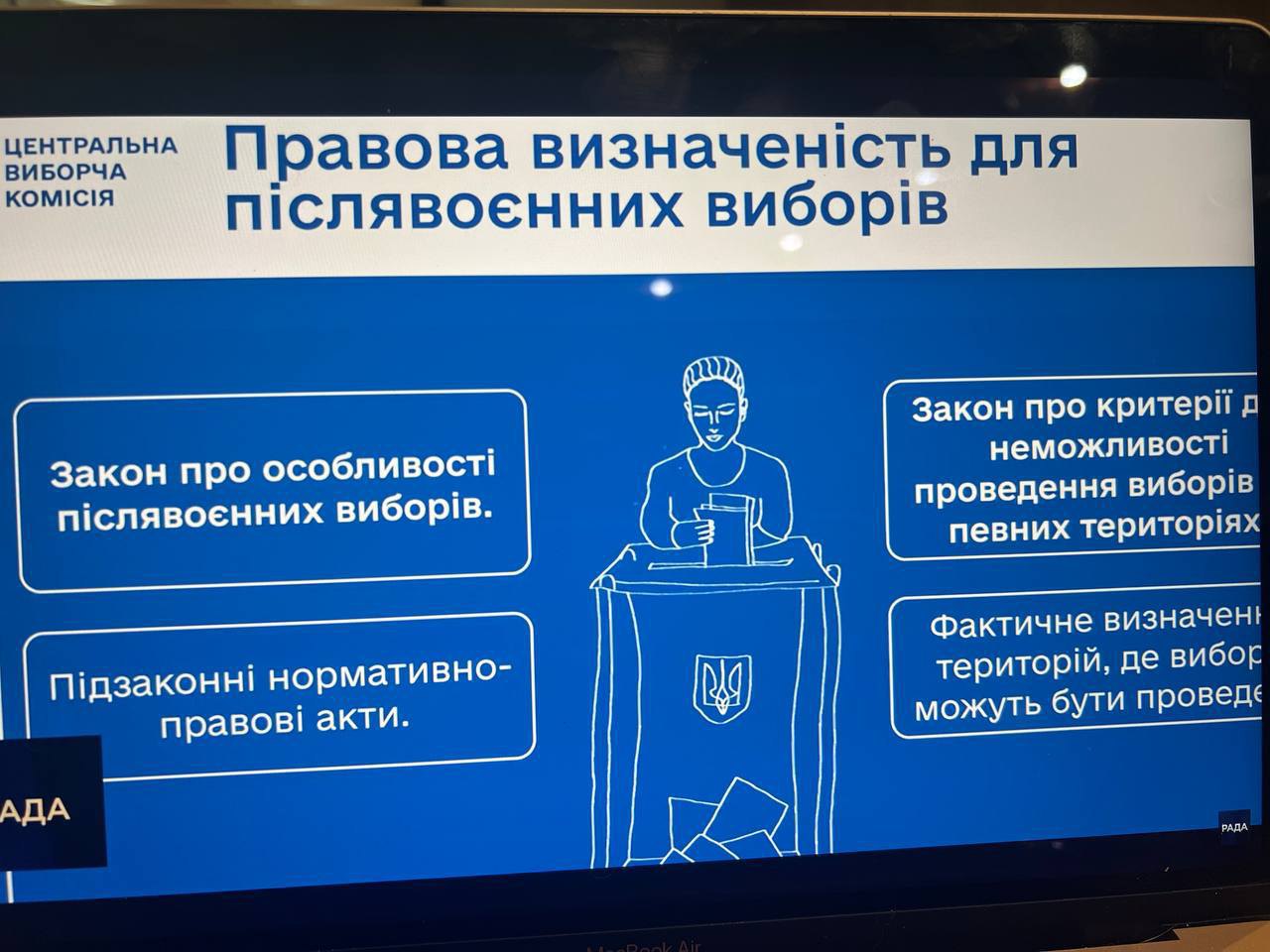
On 26 December, the first meeting (online) of the working group on the preparation of legislative proposals for elections in special or post-war periods took place. The group includes more than 60 MPs from all factions and groups, as well as representatives of the public sector, according to the First Deputy Speaker of the Verkhovna Rada and head of the group, Oleksandr Kornienko.
He presented the personal composition and working format of the group. The first deputy chair is Vice Speaker Olena Kondratyuk (Batkivshchyna), and the leadership also includes Chair of the Verkhovna Rada Committee on Organisation of State Power Olena Shulyak (Servant of the People) and Chair of the Verkhovna Rada Committee on National Security Oleksandr Zavitnevych (Servant of the People).
Korniyenko stressed that the key issue in the upcoming elections is the legal regime of martial law. The group will have to decide whether the elections will take place while martial law is still in effect, which is currently prohibited by the law on the legal regime of martial law. In addition, voting and candidacy of military personnel, voting by internally displaced persons and Ukrainians abroad are on the agenda. The main thing is to ensure security conditions for the elections.
So, are elections possible during wartime?
Deputy Speaker Olena Kondratyuk also drew attention to sociological data: only about 10% of citizens support holding elections during wartime.
She stressed that any law on elections in wartime can only be applied if security is truly guaranteed.
Kondratyuk proposed dividing the large working group into subgroups by area, including media, gender equality, voters abroad, and the use of artificial intelligence during campaigns.
‘First there must be security, first there must be the signing of a (peace) agreement, and only then can there be elections. But preparations for them must continue,’ she urged.
Position of the National Security Committee: voting is not a priority for the military
The head of the Verkhovna Rada Committee on National Security, Oleksandr Zavitnevych, noted that elections during wartime are not a priority issue for the military. The main task of the army is to ensure the security of the state and defeat the aggressor.
He highlighted two key problems: the impossibility of guaranteeing security in combat conditions and the violation of the right of military personnel to be elected.
‘The question of the right to be elected arises because a military serviceman cannot simultaneously defend the state and conduct his election campaign,’ Zavitnevych explained.
Potential peaceful scenario: elections and a referendum in 90 days
The head of the Servant of the People faction, David Arakhamia, presented a scenario in the event of the implementation of a peace plan: holding a referendum and presidential elections in Ukraine within 90 days.
"Part of the potential peace plan is 90 days: 30 days to complete all the preparatory work and legislative framework, and 60 days to conduct certain electoral procedures... If we hold presidential elections and a referendum, we will then be able to take into account all the mistakes, make the necessary changes, and be better prepared for the law on parliamentary elections," he said.
Arakhamia admitted that, with his background in IT, he still does not see a clear answer to the question of the possibility of online voting.
‘As a former IT specialist, I still don't understand whether online voting is possible, because I hear a lot of phantom fears,’ Arakhamia said.
Read alsoUkraine’s first post-war vote: referendum and presidential elections on the horizon
He recalled that similar concerns were raised when online formats were introduced for parliamentary committees.
‘We are currently holding online meetings, and we have online voting in committees. And I remember the fears that were expressed when we introduced this,’ said the head of the Servant of the People faction.
In this context, Arakhamia expressed hope that the working group would thoroughly examine the possibility of introducing hybrid voting, combining online and offline formats.
He drew particular attention to the problem of voting by internally displaced persons. According to him, the existing IDP register does not reflect the actual number of people.
‘We have an IDP register, but it does not contain accurate data. Many internally displaced persons do not register because they want to avoid being on the radar due to mobilisation,’ Arakhamia said.
Central Election Commission: destroyed polling stations, problems with the register, voting by IDPs and Ukrainians abroad
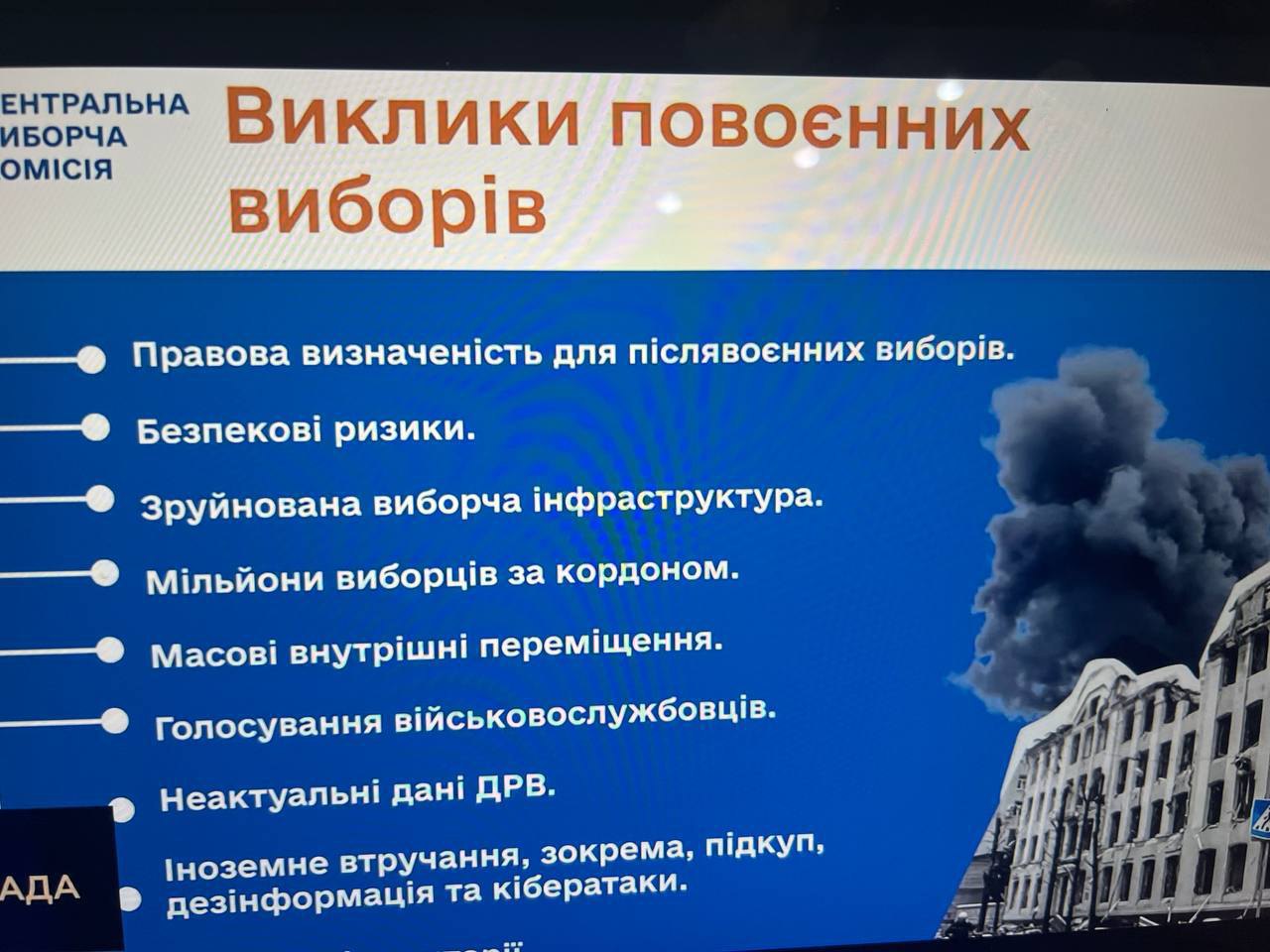
CEC Chairman Oleh Didenko outlined the key challenges: security, destruction of polling stations, voter migration, the register and the risks of foreign interference.
According to him, more than 500 polling stations are located in completely destroyed buildings, more than 1,300 are in damaged buildings, and almost 6,500 have no up-to-date information due to the occupation of territories.
Didenko also stressed the importance of ensuring the electoral rights of military personnel and internally displaced persons, as well as the need to adopt a law on the criteria for the impossibility of holding elections in certain territories.
The CEC chairman drew attention to the risks of foreign interference in the campaign, including bribery, disinformation, and cyberattacks.
Didenko suggested studying the experience of Moldova, where a special law against foreign interference was passed on the eve of the elections.
‘Perhaps this experience should be adapted to the needs of Ukraine,’ he said.
Possible measures include strengthening criminal liability, cancelling the registration of entities financed by foreign states, and requiring candidates to declare their cooperation with the Russian Federation.
Debate on sanctions and Poroshenko's participation in the elections
MP Viktoriya Syumar (European Solidarity) stressed that elections are only possible after the lifting of martial law and in accordance with OSCE standards. She warned that possible rules on removing sanctioned persons from the electoral process could create unequal conditions for participants in the electoral process.
At the same time, Central Election Commission Chairman Oleh Didenko clarified that the CEC has not proposed such rules at this time. The commission is only considering mechanisms for informing voters about candidates' collaboration with the aggressor state or occupied territories, rather than the automatic removal of sanctioned individuals.
‘As for banning sanctioned individuals, no, we have no such initiatives,’ Didenko emphasised, adding that the final decision on resolving these issues rests with the Verkhovna Rada.
Tymoshenko's position: only after the war and without electronic voting
The head of the Batkivshchyna faction, Yuliya Tymoshenko, called for the impossibility of holding elections during the war to be enshrined in law. She emphasised the need to comply with the Constitution and the standards of the Electoral Code, and warned against electronic voting and the creation of thousands of overseas polling stations.
‘Destroying what remains of people's faith in democracy after the war would be suicide for the country,’ Tymoshenko warned.
She also advocated holding all post-war elections — presidential, Verkhovna Rada and local — on the same day to avoid political chaos and a prolonged period of turbulence.
What's next?
According to the group's chairman and deputy speaker Oleksandr Korniyenko, such meetings will be held at least once every two weeks. Next time, MPs and experts plan to meet on 6 or 8 January to further develop a single draft law for holding elections.