






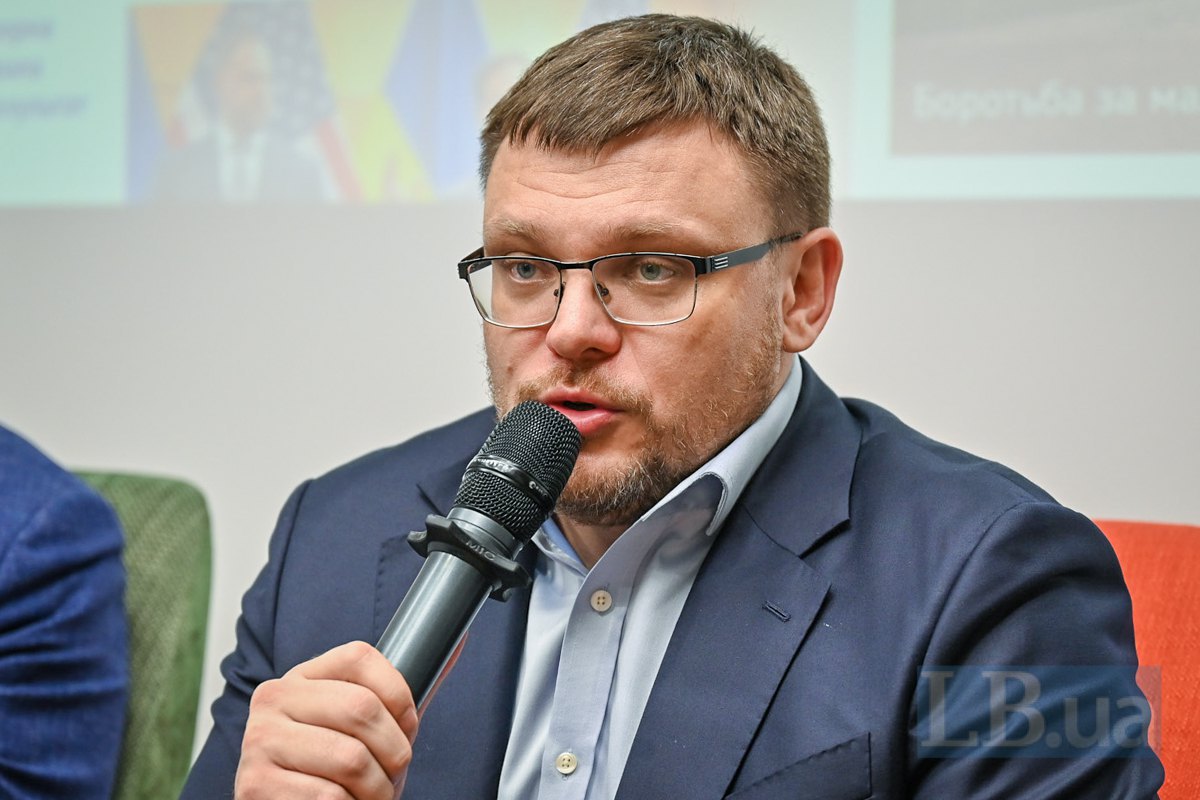
“Any high-profile investigation into top-level corruption must lead to tangible conclusions and the removal of corrupt practices. We have no ambition to influence the political landscape — that is not our role,” says NABU Director Semen Kryvonos. “Our task is to remain an apolitical body and investigate crimes strictly within the framework of the law.”
Even so, the head of the Anti-Corruption Bureau remains upbeat about the processes now unfolding in the country. He hopes the president, parliament, and Cabinet will show leadership and guide Ukraine through the current political crisis — emerging stronger on the other side.
“It is time to renew our institutions and make them more independent. It is time to implement the anti-corruption reforms set out in Ukraine’s EU accession plan. And I hope we will work closely on this with the new justice minister” (the previous minister, Herman Halushchenko, was dismissed after becoming a figure in the Midas case — Ed.).
“I believe the focus should not be on the crisis itself, but on how to overcome it in a way that meets the expectations of Ukrainian society. We should not be hearing such ‘tapes’ any more. Professionally, they help the investigation — but as a citizen, I do not welcome them,” Kryvonos noted.
Will new episodes of the Midas case be published?
“We’re not producing a series — we’re investigating a crime. We’ve now moved into the financial stage of the investigation. We’re not focused on the tapes. Once we establish the facts of a particular episode and consider the suspicion sufficiently substantiated, in 90% of our cases we release selected declassified materials from covert investigative actions. Declassified,” the NABU head explained.
This was also the case, Kryvonos reminded, with the publication of recordings in the investigation into the Chair of the Supreme Court. He understands that the Energoatom case, because of its scale, attracts heightened public attention — everyone wants the details. “But detectives are focused on the outcome, not on making a film,” the head of the anti-corruption agency emphasised.
About external influence in Operation Midas
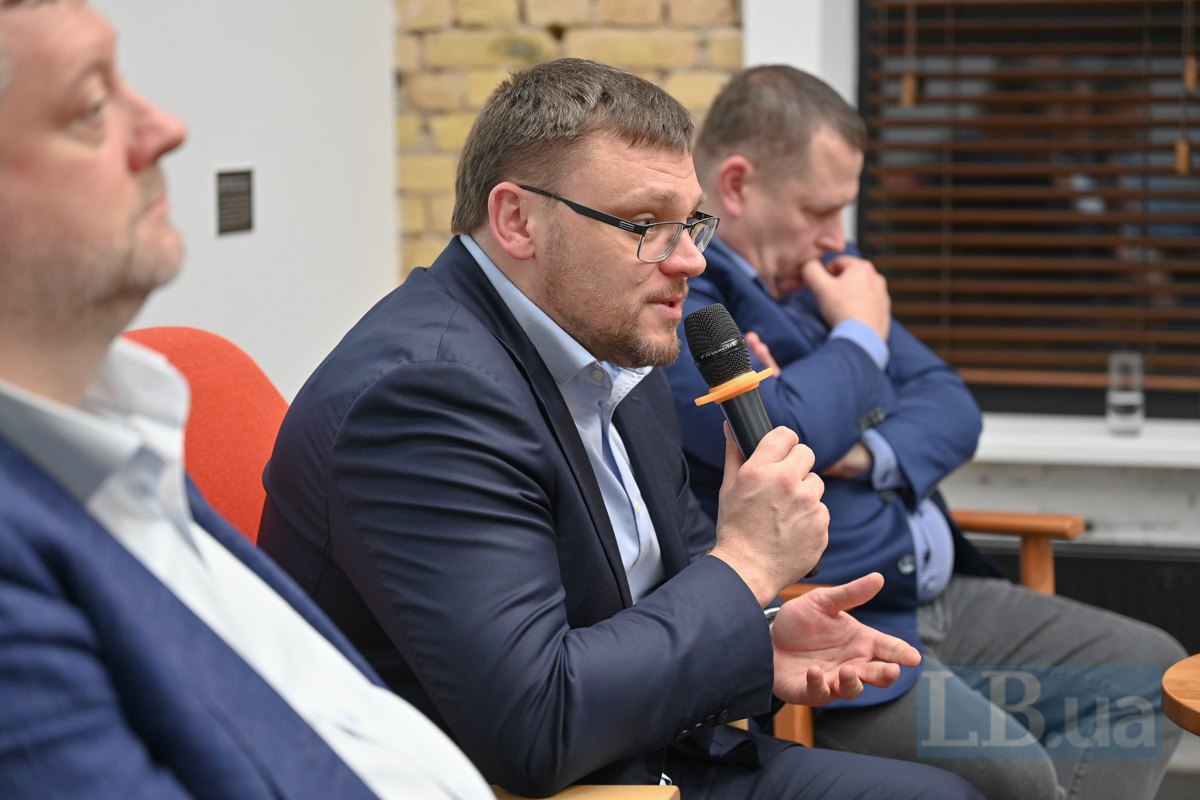
NABU Director Semen Kryvonos firmly rejects any hints or direct accusations of foreign involvement in the investigation. He calls such claims nonsense and conspiracy, an attempt to distract from the case itself.
“Let me speak on behalf of the team — first of all, our highly professional detectives, brave daredevils who are outraged when someone writes that the FBI or leaders of other states supposedly gave us instructions or handed over recordings because we ‘couldn’t have done it ourselves.’
We invite other law enforcement agencies to our training sessions — let them learn how to expose their own ‘Carlsons’. I say this without any pomp, out of respect for the detectives and prosecutors who worked on this case: there was no external influence, no secret technologies, no aliens, no reptiloids, no mythical creatures involved. This investigation is the exclusive work of NABU and SAPO prosecutors, who carried out their tasks at a high professional level.
We did not turn to anyone for help — except society. The only ones who helped were the people on 23 July; thanks to them, this investigation became possible. I am grateful that the Ukrainian public influences us, protects us, stands behind us — even if on that day they didn’t fully realise what they were about to witness. Everything else is conspiracy,” Kryvonos stressed.
He also sharply dismissed claims of Russian influence or that unmasking corruption somehow serves Russian interests.
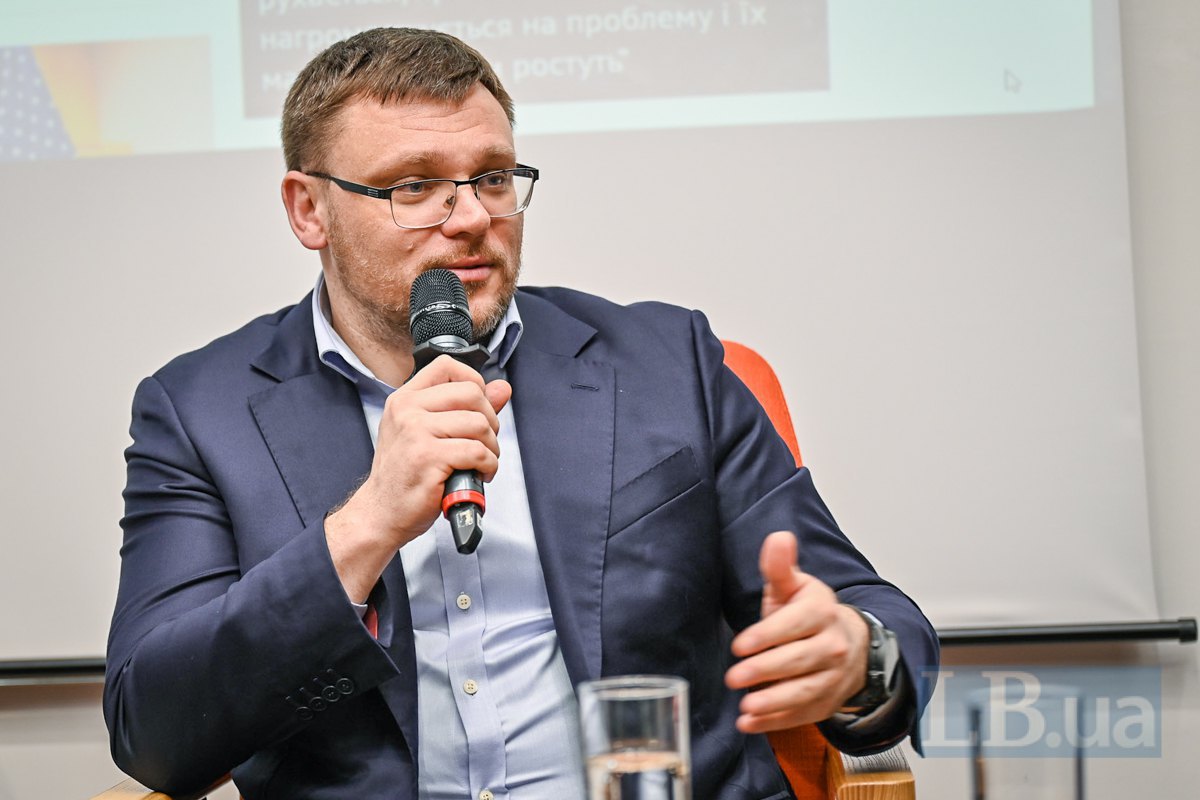
“Corruption is what truly plays into Russia’s hands. Anyone who steals from the budget or takes bribes is effectively working for Russia. Internal corruption weakens the country.
…If we want to stay effective and win, we must defeat corruption. Ukraine has everything it needs for that. We have anti-corruption institutions — some of them damaged, in need of repair and stronger guarantees of independence. But that’s a political framework, a responsibility for MPs. They already have a clear plan from European partners — they just need to follow it,” Kryvonos noted.
Did the July protests in support of NABU speed up the investigation?
“No. While working on this case we never acted out of a desire to move faster. But July absolutely influenced the process: some members of the team involved in the case suddenly faced accusations of alleged trade with the Russian Federation; there was pressure; some materials could be qualified as leaks. There was interference in the investigation, surveillance — we spoke about it a lot — targeting detectives, operational staff, operational vehicles. It was anything but easy,” Kryvonos said.
But, he assured, no external factor influenced the moment the operation moved into the public phase — only the point at which the evidence was sufficient to issue formal suspicion notices.
Did the Prosecutor General’s Office really request data on NABU detectives and SAPO prosecutors from the SBU?
“I can only confirm something when I see solid evidence. I do have certain information, but I’ll keep it under wraps for now. We’re working on it. But yes, such a request was made,” he stated. According to him, these actions must first receive proper legal assessment, and then the public will hear the details.
How is cooperation with the Security Service of Ukraine working now?
Semen Kryvonos insists that, on the institutional level, NABU maintains proper cooperation with all law-enforcement bodies.
“I never judge an institution through the prism of personalities working there or my attitude toward certain individuals. There is an institution — the Security Service of Ukraine — and it is effective in many areas. We’ve recently carried out several operations with the SBU. Together with the Strategic Investigations Department, we exposed a judge accepting unlawful benefit. And any assessment of individual actions must be made by the responsible officer — a NABU detective. We evaluate any misconduct committed against NABU detectives, and we will certainly classify such acts as crimes if the elements are present,” the head of the Bureau said.
How deep and widespread is the ‘back-office system’ inside Ukrainian authorities?
According to Kryvonos, NABU uncovered three criminal organisations in 2025 alone — in Kyiv City Council and Kyiv City Administration, in medical procurement, and in Energoatom and related sectors.
“When a back office appears, it means the institutions it parasitises on are weak. And the people leading them lack a clear position. If someone with no formal powers — only influence thanks to proximity, access to money, saunas or whatever else — can pressure civil servants and officials to solve personal issues and enrich themselves, handing out bribes and corrupting law enforcement, that means the institutions aren’t equipped with proper safeguards and independence guarantees.
Somewhere the law-enforcement system breaks — taking 4, 5, 3, 2, 1 per cent from a tender just to ‘overlook’ abuses. Somewhere safeguards fail in the management of bodies that approve tenders, allocate land, raise or lower a barrier, or appoint a crooked supervisory board. There are many such things. But the weakness of institutions is a shared responsibility,” Kryvonos stressed.
When asked how many such back offices still operate in the country, the Bureau’s director replied: “Plenty. There is still a lot of work to do. In major cities, too. Across various sectors. Unfortunately, there are signs of it even within law enforcement.”
Who sits at the top of the back-office pyramid? Can it be said that one person controls everything?
“No, not just one. It varies. I won’t say it the way you want to hear it. If there is a back office in a large city, is it really run by a single person? Different people may head them. It is a fragmented system used to siphon off money from different areas. And again: a back office emerges where there is an opportunity to steal and the safeguards fail,” Kryvonos said.
Are the links between the Midas suspects and Russia — including the so-called ‘two grand for Moscow’ — being investigated?
They are, the NABU chief assured, but communication on this requires caution.
“We have confirmed that such links exist. Next, we need to apply investigative instruments to trace those financial transactions. At a certain stage of the operation, the Security Service of Ukraine approached us. They are ready to help trace precisely those episodes that may involve connections with the aggressor state. We have already passed part of the materials to them, and they will investigate their side of the case.
As for the ‘two grand’, we will continue handling that ourselves for now, but if needed, we will involve the counter-intelligence capacities of the Security Service,” Kryvonos noted.
How did the State Financial Monitoring Service (not) assist in investigating the ‘Mindychi-gate’ case? Why were the illicit funds not blocked?
According to the head of the anti-corruption agency, such transactions should have been identified and blocked by the financial watchdog at the moment they occurred. But “something failed — both in the banks and in the Financial Monitoring Service.”
“My first deputy, who coordinates the detectives’ unit, is now in active communication with the Financial Monitoring Service. I cannot disclose the details,” Kryvonos added. “But after we began publicly raising these issues, there are signs of movement.”
At this stage, the director clarified, the Bureau has begun receiving interim responses from the State Financial Monitoring Service, including on episodes linked to defence-sector investigations.
“We do see movement and signs of activity in this direction. The question is how efficiently and how quickly they will process the rest of our requests. But we also have other tools — international cooperation.
We have moved into the public phase, which means we can now send requests for international legal assistance and speak openly with law-enforcement bodies in other countries at the operational level. The outline of the case is clear: the suspects are known, the scheme is understood, there is no longer any risk of compromising the operation. As a result, we now have far more instruments at our disposal.
The Financial Monitoring Service is, of course, an important body in this respect — it can help trace specific transactions rapidly. But if they do not do this effectively, we can work with colleagues from partner countries (Poland, Lithuania, Latvia), as well as with British and US agencies,” Kryvonos said.
Was Rustem Umerov questioned? Is he cooperating with the investigation?
The categories “cooperating with the investigation” and “person of interest” are not legal ones, Kryvonos explained. A person has a procedural status: “witness,” “suspect,” or “accused.” Umerov is a witness.
“Anyone can be questioned — that does not mean they are (or are not) cooperating. It is a procedural investigative action. He (Umerov — Ed.) was asked a series of questions and provided answers. That is all I can say at this point,” the Bureau’s chief added.
Did the recordings raise further questions for Umerov — for instance, why he did not inform NABU he was being supplied with substandard body armour?
“I had a different question: what were at least five members of the government doing in some flat? Former and current ministers. What business do government members have in a private apartment?” Kryvonos responded emotionally.
Is the information about Svitlana Hrynchuk leaving Ukraine accurate?
The NABU Director noted he cannot provide such information because, as of 2025, the Bureau has 1,900 individuals with the status of suspect — and Hrynchuk is not among them. Even if there were any procedural actions concerning her, they would not be disclosed.
Why has Andriy Yermak not been served with a notice of suspicion?
“Whether a notice of suspicion is issued or not is a matter of pre-trial investigation. We do not explain why we do or do not serve one. A suspicion is issued only when there are sufficient grounds and collected evidence. If it has not been served, the investigation continues.
This question is hypothetical. We operate strictly within the law. A detective acts according to the law: if something is done, there were grounds; if not, then potentially there were none. No individual who has committed a crime and has been identified within NABU investigations has managed to avoid liability. That is the only answer I can give,” Khyvonos stated.
Is it true that NABU serves notices of suspicion in 90% of cases on the day of a search?
According to him, this figure does not reflect reality and originated as “the opinion of one media outlet,” which others repeated. He does not know the exact percentage of searches that result in suspicions.
“A search is a standard investigative action conducted by a NABU detective. And suddenly a figure appears — 90% suspicions. Why not 93? Or 34? We conduct a huge number of searches every day, while the number of suspicions is significantly lower. Seriously. Today there were investigative actions, yesterday too. This is a constant process. NABU detectives are conducting searches all the time,” he explained.
He stressed that this is not the first time someone’s “expert opinion” is presented as established fact. The same happened when NABU was asked why detectives had not blocked the border for Tymur Mindich.
“Even the Head of the Border Guard Service does not have the procedural authority to ‘block the border’, just to be clear. A travel ban can be imposed only by a court order in connection with a preventive measure, or by law, if it restricts someone’s right to travel.
We can notify the Border Guard Service: if this person attempts to cross the border, please inform us. But this carries a huge risk of information leakage. The moment we inform someone at the stage of preparing a suspicion notice for a high-profile figure, there is a serious risk that the figure themselves will be warned. That is why we rarely resort to this,” Khyvonos added.
Will Andriy Yermak be served with a notice of suspicion?
“We do not announce suspicions in advance. We speak about a notice of suspicion only as a fact — without naming anyone — once the investigative action has already taken place. Anything beyond that is impossible. Conspiracy theories and excessive commentary only harm the pre-trial investigation and can later be used to undermine the process,” the NABU Director stressed.
“I understand the public wants to know everything. But there are the interests of the investigation to consider. Therefore, since 23 July, I must reply as follows: under the law on NABU and the Criminal Procedure Code, I do not comment on such matters until the relevant fact occurs.
If we, as a society, want justice and verdicts in this case, we need to shift our focus from information noise to establishing facts.”
Who is behind the leak from NABU?
According to Khyvonos, the first media outlet to use the Mindich recordings was Ukrayinska Pravda, journalist Mykhaylo Tkach — but he referred to sources unconnected to law enforcement. NABU and SAPO did not provide these materials.
“We more or less understand how journalists learned about the surveillance of Mindich’s flat. It definitely wasn’t us. It would be idiotic to highlight whom we are wiretapping and in which flat — so they would simply stop talking?
Although there are recordings where these gentlemen keep assuming they are being listened to, yet they continue chatting anyway. Sometimes they whisper a bit, then go back to their usual chatter,” Khyvonos said.
As for leaks in the case, they indeed occurred — and not to MP Yaroslav Zheleznyak personally, the Bureau chief noted. He added that none of Zheleznyak’s predictions had been 100% accurate, though NABU understands which sources provided him with the information.
“What matters is this: several criminal proceedings have been registered. First, regarding surveillance of our employees, attempts to track our monitoring operations around this office, and the collection of data from restricted registers. Also, concerning the monitoring of court rulings authorising searches — rulings that appeared in the register and which employees of various law-enforcement bodies accessed on the same day, warning the subjects that searches were coming.
They did not know the exact date — only the time window, as the ruling had a limited validity period. A criminal case was registered on this matter.
Another case concerns the deliberate transfer of information and infiltration of NABU and SAPO by certain individuals. These people have been identified, and they will be held accountable — both those who embedded themselves and those who, excuse me, were informing and leaking information to them.
And we must clearly distinguish between the work of journalists and the actions of people engaged in political messaging,” Khyvonos added.
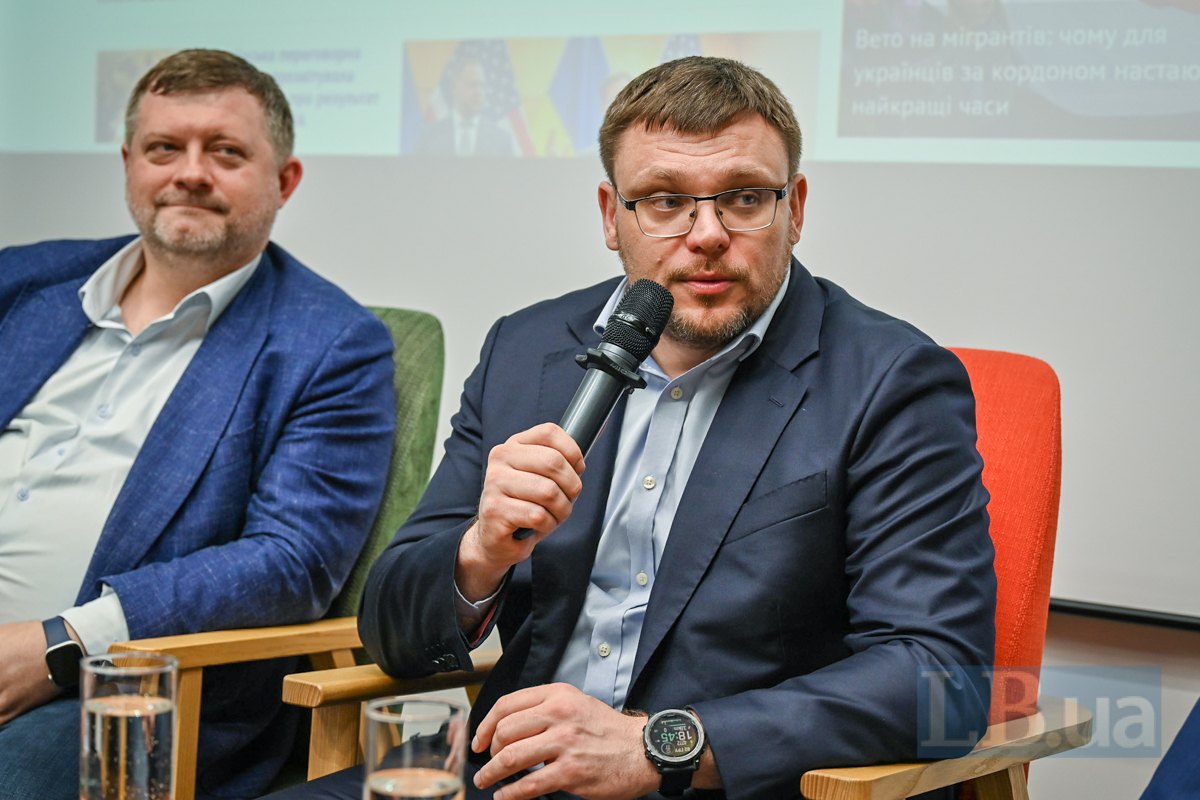
Would it not be more effective to prevent corruption schemes at the earliest signs rather than document them for 15 months while gathering evidence?
“Identifying every episode and every member of this group by the time we moved from the covert phase to the overt one — despite extreme turbulence — is bound to have a strong preventive effect. The number of requests for settlement agreements involving the return of stolen funds from abroad has risen by 30%. Is that not a preventive measure?
If this back-office network — shielded by several departments of various law-enforcement bodies, enjoying substantial political support and operating at such a scale — could be infiltrated by us… And it wasn’t just one back office, but a network of several groups in several premises, all disguising their activities. That alone will have an enormous preventive impact,” Khyvonos underlined.
He added that even before Operation Midas moved into its overt phase, the National Agency on Corruption Prevention had issued a series of recommendations to eliminate corruption within Energoatom.
“So would it have been more effective to send a formal notice saying NABU is investigating and tut-tutting them? They would have shrugged, pretended to be frightened and simply continued in another office.
The point is that we acted at exactly the right moment, even though it was painful and led to certain consequences. Sometimes you need to act precisely this way so that the positive results are stronger, deeper, and systemic. This operation is unique. NABU has never conducted anything like it before, and I cannot recall similar revelations by anyone else in the last ten years.
I’m not boasting — merely analysing the information available to me. That is why the operation caused such a reaction. And its preventive impact is genuinely significant,” the NABU Director explained.
Now that the Bureau has highlighted, among other things, the legislative gaps, it is up to the government and the Verkhovna Rada to address them, Khyvonos said. NABU is ready to provide recommendations on how to eliminate the causes and conditions that enabled these corruption offences.