






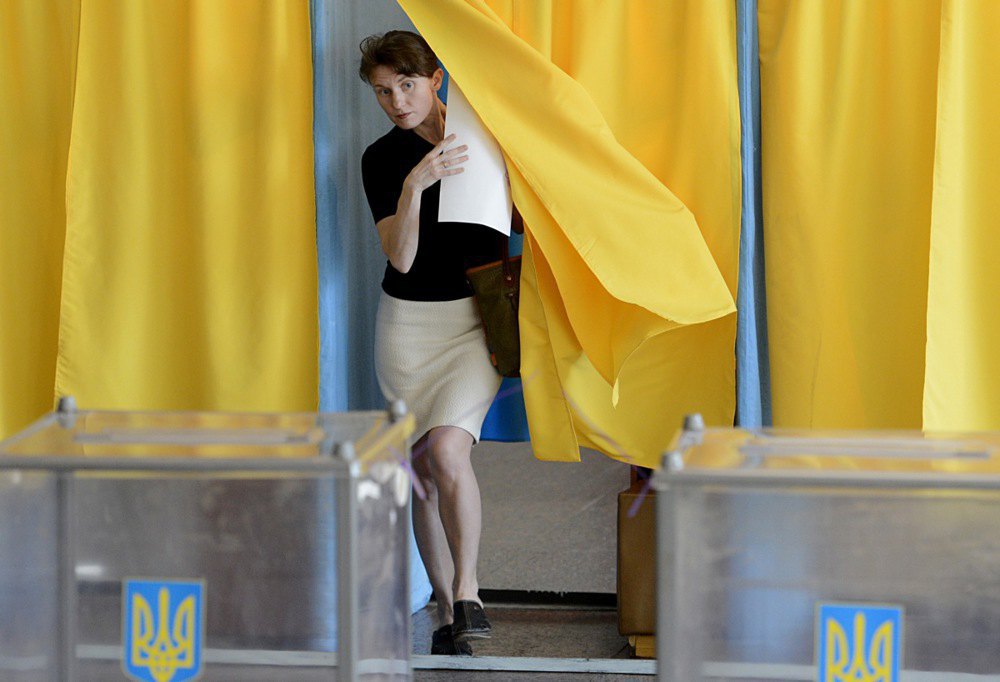
Ukraine may face elections — and not just one — in the foreseeable future, should a framework “peace agreement” be signed.
This is precisely what Ukraine’s American partners have demanded: presidential elections after the lifting of martial law. For now, there is no discussion of parliamentary or local elections, although these, too, will eventually have to be held.
An important point must be stressed: only once a truce is signed and a ceasefire is established will there be no question of holding elections “under bombs”.
“In order to dispel any speculation that I might not want peace in order to retain power, I said: please, I am ready for the campaign, but peace first. No one is clinging to their seat,” Volodymyr Zelenskyy has emphasised more than once.
Here, of course, one might rhetorically ask why the Americans are not making the same demands of Russia, where the last genuinely democratic elections took place a quarter of a century ago. The answer, however, is obvious.
That said, the first post-war electoral event may not be the presidential race at all, but a referendum.
As is well known, the territorial issue is the most difficult and painful aspect of the negotiations. Russia demands that the entirety of the Donetsk and Luhansk Regions be handed over to it.
Another key issue concerns the status of the Zaporizhzhya Nuclear Power Plant. “The Russians insist on controlling the plant themselves, while the Americans propose managing it under a concession, albeit without a clear scenario. We are saying very simply: either the plant is ours, or it will not operate,” a source in the negotiating group told LB.ua. However, they do not explain how this could be ensured from a security perspective.
The idea of holding a referendum belongs personally to Zelenskyy.
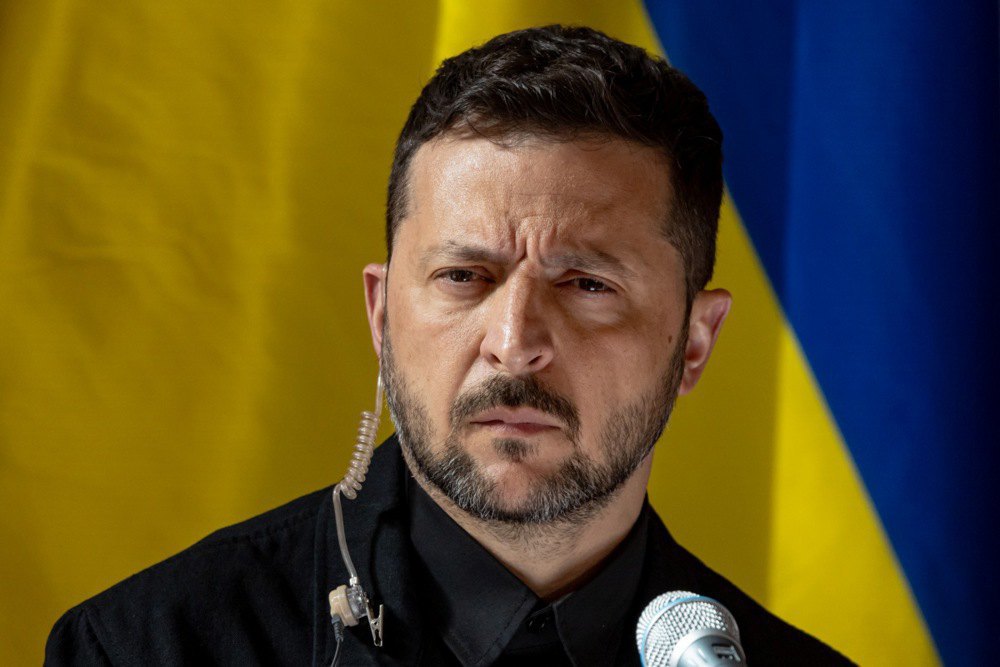
“There is no final text of the peace agreement yet. We do not know what will ultimately be written there — the situation is dynamic and constantly changing. We are not surrendering and we are not giving up our rights, but it is obvious that territorial issues are sensitive for the whole of society. So the idea is very simple: if there is an agreement, we will publish it and then ask the people, ‘Do you support the text of the agreement?’ It is a straightforward ‘yes’ or ‘no’,” says one of the head of state’s close associates.
As is also well known, Zelenskyy and his team are highly attentive to fluctuations in public opinion — in other words, to approval ratings. According to closed polls regularly commissioned by the President’s Office, Ukrainian society is roughly divided on the issue of territory (we deliberately refrain from providing specific figures, describing only the general trend as seen by the ruling team — Ed.). Roughly half of respondents are prepared to accept the de facto loss of part of the territories, though not de jure, in exchange for clear security guarantees, lasting peace and financial assistance from partners for reconstruction. The other half are categorically opposed to any compromises and are ready to “fight to the last”. Although there are more people in the second group who are not themselves fighting, it nevertheless prevails numerically.
“That is why it is so important to formulate the question correctly. The word ‘territory’ should not be used at all. As I said, it should simply be about support or non-support for the specific text of the ‘peace agreement’. I do not think there will be many who would speak out against peace. And the specific figures will depend on how we work with people, with the media, and on the signals we send,” adds the member of the President’s team quoted above.
Zelenskyy’s logic is easy to understand. A referendum would allow him to avoid bearing sole political responsibility for the final configuration of peace and a truce — or, more precisely, to share that responsibility with Ukrainian society. After all, it is clear that whatever the agreement may be, it will inevitably face criticism. In this sense, the referendum becomes a form of political insurance ahead of the upcoming presidential elections.
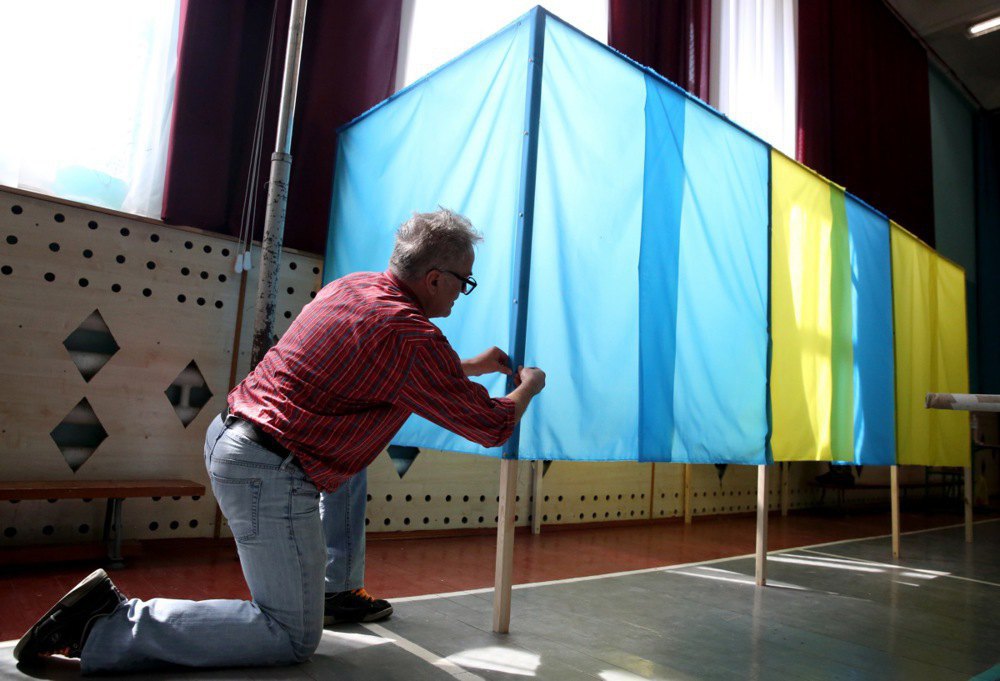
However, this approach carries a serious risk. If communications fail and the “right messages” are not conveyed effectively, Ukrainian society may simply refuse to support the agreement. And then what?
It is also worth recalling that, under Ukrainian law, the results of a plebiscite are not legally binding; they are advisory in nature.
Ukraine has already seen such a scenario. In 2000, following a so-called “popular initiative”, the authorities asked whether citizens supported limiting parliamentary immunity, granting the president additional grounds to dissolve the Verkhovna Rada, reducing the number of MPs from 450 to 300, and introducing a bicameral parliament. Although all four proposals were approved, the corresponding legislative changes were never implemented. In practice, that plebiscite served primarily as a tool to strengthen the political position of then President Leonid Kuchma.
“If you are not confident in the outcome of a referendum, it is better not to hold one at all,” insists another influential figure from Zelenskyy’s team. “Because instead of strengthening our position ahead of the election, we will create additional problems — and, frankly speaking, our boss’s chances of winning are not particularly high anyway.”
“Not particularly high” may be something of an understatement. In reality, after Mindichgate — which is still ongoing — those chances are close to non-existent. Naturally, much will depend on the list of candidates, but it is difficult to imagine a repeat of the so-called “Vienna Agreement” in 2026. One may recall that in 2015, in Vienna, with the participation of Dmytro Firtash and Serhiy Lyovochkin, Petro Poroshenko and Vitaliy Klitschko agreed that the former would run for president, the latter for mayor of Kyiv, and that the parliamentary list would be divided equally between them. In the end, less than a quarter of Klitschko’s nominal “half” of the list survived — though that, as they say, is a different story altogether.
Thus, as of mid-December, Volodymyr Zelenskyy instructed parliament to develop a scenario for the first post-war elections. Let us emphasise once again that this concerns presidential elections specifically, and only in the context of lifting martial law restrictions. At the same time, on 22 December, the head of the presidential faction in parliament, Davyd Arakhamiya, announced that MPs were forming a working group to consider the issue of holding presidential elections during martial law.
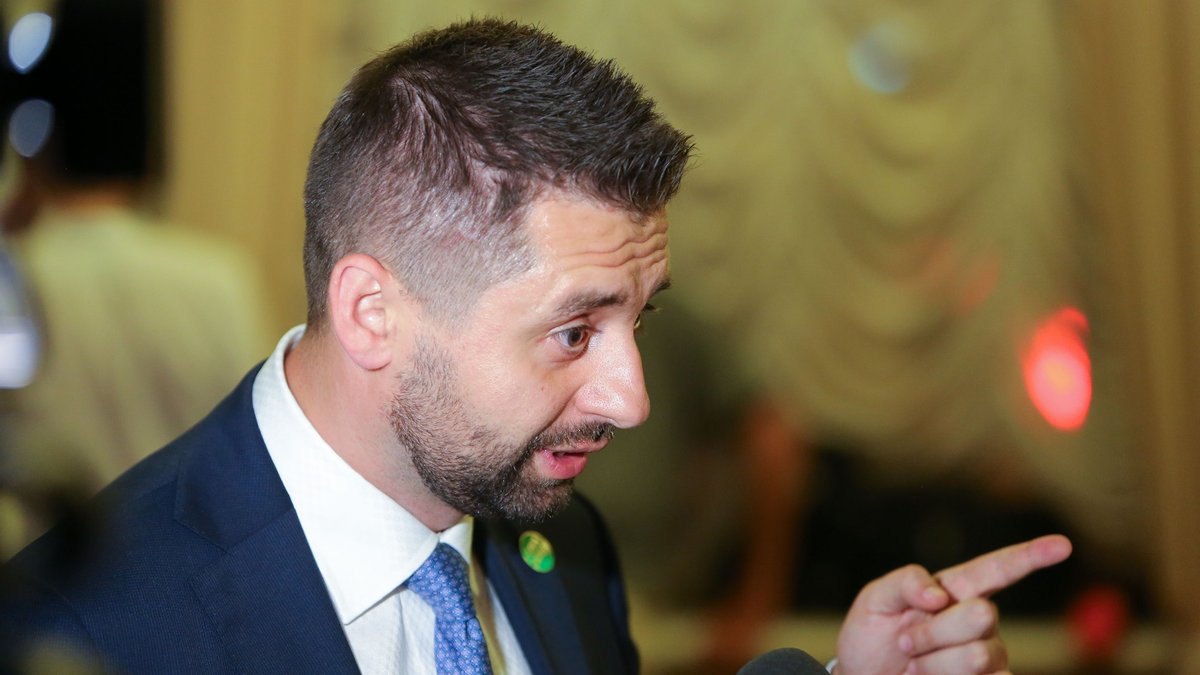
As the initiator of legislation, the president could have submitted his own draft law. However, by delegating the issue to parliament, Volodymyr Zelenskyy appears intent on reinforcing the Verkhovna Rada’s sense of its own authority. “Well, the deputies managed to vote on the budget, so they will manage here too,” says another associate of the head of state. Yet the comparison is clearly flawed. It is one thing to avoid difficult conversations with angry voters who would not tolerate the absence of a wartime budget — covering not only salaries and pensions, but also defence spending — and quite another to support the launch of presidential elections amid an uncertain political landscape. That landscape will depend directly on the final provisions of the framework peace agreement, as well as on accompanying arrangements on security guarantees, post-war reconstruction and related issues.
Parliament has not been given a deadline for developing its proposals. Responsibility for the process has been assigned to Ruslan Stefanchuk and Oleksandr Korniyenko. Davyd Arakhamiya has already met with the head of the Central Election Commission, Oleh Didenko, to discuss the main “pain points”.
“Didenko has a million comments. He says it is impossible to hold elections quickly and efficiently immediately after the war — it can be one or the other. But we understand that this is a political issue,” says a representative of the Servant of the People faction familiar with the discussions. He recalls that as far back as December 2023, following the Jean Monnet Dialogues, representatives of all factions and groups signed a document stating that any elections could not be held earlier than six months after the lifting of martial law. So what is to be done now?
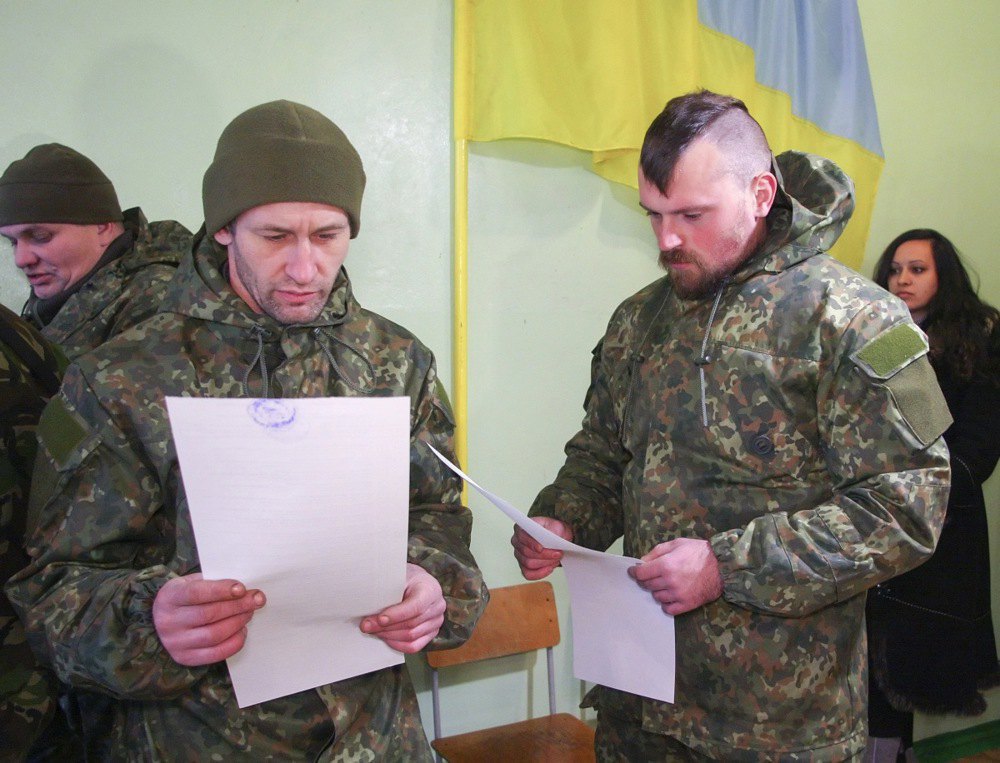
“How to organise voting for the military, how to ensure the work of observers — all of this can be resolved, provided the fighting has ended. But what to do with IDPs (internally displaced persons — Ed.) is completely unclear. Of the 4.6 million people displaced [as of autumn 2025], only around one million have actually registered: they receive payments and the state clearly understands where they live,” our interlocutor says. The rest remain registered only nominally, and it is entirely unclear how they will — or will not — be able to vote. After all, it is impossible to provide half the country with “absentee ballots”.
IDPs are only part of the broader problem of voter lists. Under current legislation, these lists are maintained by the Central Election Commission but compiled by local authorities. In a significant part of the country, however, local authorities are absent, having been replaced by military administrations.
Another major challenge concerns overseas polling stations. There are only 102 such stations for roughly eight million people who have left the country, although a significant proportion of them are children who are not yet eligible to vote. The state lacks both the financial means and the organisational capacity to expand this network.
“In addition, those who remained in Ukraine will quite logically ask: why should special conditions be created for those who left? They fled, we stayed — and now we are supposed to elect the government on equal terms?” our interlocutor adds. “Society is already polarised; there is no need to deepen these divisions further.”
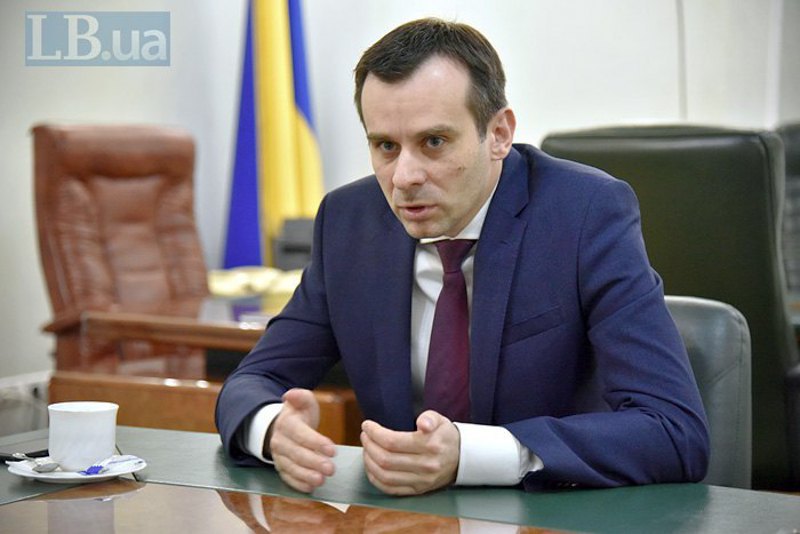
For obvious reasons, online voting is out of the question. Accordingly, only previously established polling stations would be used, and only those citizens registered with Ukrainian consulates would be eligible to vote. Many men of conscription age deliberately avoid such registration, irrationally fearing that the Territorial Recruitment Centres (TRCs) might “catch” them even in Belgium. As a result, according to the head of the Central Election Commission, Oleh Didenko, there are only about 400,000 such registered voters abroad.
The same restrictions apply to the right to vote and to stand for election. Under Ukrainian law, in order to be registered as a candidate, a person must have resided continuously in Ukraine for the past five years. The only exception concerns local elections, which is a separate issue.
This rule applies not only to presidential elections, but also to parliamentary ones. “They will take place shortly after the presidential elections, and their configuration — who will run, in what alliances, and under which slogans — will directly depend on who leads the country,” notes one of the leaders of Servant of the People.
Within Servant of the People, there is little clarity about the party’s future in the next electoral cycle — although, in reality, it has never fully succeeded in becoming a genuine party structure.
“We will definitely launch some kind of project for the ‘boss’. Perhaps even two. But what exactly it will be is for him to decide, because he will bear responsibility for it. If we manage to get forty people into the Rada, that would already be a very good result. We will see — there are simply too many unknowns at the moment,” he concludes.
At the same time, the party leadership has one idea which, in their view, could secure a comfortable political future for the “boss” and, for some of them, re-election to the Verkhovna Rada. It would also help to minimise debates about the weak political legitimacy of a new government elected under such difficult circumstances and within such a short timeframe.
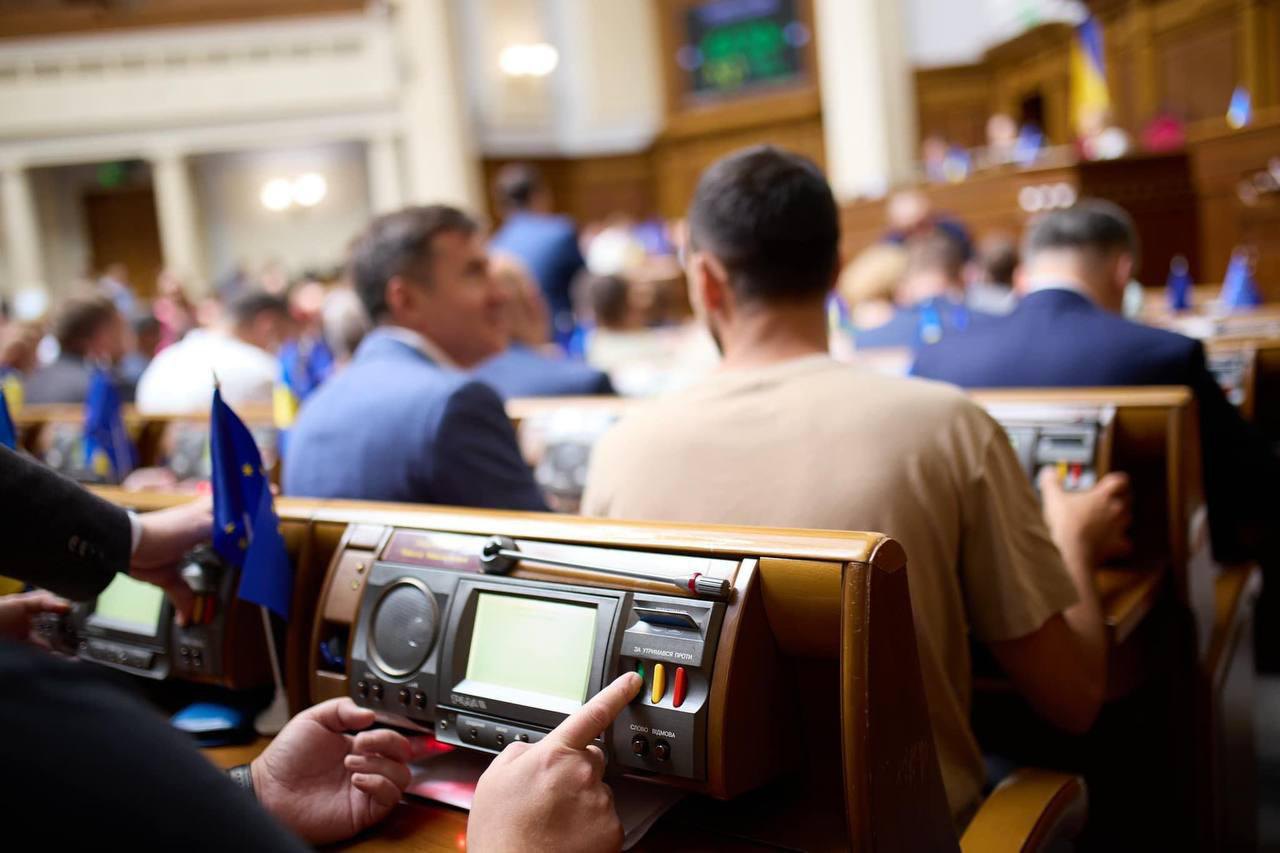
The idea in question is the introduction of a bicameral parliament. Authorship of the proposal is attributed to Davyd Arakhamiya. He argues that Ukraine is moving towards Europe, where this form of parliament is widespread (although in reality only 13 of the EU’s 27 member states have bicameral legislatures — Ed.). Under this concept, the upper chamber would represent the regions, a prospect that constituency-based deputies would be happy to support. “List candidates” are also said to be interested, as this model would allegedly increase their chances of re-election. In such a scenario, Zelenskyy could head the upper chamber and retain a position among the country’s top political leaders.
There are, however, several major caveats. Amending the Constitution is not a matter of weeks or even months. It requires two sessions of the Verkhovna Rada, a positive opinion from the Constitutional Court, and, ultimately, at least 300 votes in parliament. Is the current government — fragmented, disoriented, and evidently having failed to seize the opportunity for deep systemic change — capable of implementing such a scenario? This seems highly unlikely.
Most importantly, would Volodymyr Zelenskyy agree to a largely representative role after six and a half years of virtually unrestricted power, shaped personally around him? The answer, it would seem, is obvious.
And yes, this has already happened before, in 2000. We know how that ended.