







Ukrainian studies as a matter of national security
Mr Slyvynskyy, a conference of Ukrainian studies scholars from 38 countries was held in Lviv. It is understood that the event was not widely publicised and information about it was not widely circulated. Did the organisers have grounds to be concerned about the participants’ safety?
It would not be accurate to say that we did not publicise the event — information about it was available. However, there were certain reservations, and that is true. Security issues are a priority for us, so we sought to minimise risks. These risks relate to participants who might pose some kind of danger or threat, or who might have objectives that are incompatible with those of the conference. We will continue to take such precautions in the coming years, because during wartime these preventive measures are absolutely necessary.
So the Ukrainian language itself, as well as those who study, disseminate and promote it, could be targets for the enemy?
Yes. The enemy is attempting to destroy Ukrainian identity itself, and therefore those who strengthen and promote that identity around the world may be viewed as legitimate targets. Moreover, individuals acting on behalf of the enemy may seek to infiltrate Ukrainian studies circles. This may not necessarily involve a physical threat to participants, but it could involve gathering information required by the enemy.
That is why security issues are so important to us. Let me remind you that the conference is co-organised by the Ukrainian Institute, which operates under the Ministry of Foreign Affairs. We cooperate, and will continue to cooperate, with diplomatic missions and, potentially, with the Security Service as well. The same approach will apply to future conferences in order to prevent provocations and similar incidents.
How were participants selected? How did they learn about the conference?
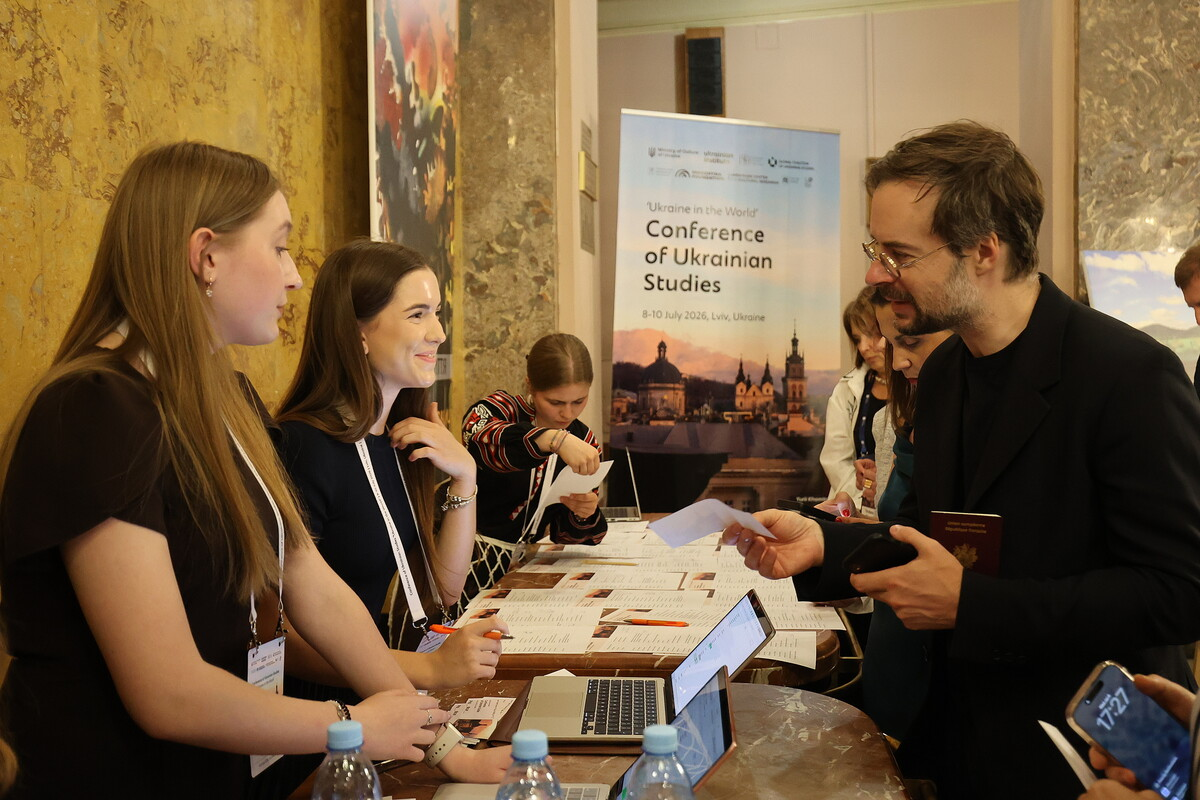
We circulated information to all interested parties and launched an open call before the conference. In addition to participant status, there was also an “invited guest” category, which was essentially open to anyone wishing to attend. Interested individuals were required to complete a special guest form, which we published on the websites of the co-organising institutions — the Ukrainian Institute and the Ukrainian Catholic University — as well as on social media. As a result, several dozen guests attended alongside the participants. They were able to take part in all conference events on the same basis as the participants.
And how many participants were there in total?
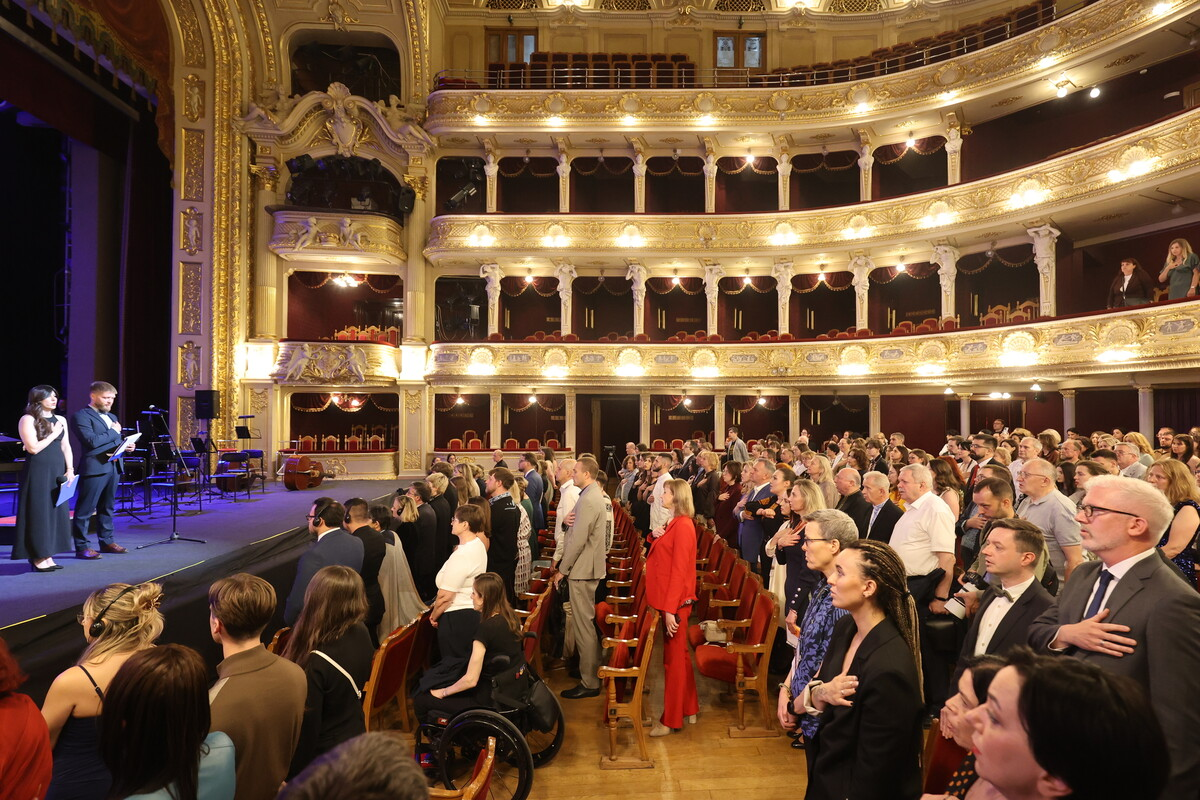
We had around 270 participants from 38 countries. Most attended the conference in person — more than 220 were present in Lviv.
What can you tell us about them in terms of age and gender? What does the typical face of contemporary Ukrainian studies look like?
Oh, it is a very pleasant one (laughs). I cannot give you the average age of our participants, but the face of modern Ukrainian studies is quite young. To a large extent, it is also female. We had more female participants than male participants, for various reasons. As for the men from Ukraine, there is one obvious explanation: many of them are serving in the Armed Forces.
Which applicants did you reject, and on what grounds?
There were several criteria. The first — the simplest — was one that, however, not all applications met. An applicant’s proposal had to relate to Ukrainian studies. But, despite the obviousness of this approach, we received proposals — let’s call them ‘Russia-centred’ — which we, of course, rejected. There were proposals in Russian, which contravened the rules of a conference on Ukrainian studies — they simply did not pass the technical screening. There were also applications from Ukrainians living abroad who were not engaged in Ukrainian studies, and this is where the thematic ‘filter’ came into play.
However, ultimately, there were applications that formally met all the criteria but fell short in terms of academic rigour. Often, the topic seemed unclear to us or was formulated very vaguely. In such cases, we asked the applicant to provide further clarification; if the applicant did not respond, we were obliged to reject the application.
As for those whose participation was ultimately approved, had they been to Ukraine before? If not, and if this was their first visit, what impressions did they take away from their stay in Lviv?
That’s a good question. We’re currently asking our participants to fill in a feedback form where they can, amongst other things, share their impressions of Ukraine and Lviv. But to answer your question: many of our participants had never been to Ukraine before. By no means all of them have any connection to Ukraine; in other words, they were discovering our country for the first time. We’ve heard many words of admiration from them, particularly because we managed to organise such a large-scale event during wartime.
Was it a shock to them that, despite the constant bombardments, everyday life goes on as normal?
Yes. Even those who take an interest in Ukraine and study it, and our culture, do not always have a realistic idea of what everyday life in Ukraine is like during the war. Many of them expected the pressure of the war in our country to be felt constantly, everywhere, at every turn. So the level of security we tried to provide for them came as a surprise. They had hoped for more extreme conditions. So, I suppose we were lucky that there wasn’t a single prolonged air-raid alert throughout the entire conference in Lviv. There was just one very brief one…
But you know, I also heard from some participants that it was important for them to experience what Ukrainians go through during air raid alerts. Because many of them came not just to look around, chat and go for a walk, but also to get a taste of Ukrainian life, as far as that’s possible over the course of a few days. And we were able to offer them a programme of activities outside the academic panels, which included walks around the city — particularly in the evening. And, of course, Lviv made a deep impression on our guests.
The evolution of Ukrainian studies worldwide
Let’s go back to the stage when you were simply receiving applications from potential participants. What did an analysis of these applications reveal? What did it show in terms of the state of Ukrainian studies worldwide and in specific regions?
It confirmed what you yourself have been saying — Ukrainian studies are represented all over the world. In countries across Europe (from north to south, that is, from Norway to Spain), as well as in North American countries, namely the United States and Canada. But that is not all, because the conference also featured countries from the so-called Global South — there were quite a few participants from Latin America — from Chile, Argentina, Mexico… There were also representatives from South-East Asia (for example, Taiwan) and Israel. In essence, almost the entire world was represented, which is certainly encouraging.
What else did this snapshot reveal? It highlighted several interesting trends which, as organisers, we had, in principle, more or less understood and recognised even before. But now this understanding has become yet another argument in favour of holding such a conference.
So, the point is that after 2022, global interest in Ukraine began to grow rapidly. Ukraine’s role has changed; it has transformed from one of the lesser-known countries of Eastern Europe into a player that influences global geopolitics, and whose voice is beginning to be heeded by the world’s most important leaders. All of this, in turn, has stimulated the emergence of new centres for Ukrainian studies. These include both those that have already been institutionalised as centres for Ukrainian studies and those represented by individual enthusiasts who nevertheless have the potential to rally a community of like-minded people around them.
And it is precisely because new enthusiasts of Ukrainian studies have emerged—whom it is so important to bring together and for whom we must create a dedicated platform where they can interact—that it is vital to continue holding our conferences. Let me remind you that the last congress of Ukrainian studies scholars took place in 2018, before the full-scale invasion began. Whilst not abandoning the experience of that congress as our foundation, we nevertheless realised that this idea needed to be revitalised at all levels.
What motivates a hypothetical resident of Taiwan or Chile to start learning Ukrainian?
There could be many scenarios here, and I know of some of them from actual conversations with our participants. For example, a very common scenario is this. There are people who, in the past, specialised in Slavic studies or even Russian studies. That said, it is by no means certain that they have ever been to Russia. Incidentally, this was the criterion we used to screen out some applications — if a person had visited the Russian Federation after 2022, their application was rejected… But let’s get back to yesterday’s Russian studies specialists.
Yes, they were involved in this field, but it’s important to understand that people change; their beliefs change, and they reassess their passions, interests and priorities. And after the full-scale invasion began, many of those involved in Russian studies realised they needed to change their field of work. They switched to the Ukrainian language out of solidarity with Ukraine. They felt that Russia was doing wrong, and took on a certain mission to spread accurate knowledge about our country. And with a Russian-speaking background, it is, objectively speaking, much easier to learn Ukrainian. So I think we shouldn’t ‘cancel’ such people.
What about other scenarios?
Other scenarios are often of a personal nature. That is, a person has met a Ukrainian man or woman and become fascinated by our culture. Sometimes this interest stems from works of fiction — I’ve spoken to people who, after 2022, read a Ukrainian book translated into their own language and felt it was important to read it in the original. That’s how they began to study the Ukrainian language and literature. In short, there are many possibilities here.
So, if we’re talking about the current perception of the Central and Eastern European region, we can say that the focus is shifting from Russian studies to Ukrainian studies. And Russian studies are gradually losing ground, aren’t they?
Unfortunately, that is too optimistic a view, because we must understand that when we talk about the academic world, it is extremely conservative and changes slowly. An important factor is that Russian studies at universities around the world, particularly in the West, has a long tradition. There are many positions held by so-called ‘tenured full professors’ — professors with tenure for life, whom no one can remove from their post for the remainder of their professional careers.
In other words, until they decide to retire, they will retain their professorial posts at their universities — such is the academic tradition. Many of these professors are specialists in Russian studies, and a large proportion of them are ethnic Russians who hold a fairly loyal stance towards the current Russian authorities. It will take a great deal of time and the efforts of many enthusiasts to turn this situation around.
In contrast, Ukrainian studies is currently a vibrant field, though still in its infancy — both in terms of its relatively short tradition and, very often, in terms of the physical age of those involved in it. Therefore, the process of marginalising Russian studies will take some time, but this is a goal we must strive for. I have spoken to colleagues from various universities, including American ones, and there they still have full professors teaching, academic courses in Russian studies still feature in the curricula (that is, in the study programmes), and students are still enrolling on them…
Although many of my colleagues say that, year on year, the number of students enrolling on these courses is falling. In other words, the process is moving forward, albeit slowly. And Ukrainian studies must fill this niche of interest in Eastern Europe. That is why we must capitalise on the moment we find ourselves in right now — a moment when Ukraine is in the spotlight, and when history itself provides us with the argument as to why Ukrainian studies are important.
And the Ukrainian state must play a leading role in this. For this is about Ukraine achieving its own agency, and here it is essential that Ukraine itself speaks about Ukraine first and foremost, rather than certain circles — even if they are loyal and in solidarity with us — circles which, after all, are not the state.
Ukrainian studies as a reflection of changes in the state
So, is the state doing what is expected of it? I would also like to raise the question of funding for programmes promoting Ukrainian Studies — is it sufficient, given that it is often the lack of funds that holds everything back?
As I have already mentioned, the conference of Ukrainian Studies scholars is co-organised by two state institutions. These are the Ministry of Culture and the Ukrainian Institute, which is administered by the Ministry of Foreign Affairs. In other words, in terms of organisation and the conception of the very idea behind this conference, it was the state bodies that played the leading role. As for the idea itself, it was Bohdana Layuk, Deputy Head of the Ministry of Culture of Ukraine, who approached me with it at the end of 2025. Thus, the initiative, one might say, originated precisely from the Ukrainian state.
At the next stage, the Ukrainian Catholic University, which is a private educational institution, joined the organisation. We also received significant financial support from the International Renaissance Foundation, the Mnozhyna Foundation and the city of Lviv. That is, two non-governmental organisations and one municipal body. It is also important to mention the international initiative known as the Global Coalition for Ukrainian Studies, which is a non-governmental association.
So, what do we see? That the conference demonstrated the potential for synergy and fruitful cooperation between state and non-state bodies, including civil society organisations, as well as a private educational institution. Together, we managed to create a team — a united team — working towards a common goal. It seems to me that this is a wonderful example of cooperation between the state, private and civil society sectors.
You speak of this conference as a completely new initiative, whilst at the same time referring to the International Congress of Ukrainianists as its foundation. Let’s examine how the so-called ‘old’ and ‘new’ approaches to conducting Ukrainian studies differed, and what exactly is this ‘new Ukrainian studies’ mentioned in your press release?
Up until 2018, there was indeed a tradition of holding congresses organised by the International Association of Ukrainianists. So, at first glance, we haven’t invented anything new, but there is a second, more careful perspective that allows us to speak of a new concept in Ukrainian studies. But what makes it new? Firstly, we have moved beyond academic institutions. In other words, Ukrainian studies is now becoming something more than just research and teaching. It is civic activism; it is the creation of social networks; it is cultural activity.
Secondly, Ukrainian studies today is far from being merely a humanities discipline. And that is precisely how — as a humanities discipline — it was viewed by the Congress of Ukrainian Studies Scholars. Or even more narrowly, as one branch of Slavic studies. We, however, propose looking at Ukrainian studies in the context of geopolitics, economics, sociology, migration issues and even mental health issues. Indeed, our panels included, in particular, topics related to supporting the mental health and resilience of Ukrainians during the war. To reiterate: Ukrainian studies now extends far beyond the boundaries of the humanities.
And there is a third, very important point that needs to be emphasised. Ukrainians’ approaches to self-identification are changing. We are moving away from seeing ourselves as an ethnic community united by a single mother tongue, shared national traditions, a common historical memory, and so on. This is because Ukrainians today include both Crimean Tatars and other ethnic communities, which together constitute the Ukrainian political nation. And this diversity of voices in modern Ukraine must be reflected in the concept of a new Ukrainian studies discipline.
Yes, I did notice the Crimean Tatar studies sessions in the conference programme. What did they reveal?
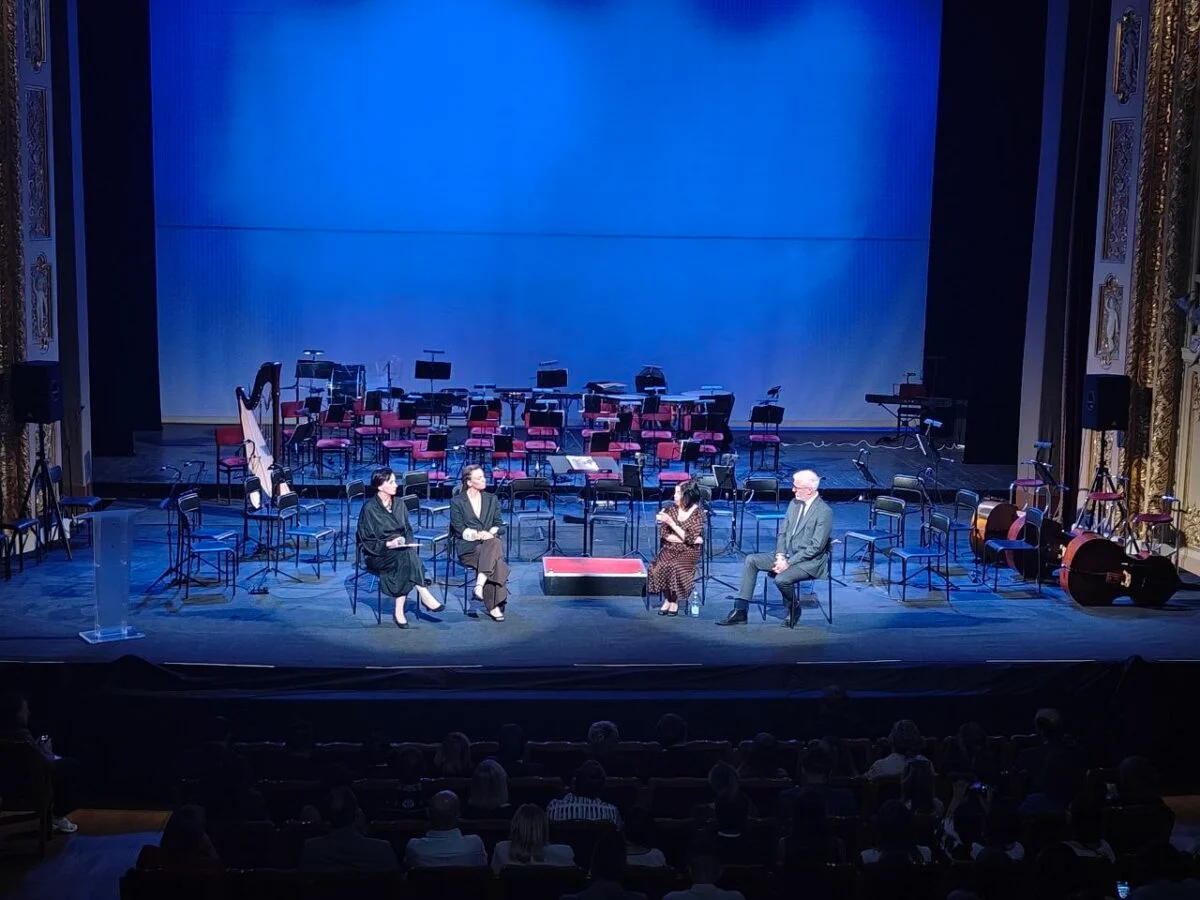
We had several panels dedicated to Crimean Tatar studies and Crimean Tatar topics in general. The Crimean Tatar language was spoken during the opening ceremony. To be precise, everything spoken on stage by the presenters was dubbed in two languages — Ukrainian and Crimean Tatar.
And this was a very, very important political statement. Because we must not view Ukrainian studies in isolation from the culture, language and history of other peoples for whom Ukraine is their homeland. After all, there is simply no other country in the world, apart from Ukraine, that would be willing and able to promote Crimean Tatar issues. We must understand and accept this reality as our duty.
But I would also like to remind you that there are other, albeit small, indigenous peoples of Ukraine who deserve attention. These are the Karaites, the Krymchaks and the Romani people. They, too, have no homeland other than Ukraine. I would therefore like to see these topics — namely, the language and culture of these ethnic communities — also represented at future conferences on Ukrainian studies.
In short, a typical pre-war congress of Ukrainian Studies Scholars pales in comparison to a conference on Ukrainian studies, as the latter offers at least three new ways of moving beyond established frameworks. These are: broadening the interpretation of the Ukrainian nation, moving away from classical academicism, and situating the humanities within the context of other disciplines. Is such a comparison inaccurate?
No, of course not; comparisons must be made, but we must also understand that we now live in different circumstances. In 2018, Ukraine was a different country, just as its role in global political and cultural processes was entirely different. Until 2018, we still lacked a clear sense of ourselves as a political nation that must unite and rise above everything that divides us, for the sake of collective defence and resistance against an external enemy. In other words, the congress of Ukrainian studies scholars presented a predominantly traditional view of Ukrainians as an ethnic community united by a single language, shared traditions and historical narratives. Today, such an approach seems somewhat anachronistic.
We have already touched upon the fact that this year’s conference was interdisciplinary, and so it featured panels such as ‘War and Society’, ‘Memory and Heritage’, and ‘Media and Propaganda’ — all of which went beyond the study of language. Which of these, in your opinion, was the most successfully executed?
I should add, however, that we also had ‘traditional’ Ukrainian studies panels — such as those on history, literature and translation. There was also a panel on various aspects of teaching the Ukrainian language around the world. After all, the central focus of Ukrainian studies remains the Ukrainian language and literature, and Ukrainian culture… But there were also panels related to geopolitics, the preservation of cultural heritage, cultural memory, and the politics of memory in general.
I’d like to talk about what I believe is one of the most pressing issues today. This is the problem of propaganda and countering propaganda. Yes, we discussed this topic as part of today’s Ukrainian agenda. The second point is the migration of Ukrainians and the formation of new Ukrainian communities around the world. We explored how the Ukrainian diaspora is changing and what networks Ukrainians are forming outside Ukraine, as well as how geopolitics and civil resistance intersect with these developments.
And, of course, it was very important for us to showcase the spectrum of Ukrainian studies around the world, in various regions — from Northern Europe to Southern Africa. A separate part of the programme was a series of 15 events, during which participants were able to present the activities of their Ukrainian studies centres or individual research projects being carried out by these centres. I would add that these 15 events attracted a great deal of interest, as they provided an opportunity to establish new contacts and initiate future collaboration.
So, we’ve discussed what the strongest aspects of Ukrainian studies are today. But what are its shortcomings?
Yes, the strengths are its interdisciplinary nature, multiculturalism and dynamism. And attracting new people with an interest in the field, and building networks of like-minded individuals. On the other hand, the shortcoming is a lack of financial support. As I’ve already mentioned, the conference took place thanks to the excellent synergy between state and non-state institutions. But I must admit that it was quite difficult for us to raise the funds needed to organise it.
We all understand that Ukraine is going through difficult times at the moment, and that funds must, first and foremost, be directed towards defence. But I would like to see, in future, that events such as the conference of Ukrainian studies scholars do not teeter on the brink of financial collapse. Because a financial cushion must be built up for the long term. In other words, not on the principle of ‘we’ve got some spare cash, let’s throw it at the conference’—no, this must be long-term planning. After all, let’s say we’re already starting to think about the next conference on Ukrainian studies.
I’ll quote your own question from the press release: ‘How do research into the Holodomor, knowledge of the deportations of the Crimean Tatars, or the scholarly analysis of Russian propaganda influence the decisions of governments and international courts?’ I see here an ambition to make Ukrainian studies an agent of influence on processes that are, on the whole, far removed from it as a discipline. But please answer the question I have just read out.
Of course, our most important goal is to preserve Ukraine, put an end to Russian aggression and bring its instigators to justice. But punishing the aggressor is impossible without evidence. That is precisely why we must gather, systematise and organise our case file of charges. And to do this, we need to investigate both the direct war crimes and the mechanics of propaganda — in other words, everything that lies behind these crimes and what prompted them.
As I see it, these are the pressing tasks that contemporary Ukrainian studies must set itself. We often hear the argument that Ukraine needs to be advocated for; well, Ukrainian studies is also a form of advocacy. It is not the same as, say, the study of ancient Roman or Sumerian-Babylonian civilisations. We cannot afford to adopt such a contemplative stance.
Because Ukrainian studies today is activism. We are engaged in work that has a real impact on world politics, that can have real consequences for criminals, and that can genuinely alter the balance of political power not only in our region but also globally. This is, in its own way, a dangerous and highly responsible undertaking. And, of course, everything we do must ultimately lead to the establishment of justice. For if we did not set this as our goal, then all our activities would be meaningless.
We’ve covered the ‘serious issues’. But if we take a break from lofty goals and pressing tasks, is there a particular image from the conference that would energise you (and us) with its vibrancy?
There is such an image (laughs). I can still picture our participants dancing Ukrainian folk dances on the lawn of the UCU campus during the conference’s closing ceremony. And the traditional music ensemble Dryg was playing for them as they danced. I know this image has stayed with many participants, because it was a symbolic coming together around Ukrainian culture of people from all corners of the world.
And it’s a very bright and warm memory… I also took great pleasure in the number of people — interested and inquisitive — whom I introduced to one another at this conference. I believe that these connections will go on to give rise to some new and important developments. And that, ultimately, is why we organised this conference.
We used to joke that it’s easy to board a ship that’s already been built and sail on from there. But now we have to build such a ship from scratch. Well, all right — not quite from scratch, but to refit it, to rebuild it from what was there before. So that after each subsequent conference, new people can board it and we can sail together towards our shared Ukrainian future.