






The structure of Ukrainian studies in Europe
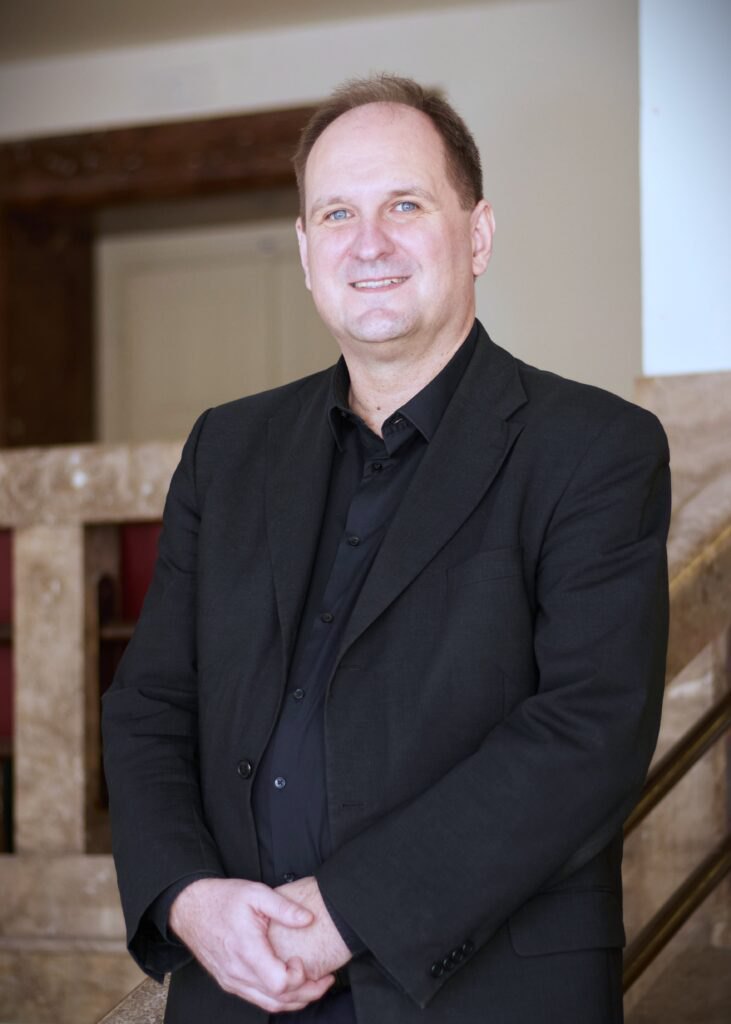
“In the process of mapping Ukrainian studies, we have come to the conclusion that the situation varies from country to country,” says Stanislav Tumis.
Firstly, there are long-established centres that have been operating for many years, particularly in Poland, where support is perhaps the strongest, and in the Czech Republic. There are also examples in South-Eastern Europe, such as Croatia, which has its own Ukrainian studies programmes. Hungary likewise has its own programmes. In other words, there are centres that already exist and are seeking to strengthen their position in the context of the war.
I would also include a number of countries in Western Europe. For example, INALCO in France has a strong focus on language and culture. In the United Kingdom, there are two key centres: the School of Slavonic and East European Studies at University College London, which has a well-established Ukrainian studies programme, and the University of Cambridge. Similar centres can also be found in other European countries.
These are the principal centres and, particularly in Central and South-Eastern Europe, they are characterised by a strong philological orientation.
This means that the primary focus is on language, literature and culture. History and other disciplines are largely absent from these programmes, although this has begun to change since the start of the full-scale war, with developments varying from one institution to another. This constitutes the first category.
The second category comprises universities where Ukrainian studies developed within existing institutes or centres that were primarily Russian- or Slavic-oriented, as was the case, for example, in Sweden. In such institutions, Ukrainian studies traditionally occupied a marginal position. Some courses were offered, with the extent of provision varying from one university to another. However, Ukrainian studies generally did not constitute a distinct specialisation and lacked systematic institutional support.
There is also a third category — the vast majority of European universities, where there was little or no provision related to Ukrainian studies. At most, one or two subjects might have been available. Following the start of the full-scale war in 2022, some of these universities sought to address this gap. For example, they introduced courses designed to familiarise students with Ukraine. However, these initiatives were generally limited in scope.
At the same time, individual academics made significant efforts to develop the field. Italy is a typical example: although Ukrainian studies were either virtually absent or very limited at many universities, a number of scholars worked to change that situation.
Naturally, the overall picture is also shaped by a weak financial base. At many universities, these disciplines remain underfunded, and there are too few staff members able to work systematically in the field.
“The state of Ukrainian studies that we observed was therefore not surprising; it largely corresponded to our expectations. That is why we have developed a set of recommendations aimed at improving the situation,” Tumis said.
What exactly do the researchers recommend?
Establishing a structured European network of Ukrainian studies
Short-term initiatives based on individual projects — which generate a brief period of activity before being discontinued — must become a thing of the past.
“At least one permanent department of Ukrainian studies should be established in every EU Member State (or, where appropriate, within regional groupings of smaller states). In Central Europe, given its specific geographical, historical and cultural context, the preservation and further development of more than one department or institute of Ukrainian studies is justified,” the document states.
“This is, of course, quite difficult to implement, as it requires substantial funding, particularly given the current lack of adequate support for the humanities. However, it is essential. The existing institutional framework must be strengthened through European grant policies. Momentum is needed both at the pan-European level and within individual universities,” emphasised Stanislav Tumis.
In his view, implementing such recommendations will require sustained lobbying at the level of the European Union. Ukraine could also play a more active role, for example through the Global Coalition for Ukrainian Studies led by Olena Zelenska, should this area become one of its priorities.
“There needs to be continuous work devoted to this field so that it does not remain merely a collection of isolated initiatives,” the researcher emphasised.
Increasing funding for Ukrainian studies as a priority for European and national institutions
Alongside long-term institutional goals, such as the establishment of permanent chairs and interdisciplinary programmes, universities and governments should also support measures that can be implemented immediately. These include visiting lectureships, specialised teaching modules, digital collaboration in teaching, bilateral agreements with Ukrainian universities, joint online courses and academic mobility programmes, the study’s recommendations state.
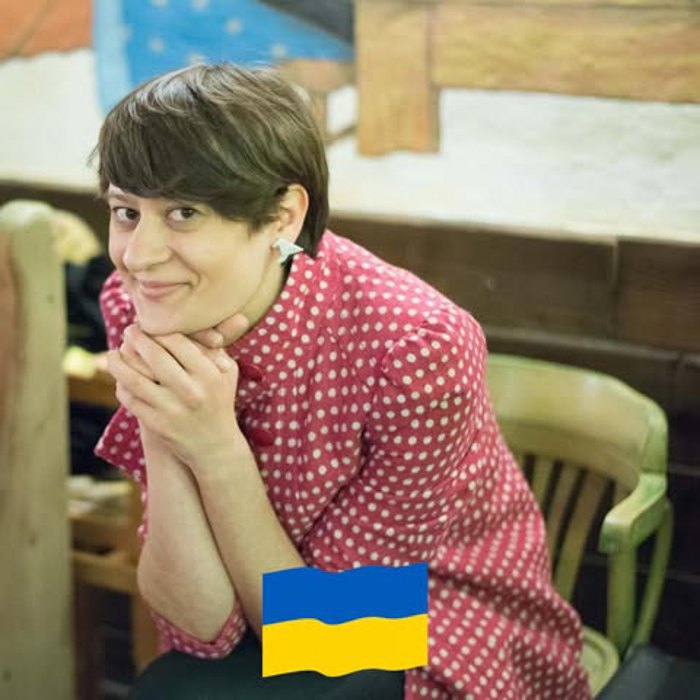
“Knowledge of Ukraine and Ukrainians abroad remains very limited. Much has been achieved: many new books have been translated, new collaborations with theatres and radio stations have been launched, and Ukrainian culture is being promoted increasingly actively. However, much remains to be done, as disinformation and fake news continue to circulate widely,” emphasised Kateryna Gazukina of the Prague Integration Centre.
“We have recommended involving Ukrainian colleagues based in Europe in both teaching and research. It is also important that Ukrainian studies does not remain solely philological in orientation. On the one hand, we should build on existing structures rather than start from scratch; on the other, we should broaden the philological component to include political science, historical and transnational perspectives,” noted Stanislav Tumis.
Making Ukrainian studies more practice-oriented
“When training specialists in Ukrainian studies at universities, it is important to focus on the practical dimension. After all, where will graduates with such qualifications be able to find employment? It is essential to understand career opportunities and to provide students with a solid foundation for the future,” said Kateryna Mychka, a PhD student in Ukrainian Studies at Charles University in Prague.
“We need to make Ukrainian studies much more attractive,” emphasised Stanislav Tumis. “We are therefore proposing an approach that is already common in many new educational programmes across the European Union — a stronger emphasis on practical experience. This includes, in particular, the introduction of work placements in non-governmental organisations (NGOs) and in a range of companies, both commercial and non-commercial.
It also includes placements in think tanks, research centres, integration centres and similar institutions. The aim is for students to engage directly with such organisations, with this experience forming an integral part of the curriculum. In this way, practical knowledge can be acquired through direct involvement and experience.”
The study itself sets out this approach quite explicitly:
“The entire curriculum should emphasise practical elements, in particular by complementing traditional lecture-based teaching with seminars, simulations, project-based learning, work placements, field research and collaborative formats that strengthen analytical, practical and professional competencies.
We also propose replacing the bachelor’s thesis with a system of continuous assessment, either through written examinations or a final comprehensive examination at the end of the programme. Alternatively, assessment could take the form of a long-term project, culminating in a public presentation and defence at the conclusion of the bachelor’s programme.
The Master’s programme, by contrast, should place greater emphasis on the development of research skills and the preparation of a final dissertation.”
Strengthening Ukrainian studies through new approaches
The shift of Ukrainian studies beyond a purely humanities-based framework and the acquisition of new competencies is perhaps the study’s most significant recommendation. It opens up new horizons for the discipline while aligning the interests of a broad range of stakeholders.
Stanislav Tumis explained it as follows:
“Given current developments and the way Ukraine is gradually assuming a more prominent role in European politics, particularly through its experience of war, an increasing number of European countries may find themselves learning from Ukraine rather than the other way around. That is one important factor.
Secondly, there are the negotiations on Ukraine’s accession to the European Union, which also play a significant role. In this context, we argue that Ukrainian studies is moving from a marginal position to a field of growing importance both for the European Union and for its member states. This is yet another argument in favour of strengthening it.”
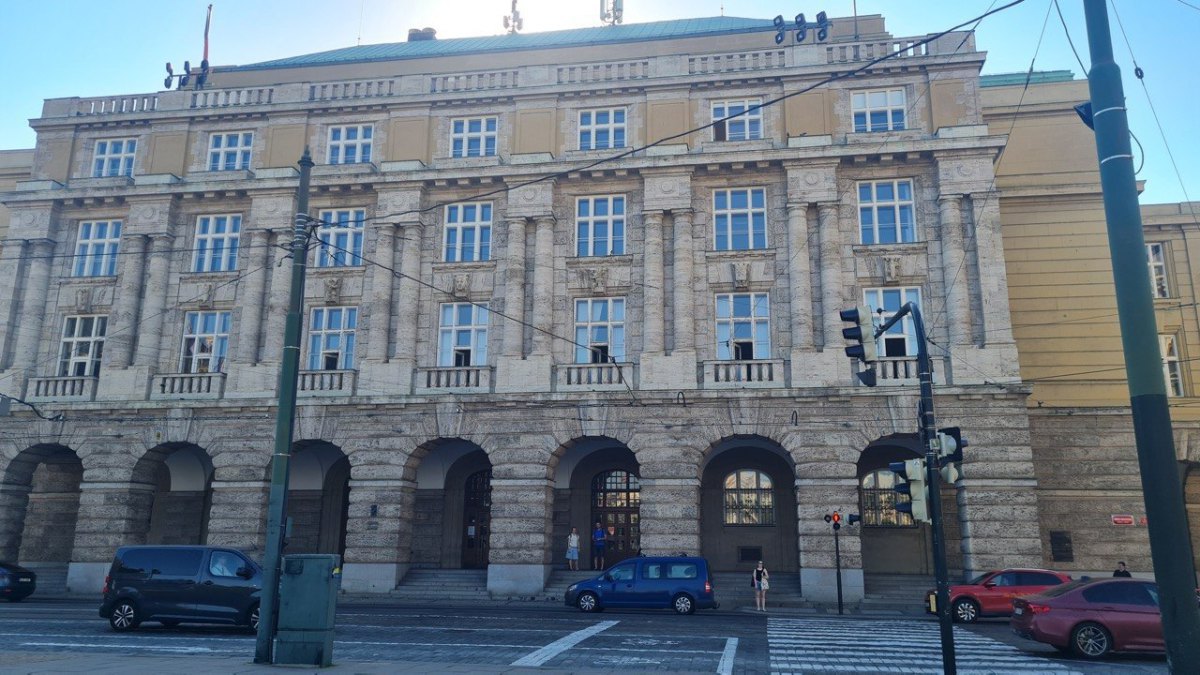
Interestingly, the presentation of the project at Charles University was not limited to graphs and statistical data. Instead, it evolved into a broader discussion of the Ukrainian question in Europe. This seemed to reinforce the idea that Ukrainian studies is already expanding beyond the traditional boundaries of the humanities.
“What is important in Ukraine today is energy, the integration of citizens — particularly internally displaced persons and those affected by the war – and addressing trauma, including, for example, through permaculture, the creation of gardens and allotments based on the principles of natural ecosystems.
Cross-sector cooperation between business, local communities and non-governmental organisations is vital, as are decentralisation, European integration, building partnerships and learning English.
“And for those living abroad, it is important not to lose their identity,” noted Lucie Řehoříková, a representative of the ‘Partnership for Ukraine’s Sustainable Recovery’ (P4UA) programme. In her view, Ukrainian studies in Europe cannot be separated from developments taking place in Ukraine itself.

The study’s recommendations on diversification and moving beyond a purely humanities-based approach state:
“This would also require expertise in post-war economic models, investment attraction, the recovery of key sectors such as energy, agriculture and technology, as well as the transparent management of reconstruction. Furthermore, Ukrainian studies should encompass the development of the European security architecture, the nature of modern warfare, including lessons learned from Ukraine’s experience, the integration of the defence industry and the long-term stability of the region.”
The presentation on Ukrainian studies in Europe concluded with a screening of the documentary film Hey, Czechs!. The film, which focuses on the war in Ukraine, recently won the Grand Prix for Best Documentary at the Adriatic Film Festival in Italy. It was also nominated for a Czech Lion Award for Best Short Film.
The documentary, which portrays life in Ukraine amid shelling and constant danger, was directed by David Van, while the humanitarian mission to Ukraine during filming was led by journalist Martin Oknecht, fundraising coordinator for the initiative ‘Help Ukraine together with Paměť národa’.
“The future development of Ukrainian studies in Europe should not be understood merely as the expansion of an already small academic field, but as the creation of a sustainable European knowledge infrastructure capable of responding to the political, social, cultural, economic and security challenges associated with Ukraine and the wider Eastern European region in the 21st century,” the study emphasises.