





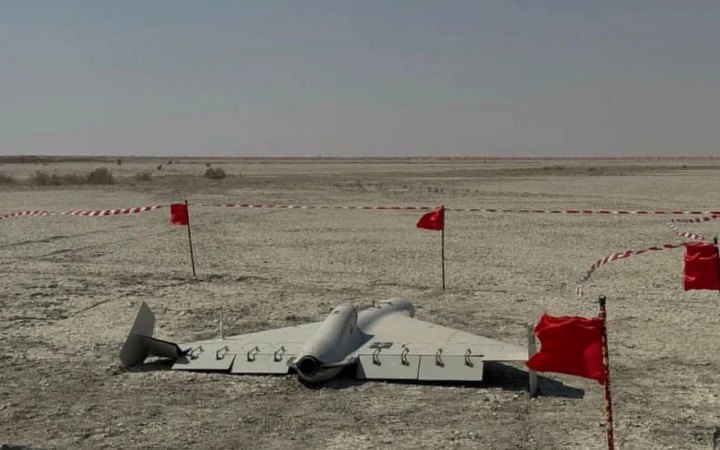
This year, Russia began actively using Shahed-type drones with turbojet engines instead of propellers. They are three times faster than earlier versions. This is the latest innovation in the field of kamikaze drones and, like others, it has been made possible only thanks to supplies of engines from China, The Wall Street Journal reports. The newspaper spoke with Ukrainian specialists who are studying these drones.
China’s Ministry of Foreign Affairs did not respond to a request for comment. Previously, Beijing had insisted it strictly regulates exports of “dual-use” components.
The Chinese company that, according to the Ukrainian government, manufactures these turbojet engines — Telefly Telecommunications Equipment — was founded in 2010 in the southern Chinese commercial hub of Shenzhen. It mainly produces computer equipment and communications devices, but also sells its own line of micro turbojet engines — small engines used in drones. Telefly did not respond to a request for comment.
After Ukraine disclosed the discovery of Telefly engines in Russian drones, the section on turbojet engines disappeared from the English-language pages of the company’s website. It can still be found on its pages in Chinese and other languages, as well as from other Chinese sellers online.
“For a long time, everything in Shahed production came down to getting Western parts. A lot of emphasis was placed on that,” said Kerry Bitsov, a former US Treasury Department official. “Now, I think that has changed, because China has become better at producing such parts and technologies.”
Russia sometimes launches Shaheds, which it calls Geran, in the same attack as ballistic missiles in order to overwhelm air defences. The missiles have greater killing power and accounted for a significant share of the deaths during the attack on Kyiv on 2 July, when jet-powered UAVs were used. But Shaheds are cheaper, and they can be sent in far larger numbers, wearing down Ukraine’s air defences.
Ukrainian President Volodymyr Zelenskyy separately highlighted Russia’s use of Shaheds with turbojet engines after the 2 July attack. Typically, Ukraine manages to destroy more than 90% of the older kamikaze drones launched by Russia. But the new turbojet models can pull away from Ukrainian interceptor drones, and have to be shot down by fighter jets or by a limited stock of interceptor missiles, Ukrainian officials say.