






The Iraqi armed forces had pre-prepared launch sites, mobile launchers on MAZ-543 chassis, and their own modifications of both the chassis and the missiles. After the air campaign began on 17 January 1991, Iraq responded with missile strikes on Israel (around 38–42 missiles), Saudi Arabia and other Gulf states (around 41–46 missiles) in an attempt to provoke an Israeli response and split the coalition.
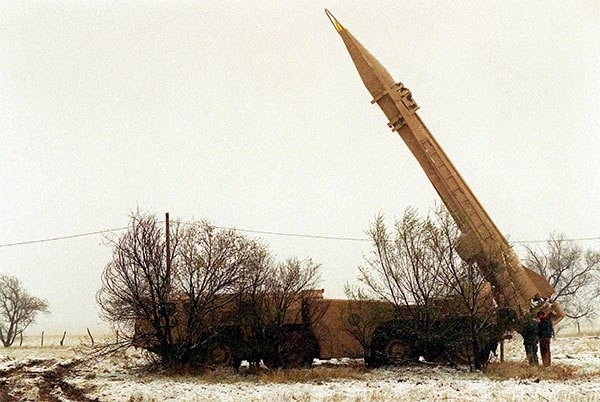
The 8K14 missiles were inaccurate (deviation of up to 600 m), but their use had a powerful psychological and political effect. On 25 February, one missile hit a barracks housing US troops in Dhahran, killing 28 service personnel. Overall, Iraq carried out around 88 successful launches (some sources cite 93). The Iraqis employed highly effective tactics: the launchers moved mainly at night, carried out rapid launches (10–15 minutes) and withdrew, concealed themselves, made skilful use of terrain, deployed high-quality French-made decoy mock-ups, and kept radio traffic to a minimum.
The international coalition began hunting Iraq’s missile forces. In the first days of the campaign, coalition forces attacked all known launch sites (around 25), shelters, production facilities, and missile-fuel storage locations. Strikes were also carried out against suspected sites (bridges, overpasses, culverts, wadis). But Iraqi missile attacks continued. There was a need to create and deploy a missile defence system.
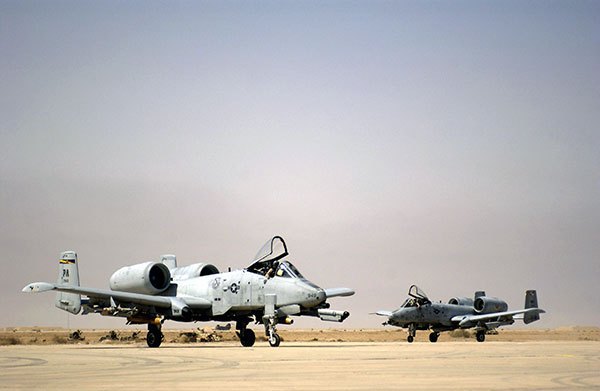
Iraq was divided into special zones (“Scud boxes”)—western Iraq, from where launches against Israel were carried out, and the south. Daytime patrols were mainly flown by A-10 aircraft; night patrols by F-15E jets with the LANTIRN infrared navigation and targeting system, as well as F-16s, British Tornados, A-6s and others. DSP early-warning satellites were used extensively, along with TR-1 and U-2 reconnaissance aircraft; later J-STARS, infrared and radar sensors were added. Between 1,500 and 2,500 sorties were flown on counter-missile missions (5–15% of the total sorties during the air campaign).
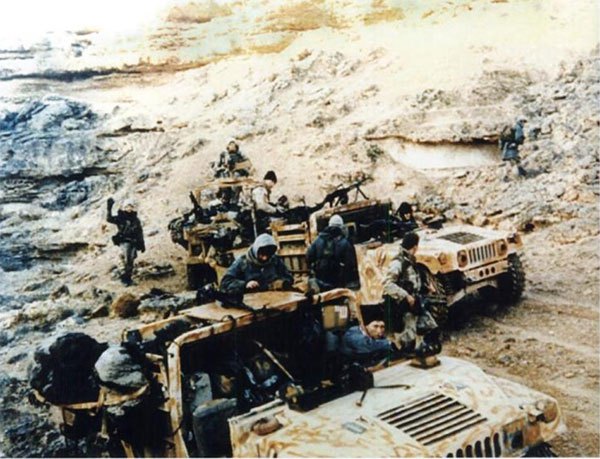
From late January to early February, groups from the British SAS and the US Delta Force (1st Detachment), supported by the 160th Special Operations Aviation Regiment, entered western Iraq (the “Scud Alley” and “Scud Boulevard” areas). Operating on foot or in vehicles (Land Rover, Humvee, Pinzgauer), they conducted reconnaissance, directed air strikes, set ambushes, and attacked logistics and command posts. The groups were inserted by helicopter hundreds of kilometres deep into Iraqi territory.
Patriot air-defence batteries provided cover against missile strikes in Saudi Arabia and Israel. Early warning from satellites made it possible to respond in time. Patriot’s effectiveness was presented as high, but after the operation the figures were revised downwards.
The operational and tactical results of all these actions were limited. During the operation, pilots and special forces reported the destruction of dozens (more than 80–100) of mobile launchers. Post-war assessments by the Pentagon, the Gulf War Air Power Survey and the UN Special Commission showed that there were virtually no confirmed destructions of mobile launchers. Many “destroyed” targets turned out to be decoys, ordinary lorries, or other objects. Iraq retained a significant part of its missile potential: dozens of ready-to-use Al-Hussein missiles and a substantial number of launchers (estimates vary, but no fewer than 10). Fixed sites and the production of missiles and missile equipment suffered more heavily.
Lessons learned from Desert Storm:
• ballistic missile launchers in desert terrain are extremely difficult to find and destroy even with absolute air superiority;
• better sensors, real-time intelligence, and integration of special operations forces and aviation are needed;
• expectations about the “body count”—that is, counting casualties and damage—must be realistic.
The 1991 experience strongly influenced the subsequent development of missile defence and tactics for hunting mobile launchers.
Better than anyone else, this homework was done in Kolomna, at JSC Research and Production Corporation Design Bureau of Mechanical Engineering. The bureau developed the Tochka 9K79 tactical missile system, its modernised Tochka-U variant, the Oka 9K714 operational-tactical system (destroyed under the INF Treaty, and one that genuinely terrified NATO), and the Iskander 9K720 operational-tactical system. The Design Bureau of Mechanical Engineering is also involved in developing the Kinzhal missile. Ukraine’s Defence Forces are aware of this, and on the night of 10–11 November 2023 the facility was visited by a helpful drone. Later (in 2024–2025), attempts at sabotage and assassination plots targeting the bureau’s leadership were reported—but that was not us.
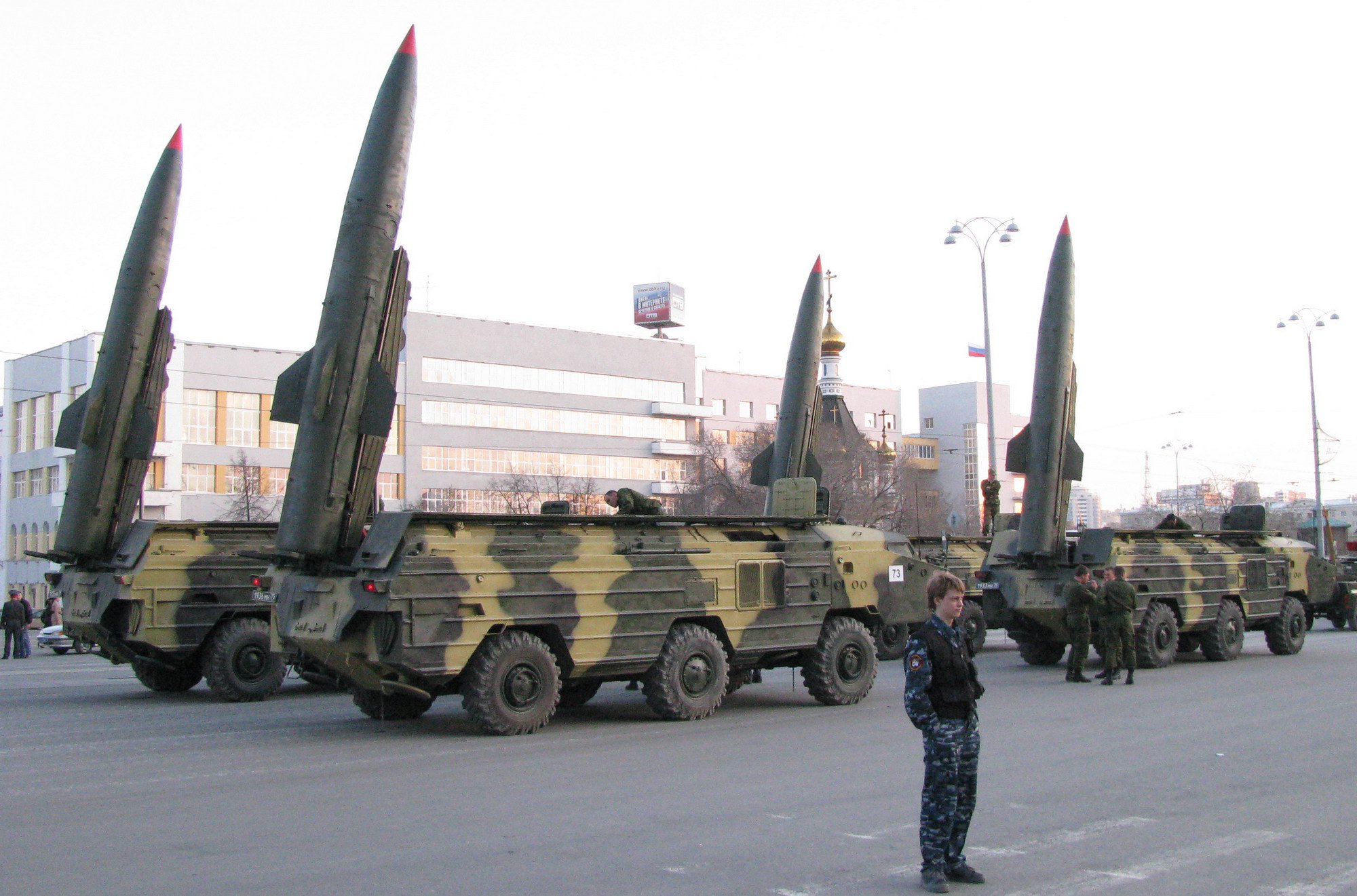
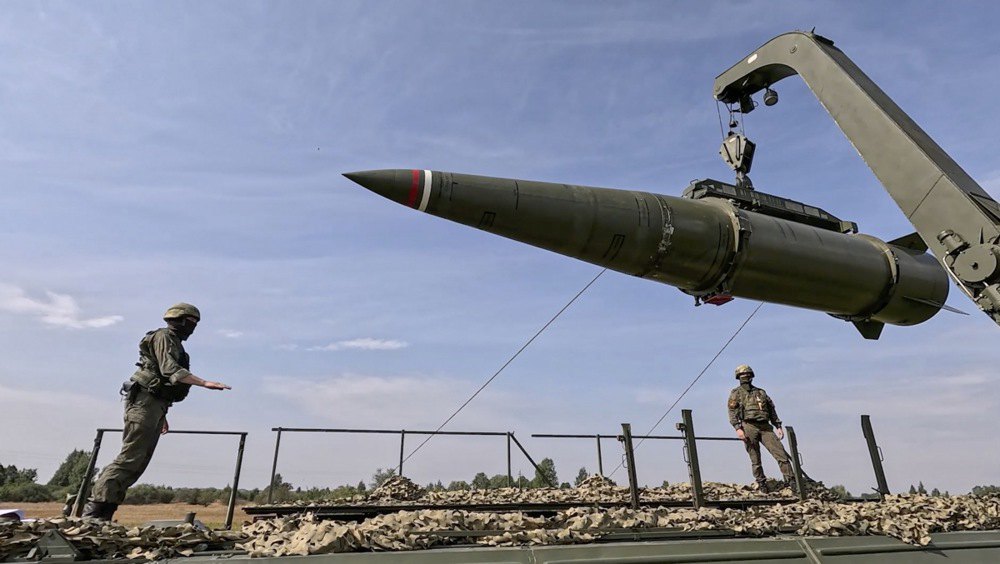
The lesson learned led to a decidedly non-trivial solution: the designers offered the Russian army a “missile brigade” package—meaning the army receives, in one go, a set of 51 vehicles, including 12 9P78-1 self-propelled launchers (on the MZKT-7930 chassis), 12 9T250 transporter-loader vehicles (also on the MZKT-7930, with a crane for reloading missiles), 11 9S552 command-and-staff vehicles (on a KamAZ chassis), a 9S920 information preparation point, a maintenance and technical servicing vehicle, and 14 life-support vehicles (guardroom, canteen, bathhouse, etc.). There are 16 armies in the Russian armed forces; missile brigades exist in each, except the 51st (the so-called “Donetsk People’s Militia”) and the 3rd (the same kind of “people’s” formation, only “Luhansk”). There were rumours that a fourth battalion is being added to brigades. No one has confirmed it yet, but the equipment and missiles would have to be assembled from somewhere—something that looks problematic today for the enemy’s defence industry.
Clearly, they will not drag such expensive equipment into the immediate area of operations, and they also need to keep something in the east of the country. Most likely, the enemy’s army missile brigades operate in rather odd ad hoc tactical groups, built around a missile battalion reinforced with 9S920 vehicles, a maintenance and technical servicing vehicle, and other life-support vehicles. Note that without the 9S920, preparing flight missions for missiles is difficult and slow, and automatically transmitting them to the launchers is impossible. The same applies to the maintenance and technical servicing vehicle: a missile will not fly without checks carried out in that vehicle. These are the first two critical pain points to look for. The remaining targets in this pack are the main armament of a standard missile battalion: four 9P78-1 self-propelled launchers and four 9T250 transporter-loader vehicles. The battalion has eight missiles on the launchers and another eight on the transporter-loaders—16 in total—meaning eight missiles in the first salvo and another eight in the second.
So where do you look for this menace?
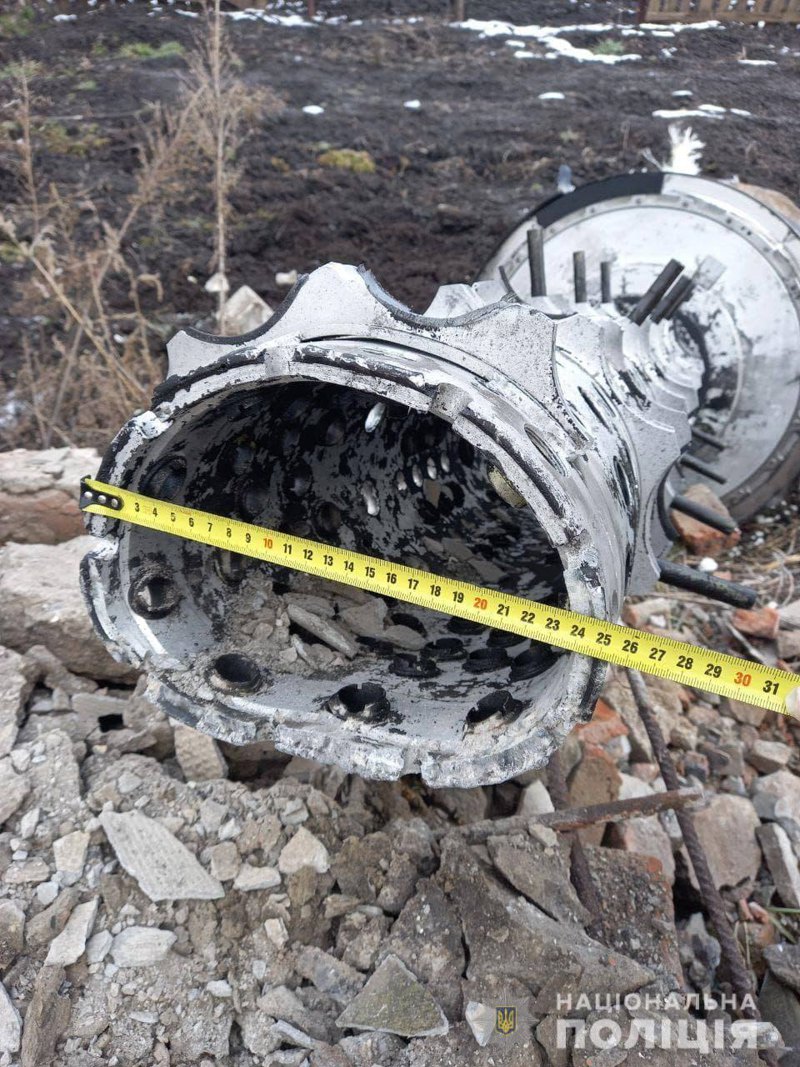
The officially stated maximum range of the 9M723 ballistic missile is up to 480 km (up to 700 km with a lighter warhead). The 9M728 and 9M729 cruise missiles are officially said to fly the same 480 km, which complies with the USSR–US Intermediate-Range Nuclear Forces Treaty, but there is a view that the Russians are lying and that the 9M729 can fly up to 2,000 km. Perhaps that is why the United States withdrew from the treaty on 2 August 2019 and is working on its own Long-Range Precision Fires programme to replace the ageing ATACMS.
In practice, most of Ukraine’s territory (with the exception of Trancarpathian Region, parts of Lviv Region, Ivano-Frankivsk Region, and Chernivtsi Region when launches are made exclusively from standard positions) lies within the potential strike zone when launches from different directions are combined. The flight time of ballistic missiles ranges from 1–2 minutes (border cities such as Kharkiv or Odesa during strikes from Crimea, when the missile explosion comes before the warning siren) to 5–7 minutes (deeper rear areas).
From launch areas in Kursk and Bryansk Regions, the enemy can cover all of northern and central Ukraine and a significant part of the east: Sumy, Kharkiv, Chernihiv, Poltava, Kyiv, Cherkasy, and partly Dnipropetrovsk and Kirovohrad Regions. From Rostov Region they strike the east and south: Donetsk Region, Luhansk Region, Dnipro, Zaporizhzhya, partly Kharkiv Region and the south. From Crimea they strike the south and south-west: Kherson Region, Mykolayiv Region, Odesa Region, Zaporizhzhya, partly Dnipropetrovsk Region and areas deeper in Ukraine’s rear.
All sensible missile crews constantly change their exact positions, all the more so because the systems’ mobility allows it. The enemy is well camouflaged and operates exclusively in dispersed formations.
The main areas from which Iskander operational-tactical missile systems are launched at Ukraine are Russia’s border Regions and temporarily occupied Crimea. Analysis shows that the 448th Missile Brigade of the 20th Army (the last to re-equip with Iskander) has deployed its launch areas in Kursk Region (around the villages of Shumakove and Cheryomushki, and the town of Shchigry). This is one of the most active directions, from which strikes are mainly carried out against Sumy Region, Kharkiv Region, Chernihiv Region, Poltava Region and sometimes deeper.
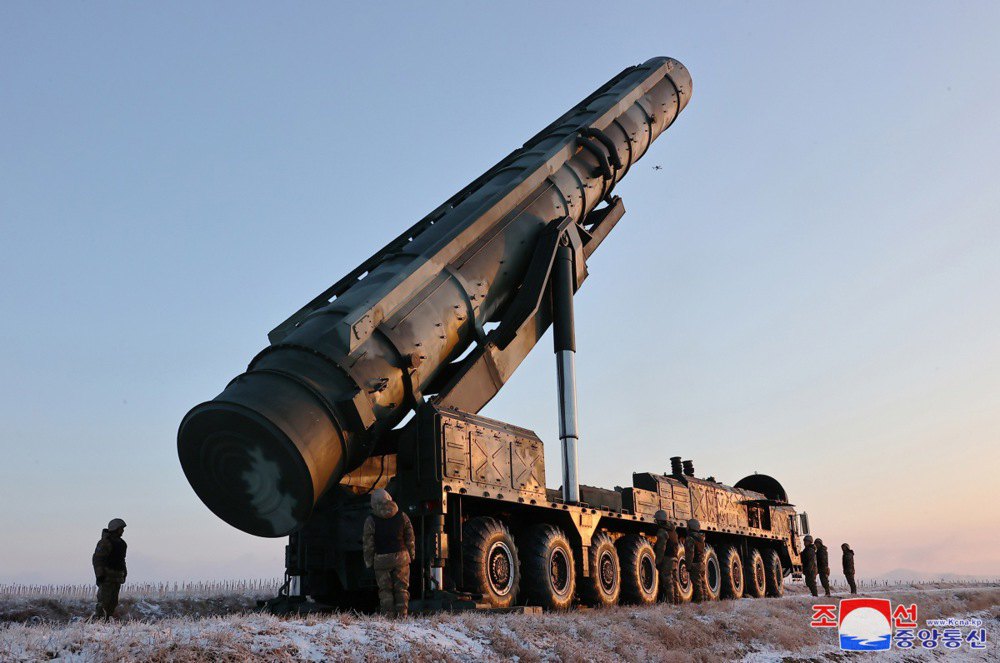
In Bryansk Region, from a launch area near Klintsy and other border locations, the 112th Missile Brigade of the 1st Tank Army fires at Kyiv, Chernihiv, Sumy and other regions of northern and central Ukraine (the brigade still needs to be verified; it has also been seen in Voronezh Region, and Koreans have arrived—six Hwasong-11S operational-tactical missile system launchers, a kind of North Korean Iskander).
From Rostov Region, from launch areas near Taganrog and Millerovo, the enemy’s 47th Missile Brigade of the 8th Army fires at southern and eastern Ukraine (Dnipro, Zaporizhzhya, Donetsk Region, etc.).
In temporarily occupied Crimea, launch areas have been spotted around Novoselivske, Cape Tarkhankut, in Kozacha Bay (near Sevastopol), and near Simferopol. From here, the 1st Missile Brigade of the 49th Army can reach southern Ukraine (Odesa, Mykolayiv, Kherson, Zaporizhzhya) and deeper targets. There have also been reports of combat activity by the 12th Missile Brigade of the 58th Army. Both armies are conducting an operation in Zaporizhzhya Region, so it is not surprising that their missile brigades are in Crimea. The 15th Coastal Missile Brigade fires Oniks missiles at Odesa and other cities, but for now it lies outside the scope of this publication.
Launches have also been recorded from Belgorod and Voronezh Regions, and Krasnodar Krai. But the main combat launches take place from areas close to the border (often 100–200 km from the line of contact), which differs significantly from the tactical standards set out in the relevant manuals.
So it becomes clear that finding an operational-tactical missile system launcher in position is extremely difficult—something confirmed by the international coalition’s experience in Iraq. The search is complicated by Ukraine’s lack of a national system for early detection and warning of missile attacks, the inability to maintain round-the-clock aerial surveillance of the airspace over likely launch areas on Russian territory, and the inability to deploy a significant number of Special Operations Forces units there.
Simply switching on Starlink, even over Russia’s border areas, will not solve it. Unconventional steps are needed.