





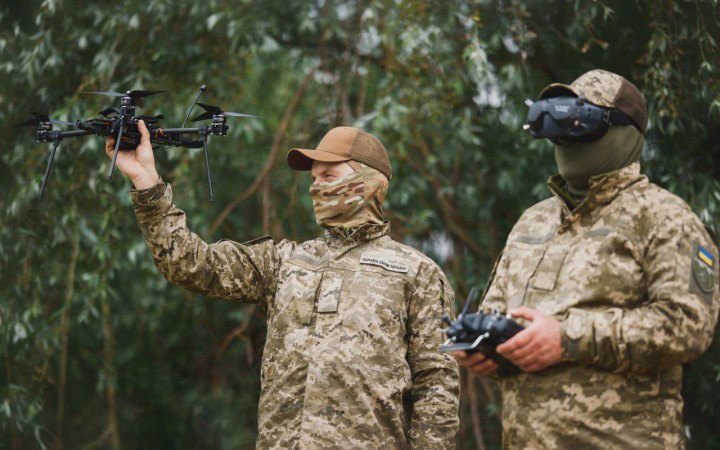
The Brave1 defence cluster, together with the Main Directorate for Defence Innovations of Ukraine’s Ministry of Defence, conducted large-scale trials of modules for automatic drone re-targeting on moving ground targets. Brave1 and the Ministry of Defence reported this.
According to Brave1, this was the first test of the technology on such a large scale under a single scenario. The trials used multirotor drones larger than 10 inches, with a payload of at least 2 kg. The unmanned aircraft had to fly 2 km, independently acquire a moving target at a distance of more than 500 metres and strike it without operator involvement — at that moment, the pilot took their hands off the controller.
Each team had up to three attempts. To pass the trial successfully, the target had to be hit at least twice out of three attempts. Six of the seven companies passed the trials successfully. They received recommendations for procurement.
Brave1 noted that the strategic goal is to maximise the rollout of automatic re-targeting technologies based on artificial intelligence and machine vision across the armed forces.
“At the same time, the Ministry of Defence and Brave1 adhere to ethical principles for the use of AI in defence. Artificial intelligence helps increase the effectiveness of strikes against the enemy, but the decision to employ it is made by a human,” the Ministry of Defence said.
As a reminder, the Defence Forces use more than 70 types of systems based on artificial intelligence and machine vision technologies to engage enemy targets.
“At present, more than 200 companies in Ukraine are producing AI drones. And on the state defence technology marketplace Brave1 Market, defenders have access to 46 AI developments, including target recognition modules, optical stabilisation and automatic re-targeting,” the Ministry of Defence reported.