





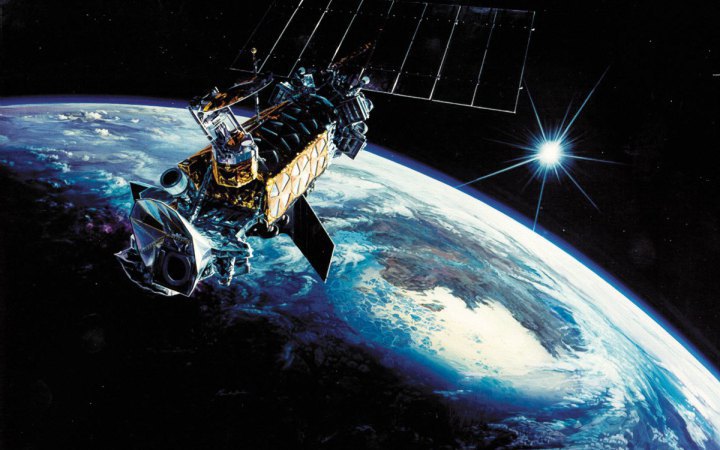
US company Antares has won a US Air Force competition to build a demonstrator space nuclear reactor and will receive $161 million for its development.
This is reported by Militarnyi, citing a company press release.
As part of the programme, Antares will carry out a ground demonstration of the R1-S reactor, after which it will integrate it with a spacecraft to undergo flight certification. Potentially, this could culminate in launching the reactor into space.
The technical specifications of the R1-S have not yet been disclosed. It is known that the ground-based R1 family of reactors uses HALEU fuel in the form of TRISO particles, a graphite core, sodium heat pipes and a closed Brayton cycle with nitrogen.
For the R1 family of reactors, Antares claims electrical output from 100 kW to 1 MW and a service life of more than six years. At the same time, these characteristics cannot be directly applied to the space-based R1-S.
Read alsoRussia and China are expanding their nuclear arsenals: the number of deployed warheads worldwide has increased
The company also plans to use the Mark-1 reactor to power an unnamed “operational ground-to-space facility”. This likely refers to infrastructure to support space operations, but Antares does not specify its purpose.
On 4 June 2026, the Antares Mark-0 microreactor achieved criticality for the first time in Idaho as part of the US Department of Energy’s pilot reactor programme.
The Mark-0 was a zero-power reactor and did not generate electricity. It was used to verify core physics, reactivity margin, control systems and emergency shutdown.
In 2027, Antares plans to test the Mark-1, which is expected to operate for more than six months together with an energy conversion system based on a closed nitrogen Brayton cycle.
The United States is simultaneously developing space nuclear power programmes for scientific, research and military tasks.
The NSTM-3 initiative, approved in April 2026, provides for the creation of low- and medium-power reactors for operation in orbit and on the Moon’s surface. In the 2030s, systems with a capacity of at least 100 kW are planned to be deployed.
NASA and the Pentagon will run separate competitions but, where possible, will use shared design solutions, nuclear fuel, energy conversion systems and ground infrastructure.
The first flight demonstration is expected to be Space Reactor-1 Freedom. NASA plans to launch it to Mars in late 2028. The HALEU-fuelled reactor is to produce 20 kW of electrical power and supply a 12 kW Hall thruster.
The next project is expected to be Lunar Reactor-1, which NASA and the US Department of Energy plan to prepare for launch in 2030. It is intended to provide lunar infrastructure with electricity for at least five years regardless of lighting and temperature.
A separate programme is being implemented by the Pentagon. Subject to funding, by 2031 it plans to deploy a medium-power reactor for an unnamed military space mission.