





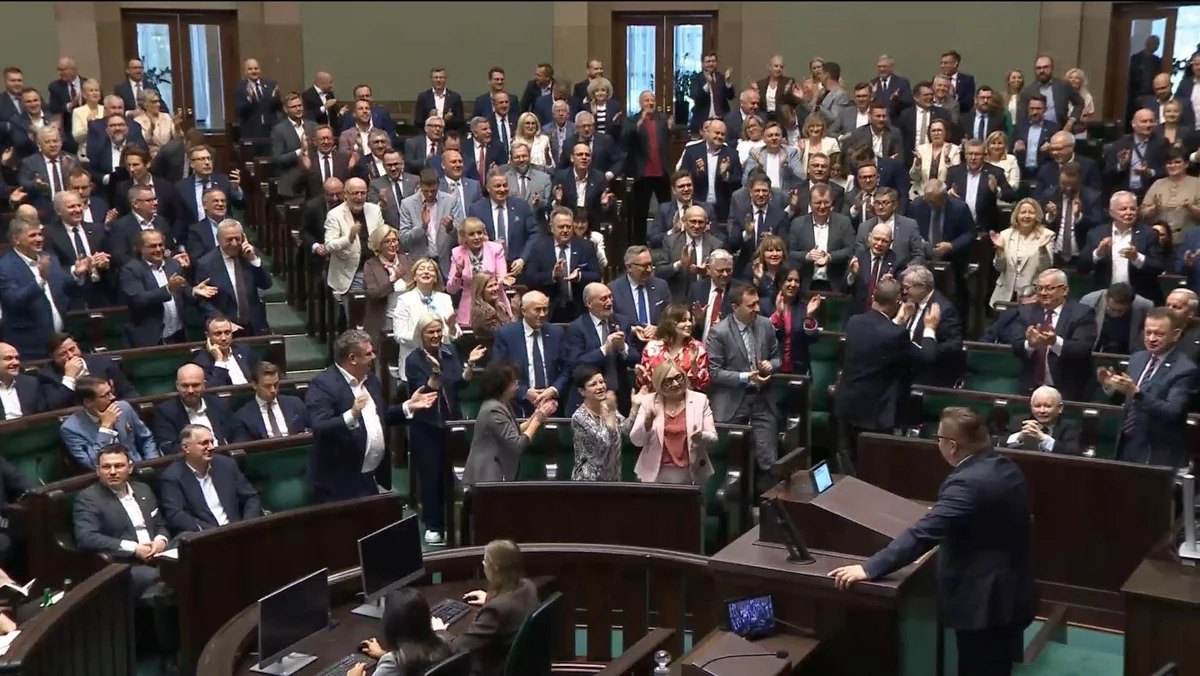
In their written appeal to Donald Tusk’s government, the initiators mention Poles living in Lviv who are seeking to preserve their national identity but do not feel supported by the Ukrainian state. In justifying their request, the signatories appeal to the “Polish history of the city”. The MPs also cite, as an example, the celebration of Ukraine’s Independence Day in Warsaw, which took place on 24 August. In the authors’ view, the march should include Poles living in Lviv as well as representatives of the Polish authorities.
The appeal for a march in Lviv was signed by representatives of parties that do not shy away from voicing historical claims against Ukraine. They threaten to block Kyiv’s Western integration. They dictate what history we should study and which heroes we should honour. And instead of an adequate dialogue about the past, they have chosen the language of blackmail and manipulation. Even so, judging by the reaction of the heavyweights of Polish politics, the idea of a march in Lviv has so far failed to generate much enthusiasm even within right-conservative circles.
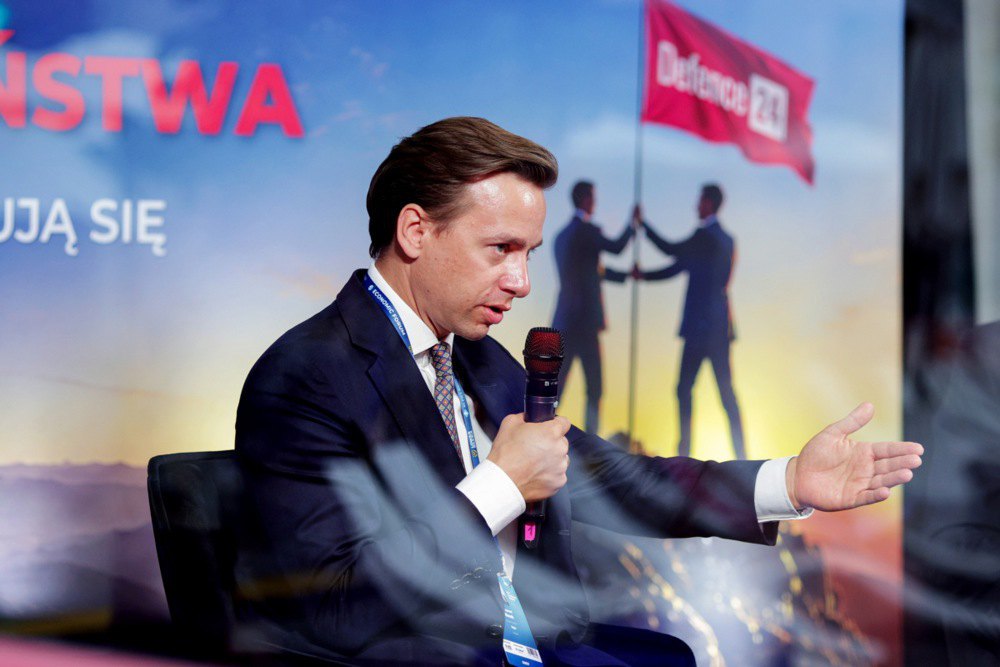
Although the initiative’s author is Law and Justice MP Dariusz Matecki, the letter does not bear the signatures of right-wing leaders. Neither Jarosław Kaczyński, nor Sławomir Mentzen and Krzysztof Bosak, nor Mateusz Morawiecki, nor Grzegorz Braun had, as of 17 September, officially stated that they support holding the march. What is more, Confederation co-chair and Deputy Speaker of the Sejm Krzysztof Bosak called the idea unnecessary and strange. Speaking to journalists, he said that at first he did not understand what it was even about. The politician also added that if any celebrations of Polish Independence Day were to be held in Ukraine, they should take place in Kyiv. And the MPs’ appeal should be addressed not to the Polish government but to the Ukrainian one. In general, he said, he has more serious matters to deal with than discussing such an idea from parliamentary colleagues.
In effect, the initiative for a march in Lviv has remained at the level of Sejm MPs, while the leadership of right-wing parties has either distanced itself from it or simply stayed silent. This differs from situations in which party leaders, on the contrary, promote and support proposals from their rank-and-file members.
By contrast, members of Donald Tusk’s governing coalition did not hide their irritation at the adventure of organising a Polish march in Lviv. Poland’s Deputy Defence Minister Cezary Tomczyk called the right-wing MPs’ idea of a march in Lviv madness. He suggested imagining what it would be like if Poland’s western neighbours wanted to hold a similar march in Warsaw. Dariusz Wieczorek of the Left added that his political force is not planning any events in Lviv on 11 November. He described the very idea of the march as a provocation and also suggested that Grzegorz Braun represents a pro-Russian political force.
Polish People’s Party MP Marek Biernacki also did not hide his outrage at plans to hold a Polish march through the streets of Lviv. He said he was “shocked by the madness that has gripped the Polish political class”. He suggested that such actions could worsen Polish-Ukrainian relations. And the chair of the Polish Sejm’s Foreign Affairs Committee, Paweł Kowal (Civic Coalition), called the authors of the Polish march “provocateurs and fake patriots” whose actions could lead to a deterioration in international relations. In his view, these MPs are looking for an opportunity to join in a “Russian chorus”. He urged Poles to be more cautious of those who use patriotic rhetoric to cover other aims.
At the official level, Ukraine has so far not responded in any way to the initiative to hold a Polish march in Lviv. And that is clearly the right tactic. Taking provocative proposals seriously is a great honour for their authors. The only clear public position came from the civic organisation “Memory and Justice — Association of Descendants of Ukrainian Victims of Polish Repressions”. Its statement stresses that Lviv cannot be a platform for Polish political provocations. The initiative by the 21 Sejm MPs is described as “a political provocation that has nothing to do with good neighbourliness”. Members of the Association also ask the authors of the idea how they would feel about a Ukrainian independence march through the streets of Przemyśl or Chełm under the slogan of “honouring the Ukrainian history” of those cities. They call on the Polish government to reject this irresponsible initiative, and on the Ukrainian authorities not to grant permission for the march.
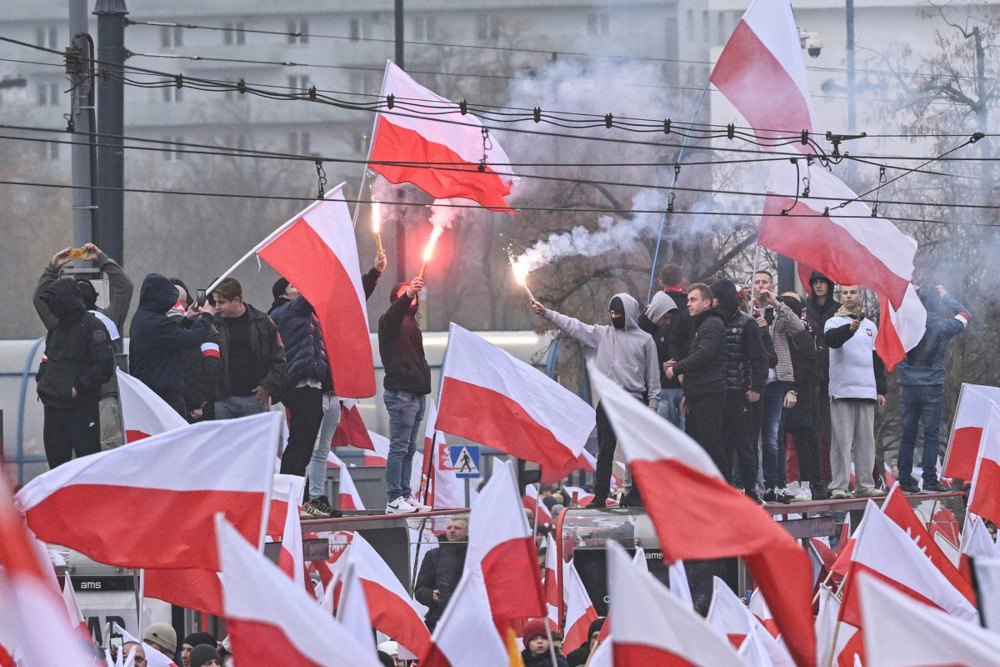
The potential consequences of a Polish march in Lviv on 11 November are clear. If it were to take place, such an event would become a powerful springboard for the far-right forces of the neighbouring country. The march would inevitably provoke a negative reaction from Ukrainian society. And it might even lead to civic confrontation on the streets of Lviv. Its symbolism lies not in demonstrating protection for Poles living in Ukraine, but in the fact that certain forces in Poland want to send a clear signal about Lviv as a historically Polish city.
The march would undoubtedly attract heightened attention from radicals, Ukrainophobes and provocateurs. And also from the Kremlin, which is genuinely interested in deepening contradictions between Poles and Ukrainians. A crowd under Polish flags marching through the streets of Lviv, chanting anti-Ukrainian slogans, vilifying Bandera, Shukhevych and the UPA — this is not a fantasy but an entirely realistic picture. You do not need to be an outstanding analyst to predict the consequences of such a spectacle.
It is striking that while proposing destructive ideas that will inevitably worsen Ukrainian-Polish relations, the Polish right for some reason reacts very sluggishly to Russian threats. On the day it became known about the Sejm MPs’ appeal, Russian President Vladimir Putin’s adviser Nikolai Patrushev said in an interview with the newspaper “Arguments and Facts” that if Poland entered a war against Russia, Moscow would use its entire arsenal of available means and Warsaw would fall in two or three days. The threats from the former secretary of Russia’s Security Council went unnoticed by the principled fighters for Polish history and identity on Ukrainian territory.
With a high degree of probability, it can be argued that holding a Polish march in Lviv will remain merely an idea. Even the leaders of Poland’s right-wing parties are not ready to publicly promote such an event. And members of Donald Tusk’s governing coalition are openly negative about the march and consider it a dangerous and senseless initiative. Even so, such proposals are capable of further deepening distrust between Warsaw and Ukraine. Polish politicians are playing with fire and crossing “red lines” as they try to win extra electoral points ahead of the Sejm elections due next year. Kyiv needs to be ready for new anti-Ukrainian speculation, which has become an element of Poland’s domestic discourse.