





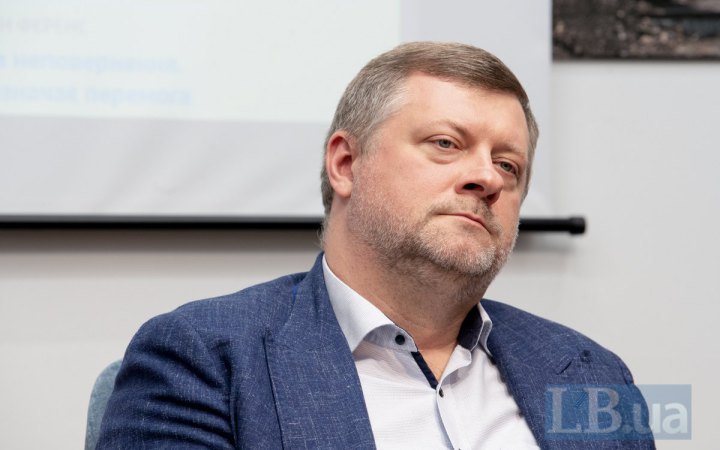
Ukraine has not heard calls from international partners for urgent elections for some time. First Deputy Speaker of the Verkhovna Rada Oleksandr Korniyenko said this in an interview with LB live.
He said the draft law on the first post-war elections is at an advanced stage in its technical aspects and in the work produced by the sub-groups. Political issues have not been resolved and will not be until the security situation improves and peace is guaranteed for a certain period.
Once these conditions are met, a substantive political discussion will begin. It had been planned for the autumn, before the situation with shelling in Kyiv worsened.
“I think that over time we will all in Kyiv, on the one hand, learn to live with all this, start using various underground halls and facilities more quickly, and also start intercepting more of the jet-powered Shaheds in the first place. And then perhaps deeper into the autumn we will return to these discussions. We will talk about it, but again, it will be more about theorising,” Oleksandr Korniyenko believes.
According to him, a significant number of MPs point out that it is currently unclear when elections will take place and under what external and internal circumstances. This affects their decisions on the system of parliamentary and local elections and even the question of the order in which elections should be held.
“A separate issue is security criteria. To hold them or not to hold them. We understand that there is, unfortunately, a high probability that a large part of Ukraine will remain under occupation. Elections cannot be held there. But a large part will also be in the so-called frontline zone, near the occupied areas. And it is also a big question whether democracy can be restored there quickly. We need to define correctly where this will be,” he said.
The Verkhovna Rada must set out the mechanism for assessing this boundary: who will assess the security situation and by what criteria. The discussion on this is also ongoing, although it is less politicised. At the same time, Korniienko does not rule out that politicisation will intensify when it comes time for decisions in the chamber. For now, there are two proposals: the first is for the Verkhovna Rada itself to determine this; the second is for the government to prepare the grounds and for the Verkhovna Rada to approve them by resolution.
- In March, OPORA network head Olha Ayvazovska said the draft law on the first post-war elections was 65% ready, and that finalisation would take at least a month and a half. However, as of now, 21 September, the draft law has still not been registered in the Rada.
- A separate draft law is being prepared to hold the first post-war elections, as they will not fall under any existing legislation.