





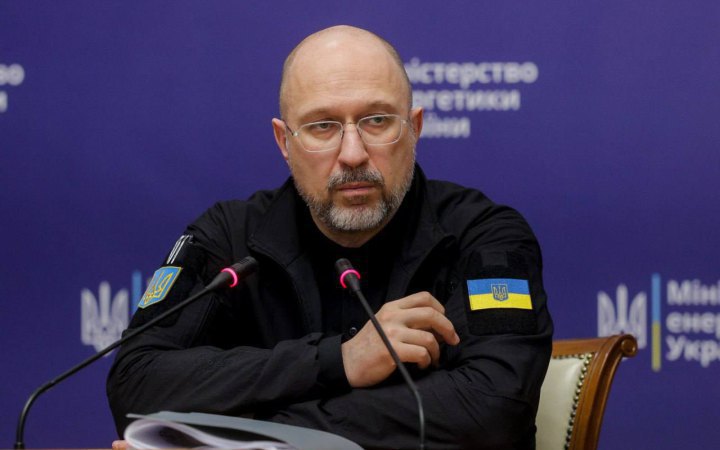
Ukraine’s First Deputy Prime Minister and Minister of Energy Denys Shmyhal showed partners in Paris two weeks ago a document according to which Russia is preparing large-scale strikes on Ukraine’s energy sector.
A copy of this document was obtained by The New York Times. Two sources told the newspaper that Shmyhal described the document as an intercepted Russian plan to destroy the energy system through systematic attacks.
It describes, the newspaper writes, a strike campaign using up to 1,000 missiles, drones and bombs. The targets are to include many facilities, in particular electrical substations, hydroelectric power plants, thermal power plants and boiler houses.
The document sets out three stages of attacks. The first envisages destroying substations near Ukraine’s western borders through which the country imports electricity from Europe. The second is to disable hydroelectric power plants. The third is the forced shutdown of three operating Ukrainian nuclear power plants. The enemy plans to launch missile strikes on the open switchyards that connect them to the power grid. These facilities are located close to the reactors.
According to the document, the aim of the attacks is to destroy almost 15 GW of generating capacity—roughly what Ukraine had at the end of the summer.
The plan also states that Moscow will attack Ukraine’s water supply system, including pumping stations and wastewater treatment facilities, using dozens of ballistic missiles and guided aerial bombs.
The ultimate goal of the attacks is to cut major Ukrainian cities off from electricity, heat and water, which could trigger a humanitarian crisis. The main targets are Kyiv, Kharkiv and Odesa. The plan envisages cutting electricity supplies to these cities by 90%, reducing heat supply by 90% and severely disrupting the sewerage system.
The New York Times was unable to independently verify the authenticity of the document. It is dated August and written in Russian. At the same time, Russian leader Vladimir Putin has publicly said his forces will carry out a large-scale campaign this winter to disable Ukraine’s energy infrastructure, calling it a response to Ukrainian strikes on Russian oil refineries.
A week ago, Shmyhal outlined the document in broad terms, saying that “our partners, like us, were struck by its cynicism, this cold terrorist calculation—how to destroy our energy system”.
Whether Russia will implement the strategy set out in the document, and whether it would succeed if Moscow tried to do so, is unknown.
Over the past few months, Ukraine has been preparing for winter by building protective structures over critical facilities.
The Ukrainian authorities have spent hundreds of millions of dollars repairing power plants and substations, as well as installing smaller energy facilities, including gas turbines that are harder to hit. Ukraine has also invested in strengthening the power grid so it can withstand winter loads and reroute electricity when transmission lines are damaged by attacks.
Energy experts warn that these measures may, at best, mitigate the expected blow, but not stop it.
In August, Shmyhal said that Ukraine would enter the winter well prepared. According to him, the country had about 15 GW of available capacity, and by the end of the year this figure was expected to rise to more than 21 GW. That, he said, would be enough to cover peak demand, which last winter reached about 18 GW.
- At the end of September, Russia had already attacked Kyiv’s energy sector and the surrounding region. In particular, generating equipment at the Trypilska thermal power plant was damaged.