





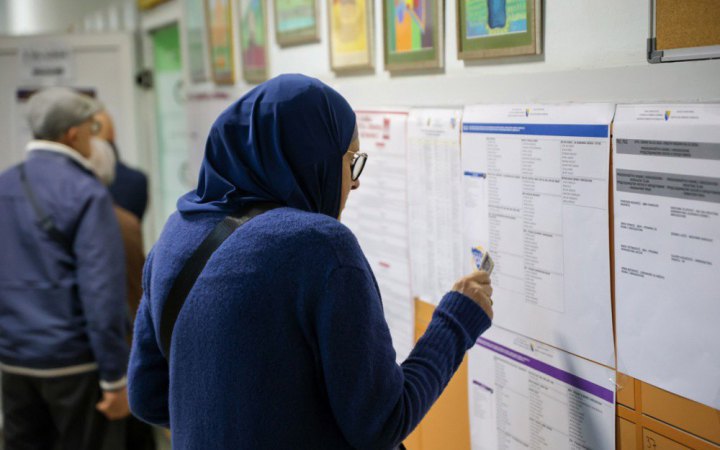
Elections began in Bosnia and Herzegovina on Sunday, with results that could determine the country’s future political course and the balance of influence between the West and Russia. One of the key issues is choosing a successor to the pro-Russian politician Milorad Dodik.
This is reported by the Financial Times.
Voters will elect representatives to three parliaments: Republika Srpska, the Federation of Bosnia and Herzegovina, and the state-level parliament. They will also choose three members of the country’s collective presidency and a new president of Republika Srpska.
Dodik’s SNSD party is facing one of its most serious challenges in recent years. Opposition forces have united around the candidate Branko Blanuša, who will take on the SNSD candidate, Republika Srpska Prime Minister Savo Minić.
According to a Metrics Consulting poll conducted in mid-September, Minić was ahead of Blanuša, 49% to 45%.
At the same time, Dodik’s party is likely to remain the largest political force in the Republika Srpska parliament, although it may lose some support and face difficulties in forming a coalition.
Milan Nič, a Balkans expert at the German Council on Foreign Relations, described the election as a potentially pivotal moment for Bosnia and Herzegovina. He said the outcome could determine how strongly the new authorities orient themselves towards the West and advance talks on EU accession.
Dodik, who has shaped Bosnian Serb politics for decades, is accused of seeking to secure Republika Srpska’s secession from Bosnia and Herzegovina. He also maintains close ties with Russia and regularly meets Russian President Vladimir Putin.
This week, Putin met with Dodik and Minić and expressed his support for them. According to the Republika Srpska government, the Russian president also promised to keep gas prices unchanged.
The political situation in Bosnia and Herzegovina remains unstable because of the complex system of governance created by the 1995 Dayton Peace Agreement, which ended the three-year war following the break-up of Yugoslavia.
Analysts warn that fresh political uncertainty could deepen instability across the region and complicate the European Union’s enlargement process.