“The Sea Brought Me Marusia Churai”
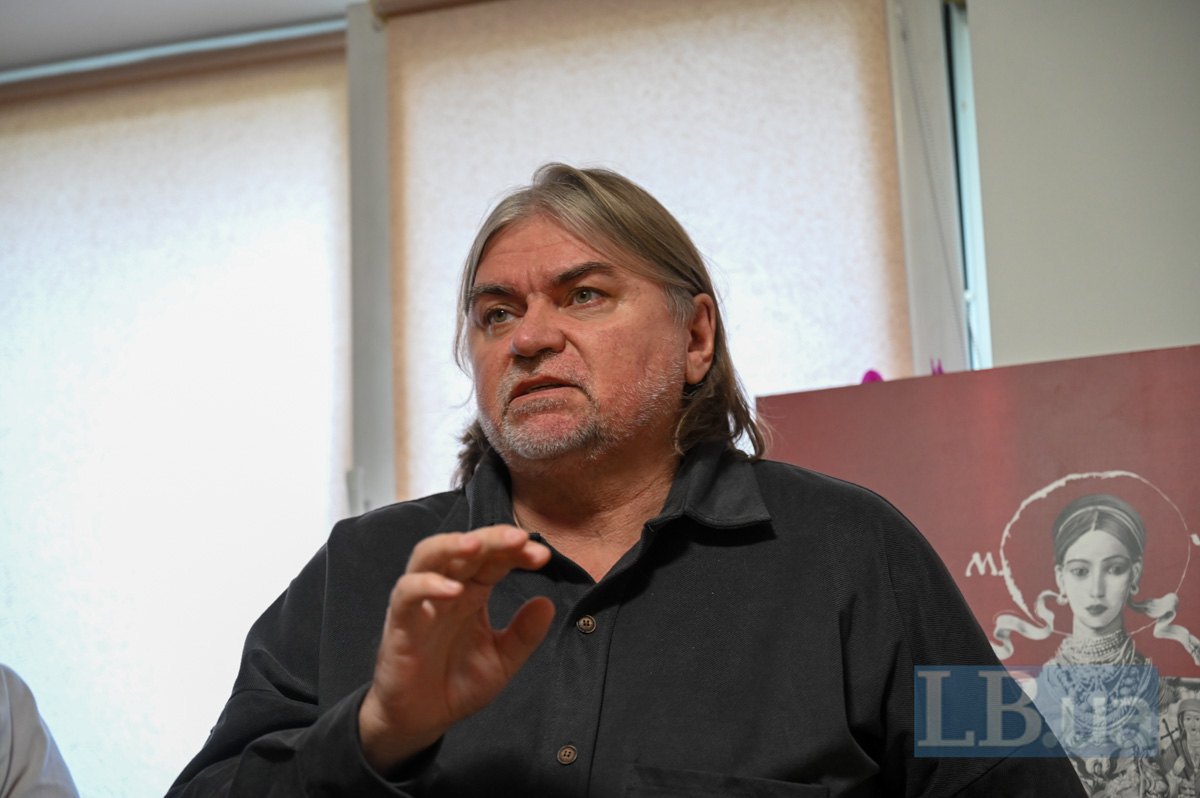
“Do you know how the idea of staging Marusia Churai came to me?” asks director Rostyslav Derzhypilskyi. “It was in Croatia. We were there with my family, and at first I wanted to stage Shevchenko. I was walking along the seafront, thinking. It started to rain, the wind picked up. About an hour and a half later I came back to the house we were staying in, shaking all over, and my wife says: so, have you come up with anything about Shevchenko? I reply: no, the sea brought me Lina Kostenko and Marusia Churai. And then I got scared, because I thought I wasn’t worthy of such heights. So I put everything off. And a year and a half later, back at the sea again, it was as if some voice told me: ‘If you don’t stage Marusia Churai, you’re finished.’ That was it—I understood I had to. And then worthy people began to gather, the best actors, with whom we made the production. And it was fantastic—call it what you like, but something that fantastic happened.”
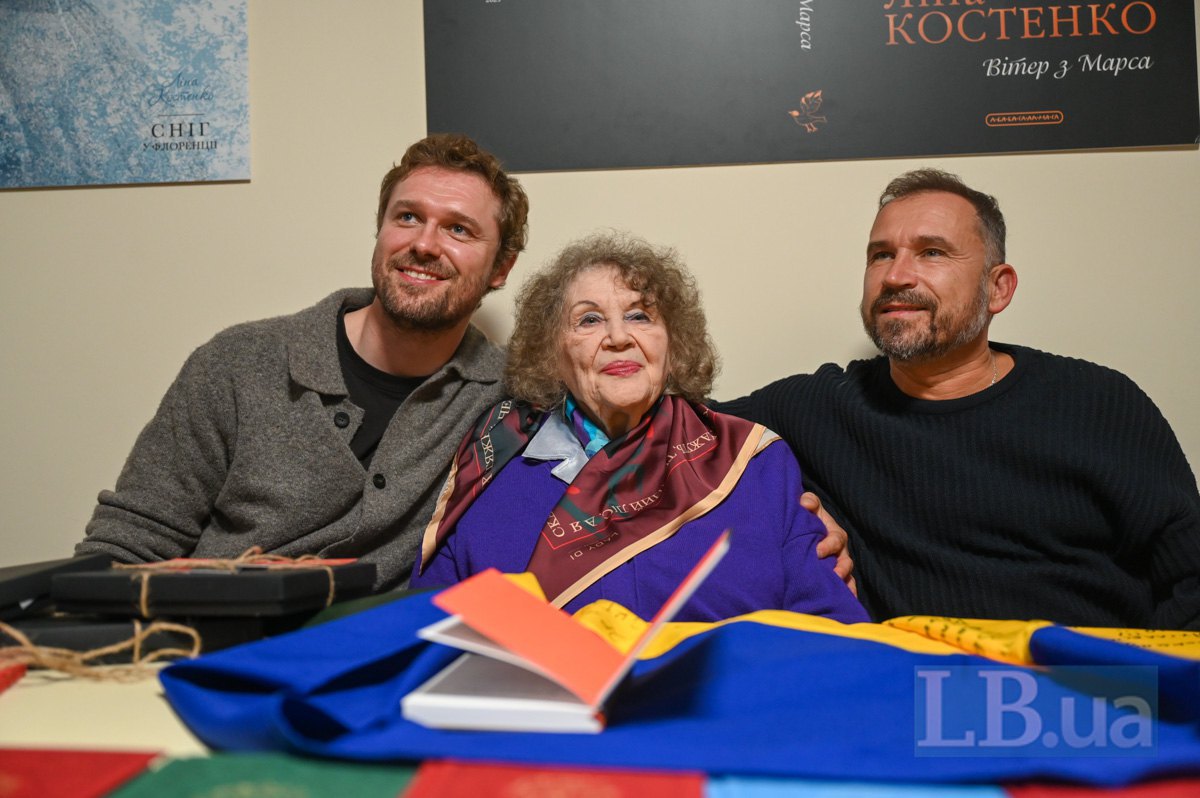
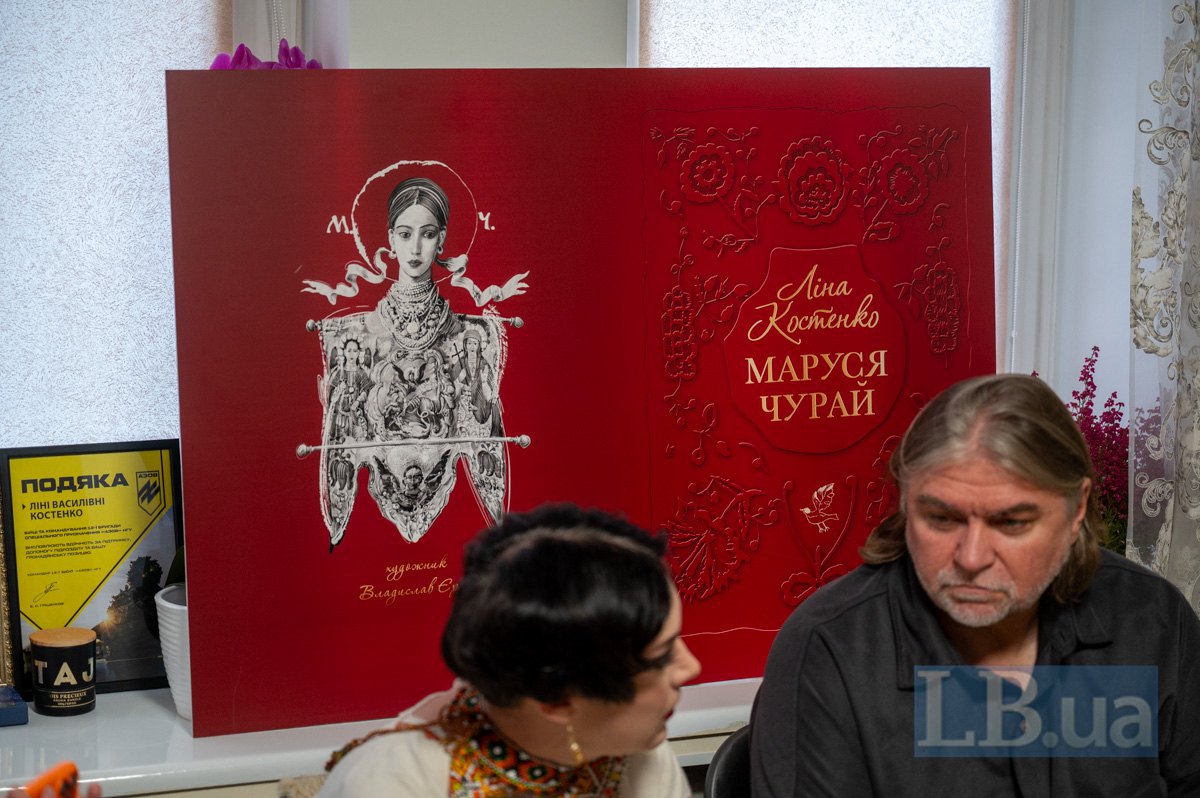
Marusia Churai is the production the Frankivsk drama theatre first performed back in the summer. Left Bank has written about it in detail before. Let us recall that the production is not academic but highly innovative: a Marusia who smokes; a Hryts lying under a ventilator; a female judge instead of the “canonical” 17th-century judge described by Lina Kostenko…
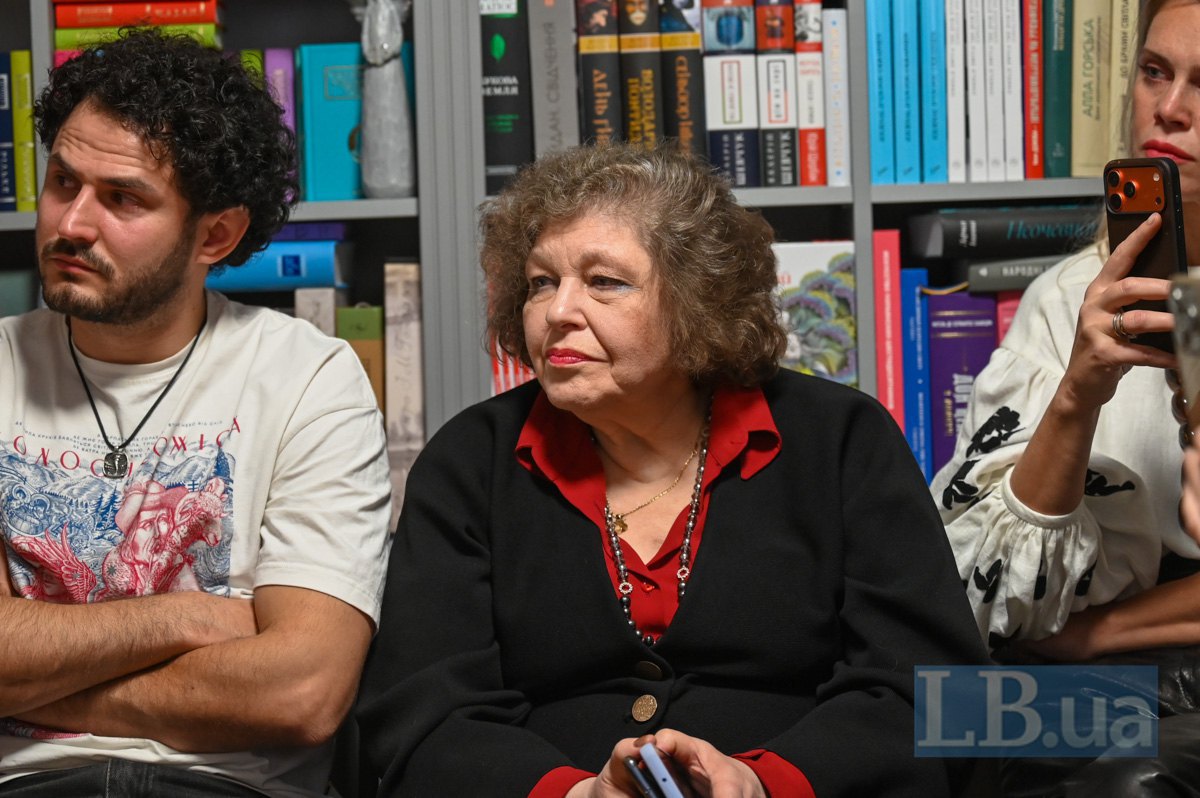
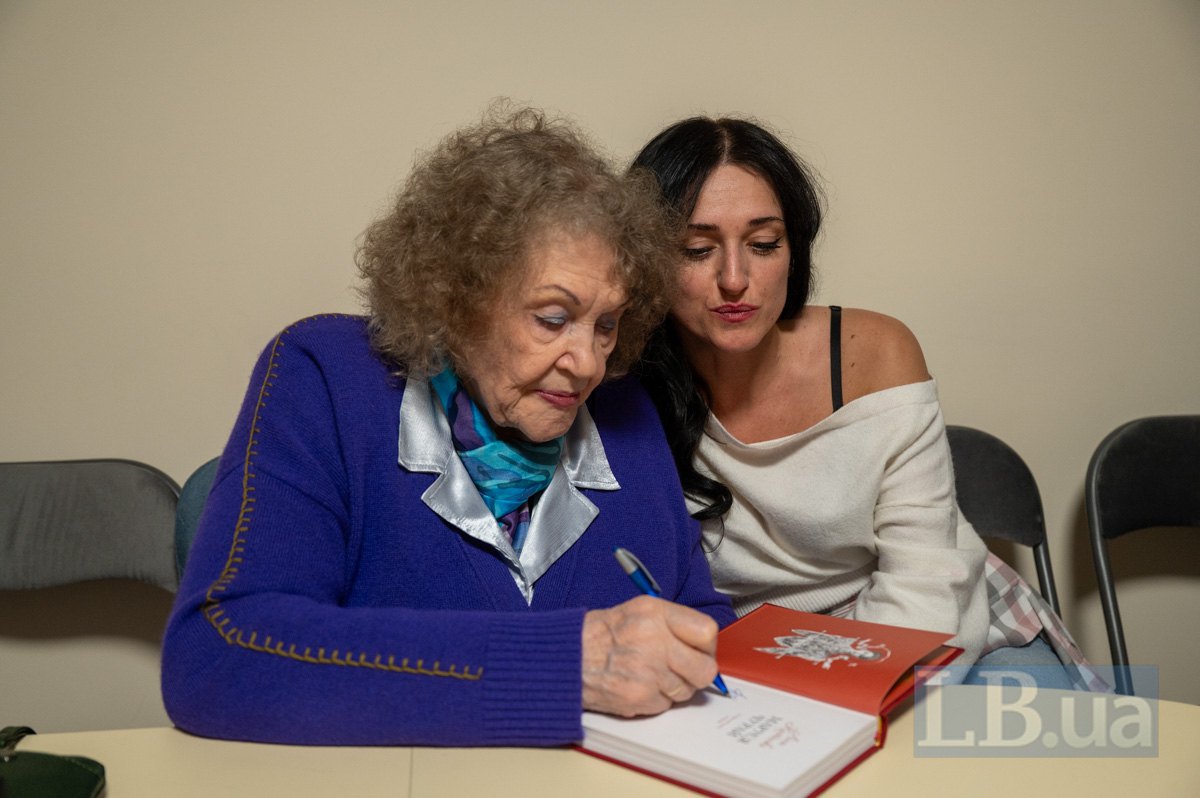
The author herself does not object to such an interpretation. She says that one performance of Marusia was stopped at her request, although “the actors, of course, were trying their best”—but Derzhypilskyi was given carte blanche. “For the most part I don’t interfere in neighbouring arts. They do their thing and I don’t dictate to them; I do my thing and nobody interferes with that,” Lina Vasylivna says. And she waves her hand—as if to say, let them “mess about”.
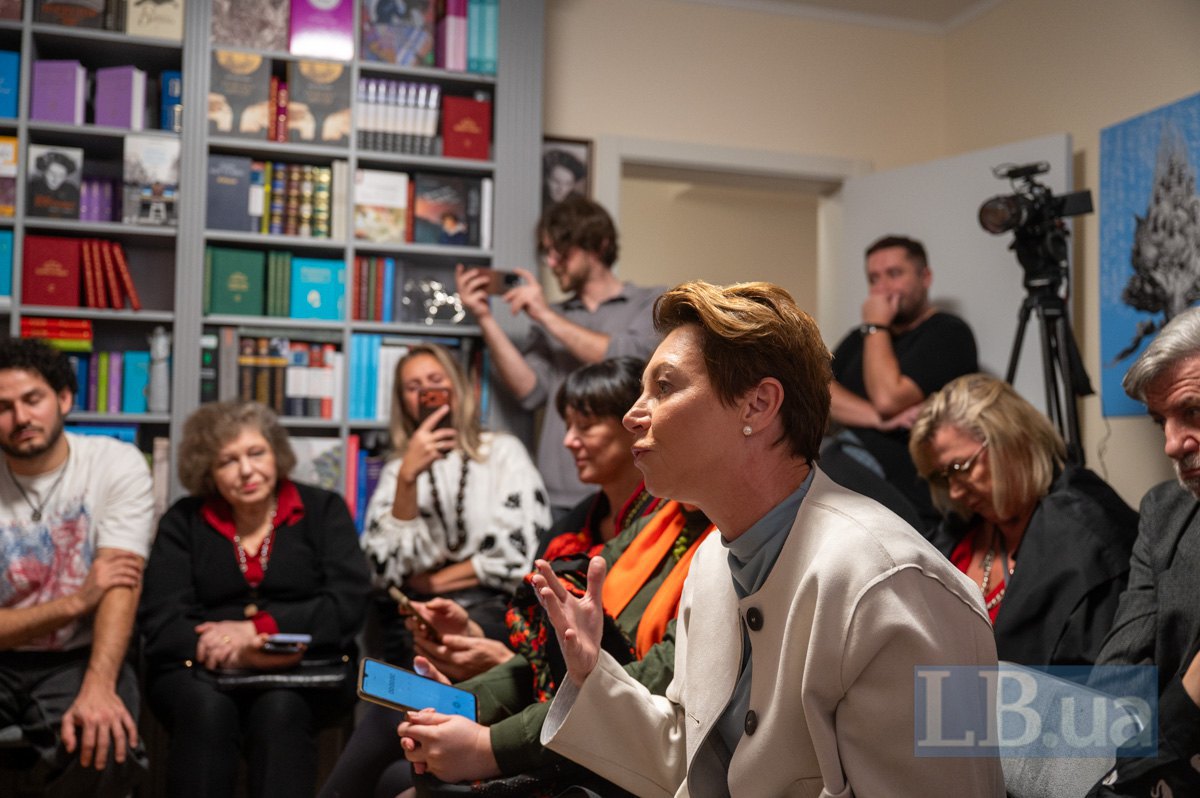
Oles Sanin takes the floor—a film director, cinematographer, actor and producer. He talks about how he helped “Rostyk”, meaning Rostyslav Derzhypilskyi, in working on the production. “Rostyslav came up with the idea that a third of the stage area would be taken up by a screen. I said: but how will people watch the actor if his image is projected on the screen and one head is going to be five by seven metres? So I came up with a concept for how it would all work without distracting from the action.”
Addressing Lina Kostenko, Sanin says: “I tried to send greetings to the searches of the people who taught me, and to the time in which you were writing. So that poetry could exist on stage. And so that it would come out as a kind of neo-Baroque that would convey that time, the Cossacks, the era… We can’t recreate it completely and in full, but we can convey to the audience our impression of it.”
“Don’t Stage Hamlet If You Don’t Have a Hamlet”
For some of the younger actors, working on Marusia Churai is not a stage debut, but one of their first leading roles. For Honoured Artist of Ukraine Nataliia Polovynka (in the production she plays Churaikha, Marusia’s mother), however, a production based on this text proved fateful—having seen it back at the dawn of Independence, Polovynka chose an acting career.
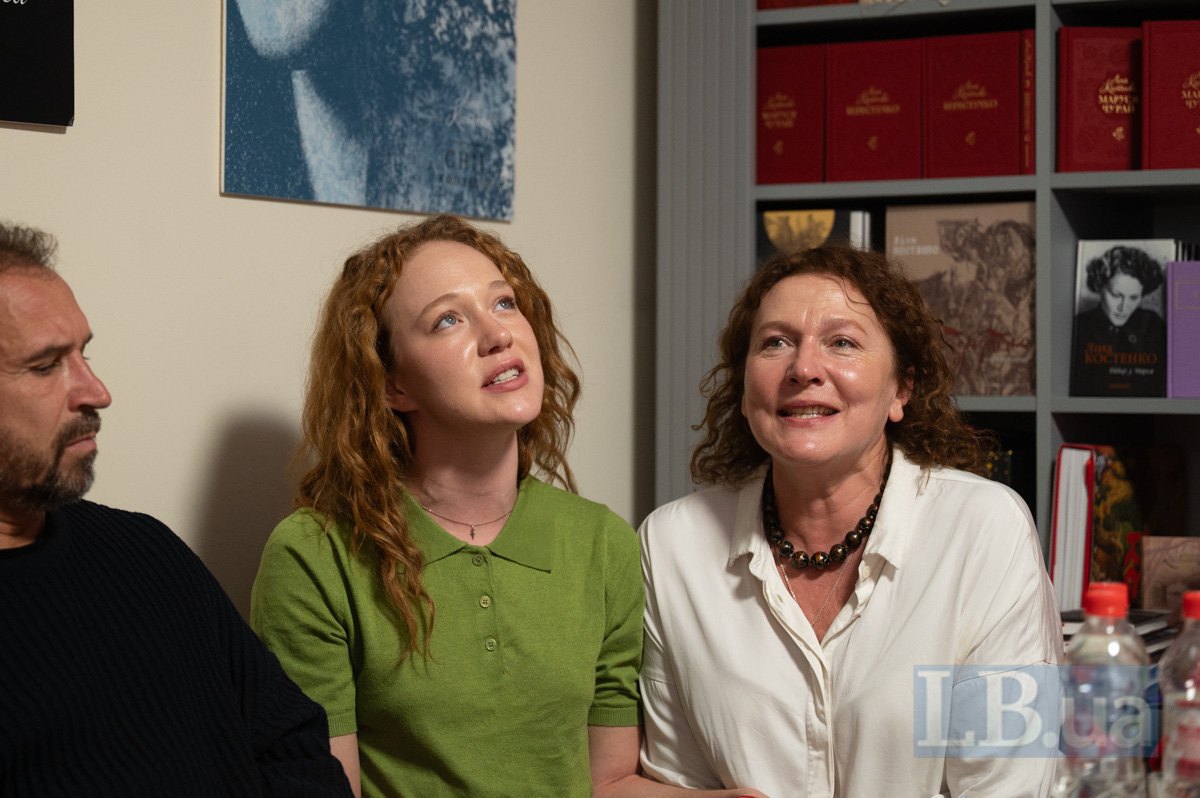
“For me, the myth of Marusia Churai turns out to be important throughout my whole life. Because what leads our people and our culture, I am convinced, is song. Song is at the very foundation of culture; it carries what is most precious in this people. And it was song itself that created the image of Marusia Churai. I am struck by the text written by Lina Kostenko, because Marusia’s language combines the melodic quality of song with the speech of that time, which none of us, of course, ever lived through. It is an inexhaustible source of folk wisdom and beauty—some refined, noble beauty and elevation… That is why I think we still have a great deal of work ahead, so that we can continue to read Lina Vasylivna’s text closely and speak it aloud, because however far we follow it, it is still ahead of us.”
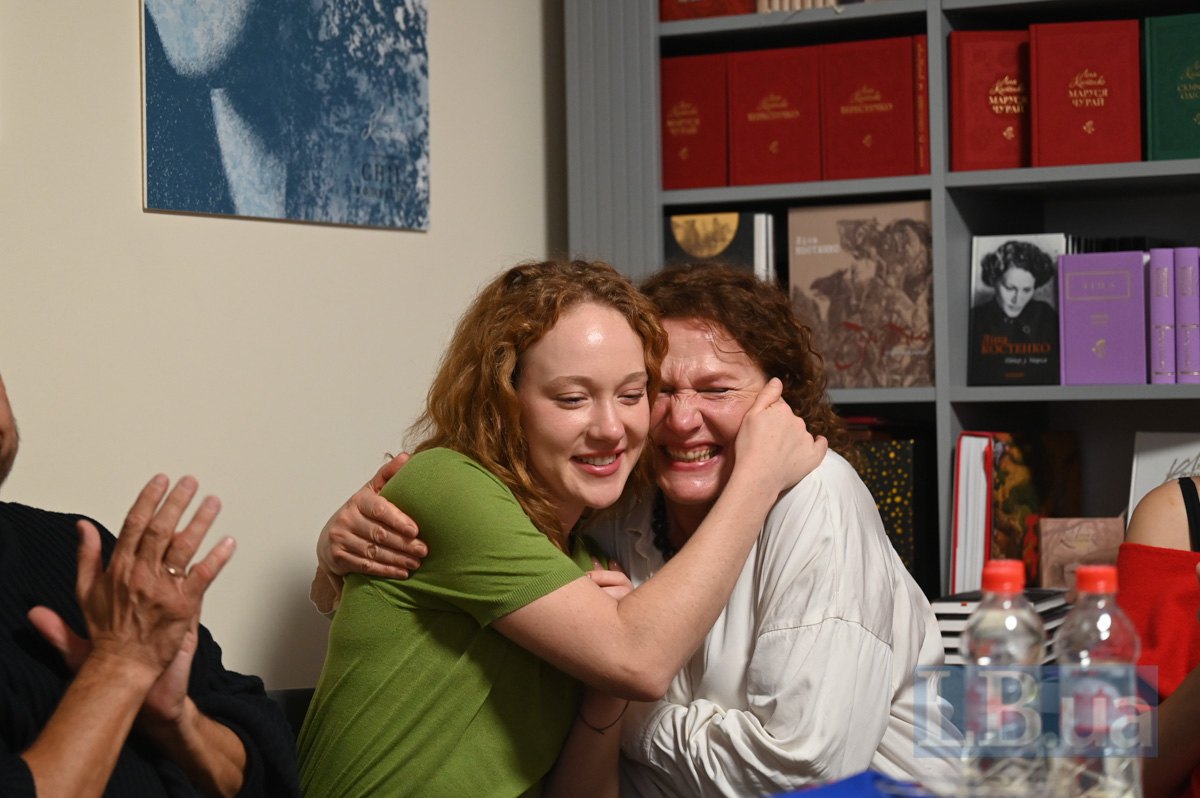
Nataliia Polovynka and Mariia Stopnyk sing “Oh, in the Cherry Orchard…”, and the tear mentioned in this folk song is already shimmering in the listeners’ eyes. Stopnyk plays Marusia, and director Derzhypilskyi considers the actress a real find. “As they say, you shouldn’t stage Hamlet if you don’t have a Hamlet. But this is the case where I had a Marusia. Yes, she is also Marusia—Mariia Stovpnyk. We didn’t know what Churaivna should be like—tall or short, dark-haired or fair. We have our Marusia, and she is incredible.”
“At first it was frightening,” Stovpnyk shares. “Rostyslav Liubomyrovych called me and started talking about Marusia Churai. We decided we needed some time to think. And then we told ourselves: yes, we’re doing it, because it’s no longer scary. And what we ended up with was (she gestures with her hands) this kind of pillar. A huge heavenly pillar, and then—an explosion. Because this production—both the material and the image—is far higher than all of us.”
“It Was a Pathological Life”
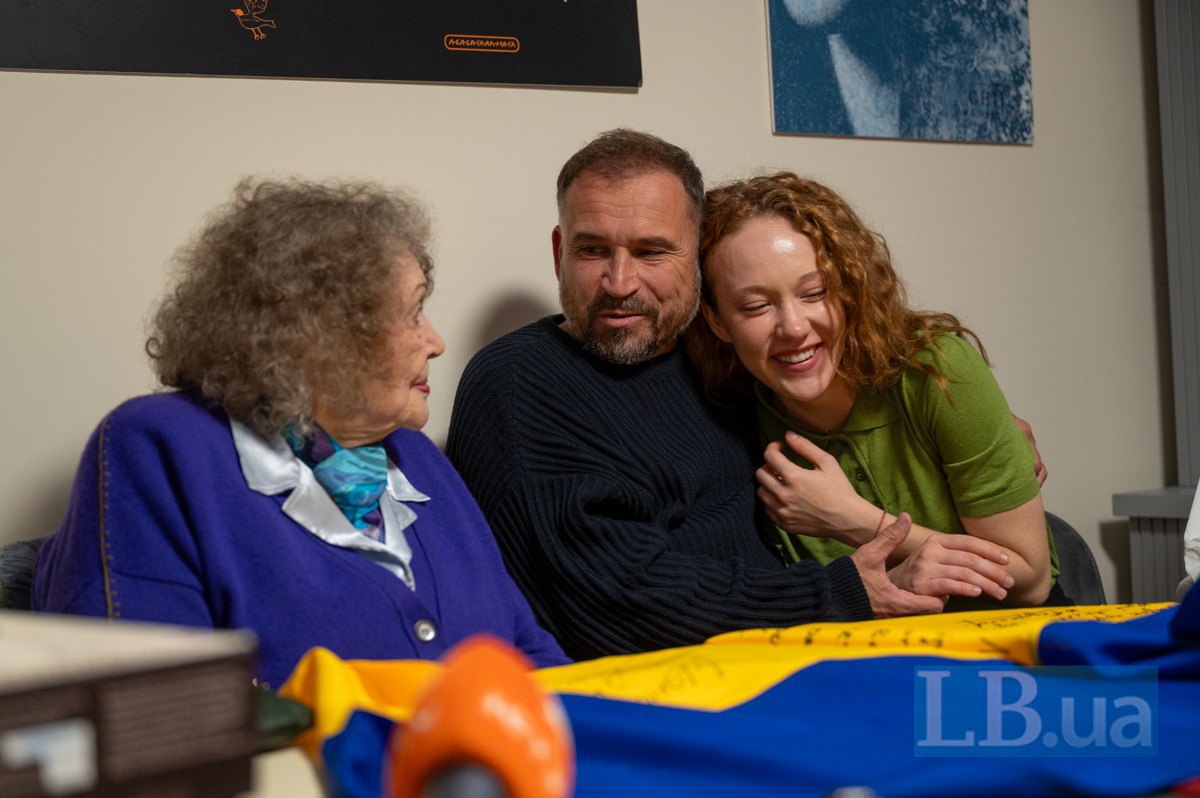
That sense of the text’s superiority is shaped by the era in which it was written: the bleak years of Brezhnev’s stagnation. “When I was writing it, do you know what state I was in? Like in Marusia Churai: ‘This prison—this is freedom, because here I’m no longer afraid of anything,’” Lina Kostenko quotes from the poem. “Because arrests were already happening, and I didn’t have any pleasant feelings then. And where Marusia’s sworn brother Ivan is mentioned, that was my address to Ivan Dziuba. And when I was writing about Marusia in prison, I was thinking about how Yevhen Sverstiuk was getting on there, in captivity.”
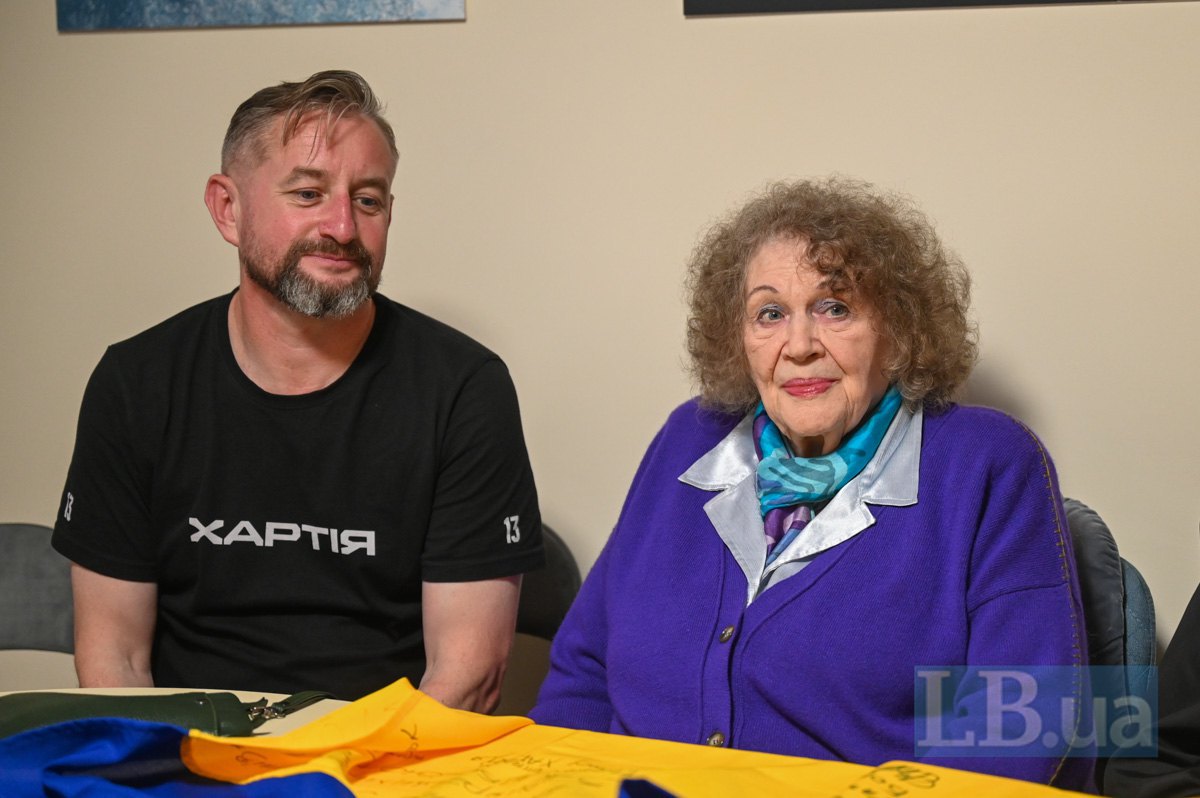
Lina Vasylivna recalls the dissident Sixtiers, most of whom are no longer in this world. Names are heard: Alla Horska, Nadiia Svitlychna… The poet talks about how, in Soviet times, they celebrated the forbidden Christmas, how they sang “Chervona Kalyna”. “And if the neighbours heard—and they did hear—they could report us. You understand, it was a pathological life… I endured it only because I was able to write what pushed that darkness apart. I wrote Marusia, and they didn’t print it for a long time. I finished it sometime in 1973, and the first reaction was: don’t print it, because it’s a nationalist work. But Bazhan saved it. Bazhan wrote a positive review, and then that was it—meaning it could be printed.”
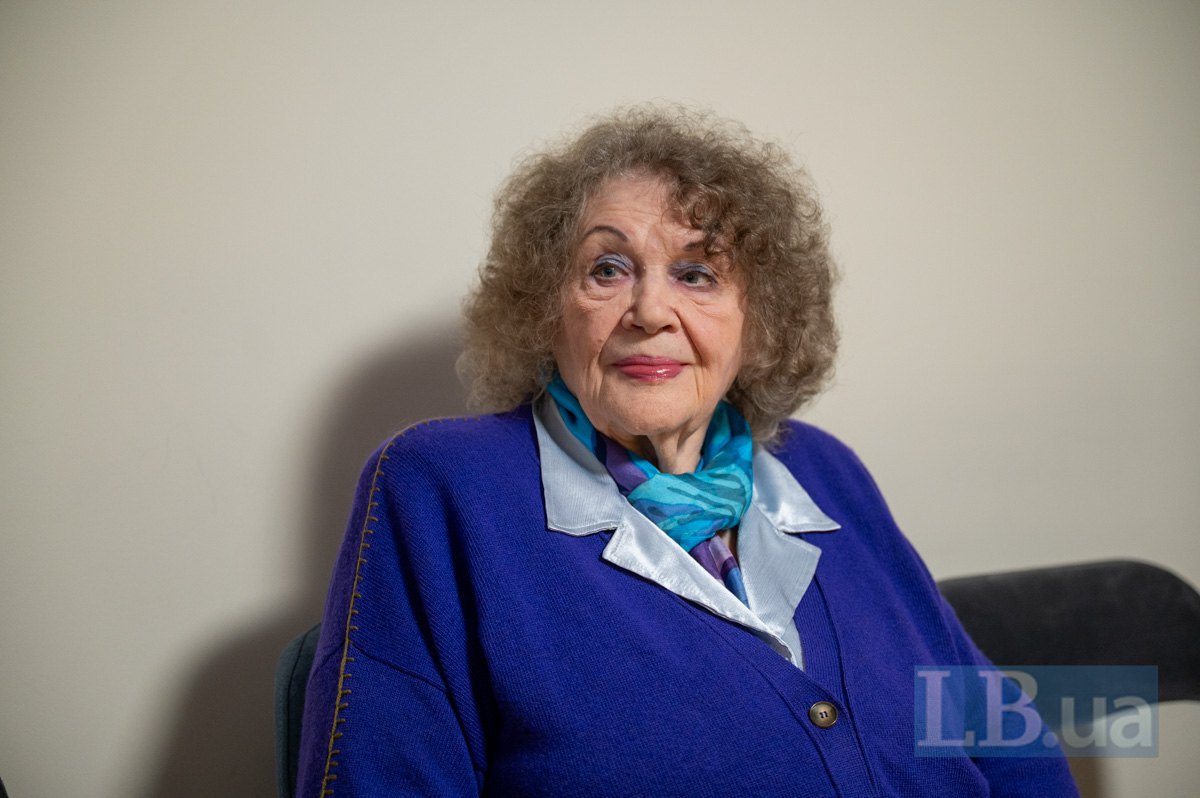
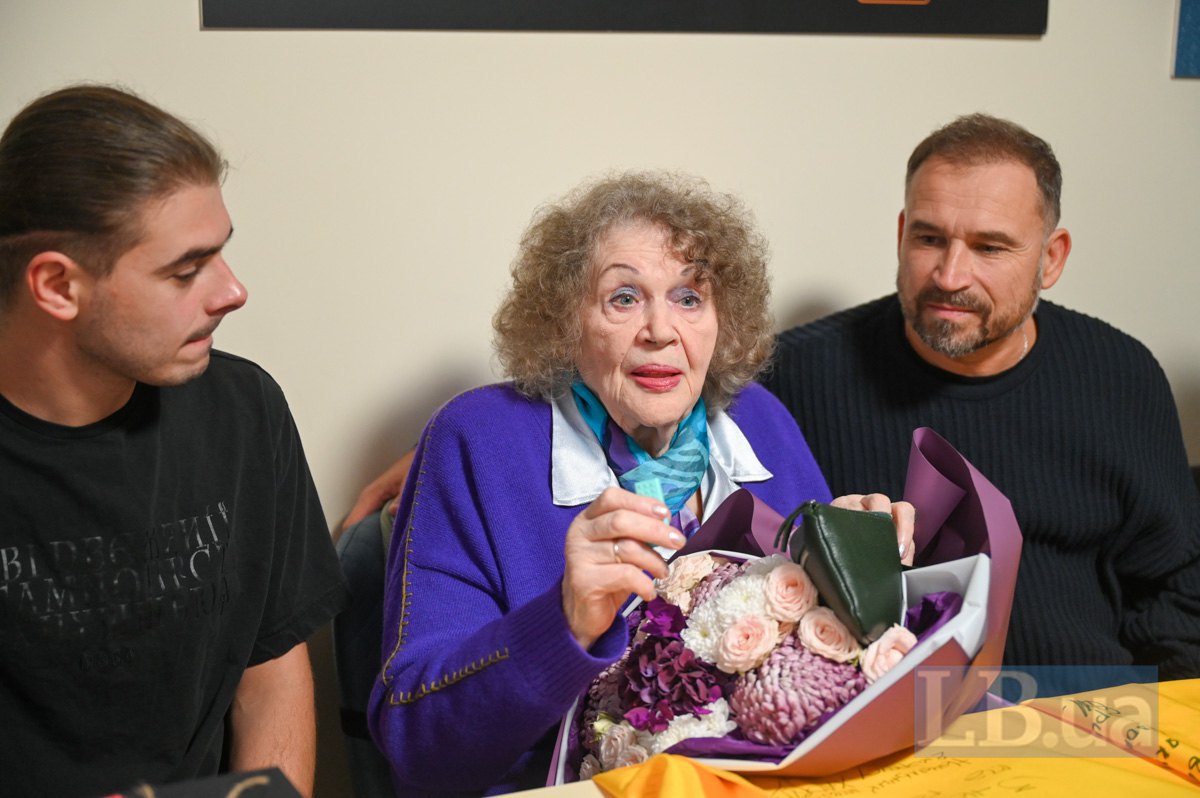
“I look at you now and I rejoice,” Lina Vasylivna says. “I rejoice even at such a terrible time. There is a war on, and I always carry a flash drive with me—if I’m killed, everything I’m writing now will be with me. So that nothing is lost.”
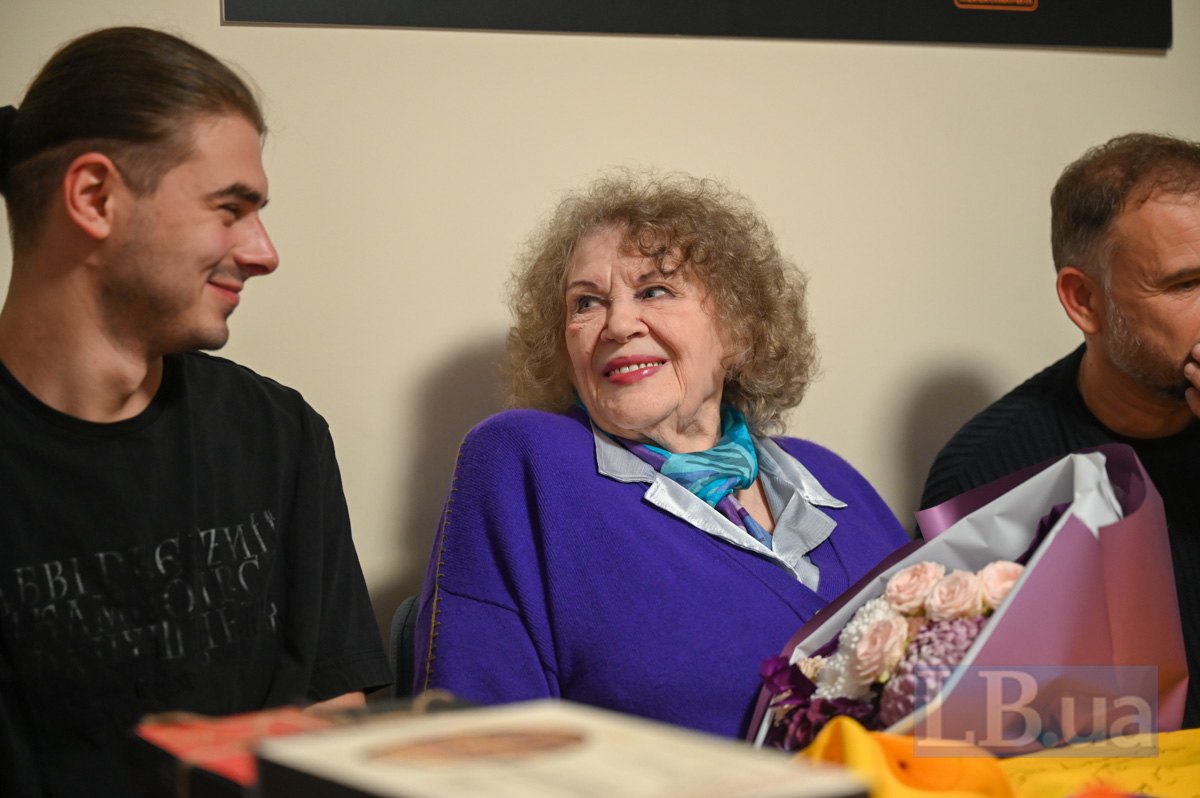
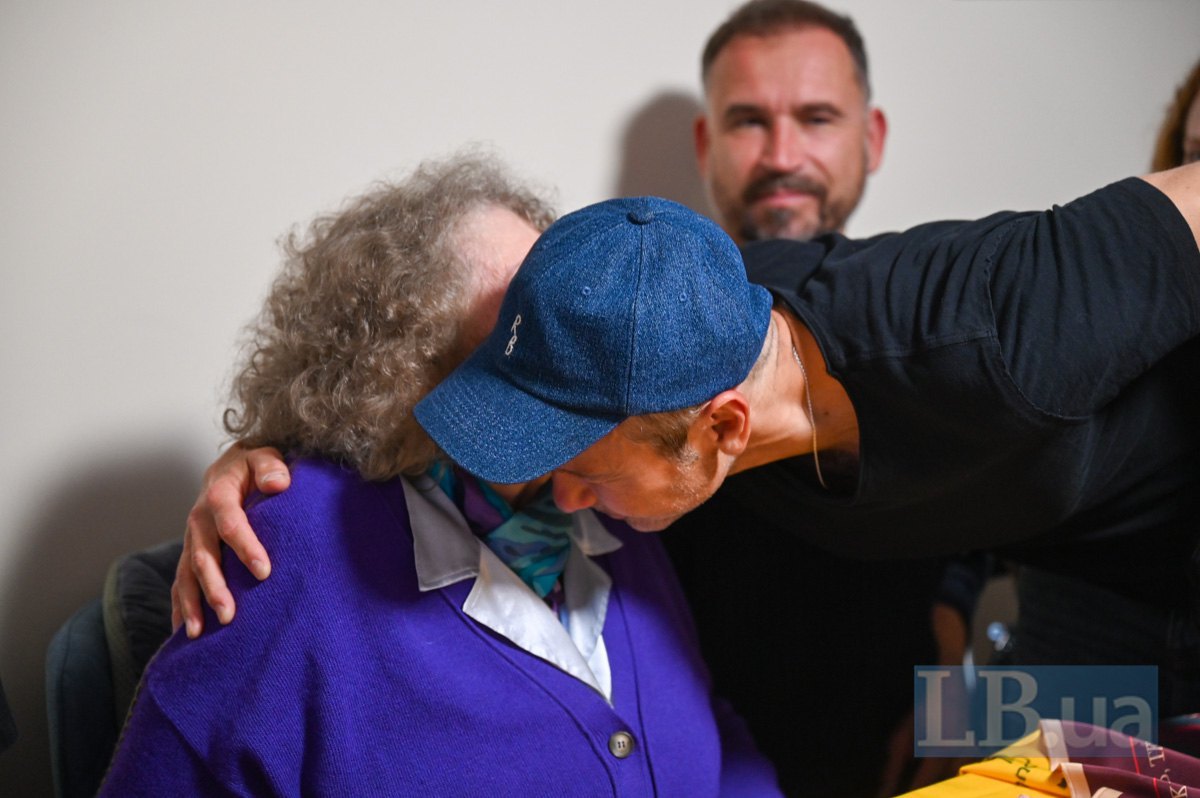
“Thank you for a pill against indifference,” joins in People’s Artist of Ukraine Nadiia Levchenko, who played the judge in the production. “We studied Marusia Churai as a set text, and then in acting excerpts. Marusia has been with me in that continuity for 23 years straight. Thank you for that continuity too, because thanks to it I can open the work and each time find something new for myself that awakens in me the desire to keep going. And thank you for the fact that right now my knees are shaking—but not because of air-raid alerts and explosions, rather because I’m sitting next to you.”
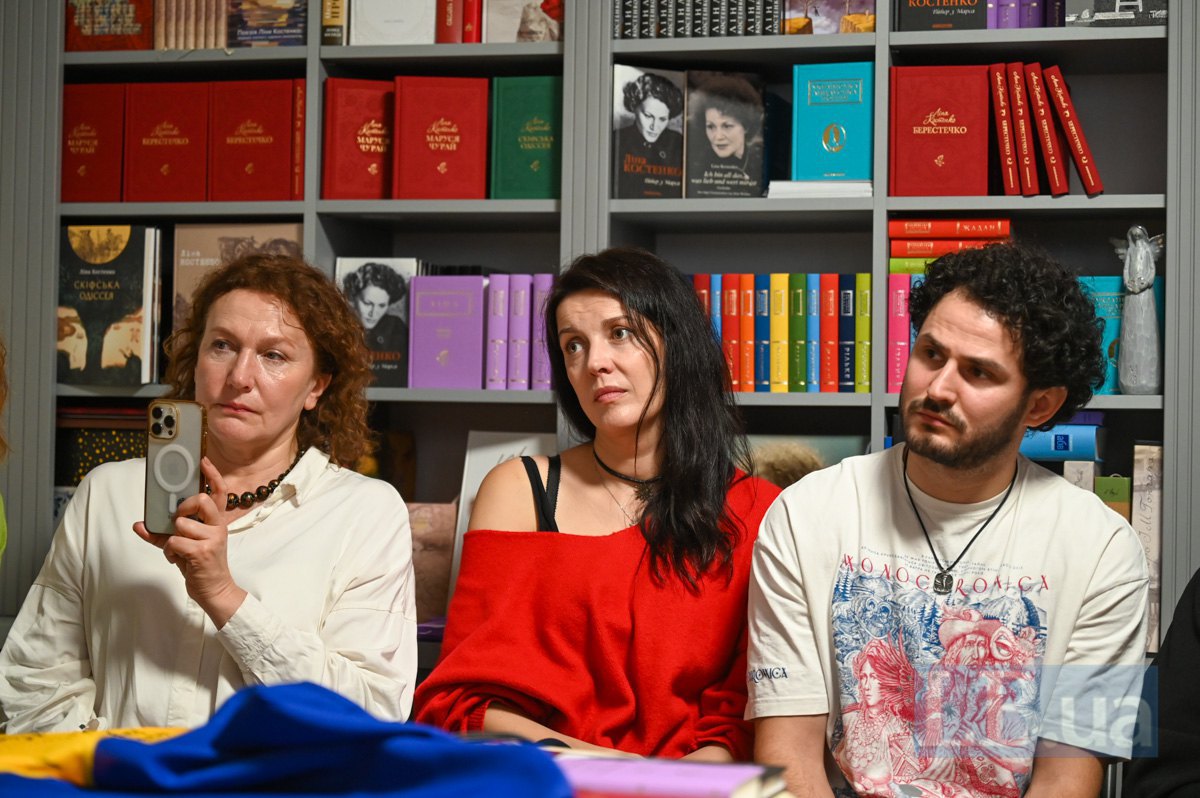
“The Text Won’t Let Go. We Speak in Lines from the Production”
“You know, texts disappear, they get worn away, but with Marusia the strangest thing happens. It won’t let go. We still speak in lines from this production in everyday life. And that, actually, is very cool on the one hand, and on the other—frightening. This text won’t let us go. And we still live with these characters in our lives, and it’s so strange,” admits Oleh Panas, who plays Hryts.
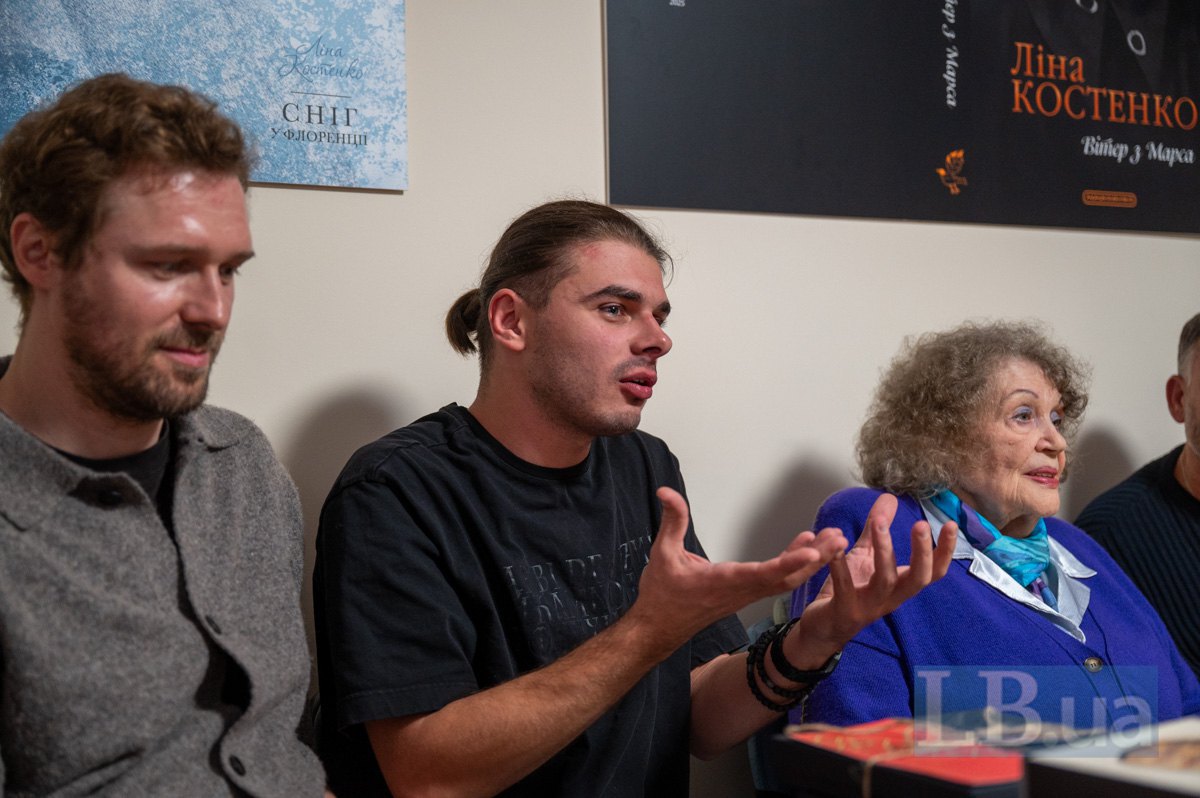
Commenting on what Panas said, Lina Kostenko notes that she built several layers of language into her work: the natural language of those times, bureaucratic and judicial language, the language of song, and her own poetic language. Given the state of the Ukrainian language in the country at the time, she considered it her duty to preserve all those linguistic strata.
What Ukraine was going through then—de facto under Soviet occupation—has become clearer to the actors now, the participants in the production share. Today’s terrifying times of the Russian invasion resonate for them with the era of Soviet subjugation, and with the times to which Marusia Churai refers—wars which, in the days of Bohdan Khmelnytsky, were fought for Ukraine’s right to exist.
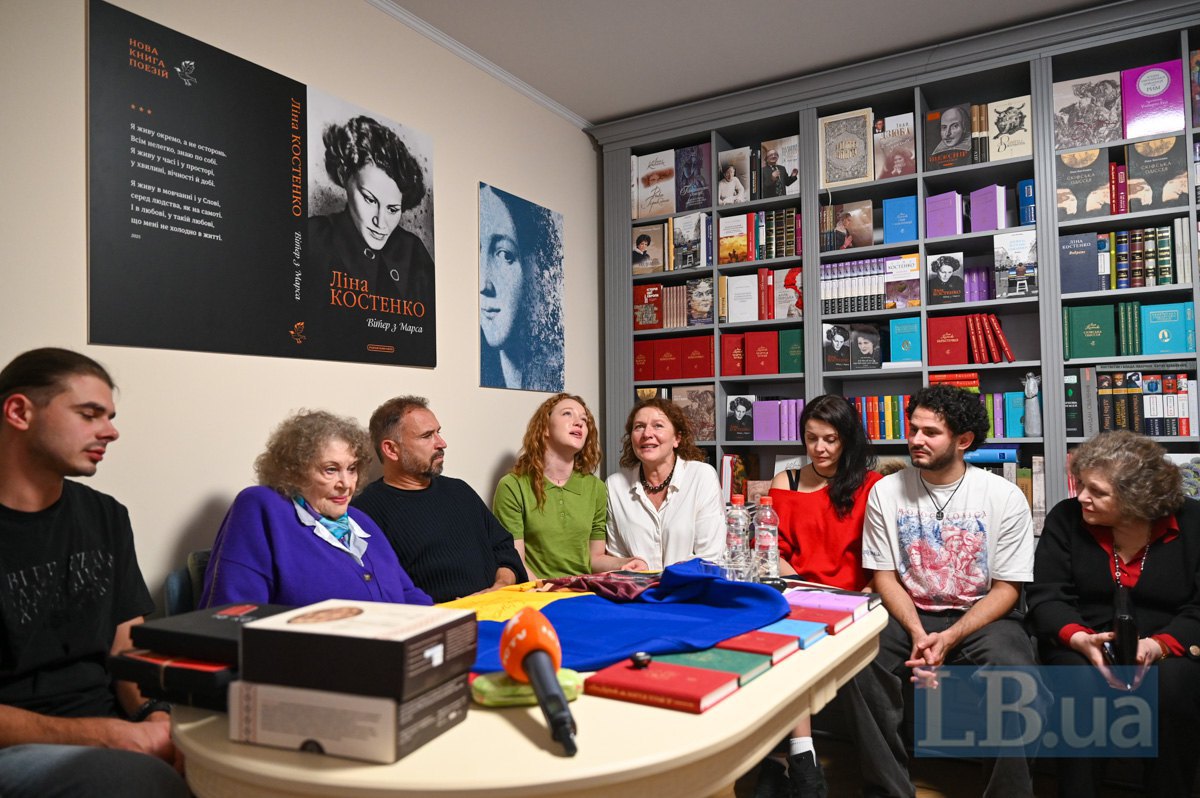
Olha Komanovska, who plays Bobrenchykha—Hryts’s mother—speaks about her reading of the character. She strips Bobrenchykha of the negative perception of someone who thinks only about material wealth and a well-off daughter-in-law, and who pushes Hryts to break off his relationship with Marusia. “I have an only son, gentlemen, and only one sorrow in my soul, one thorny little spike in my heart—God forbid he should go to live with his in-laws,” Komanovska quotes her character and cannot hold back tears. The actress also has a son, she says, and today that “thorny little spike” reads as the pain and anxiety of every mother whose son is at war.
“At the Performance I Was a Happy Person”
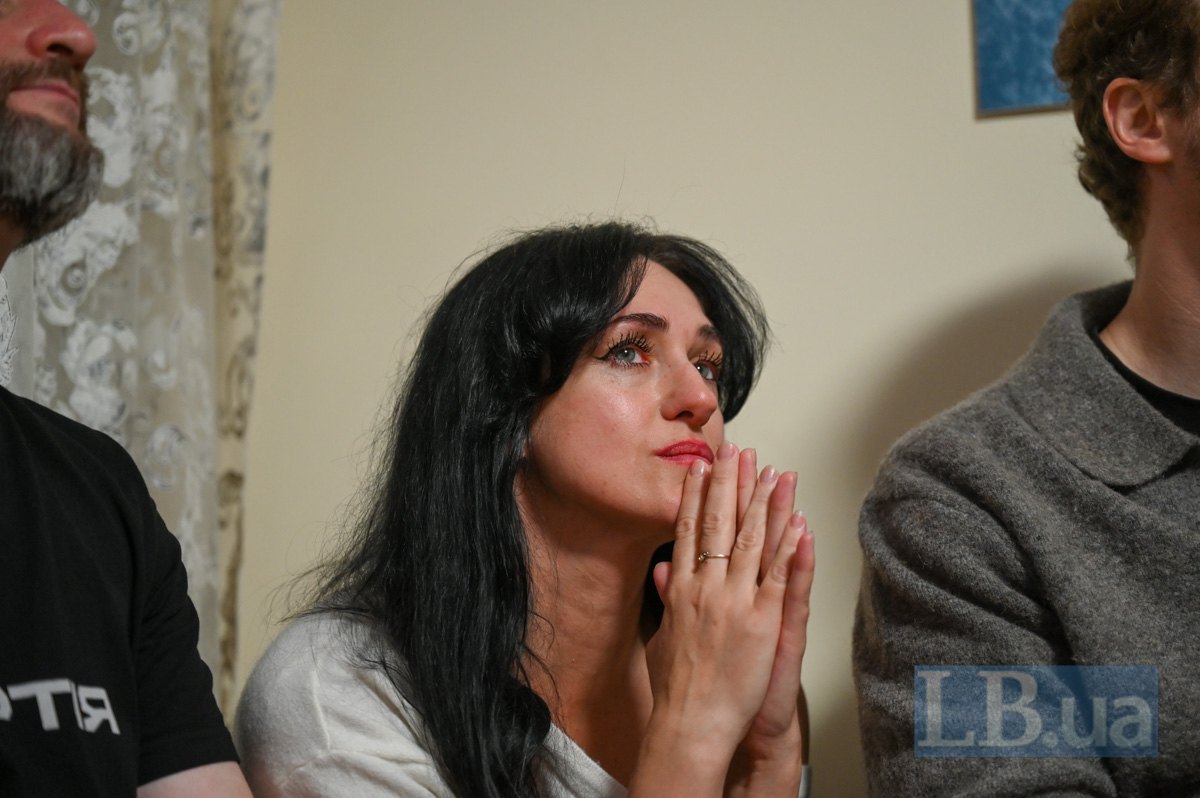
The theme of war draws those present in, and someone asks Lina Kostenko how she is holding up now—against the accompaniment of constant explosions—and how she held up in the bleak 1970s, when the war against Ukraine was also ongoing, but in a different form. The children saved her, Lina Vasylivna says: “my daughter and my husband, whom I loved very much”. And the second lifeline was work, and work again. The ability to write, as long as writing is possible.
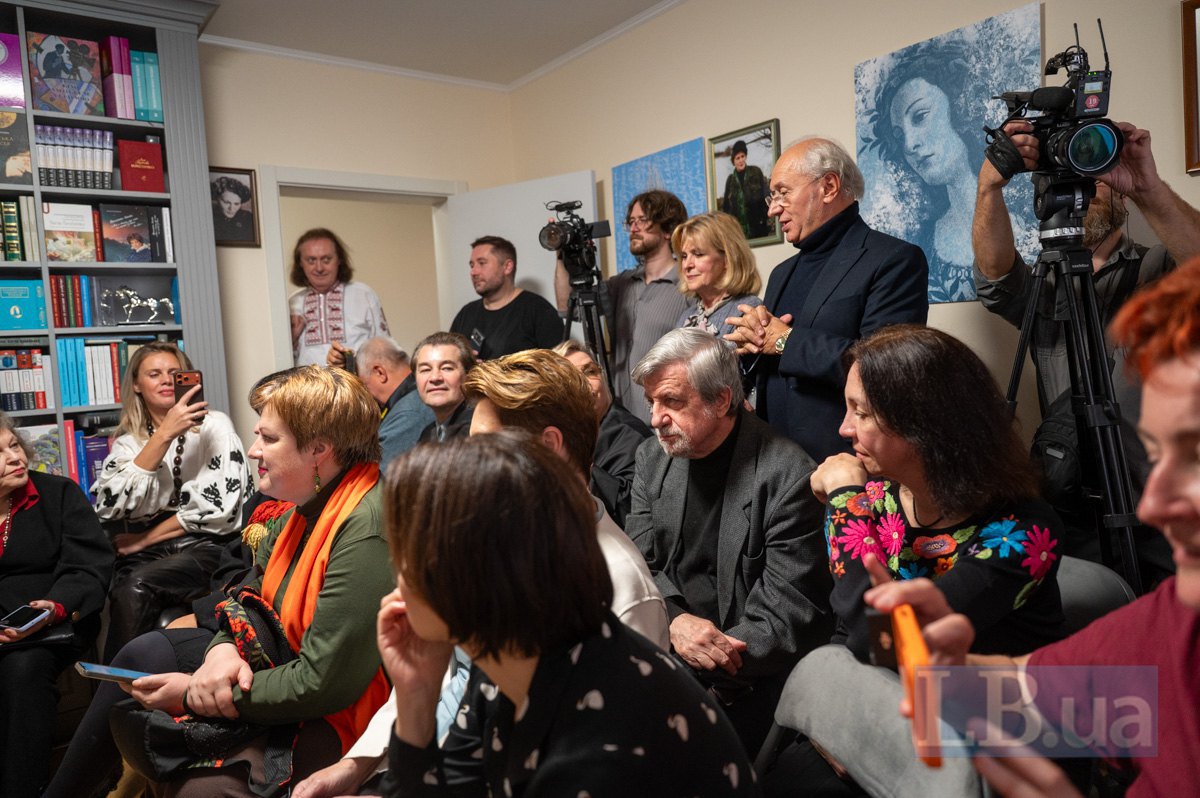
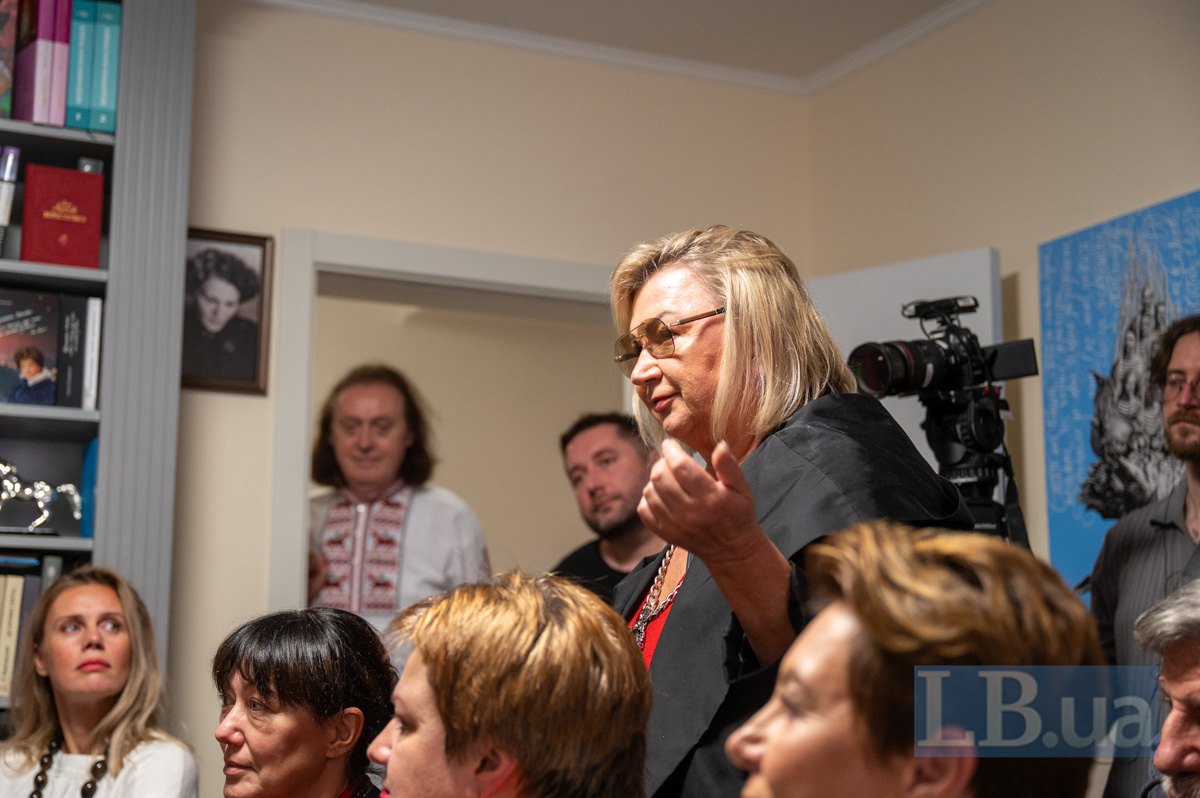
The dialogue is continued by film scholar Serhii Trymbach—he notes that during the performance he watched the day before, he felt truly happy. “I felt that I wasn’t living in this space, not in 2026. But at the same time I also felt the present moment. I felt that I am Ukrainian. And I understood that we will win the war, because we will endure. Because we will preserve what we have preserved all these years—our sense of self.”
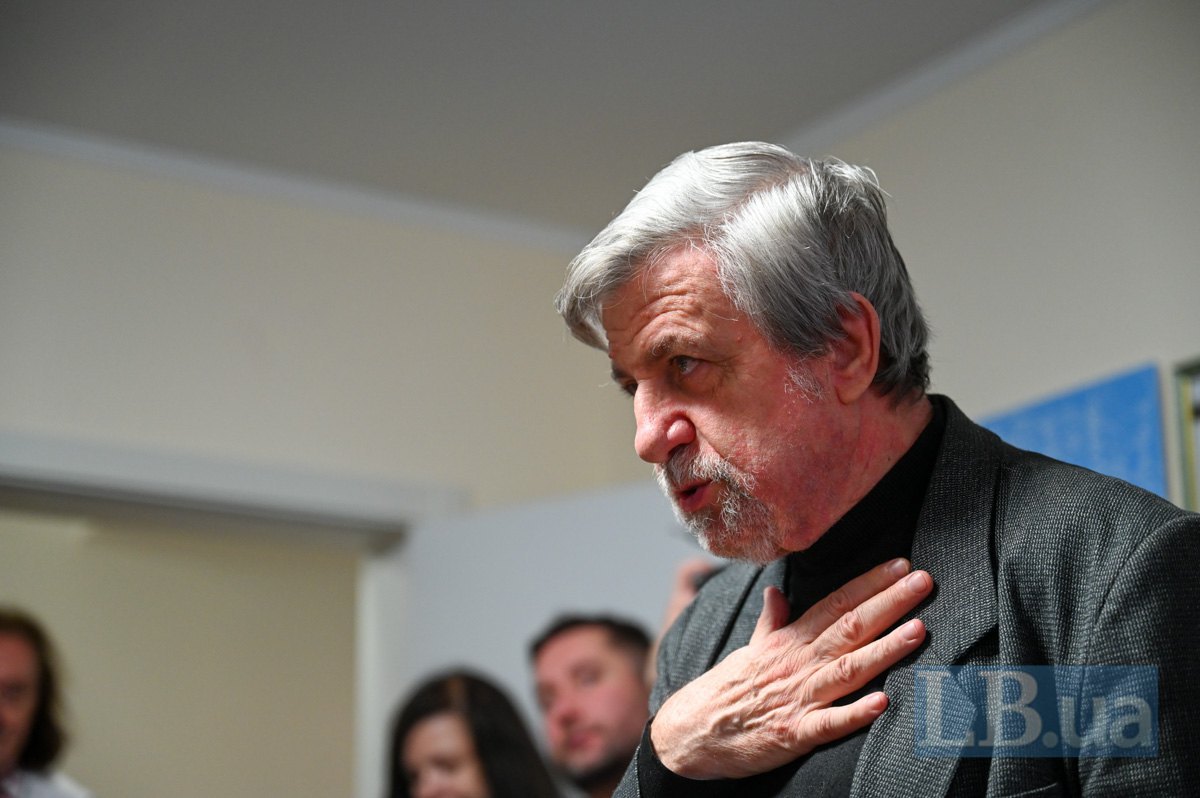
A great deal divides us, Trymbach says, but there are also things that unite and stitch the country together. “We are people of a particular, concrete culture that is developing relentlessly. And that is proven by how organically modern costumes and modern surroundings are woven into the events of the 17th century. And it is astonishing, Lina Vasylivna, how the actors convey your text. Rostyslav has every reason to be proud of such actors. So once again, thank you for this happiness that I experienced and that I will live with for a long time,” he adds.
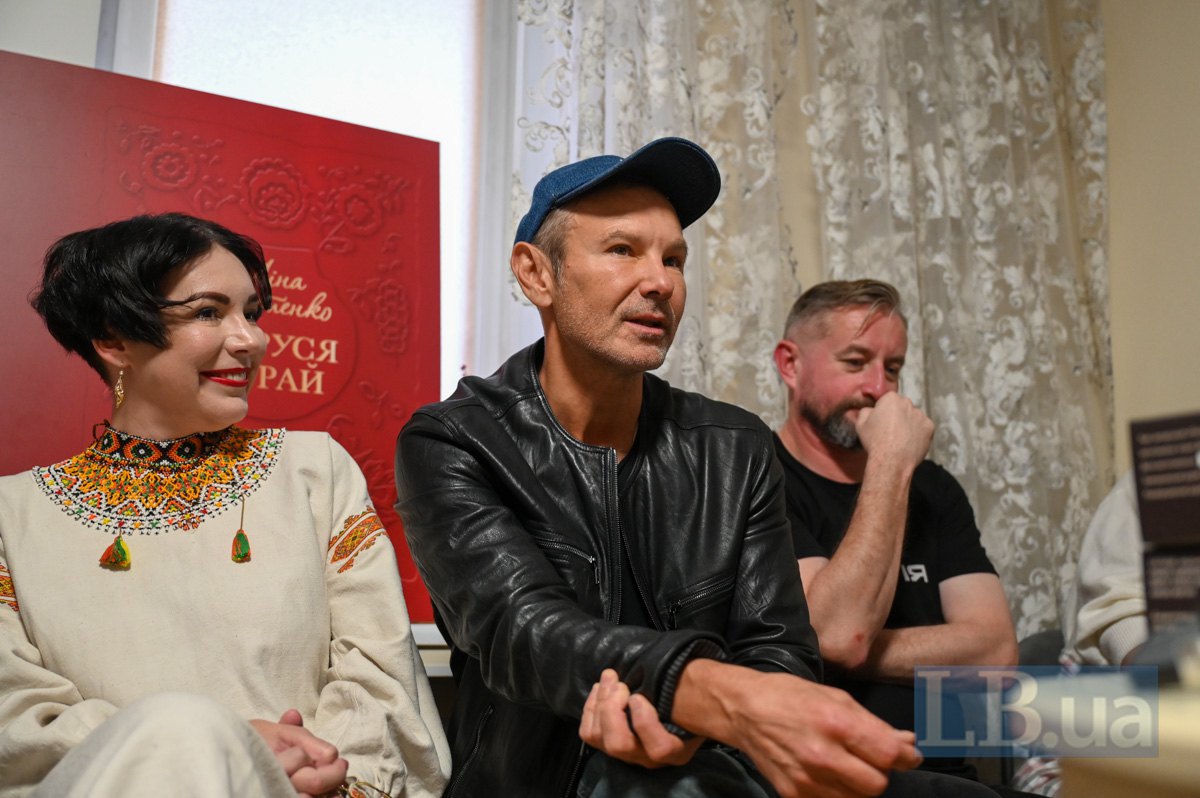
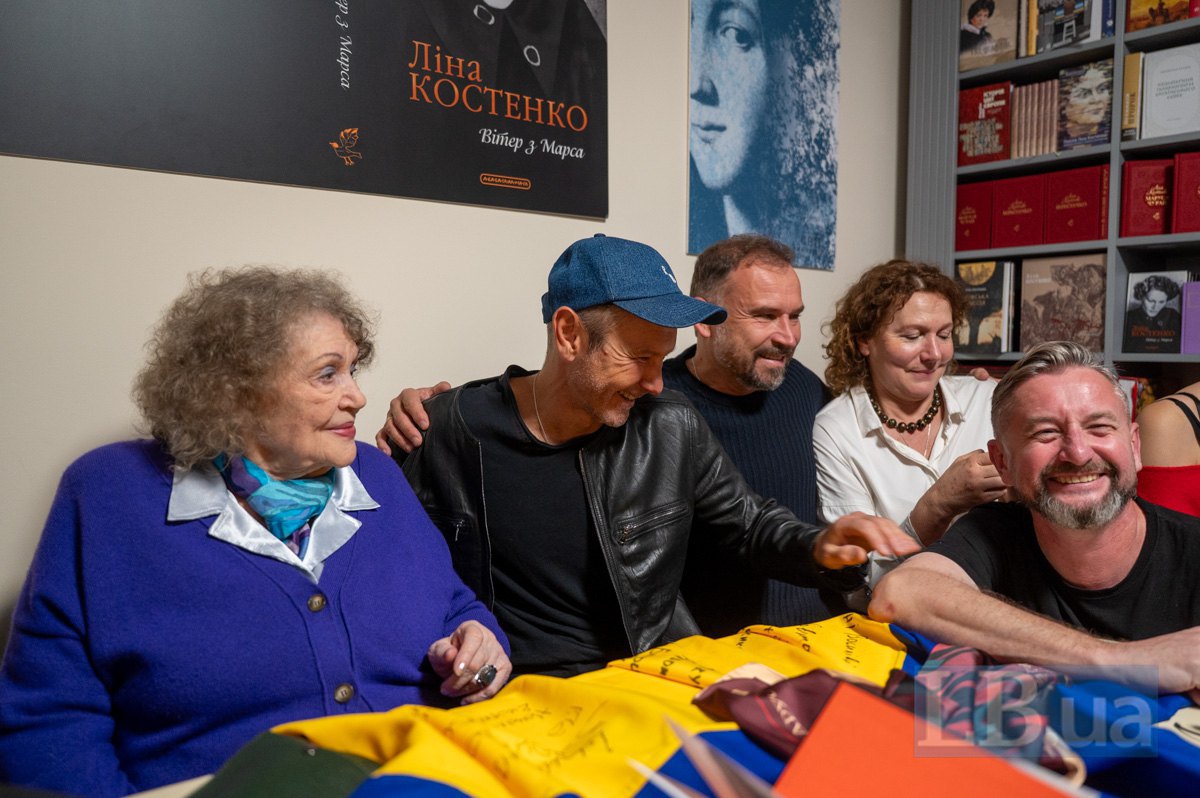
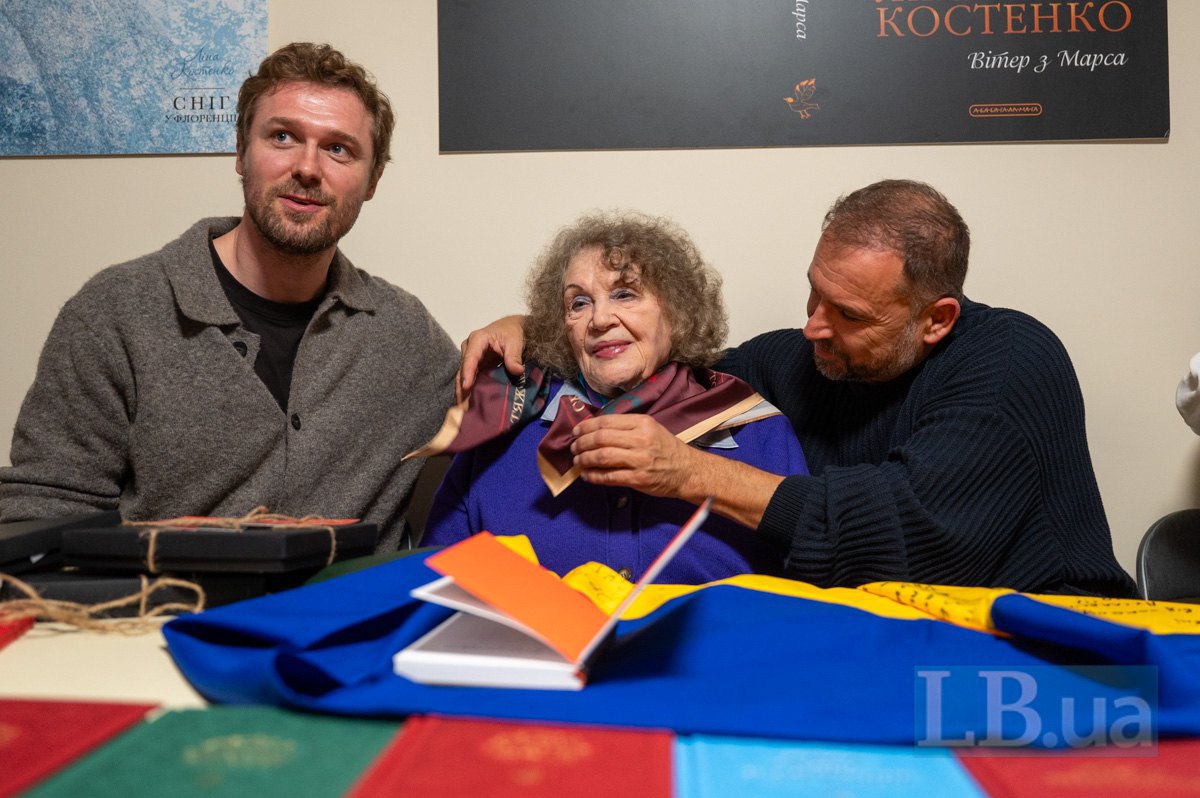
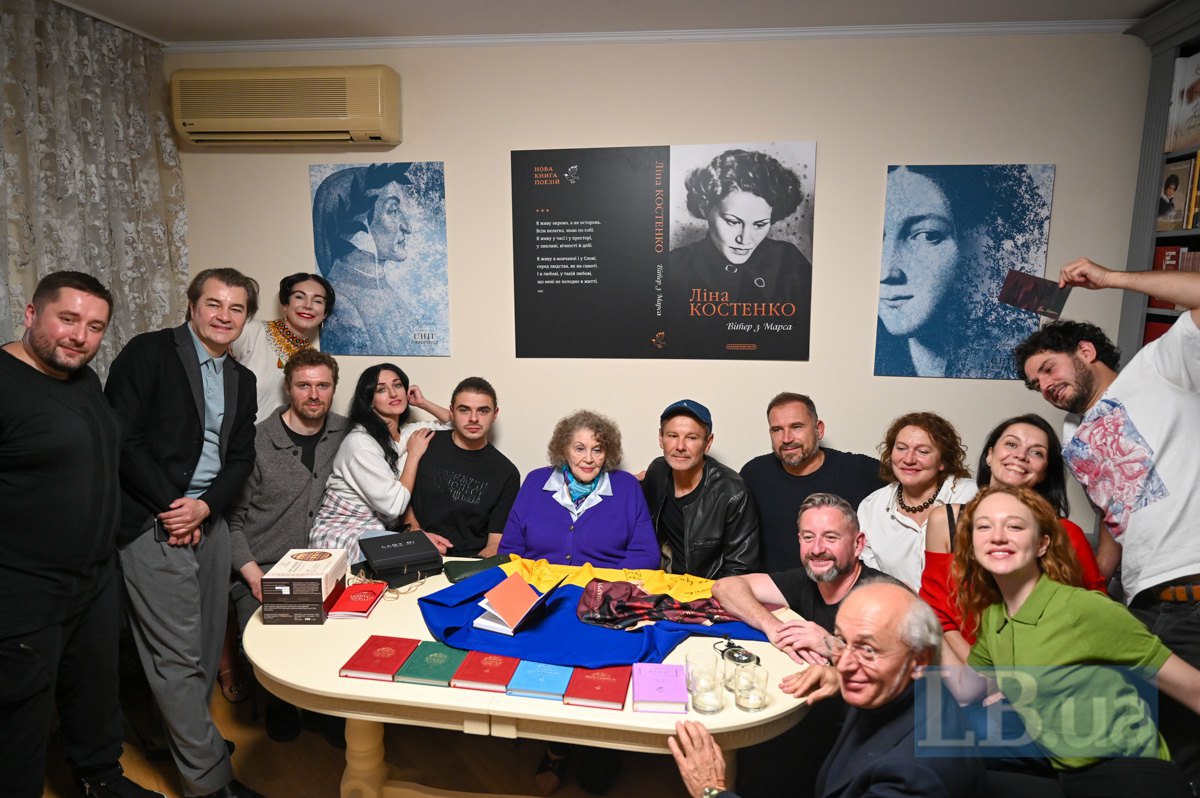
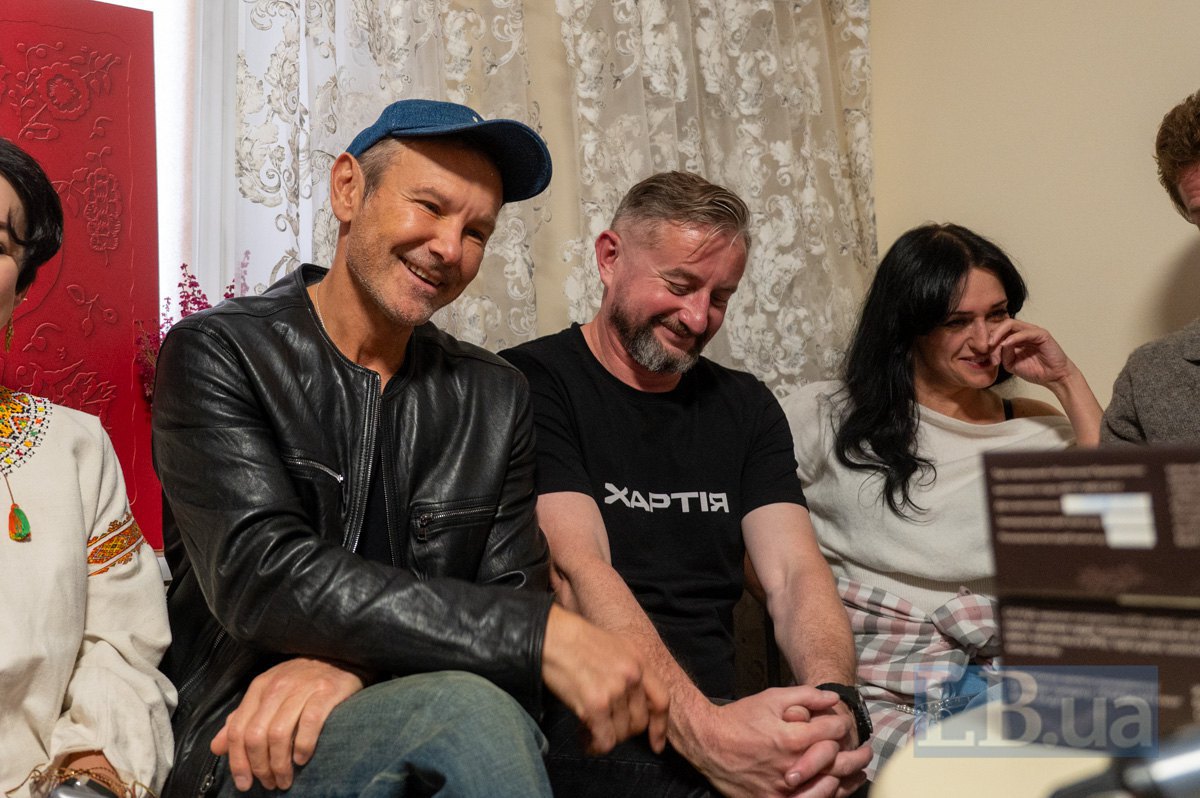
Those present thanked the actors, the director, and the singer and composer Sviatoslav Vakarchuk, who took on the musical design of the production. He himself noted that he considers it a great honour to take part in such a project. And all of us, probably, will consider it great good fortune that we lived in the same era as Lina Kostenko and the heroes of her works. One would like to add “immortal works”, but that would sound too pompous. Yet her lines will outlive us and our descendants. The only thing they will not outlive is Ukraine—so long as we have our own state, we will have our own theatre, poetry, our own culture. And our own happiness, of which Serhii Trymbach spoke.
Read alsoMarusia Churai: A Controversial Production About War, Love and the Cultural Front