





On the night of 14 October, from 18:00 on 13 October, Russia carried out a large-scale combined strike on Ukraine using attack UAVs and 39 missiles of various types approaching their targets on a ballistic trajectory. The main direction of the strike was Kyiv, Kyiv Region and Kharkiv Region, the Air Force reported.
The distinctive feature of the attack was the simultaneous use of different types of aerial attack assets from different directions, and a large number of ballistic missiles against energy facilities. In total, the Air Force’s radio-technical troops recorded 167 aerial attack assets — 39 missiles and 128 UAVs of various types:
- 39 anti-ship missiles Iskander-M/KN-23/S-400/ Zircon/Onyx (launch areas — Kursk, Bryansk, Voronezh and Rostov Regions);
- 128 attack UAVs of the Shahed type (including 77 jet-powered), Banderol/Dan-T, Gerbera, Italmas, and decoy drones of the Parodiya type.
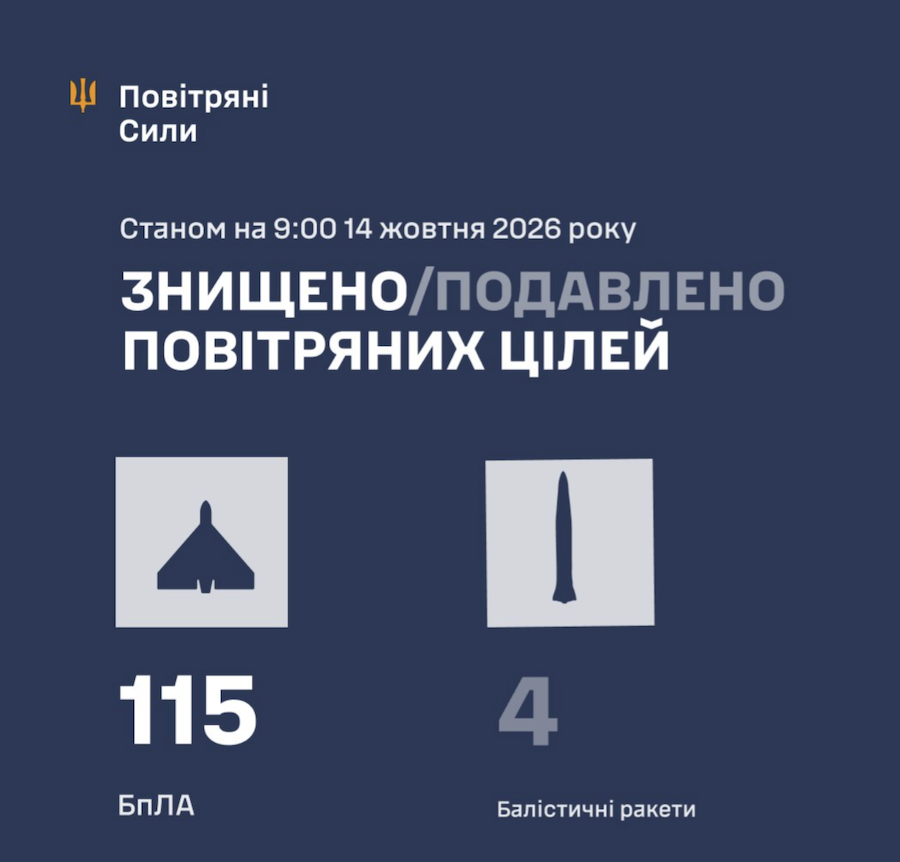
According to preliminary data, as of 09:00, air defences shot down/suppressed 119 targets:
- 4 ballistic missiles Iskander-M/KN-23/S-400/Zircon/Onyx;
- 115 Russian UAVs of various types (including 59 jet-powered), which is 90% of the total number of attack UAVs.
According to preliminary information, as of 09:00, missile and attack UAV impacts were recorded at 22 locations, and the fall of downed targets (debris) at 8 locations. Some Russian missiles did not reach their targets.
The Attack on the Night of 14 October
The Russians launched the first wave of ballistic missiles at around 23:00. The main direction of the strike was the capital’s CHP Plant No. 4, but the Russian military also hit a nine-storey residential building. At least two people were killed there and more than 20 were injured. American partners did not provide advance warning of the launches, so Ukraine detected the missiles only as they approached the city, leaving virtually no time to respond after the air-raid alert.
The second wave of ballistic missiles began after 04:00. The Russian folaunched them in series, at intervals over several hours.
In addition to the energy sector, railway infrastructure in various regions suffered significant damage.