





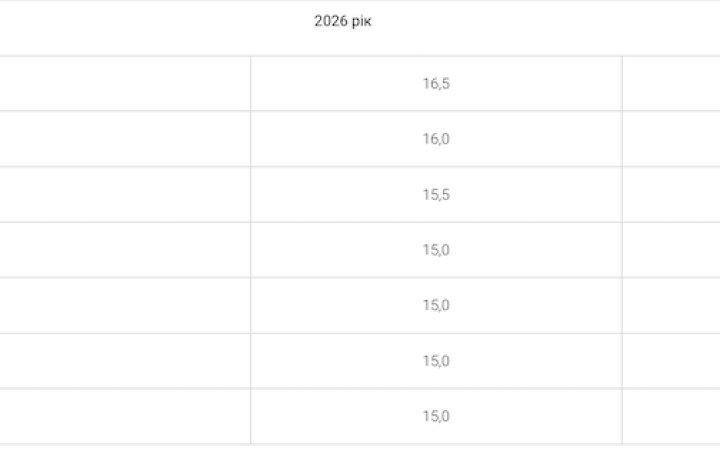
The National Bank of Ukraine has raised the key policy rate to 16.5% in view of stronger price pressures and worsening inflation expectations. The decision is expected to support the attractiveness of hryvnia-denominated assets and the resilience of the foreign-exchange market, helping to keep inflation expectations and price dynamics under control, the NBU said.
Price pressures have intensified due to the impact of hostile attacks, logistics disruptions, and rising fuel costs. In previous months, inflation noticeably exceeded the NBU’s forecast: in September, headline inflation accelerated to 10% year on year.
“According to the NBU’s estimates, these trends persisted in October as well. Inflation dynamics were driven primarily by the direct and second-round effects of higher fuel prices as a result of the war in the Middle East, as well as the intensification of Russian attacks on Ukraine’s warehousing and logistics infrastructure. In such conditions, households’ inflation expectations remained volatile and elevated, while those of banks and analysts deteriorated markedly,” the statement said.
The NBU believes that inflation will slow next year as the effect of higher fuel prices fades and thanks to monetary policy measures.
“The inflation forecast for 2026 has been raised to 12.5%. According to the NBU’s estimates, the consequences of shelling alone will add about 0.7 percentage points to annual inflation. Among other important factors that will affect price dynamics are the effects of higher fuel prices and an expansion of fiscal stimulus. In 2027, inflation will slow to 7.3% year on year. This should be supported by an expected decline in global oil prices, as well as monetary policy measures. The NBU will continue to support the attractiveness of hryvnia-denominated assets and the resilience of the foreign-exchange market, which will limit price pressures. Inflation will also be restrained by a likely cooling of domestic demand and the labour market in the coming months due to the consequences of Russian attacks,” the central bank noted.
According to the NBU’s estimates, in the third quarter real GDP fell by 0.5% year on year. This is primarily the result of the blockade of seaports and Russian attacks on production capacity and logistics. Metallurgical and ore-mining enterprises suffered the greatest losses. At the same time, the performance of other sectors of industry, trade, and agriculture also deteriorated. As a result, the NBU revised its forecast for real GDP dynamics in 2026 downwards — to -0.4%. The biggest impact on the downgrade came from the consequences of intensified shelling, whose negative contribution to GDP is estimated at 1.9 percentage points.
- From 30 January this year, the key policy rate stood at 15% per annum. This level remained in place until 31 July; from that date it was 15.5%. In September, the NBU raised the key policy rate by a further 0.5 percentage points.