





Ukrainian intelligence believes poor-quality fuel may have caused the recent explosion of a Russian Su-57.
As the Defence Intelligence of Ukraine (HUR) recalled, on 29 October, Russia’s newest multirole fighter, the Su-57, exploded at the Akhtubinsk military airfield in the aggressor state. This happened during engine start-up. The combat aircraft is valued at around $150 million.
The Su-57 is equipped with an AL-41F1 afterburning turbofan engine (the so-called “Izdeliye 117”). One of the reasons engines of this type can explode or suffer catastrophic failure is fuel of inadequate quality.
Previously, intelligence reported a growing Russian dependence on imported aviation fuel amid a reduction in domestic production of aviation kerosene due to Ukraine’s “long-range sanctions”.
Now military intelligence has uncovered another logistics scheme used by the Russian Federation for seaborne imports of petrol and aviation fuel from the Vadinar refinery of Nayara Energy (India), 49.13% of whose shares are owned by the Russian state company Rosneft. Nayara Energy is among the largest consumers of Russian crude oil.
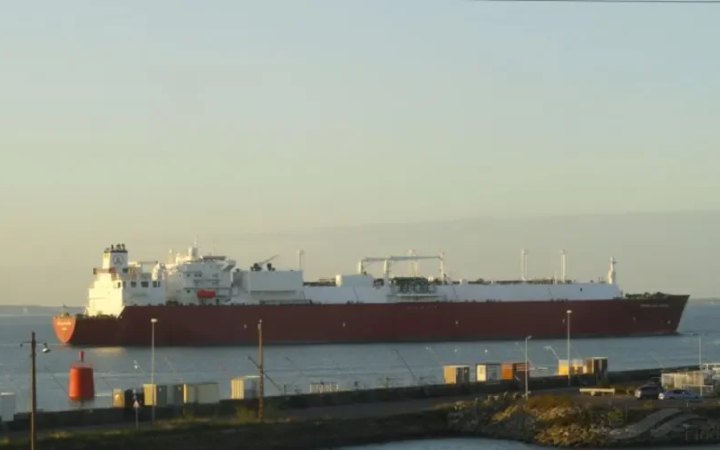
On 22 August 2026, the GRIF tanker (IMO 9332028) from Russia’s shadow fleet, which is under EU, Swiss, Ukrainian, UK and Canadian sanctions, shipped almost 40,000 tonnes of JET-A1 aviation fuel from the Vadinar refinery.
This cargo was transhipped via STS (ship-to-ship) to the HALCYON tanker (IMO 9263693, under EU, Swiss, Ukrainian and Canadian sanctions) in the first ten days of September 2026 in an anchorage area off Malaysia’s east coast. This area, located near the eastern entrance to the strategically important Singapore Strait, is one of the largest grey zones in global maritime trade and the world’s biggest STS transhipment hub.
As early as 23 September 2026, the HALCYON tanker from Russia’s shadow fleet delivered more than 37,000 tonnes of aviation fuel from Malaysia to the Russian port of Nakhodka.
This batch of aviation fuel was unloaded at the transhipment terminal of RN-Morskoy Terminal Nakhodka LLC (TIN 2508070844, not under sanctions), the former Nakhodka oil depot.
RN-Morskoy Terminal Nakhodka LLC is a major logistics subsidiary of Rosneft Oil Company PJSC, located in Primorsky Krai and specialising in the transhipment and transportation of petroleum products.
The operator of the aviation refuelling business within Rosneft’s structure is RN-Aero LLC (TIN 7705843041), which is under sanctions imposed by Japan, the EU, Switzerland, the UK and Ukraine.
Under a state contract to produce Su-57 multirole fighters, RN-Aero LLC supplies aviation fuel to United Aircraft Corporation PJSC (under sanctions imposed by the US, Canada, Switzerland, the EU, the UK, Australia, New Zealand, Japan and Ukraine).
In the summer of 2026, Russian dictator Vladimir Putin, by decree, officially allowed data on operations and supply volumes to be concealed for RN-Aero LLC and a number of other Rosneft entities (including the Tuapse refinery and maritime terminals).
Jet A-1 is an equivalent of the Russian/Soviet aviation fuels TS-1 and RT for gas-turbine aircraft engines. Jet A-1 fuel is fully compatible and suitable for use by Russian aircraft in service with the aggressor state’s armed forces — MiG-29, Su-34 (NVO), Su-35S, Su-30SM, Su-57, Su-24M, Tu-95MS (MSM).
Jet A-1 can also be used to refuel Geran-4 and Geran-5 jet strike UAVs with turbojet engines of the Telefly TJ2000A (TF-TJ2000A) type or their Russian copies, TRD-2000.
It has been confirmed that Russian Il-76MD-90A military transport aircraft equipped with PS-90A-76 engines, used by the Russian Ministry of Defence to transport weapons and military equipment, including operational-tactical missile systems, use Jet A-1 standard fuel instead of the manufacturer-recommended TS-1 (GOST 10227-86).
The Defence Intelligence of Ukraine (HUR) notes: increasing sanctions pressure on Russia and monitoring compliance with sanctions are important tools for depriving the aggressor of the capacity to wage a criminal war in Europe — the largest since the Second World War.